
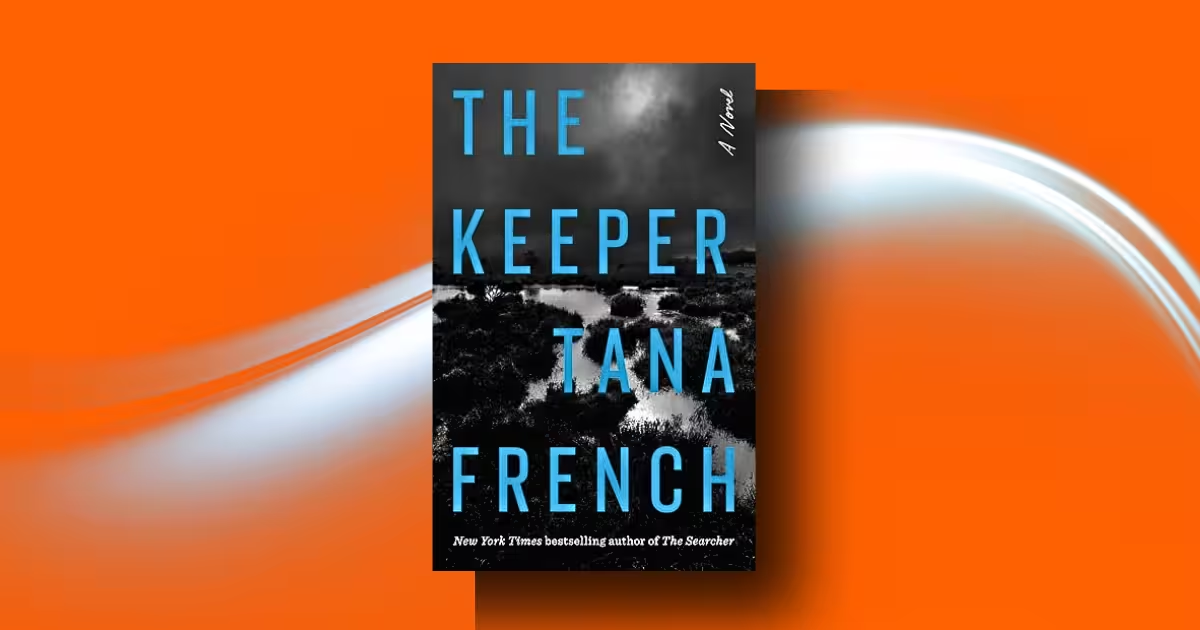
Did you ever wonder why a quiet Irish village can feel more dangerous than a Chicago back alley? Or how a single death can rip open decades of buried grudges, land hunger, and the quiet violence of “just getting along”? That’s exactly the hook that pulled me straight into The Keeper by Tana French—and kept me turning pages until the small hours.
In the final chapter of Tana French’s Cal Hooper trilogy, a young woman’s apparent suicide in the river forces retired Chicago cop Cal, his fiancée Lena, and teenage Trey to decide whether protecting the only home they’ve built is worth the price of silence—or the cost of truth.
The Keeper is best for you if you love slow-burn rural noir where gossip is deadlier than guns, characters who feel like neighbors you half-trust, and endings that leave you unsettled rather than satisfied, this is for you.
It’s perfect for fans of The Searcher and The Hunter who want the trilogy’s emotional payoff. Skip it if you crave high-body-count thrillers or tidy resolutions—French rewards patience, not speed.
Table of Contents
1. Introduction
The Keeper is the third and final novel in Tana French’s Cal Hooper series, published by Viking on March 31, 2026. French, the “queen of Irish crime fiction,” returns to the misty West of Ireland townland of Ardnakelty, where American ex-cop Cal Hooper has tried—mostly successfully—to leave his old life behind.
I picked up The Keeper straight after finishing the first two, expecting another atmospheric mystery. What I got was something deeper: a meditation on belonging, sacrifice, and the ugly bargains small communities make to survive.
2. Background
French has always rooted her stories in place as much as plot. Ardnakelty feels alive—rain-soaked fields, turf smoke, the low hum of gossip in Noreen’s shop. This time, the stakes shift from personal crimes to something bigger: the land itself.
Tommy Moynihan, the local big shot with political pull, is quietly buying up farmland for a factory development that will bring jobs but destroy the old way of life. Historical echoes of Irish land struggles and modern corporate greed simmer beneath every conversation.
No need for big-city cartels; the real threat comes from inside the community.
3. The Keeper Summary
The story opens on a damp November Saturday in Ardnakelty.
Cal Hooper is in Noreen’s shop buying eggs when Tommy Moynihan breezes in with his son Eugene and Eugene’s girlfriend Rachel Holohan waiting outside in the rain. “Young love, isn’t it great?” Tommy booms. Something feels off—the girl won’t look at Eugene—but Cal shrugs it away.
He’s busy planning a soufflé with Trey and Lena, trying to keep life simple.
That night Rachel vanishes. The townland mounts a search.
Cal and Trey find her body snagged in the river, white jacket floating like a ghost. The medical examiner rules suicide: Rachel drank antifreeze, then threw herself off the old bridge. The town whispers she was heartbroken—Eugene was stepping out, or so the story goes. Cal wants to stay out of it.
Lena, who saw Rachel hours earlier when the girl dropped by with a ringwormy cat and unspoken worries, stays silent. Trey, though, is certain something darker happened. “I don’t reckon Rachel done it herself,” she insists.
Tommy Moynihan hires Cal to “find out why” Rachel died—specifically, whether she was cheating on Eugene. Cal refuses, but the refusal marks him. Rumors explode. Some blame Eugene. Others blame Lena, claiming she confronted Rachel over an affair with Cal.
The town splits. Mart Lavin and his cronies see Tommy’s land grab as the real poison; the McHughs and others side with jobs and money. Fights break out in Seán Óg’s pub. Spray paint appears on walls: TRAITORS OUT.
Cal, Lena, and Trey dig quietly. Rachel had visited Lena, Sheila Reddy, and old Mrs. Duggan the evening she died, desperate to stop Tommy and Eugene’s factory plan. She feared losing friends, losing her future, losing the only home she knew. Mrs. Duggan gave her the means and the idea: antifreeze from the shed, a dramatic river death that would look suspicious enough to spark questions.
Rachel chose to become a sacrifice so the town would investigate. She left no note, but her actions spoke.
The climax builds in the pub and on the bridge. Eugene, cornered by Cal, admits his father killed Rachel to silence her. Tommy arrives and spins his version—Rachel was unstable, he only tried to calm her.
The men of Ardnakelty close ranks. Mart’s group confronts Tommy; evidence (witnesses seeing him near the bridge) piles up. No arrest—small-town justice works differently—but Tommy’s power cracks. Eugene turns on him, at least enough to walk away from the plan.
Lena later tells Eugene the full truth about Rachel’s suicide so he can honor her choice. She keeps quiet publicly: Rachel’s death was her final act of agency. Revealing the suicide now would rob her of that.
In the end, snow falls. The factory plan dies. Tommy survives legally but loses his grip on the townland. Cal, Lena, and Trey sit by the fire with their dogs. Cal realizes he has finally chosen his side—not as a cop, but as a keeper of this flawed, stubborn place.
The book closes on quiet acceptance: some secrets protect the living; some sacrifices are worth the silence.
4. The Keeper Analysis
4.1. The Keeper Characters
Cal Hooper evolves from reluctant outsider to committed insider. His cop instincts twitch at every rumor, yet he learns that sometimes the right thing is not solving the case.
By the finale he chooses loyalty over justice: “I wanted Tommy Moynihan tarred and feathered and run out of town.” His growth feels earned.
Lena Dunne is the emotional heart. Tough, private, she carries the weight of Rachel’s visit. Her decision to tell Eugene the suicide truth—honoring Rachel while protecting the community—is masterful.
She tells Cal, “She went into that river to get a job done. It’s done.” Lena’s arc is my favorite: from detached to fiercely protective of her chosen family.
Trey Reddy has matured into a sharp-eyed teenager who sees through adult lies. Her insistence that Rachel was murdered drives the plot, but her growth lies in accepting nuance: “Tommy’s fault anyhow.”
Tommy Moynihan is a superb villain—charming, ruthless, convinced he’s the town’s savior. His final confrontation reveals a man who genuinely believes his ends justify any means. Eugene starts as a pompous douche but ends broken, forced to choose between father and memory of Rachel.
Supporting players—Mart Lavin’s cunning, Noreen’s gossip, Mrs. Duggan’s chilling pragmatism—feel lived-in. French never wastes a character; even walk-ons have weight.
4.2. The Keeper Themes and Symbolism
The core theme is belonging vs. truth. What are you willing to ignore to keep your home intact? Rachel’s suicide becomes a symbol of sacrificial resistance—the river swallows her, but her death floods the town with questions.
Antifreeze (slow, painful), paired with the rushing river symbolizes the tension between deliberate choice and uncontrollable forces.
Land itself is a character: “the pristine beauty…under threat from the machinations of a developer.” French’s descriptions of mist, heather, and rain-soaked fields make the countryside feel alive and worth defending.
Gossip functions as both weapon and glue—rumors about Lena and Rachel nearly destroy lives, yet collective storytelling ultimately checks Tommy’s power.
Silence is another motif. Lena’s final line—“I’ll keep quiet…to suit Rachel”—echoes the town’s age-old survival strategy. French asks: when does silence become complicity, and when is it mercy?
5. Evaluation
The Keeper is a marvelous, poignant capstone to the Cal Hooper trilogy—groundbreaking in its quiet fury and refusal to deliver easy catharsis. I finished The Keeper with a lump in my throat and the rare satisfaction of watching flawed people choose, imperfectly, to protect what they love.
Strengths
French’s prose is luminous—rain “hanging in the air as a fine mizzle,” characters who speak in pitch-perfect dialect. The slow reveal of Rachel’s plan is masterful. Emotional depth between Cal, Lena, and Trey feels authentic and moving.
Weaknesses
Pacing lags in the middle as rumors swirl; some readers may find the lack of courtroom justice frustrating. A few subplots (teen football, minor feuds) could have been trimmed.
Impact
Intellectually, it forced me to reconsider community loyalty. Emotionally, Rachel’s lonely choice haunted me for days.
Comparison with similar works
It sits beside French’s own The Searcher (same setting, gentler stakes) and The Hunter (more personal). Echoes of John le Carré’s moral grayness and the rural dread of Fiona Mozley’s Elmet.
Adaptation
6. Personal insight with contemporary educational relevance
The most urgent theme is environmental sacrifice and community complicity. Tommy’s factory plan mirrors real 2020s battles: Irish rural communities facing data centers, wind farms, or housing developments that promise jobs but threaten ecosystems and heritage.
Rachel’s suicide to force scrutiny feels extreme, yet it echoes real “land defender” stories—from Standing Rock to Irish anti-mining protests—where individuals risk everything to protect place.
In an era of climate anxiety and rural depopulation, French reminds us that progress often demands quiet sacrifices we’d rather not name. Statistics from the Irish Central Statistics Office show rural counties lost 12% of young adults between 2016–2022; the novel asks what price we pay for “jobs.” (See Central Statistics Office Ireland reports on rural migration for context.)
The lesson? Silence can preserve community, but only truth preserves its soul.
7. The Keeper Quotes
- “You can’t go killing people just because they deserve it.” (Mart, capturing the book’s moral tightrope.)
- “She went into that river to get a job done. It’s done.” (Lena, honoring Rachel’s sacrifice.)
- “Rachel was a lovely girl…she was no fool.” (Tommy’s chilling self-justification.)
- “The river’s roar and the utter loneliness filled her, and still she stepped forward.” (The quiet power of Rachel’s final moments, reconstructed in memory.)
8. Conclusion
The Keeper left me stirred, unsettled, and strangely hopeful. French has crafted a fitting, powerful end to Cal’s arc—one that celebrates the messy, rain-soaked beauty of chosen family and chosen home.
I recommend it wholeheartedly to fans of literary crime, slow-burn mysteries, and anyone who has ever wondered what they would sacrifice to protect the place they finally belong. In 2026, with real-world land fights raging, this novel feels not just timely but necessary.
Read it. Then sit with the silence it leaves behind—you’ll understand why some keepers never let go.







