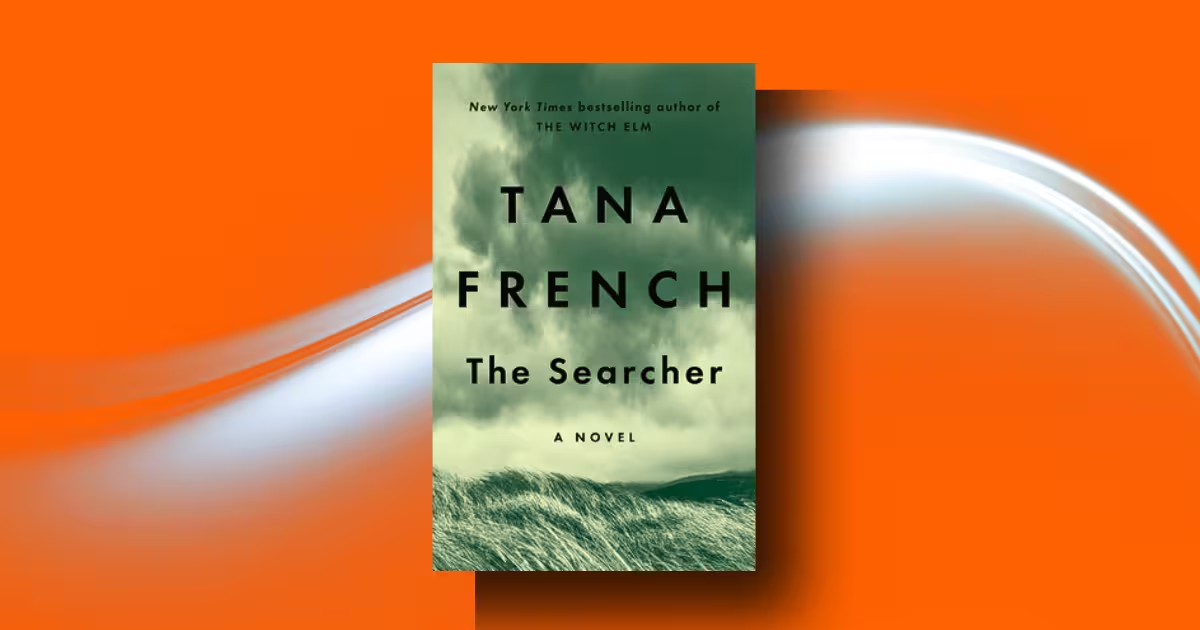
Why do you feel that familiar itch to run away from everything, only to realize that the secrets you’re trying to bury are the very things waiting for you at the end of the road? The Searcher is a masterfully slow-burning, atmospheric neo-Western set in the rugged West of Ireland, where a retired Chicago cop’s quest for peace is shattered by a local disappearance that forces him to choose between the law he once served and the tribal justice of an insular community.
The Searcher is best for readers who crave “vibes” and atmosphere over high-speed action; fans of character-driven mysteries like Jane Harper’s The Dry; and anyone who appreciates a nuanced exploration of moral ambiguity and rural Irish culture.
However, The Searcher is not for readers looking for a fast-paced “whodunit” with a clean, heroic ending; those who prefer the procedural grit of Tana French’s Dublin Murder Squad series; or anyone who finds 200 pages of house renovation and bird-watching tedious.
Table of Contents
1. Introduction
In 2020, Tana French—the undisputed queen of the Irish psychological thriller—stepped away from the urban grit of her celebrated Dublin Murder Squad series to deliver something unexpected.
The Searcher, published by Viking (Penguin Random House), is a standalone novel (and now the first in a trilogy) that trades the sterile interrogation rooms of Dublin for the sodden, wind-swept fields of the West of Ireland.
At its heart is Cal Hooper, a man who has spent twenty-five years as a Chicago police officer and is now looking for a “small place” in a “small country” where the only thing he has to fix is a dilapidated cottage. But as any reader of French knows, “small towns” are often the largest repositories for darkness.
2. Background:
The novel’s DNA is deeply rooted in the Western genre. While the setting is the fictional village of Ardnakelty, the themes are classic John Ford: a weary gunslinger (Cal) retreats to a frontier, finds a young “sidekick” (Trey) in need of protection, and eventually has to pick up his badge (or in this case, his instincts) to fight a corruption that the local authorities ignore.
Set against a backdrop of contemporary rural Ireland—a landscape marked by depopulation, the lingering scars of the “Celtic Tiger” crash, and a deep-seated suspicion of outsiders—The Searcher captures a world where the “law” is a flexible concept defined by the men who have farmed the land for generations.
3. The Searcher Summary of the Book (Part 1)
The Outsider’s Arrival
Cal Hooper has had enough of the Chicago PD. After a bruising divorce and a career spent seeing the worst of humanity, he buys a “fixer-upper” in Ardnakelty, a tiny, remote village where he hopes to spend his retirement sanding wood and fishing for perch.
For the first few months, Cal’s life is a meditative routine of manual labor and quiet observation of the local rooks—birds he admires for their intelligence and territorial nature.
He begins to integrate into the community, frequenting the local pub and engaging in the ritualistic, indirect banter of the locals, particularly his neighbor Mart Lavin. Mart is the quintessential rural Irishman: friendly on the surface, but deeply committed to the unwritten rules of the townland.
A Shadow in the Hedge
The peace is broken when Cal realizes he is being watched. A local kid, Trey Reddy, begins “haunting” his property. Initially, Cal mistakes Trey for a boy due to the kid’s dirty clothes and short hair, but he soon discovers Trey is a thirteen-year-old girl from the village’s “problem” family. The Reddys are outsiders in their own home—poor, neglected, and living on the social margins.
Trey hasn’t come to Cal for friendship; she wants his professional skills. Her nineteen-year-old brother, Brendan, has been missing for months. The village consensus—led by Mart and the local police—is that Brendan simply “ran off” to Dublin or London, just like his feckless father did before him.
But Trey is certain: Brendan would never leave her behind. He was her only protector, and she believes something terrible has happened to him.
The Investigation Begins
Reluctantly, Cal’s “cop radar” kicks back into gear. He begins asking questions—carefully, as is the Ardnakelty way—and quickly finds that the village’s friendly facade is a wall. When he asks about Brendan at the pub, the air changes. The locals suggest Brendan was a “troublemaker” who got involved with “bad types” from Dublin.
Cal discovers that Brendan had been trying to improve himself, studying and perhaps getting involved in something that promised quick money. As Cal digs deeper, the warnings become more explicit. He is told by Mart that in Ardnakelty, they “look after their own,” and that some stones are better left unturned.
The tension escalates when Cal is visited by three men from Dublin—drug dealers who are also looking for Brendan. They beat Cal severely, a warning that his interference is attracting the wrong kind of attention to the townland. Instead of scaring him off, the violence confirms Cal’s suspicion: Brendan didn’t just walk away.
(Part 2): The Bog’s Secret
The Reveal of Local Justice
Cal eventually realizes that the threat isn’t just coming from the Dublin “bad boys”; it’s coming from within Ardnakelty itself. He discovers that Brendan had indeed tried to start a small-scale drug operation in the village to make money for his family.
However, the village elders—led by Mart—decided that this “poison” could not be allowed to take root in their community. They didn’t call the Guards (the police); they handled it themselves.
In a devastating confrontation, it is revealed that the local men lured Brendan to a remote cottage under the guise of helping him, and in the ensuing struggle, Brendan was killed. They buried him in the mountain bog, believing they were protecting the village’s soul by excising a “cancer” before it could grow.
The Moral Compromise
Cal finds Brendan’s body, but he is faced with a impossible choice. If he goes to the police, he destroys the community he has come to love, and he puts Trey in even greater danger from the fallout. Furthermore, the “law” in this part of Ireland is shown to be complicit or indifferent.
In a morally ambiguous ending that mirrors the harsh reality of the landscape, Cal chooses to stay silent about the murder. He makes a deal with the locals: Trey is to be left alone and protected, and Cal will remain as her mentor and surrogate father figure. The book ends with Cal and Trey working together on a piece of furniture—a quiet, domestic image that masks the blood buried in the soil nearby.
4. The Searcher Analysis
4.1. The Searcher Characters
Cal Hooper: A man who wanted to be “nothing,” yet finds he cannot escape his nature as a protector. His development is one of disillusionment; he realizes that the “goodness” he sought in rural life is just as messy as the “badness” he left in Chicago.
Trey (Theresa) Reddy: The true heart of the novel. Wise beyond her years and “tired to fuckin’ death” of the uncertainty surrounding her brother. Her transformation from a feral, suspicious child to Cal’s apprentice is the book’s most rewarding arc.
Mart Lavin: A complex antagonist (if he can even be called that). He represents the “old ways”—the communal safety that requires the sacrifice of the individual for the sake of the many.
4.2. The Searcher Themes and Symbolism
The Code of Silence: The village of Ardnakelty operates on a system of “mutual obligation” and “sideways” conversation.
The Rooks: The birds serve as a constant symbol of community and territoriality. They watch everything, they remember faces, and they defend their colony at any cost—just like the villagers.
Justice vs. Law: The central conflict. Is it “just” to kill a young man to prevent a drug epidemic in a small town? French leaves the answer to the reader.
5. Evaluation
The Searcher is a poignant and grounding masterpiece that redefines the modern noir.
Strengths: The atmospheric prose is unrivaled. French describes the Irish weather and landscape so vividly you can almost feel the dampness in your bones. The dialogue captures the rhythmic, evasive nature of Irish speech perfectly.
Weaknesses: As noted by many critics, the pacing is “painfully slow” for the first two-thirds. If you aren’t interested in the minutiae of fixing a kitchen counter, you may struggle to reach the payoff.
Impact: The book lingers because of its ending. It forces you to question your own moral compass and whether “the law” is always the same thing as “what is right.”
Comparison: Fans of The Searcher will find similar themes of rural isolation and local secrets in Jane Harper’s The Dry or Chris Whitaker’s We Begin at the End.
6. Personal Insight: The Quiet Crisis of Rural Decline
The Searcher resonates today because it highlights the contemporary reality of rural depopulation. In Ireland, youth unemployment for those aged 15-24 often hovers around 10-12%, leading many young people like Brendan Reddy to feel that their only options are “the city” or “the trade”.
This economic vacuum often invites the very “poison” Mart Lavin fears: drug trafficking and crime. The book serves as a cautionary tale about what happens when communities feel abandoned by the state—they revert to tribalism.
It’s a theme that echoes global trends where rural areas feel disconnected from the central government’s “law” and create their own instead.
7. The Searcher Quotes
- “The rooks have been here a lot longer than he has. It would be pretty impertinent of him to waltz in and start interfering with their ways”.
- “No one ever moves here… Only away”.
- “I wanta stop now. I’m tired to fuckin’ death of this… I just want it gone” (Trey Reddy).
8. Conclusion
The Searcher is more than a mystery; it is an exploration of the soul of a place. It’s a slow, beautiful, and ultimately heartbreaking look at what we are willing to do to keep our small corners of the world safe.
Recommendation: Highly recommended for readers who value prose and atmosphere over plot-heavy thrillers. If you enjoyed the character work in Man’s Search for Meaning regarding resilience in the face of despair, you will find a similar (though fictional) resonance in Cal Hooper’s journey.
This video provides an excellent visual and thematic overview of why Tana French’s shift to the West of Ireland marks a significant turning point in her career.