
Last updated on November 3rd, 2026 at 10:10 am
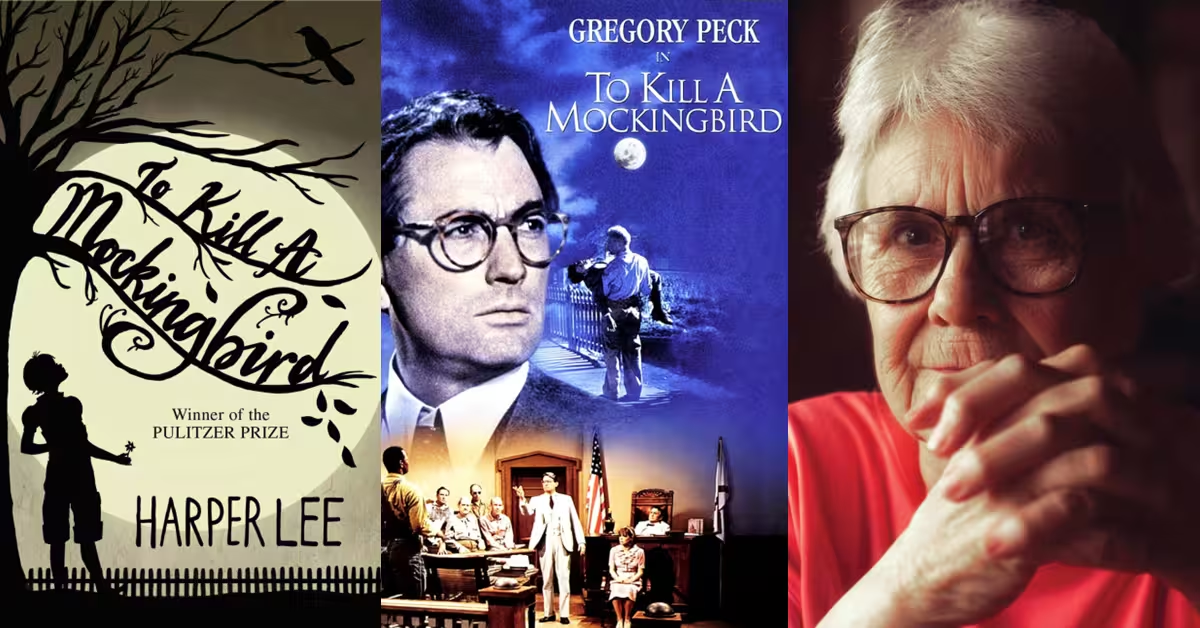
To Kill a Mockingbird is Harper Lee’s 1960 novel about a small Alabama town that convicts an innocent Black man while its children watch from the balcony, and yes, it is still worth reading, though not for the reason most classrooms give. I came back to it expecting a statue of a hero lawyer. Instead I found a book whose sharpest knife points at the polite people of Maycomb: the teacher who hates Hitler but not Jim Crow, the church ladies pitying Africans over coffee while a man dies in a prison yard, and the twelve “reasonable” jurors.
If you are here for a full summary, the ending explained, or a straight answer on whether Atticus Finch deserves his pedestal, it’s all below.
At a glance
To Kill a Mockingbird follows Scout Finch, aged roughly six to nine, across three years in Depression-era Maycomb, Alabama. Her father Atticus defends Tom Robinson, a Black farmhand falsely accused of raping Mayella Ewell. Atticus proves Tom could not have done it, and the all-white jury convicts him anyway. Tom is later shot dead trying to escape prison.
Mayella’s father, Bob Ewell, seeks revenge by attacking Scout and her brother Jem on Halloween, and the reclusive neighbor Boo Radley, whom the children have feared and mythologized all along, saves them and kills Ewell. The sheriff declares that Ewell fell on his own knife to protect Boo from public attention.
The novel’s core lesson is empathy: you only understand a person when you see the world from where they stand.
My rating is 4.5/5.
It is a funny, warm, beautifully observed book with a real blind spot: its Black characters rarely get the inner life its white characters do.
Who will love it, and who may bounce: Readers who like coming-of-age stories told by a sharp, funny child narrator will fall for Scout within ten pages, and anyone who enjoys courtroom drama will find Chapters 17 to 21 genuinely gripping.
Parents reading alongside teenagers will get a lot out of it, because the book is really about how children learn morality from the adults around them. Book clubs will have plenty to argue about. On the other hand, readers who want a fast plot may lose patience with the first half, which drifts through summers, school days and neighborhood gossip before the trial arrives.
And readers looking for a story that centers Black experience in the segregated South will likely find it frustrating, because Tom Robinson, Calpurnia and Helen Robinson are seen almost entirely through white eyes. For those readers, I’d suggest pairing it with one of the books in my comparison section rather than skipping it entirely.
About the Book
Title: To Kill a Mockingbird
Author: Harper Lee
First published: July 11, 1960, by J. B. Lippincott & Co. (NYS Writers Institute)
Edition I read: HarperCollins paperback, ISBN 978-0-06-198026-8, which includes Lee’s short 1993 foreword asking readers to skip introductions
Structure: Two parts, 31 chapters (Part One: Chapters 1 to 11; Part Two: Chapters 12 to 31)
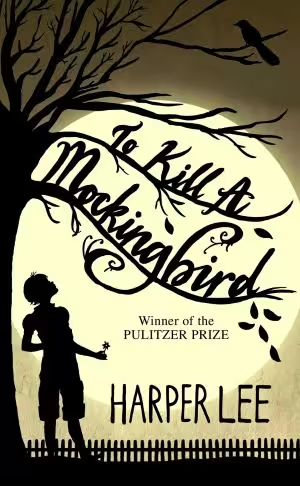
Awards: The novel won the Pulitzer Prize for Fiction in 1961 and has sold over 40 million copies worldwide.
Quick verdict
A tender, funny, and quietly furious novel about how a decent-looking town agrees to destroy an innocent man. Recommended for readers who love child narrators, Southern fiction and courtroom stories, with the caveat that its view of race is limited to a white family’s porch.
Should You Read It?
| Pros | Cons |
|---|---|
| Scout’s voice is one of the funniest and most alive in American fiction | Black characters, including Tom, get little inner life |
| The trial chapters are tense, clear and expertly built | The first half meanders; plot momentum arrives late |
| The ending ties the Boo Radley and Tom Robinson threads together beautifully | Atticus is close to flawless, which makes him less human |
| Sharp satire of “respectable” hypocrisy (Miss Gates, the missionary circle) | Adult narrator and child narrator blur in places |
| Short chapters, easy to read with teenagers | Racial slurs appear often and can be painful in a classroom |
What Is It About?
In 1930s Alabama, lawyer Atticus Finch defends a Black man falsely accused of raping a white woman, knowing he will probably lose. His daughter Scout narrates the trial, the town’s reaction, and her obsession with Boo Radley, the neighbor nobody ever sees.
By the end, both the convicted man and the hidden neighbor turn out to be the “mockingbirds” of the title: harmless people the town is willing to destroy.
Rating: ★★★★½ (4.5/5)
Background: Why Does the History Matter Here?
The history matters because Lee was writing about a world she grew up inside. She was born Nelle Harper Lee on April 28, 1926, in Monroeville, Alabama, and died there on February 19, 2016 (CNN fast facts via KRDO).
Her father, A.C. Lee, was a Monroeville attorney widely seen as the model for Atticus, and her childhood neighbor Truman Capote is the likely model for Dill; she also sat as a child in the courthouse balcony watching her father argue cases (The Saturday Evening Post). That detail hit me hard, because the balcony is exactly where Scout watches the trial.
The novel is set in the mid-1930s; Atticus himself names the year 1935 in his closing argument (Chapter 20). Many readers connect Tom Robinson’s case to a real one: in April 1931, when Lee was five, trials began in Scottsboro, Alabama, over alleged rapes of two white women by nine young Black men, and that case is often described as a rough basis for the novel’s events (Antiquarian Auctions).
I’d treat that as a strong likely influence rather than a confirmed one, since Lee rarely discussed her sources.
One more piece of context changes how many people read Atticus now. Go Set a Watchman, a manuscript Lee completed in the 1950s and set twenty years after To Kill a Mockingbird, was published on July 14, 2015 (CNN fast facts via ABC17; KVIA), and it caused controversy because its older Atticus appears racist and supportive of segregation.
To Kill a Mockingbird Plot Summary
How does the story begin? The frame and the Radley legend (Chapter 1)
The story opens with an adult Scout looking back. Her brother Jem broke his arm badly at the elbow when he was nearly thirteen, and the siblings later argued about where the events leading to it really started. Scout blames the Ewells; Jem says it began the summer Dill arrived and gave them the idea of making Boo Radley come out. That first page quietly tells you how the book will end, which I completely missed the first time.
Scout (Jean Louise Finch) lives in Maycomb, a tired, hot, poor county seat, with her brother Jem, her widowed father Atticus, and their Black cook, Calpurnia, who rules the kitchen and Scout with equal firmness. Their mother died of a heart attack when Scout was two.
The summer Scout is almost six, a small, white-haired boy named Charles Baker Harris, known as Dill, comes to stay with his aunt, Miss Rachel, next door. Dill is a brilliant liar and storyteller, and he becomes obsessed with the Radley Place, the gloomy house down the street.
The neighborhood legend goes like this: as a teenager, Arthur “Boo” Radley fell in with a rowdy group of boys, got into trouble, and was taken home by his strict father instead of being sent to the state industrial school.
He was not seen for fifteen years. At thirty-three, according to the gossip Miss Stephanie Crawford, he stabbed his father in the leg with scissors. After old Mr. Radley died, Boo’s older brother Nathan took over the house, and Boo still never came out. Children believe he eats raw squirrels and peeks in windows.
On a dare from Dill, Jem runs through the Radley gate, slaps the side of the house, and races back. As they watch from their porch, an inside shutter seems to move.
What happens at school, and why does it matter? (Chapters 2 and 3)
Scout starts first grade and immediately clashes with her new teacher, Miss Caroline Fisher, who is upset that Scout can already read and tells her father to stop teaching her.
When Miss Caroline tries to lend a quarter to Walter Cunningham, a poor farm boy with no lunch, Scout tries to explain that Cunninghams never take what they can’t pay back, and gets her hand smacked with a ruler for her trouble. Scout takes her anger out on Walter in the schoolyard until Jem stops her and invites Walter home for dinner.
At the table, Walter pours syrup over everything, Scout comments, and Calpurnia hauls her into the kitchen for a furious lecture about treating any guest as company, no matter who they are.
That afternoon a filthy boy named Burris Ewell is sent home for having lice and leaves Miss Caroline in tears with a vicious insult. That night, Atticus gives Scout the advice that shapes the whole book: you can’t really understand someone until you imagine life from inside their skin. He also strikes a deal with her.
If she keeps going to school, they will keep reading together every night.
What are the gifts in the tree? (Chapters 4 to 7)
Walking home past the Radley Place, Scout finds chewing gum in a knot-hole of an oak tree. Later she and Jem find two polished Indian-head pennies inside a small box. Dill returns for the summer, and during a game Jem pushes Scout in a tire so hard it rolls into the Radley yard. While she staggers out, she hears someone inside the house laughing. She never tells Jem.
The children invent a game acting out the Radley story, with Jem as Boo stabbing his father with scissors. Atticus catches them, and later catches them trying to pass a note to Boo through a window with a fishing pole. He tells them firmly to stop tormenting the man.
On Dill’s last night that summer, the three sneak into the Radley backyard to peek through a window. A man’s shadow crosses the back porch toward Jem. The kids run; a shotgun goes off; Jem’s pants catch on the wire fence and he leaves them behind. In front of the gathered neighbors, Nathan Radley says he fired at a Black man in his collard patch. Dill invents a story about strip poker to explain Jem’s missing pants.
In the middle of the night, Jem goes back alone to get them. Weeks later he admits to Scout that he found them folded over the fence, the tear crookedly sewn up, as if someone had been expecting him.
More gifts appear in the knot-hole: a ball of twine, two soap carvings that look exactly like Jem and Scout, a spelling medal, and a broken pocket watch on a chain. The children write a thank-you note. The next morning, the hole has been filled with cement.
Nathan Radley says the tree is dying; Atticus says it looks perfectly healthy. Jem stands on the porch until dark and comes inside having cried silently.
What happens during the winter fire? (Chapter 8)
A rare snowfall hits Maycomb. Jem builds a snowman out of mud covered with a thin coat of snow and shapes it to look like their neighbor Mr. Avery; Atticus makes him disguise it with Miss Maudie Atkinson’s sunhat and hedge clippers.
That night Miss Maudie’s house burns down. Atticus sends the children to stand by the Radley gate, out of the way. Afterward, Scout finds a wool blanket around her shoulders that she never noticed being put there.
Atticus realizes it was Boo, and Jem, frightened that Nathan will be blamed, pours out the story of the pants and the knot-hole. Miss Maudie, meanwhile, laughs off losing her house and plans a smaller one with more room for azaleas.
When does Tom Robinson’s case enter the story? (Chapter 9)
Cecil Jacobs announces at school that Scout’s father defends Black people, using a slur. Atticus confirms that he is defending Tom Robinson, a man from the Black settlement past the town dump and a member of Calpurnia’s church. He says he must do it or he could never again ask his children to mind him, and he admits he does not expect to win. He asks Scout to keep her fists down no matter what she hears.
At Christmas at Finch’s Landing, the family homestead, Scout’s cousin Francis repeats the slur about Atticus, and Scout splits her knuckle on his teeth. Uncle Jack spanks her without hearing her side. When she explains, he is ashamed, and she makes him promise not to tell Atticus.
Later that night Scout overhears Atticus telling Jack the case is hopeless: it’s the word of a Black man against the Ewells, and he only hopes his children come through it without catching the town’s sickness. Years later Scout realizes he meant for her to overhear.
What does the mad dog scene reveal about Atticus? (Chapter 10)
Scout and Jem are embarrassed by their father, who is nearly fifty, wears glasses, and doesn’t hunt, fish or play football. When he gives them air rifles, he tells them they may shoot bluejays but must never shoot a mockingbird, and Miss Maudie explains why: mockingbirds harm no one and only make music.
One February day a sick dog named Tim Johnson staggers down their street with rabies. Sheriff Heck Tate hands his rifle to Atticus. Atticus takes off his glasses and kills the dog with one shot from a distance.
Miss Maudie tells the stunned children their father was once known as the best shot in the county and gave it up because it seemed an unfair advantage over living things. Jem decides not to brag at school, concluding that Atticus is a gentleman.
Who is Mrs. Dubose, and why does Atticus call her brave? (Chapter 11)
Mrs. Dubose, an elderly, ill neighbor, regularly insults the children from her porch. When she calls Atticus a lawyer for “trash” and Black people, Jem snaps and slashes every camellia bush in her yard. As punishment, he has to read aloud to her every afternoon for a month, then one extra week. During the readings she has strange fits, and an alarm clock ends each session a little later every day.
After she dies, Atticus explains she was addicted to morphine, prescribed for pain, and had used the readings to break the addiction before her death. She leaves Jem a white camellia in a candy box. Atticus tells him she was the bravest person he ever knew, because courage means starting a fight you know you’ll lose and seeing it through.
What does Scout learn at Calpurnia’s church? (Chapter 12)
Part Two opens with Jem at twelve, moody and suddenly too old for Scout. Dill writes that he won’t come that summer. With Atticus away at the legislature, Calpurnia takes the children to her church, First Purchase, built from the first earnings of freed slaves.
A woman named Lula objects to white children being there, but the congregation welcomes them. The minister, Reverend Sykes, collects money for Tom’s wife, Helen, who can’t find work because of the accusation. He literally shuts the church doors until the congregation raises ten dollars.
The children learn that hymns are “lined” because few members can read, that Calpurnia learned to read from an old copy of Blackstone’s Commentaries, and that she speaks one way at the Finch house and another way with her own community. Scout is startled to realize Calpurnia has a whole life outside their kitchen.
Why does Aunt Alexandra move in? (Chapters 13 and 14)
The children come home to find Aunt Alexandra, Atticus’s sister, settled on their porch, there to give Scout “feminine influence.” She is obsessed with family background and the inherited “streaks” of every Maycomb family.
Atticus awkwardly tries to deliver her lecture about the Finches’ gentle breeding, sees Scout in tears, and tells them to forget it. When Alexandra suggests firing Calpurnia, Atticus flatly refuses.
Soon after, Dill turns up hidden under Scout’s bed, having run away from his mother and new stepfather because they don’t seem to want him around. Jem tells Atticus, breaking the children’s code, and Atticus arranges for Dill to stay.
What happens at the jail? (Chapters 15 and 16)
A group of men comes to the Finch yard warning that there may be trouble when Tom is moved to the county jail. The next night, Atticus sits outside the jail under a light bulb on an extension cord, reading. The children sneak downtown and watch as four cars full of men from Old Sarum arrive to lynch Tom.
Scout runs into the circle, sees her father’s fear, and spots Walter Cunningham’s father. Not understanding the situation, she chats to him about his son Walter and his entailment troubles. Embarrassed in front of a little girl, Mr. Cunningham squats down, tells her he’ll pass along her greeting, and orders the men to leave.
Atticus leans his face against the jail wall. Mr. Underwood, the newspaper editor, reveals he had a shotgun on the mob the whole time.
The next morning the whole county pours into town for the trial. The children spot Mr. Dolphus Raymond, a wealthy white man who lives with a Black woman and their mixed-race children and seems always drunk. In the courthouse they overhear that the judge appointed Atticus to the case. With no seats left, Reverend Sykes takes them up to the “colored balcony.”
How does the trial unfold? (Chapters 17 to 21)
Sheriff Heck Tate testifies that Mayella was beaten, mostly on the right side of her face, and that nobody called a doctor. Bob Ewell testifies that he saw Tom raping his daughter through the window. Atticus asks him to write his name, revealing he is left-handed, which fits the injuries on Mayella’s right side.
Mayella, nineteen, says Tom attacked her after she offered him a nickel to chop up an old dresser. Under Atticus’s gentle questions, a picture of her life emerges: no friends, seven younger siblings, a drunk father, water hauled from a spring by the dump, a row of red geraniums she tends. Her story wobbles on whether she was hit or not.
Then Atticus asks Tom to stand. Tom’s left arm is twelve inches shorter than his right, crippled in a cotton gin accident as a boy. He could not have bruised the right side of her face. Atticus asks Mayella directly whether her father beat her. She refuses to answer and erupts in rage at the “fancy gentlemen” of the court.
Tom testifies that Mayella had asked him in to do small jobs for over a year, unpaid, and that on the evening in question she sent the children away for ice cream, asked him to reach a box on top of a wardrobe, then grabbed him and kissed him.
Bob Ewell saw them through the window and threatened her. Tom ran because, as he says, any Black man in that spot would be scared. Then he makes the fatal mistake: when the prosecutor, Mr. Gilmer, asks why he helped her for nothing, Tom says he felt sorry for her.
The white courtroom goes cold. Gilmer sneers at him, calling him “boy” repeatedly, until Dill starts crying and Scout takes him outside.
Under a tree they meet Dolphus Raymond, who reveals his paper bag holds only Coca-Cola. He pretends to be a drunk so the town has an excuse for his choices. He tells them Dill’s tears come from seeing the casual cruelty white people inflict on Black people.
Back inside, Atticus delivers his closing argument. He removes his coat and loosens his collar, which the children have never seen. He argues there is no medical evidence, that Mayella broke a code by kissing a Black man and is trying to destroy the evidence of her shame, and that a court is the one place where all people are supposed to be equal. Calpurnia arrives with a note that the children are missing; Atticus lets them return after supper to hear the verdict.
The jury stays out for hours. Close to eleven at night they return, and none of them look at Tom. Guilty. As Atticus walks out alone, everyone in the colored balcony stands up. Reverend Sykes tells Scout to stand because her father is passing.
What happens after the verdict? (Chapters 22 to 25)
Jem cries all the way home. The next morning the Finch kitchen is piled with food from Tom’s community, and Atticus’s eyes fill with tears. Miss Maudie tells Jem that the jury staying out so long was a small step, and that the judge chose Atticus on purpose.
Then Bob Ewell spits in Atticus’s face on the street and threatens to kill him. Atticus shrugs it off, reasoning that if it saved Mayella a beating, he’ll take it.
Atticus tells the children Tom will appeal, and that one juror, a Cunningham relative, held out for acquittal at first. Jem works out a theory of four kinds of Maycomb people; Scout decides there is only one kind, folks. Jem wonders if Boo stays inside because he wants to.
At Aunt Alexandra’s missionary society tea, the women weep over a distant African tribe and complain that their own Black servants have been sulky since the trial. Miss Maudie cuts one of them down with a single remark.
Atticus comes in pale: Tom has been shot seventeen times trying to climb the fence at the prison farm. Alexandra nearly breaks, then rejoins the tea with her head high. Scout passes the cookies.
Atticus and Calpurnia go to tell Helen, who falls to the ground at the news. Mr. Underwood writes an editorial comparing Tom’s death to the killing of songbirds, and Scout finally grasps that Tom was doomed the moment Mayella screamed.
How does Bob Ewell’s revenge build? (Chapters 26 and 27)
In third grade, Scout’s teacher Miss Gates gives a lesson condemning Hitler’s persecution of Jews. Scout remembers overhearing the same teacher say outside the courthouse that Black people needed to be taught a lesson.
When she raises it with Jem, he explodes and tells her never to mention the courthouse again. Atticus explains Jem is storing the pain away until he can face it.
By October, Bob Ewell has been fired from a federal jobs program for laziness and blames Atticus. Someone tries to break into Judge Taylor’s house. Ewell follows Helen Robinson on her way to work, muttering filth, until her employer, Link Deas, threatens him with jail. Then comes Halloween. Scout is cast as a ham in a school pageant about Maycomb County’s farm products, wearing a costume of chicken wire and painted cloth.
What happens on Halloween night, and how does the book end? (Chapters 28 to 31)
Jem walks Scout to the pageant at the school, past the Radley Place in pitch darkness. Scout falls asleep backstage and misses her cue, then insists on walking home in the costume to hide her embarrassment. Crossing the dark schoolyard, they hear footsteps behind them.
A man attacks. The wire costume keeps a blade from reaching Scout. She hears a struggle, hears Jem scream, feels herself squeezed by a man who is then pulled off her.
When it goes quiet, she feels a man on the ground who smells of whiskey, then sees, under the streetlight, a man carrying Jem to their house.
Jem is unconscious with a badly broken arm. Sheriff Tate arrives and reports that Bob Ewell is lying dead under the oak with a kitchen knife under his ribs. When Scout describes the man who saved them, she points to the stranger standing quietly in the corner of Jem’s room: a pale, thin man with colorless eyes. Scout recognizes him and greets him by the nickname the children used for years. It is Boo Radley.
On the porch, Atticus assumes Jem killed Ewell in self-defense and insists on a public hearing, because he refuses to raise his son under a cover-up. Heck Tate insists Ewell fell on his own knife. As the argument goes on, it dawns on Atticus that the sheriff is protecting Boo, not Jem.
Tate says that dragging a shy man who just saved two children into the spotlight would be a sin, and that one innocent man is already dead.
Atticus accepts. He asks Scout if she understands, and she says that exposing Boo would be like shooting a mockingbird. Atticus thanks Arthur for his children.
Scout lets Boo look at the sleeping Jem and touch his hair. Then he asks her, in a near whisper, to walk him home. She has him offer his arm so it looks like a gentleman escorting a lady, walks him to his door, and never sees him again. Standing on the Radley porch, she looks out at her own street and imagines the past three years from Boo’s view: two children playing, fighting, finding gifts in a tree, shivering at a fire, needing him.
She realizes she finally understands him. At home, Atticus reads to her from Jem’s book The Gray Ghost, about a boy wrongly blamed for things he didn’t do who turns out to be kind.
Half asleep, Scout tells him the boy was real nice once people saw him, and Atticus tells her most people are, once you finally see them. He sits by Jem’s bed all night.
The ending explained: The final chapters connect the book’s two halves. Tom and Boo are both mockingbirds, harmless men the town misjudges. The town destroyed Tom through a public trial; Heck Tate’s lie protects Boo from a smaller version of the same public machinery.
Atticus, who has lived by the rule that the law applies equally, accepts a bent truth because, after watching the law kill Tom, he sees that a “correct” process can still be a cruel one.
And Scout completes the lesson from Chapter 3: she literally stands in Boo’s spot and sees her own life from there.
Analysis and Critique
Who are the main characters, and do they actually change?
The main characters are Scout, Jem, Atticus, Boo Radley, Tom Robinson, the Ewells and Calpurnia, and the most interesting thing about them is who gets to change and who doesn’t.
Scout (Jean Louise Finch) is the book’s engine. She’s hot-tempered, literal, and hilarious, and her growth is gradual: from punching Walter in Chapter 3 to wanting to invite him home in Chapter 23, from mocking Boo in games to walking him home as a guest. The clever trick is the double voice.
Child Scout misreads things (she thinks the lynch mob is a social call), while adult Scout lets us feel the danger she couldn’t. Occasionally that blend wobbles, with a seven-year-old producing very adult phrasing, but mostly it works.
Jem Finch has the most painful arc in the book, and I think he’s underrated. He goes from a boy daring himself to touch a house to the one who cries at the cemented knot-hole, cries again at the verdict, and then can’t bear to hear the word “courthouse.”
His faith that Maycomb’s people are the best in the world breaks in Chapter 22. His broken arm at the end feels like the physical version of what the trial did to him inside.
Atticus Finch is wise, dry, patient, and almost too good. He loses his temper once, in Chapter 14, and it shocks everyone. His real complexity lies in two places: he’s naive about Bob Ewell (he really believes the spitting was the end of it), and he bends his own principle at the end when he accepts the sheriff’s version.
The critique that he’s a “white savior” has some force, but it’s worth noticing that he saves no one. He loses the case, Tom dies, and Scout and Jem are saved by Boo. If anything, the book shows the limits of a good white man working inside a rotten system.
Boo Radley (Arthur Radley) is mostly absence: a moving shutter, gum in a tree, a blanket, mended pants. When he finally appears in Chapter 29, he’s frail, shy and childlike. Lee keeps him nearly silent, which I found exactly right. His kindness is shown through objects, not speeches.
Tom Robinson is the book’s moral center and its biggest weakness. He’s decent, honest and helps Mayella out of pity, and that pity is what sinks him in court. But we only see him on a witness stand and through others’ reports. We never sit in his home or hear what he thinks of Atticus.
Lee gives Mayella a richer interior life than the man accused of attacking her.
Mayella and Bob Ewell are a smart pairing. Bob is purely malicious, a man whose only status is being white. Mayella is something sadder: the loneliest person in the book, as Scout herself concludes in Chapter 19, a girl whose geraniums are the only beauty she owns. Her lie kills a man, and the book still asks you to understand her without excusing her. That’s hard to do and Lee does it.
Calpurnia is the character I wanted far more of. Chapter 12 opens her up: she reads, taught her son from a law book, and moves between two worlds with full awareness. Then the book closes her back into the kitchen.
Supporting players carry a lot of moral weight. Miss Maudie is the voice of plain sense. Mrs. Dubose models a stubborn, ugly kind of courage. Heck Tate begins as a scary man with a rifle and ends as the novel’s final moral decision-maker.
Dolphus Raymond shows what it costs to openly reject the town’s rules. And Aunt Alexandra surprised me most on this read; her moment in Chapter 24, holding herself together to serve coffee after Tom’s death, is quietly devastating.
What are the main themes and symbols, and do they work?
The main themes are empathy, the gap between law and justice, the hypocrisy of respectable people, and courage, and they work because Lee shows them through small scenes rather than lectures.
Empathy as a skill. Atticus’s advice in Chapter 3 is the book’s backbone, and every major plot point tests it. Scout has to see Walter’s poverty, Miss Caroline’s ignorance, Mrs. Dubose’s pain, Mayella’s loneliness and finally Boo’s view of the street.
The final chapter, where she literally stands on his porch, is the payoff, and it’s one of the best-earned endings I know.
Law versus justice. Atticus’s closing speech praises courts as places where everyone is equal, and then the court proves him wrong. Chapter 23 makes this explicit: a white man’s word beats a Black man’s word every time in Maycomb, and Atticus calls that an ugly fact.
The ending then flips the problem. To protect Boo, the sheriff breaks the letter of the law. Lee doesn’t tidy that up, and I respect her for it.
The polite bystanders. This is the angle I think most reviews miss.
Bob Ewell is a villain, but he’s an easy one. The scarier people are the respectable ones: Miss Gates, who condemns Hitler in Chapter 26 after saying racist things outside the courthouse; Mrs. Merriweather, who cries over a far-off tribe while complaining about her sulky cook in Chapter 24; and the twelve farmers who, as Atticus puts it in Chapter 23, are reasonable men in everyday life. Mr. Underwood’s editorial makes the point plainest: Tom was convicted in the private courtrooms of people’s hearts before the trial began.
That’s the book’s real argument, and it’s far more uncomfortable than a story about one heroic lawyer.
Courage. Lee sets up two kinds of courage side by side in Chapters 10 and 11: Atticus with a rifle, and Mrs. Dubose fighting a morphine addiction alone. Atticus tells Jem the second is the real kind. The trial is the same kind of courage: fighting a case you know is lost.
Class. Jem’s “four kinds of folks” speech in Chapter 23 and Aunt Alexandra’s ban on Walter Cunningham show that Maycomb sorts people by family, money and literacy, not just race. Scout’s answer, that there’s only one kind of folks, is simple, and the book lets Jem’s sadder question stand next to it: if everyone is the same, why do they despise each other?
Key symbols:
The mockingbird stands for harmless innocence. Tom and Boo are the two clearest mockingbirds, and Mr. Underwood’s songbird editorial connects Tom to the image directly.
The knot-hole tree is a channel of friendship between Boo and the children. When Nathan cements it shut, the only line of communication between Boo and the outside world is closed, and Jem understands this before Scout does.
The Radley house and closed doors echo the whole town. Maycomb shuts its doors on the mad dog in Chapter 10, and Scout later senses the same deserted, waiting feeling in the courtroom before the verdict.
Eyes and hands. Atticus is nearly blind in his left eye; Bob Ewell is left-handed; Tom’s left arm is useless. Lee builds the courtroom evidence on the left side of bodies, and it’s a neat bit of craft.
The ham costume is comic and protective at once. It’s absurd, it embarrasses Scout, and it saves her life.
The camellia Mrs. Dubose leaves Jem represents a grudging peace and the complexity of people he wanted to simply hate.
Evaluation
To Kill a Mockingbird is a generous, sharp-eyed and sneakily angry novel that’s funnier than its reputation and darker than its classroom reputation allows. Reading it as an adult, I felt less inspired by Atticus and more unsettled by everyone standing politely around him.
The best of the novel
Scout’s voice is the clear winner. Lines of comedy (the ham costume, the “morphodite” snowman, Scout talking entailments at a lynch mob) sit right next to tragedy without either one canceling the other out. The trial chapters are superbly built: Lee plants the left-handed detail, Tom’s arm, and the missing doctor so cleanly that a teenager can follow the logic.
And the ending pulls the two halves together so well that the slow first half suddenly makes sense in hindsight. Every gift in the tree pays off.
The downside of the novel
The first eleven chapters drag for some readers; I enjoyed them more the second time, knowing where they lead. The bigger problem is perspective.
Tom, Helen and Calpurnia are mostly instruments in a white family’s moral education, and Tom’s death happens offstage, reported in two paragraphs at a tea party.
You could argue that’s deliberate (Scout’s world really was that limited), but the novel rarely signals that it knows it. Atticus is also so composed that he rarely feels like a person under strain, and the adult narrator sometimes slips words into child Scout’s mouth.
How did it affect me, and why is it controversial?
The scene that wrecked me this time was not the verdict but the next morning’s kitchen table loaded with food from Tom’s neighbors, and Atticus unable to speak. It’s the moment the book admits who has really paid for this case.
The controversy is real and comes from both sides. The book was number seven on the American Library Association’s list of most challenged books of 2020, challenged over racial slurs and their effect on students, its “white savior” character, and its view of the Black experience (Book Riot).
In Washington state, the Mukilteo School District board approved a request to remove it from the ninth-grade required list, while keeping it available for teachers who want to use it (WJLA/KOMO).
A University of Washington teaching professor quoted in that coverage argued the book can still prompt good conversations, but needs teaching differently from the old “Atticus is the greatest man alive” approach (KATV). I agree with her. Teach the bystanders, not the statue.
Yet readers clearly still love it: PBS viewers voted it America’s best-loved novel in The Great American Read in October 2018, in a contest that drew over 4 million votes (PBS).
How does it compare with similar books?
Adventures of Huckleberry Finn (Mark Twain): Another child’s-eye journey through Southern racism, another book that frequently gets challenged for its language. Twain’s satire is wilder; Lee’s is gentler and more domestic.
Go Set a Watchman (Harper Lee): Essential if you want to complicate Atticus, though it reads like what it is, an earlier manuscript rather than a finished novel.
A Lesson Before Dying (Ernest J. Gaines): Also about a Black man wrongly sentenced in the South, but told from inside the Black community. It’s the book I’d hand to anyone frustrated by Tom Robinson’s silence.
The Hate U Give (Angie Thomas): A modern young adult novel about a teenage girl, a killing, and a community’s search for justice. It sat on the same 2020 most-challenged list (Book Riot), and it pairs well with Lee’s novel in a classroom.
How does the 1962 film compare with the book?
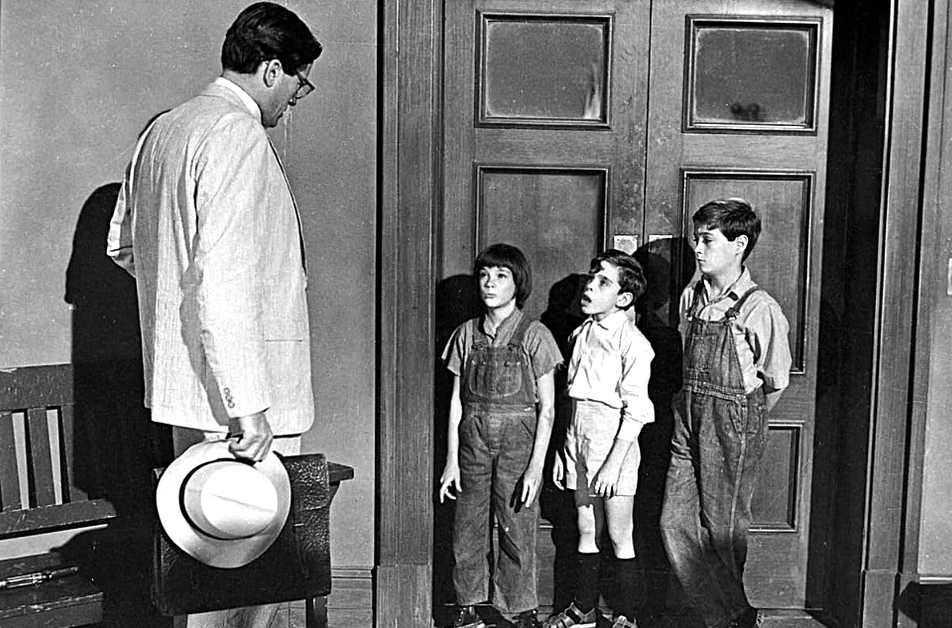
The film is one of the most faithful and beloved literary adaptations ever made, but it trims away much of what makes the novel sharper. Universal opened it on December 25, 1962, and it won Oscars for Gregory Peck as Best Actor and for Horton Foote’s adapted screenplay (AFI Catalog) out of eight nominations, including Best Picture and a supporting nomination for Mary Badham as Scout (AFI Catalog).
A lovely detail: Peck visited Monroeville and recorded Lee reading pages of her novel, which helped him learn Atticus’s accent (AFI Catalog).
Box office: The film had a $2 million production budget and earned $13,129,846 at the domestic box office, about 6.6 times its cost (The Numbers; The Numbers).
What changes from page to screen: The film keeps the Boo Radley mystery, the jail scene, the trial and the ending largely intact, but by my viewing it drops Aunt Alexandra entirely and leaves out Calpurnia’s church, the missionary tea and Miss Gates’s Hitler lesson.
That loss matters: those are exactly the scenes that expose Maycomb’s respectable hypocrisy, so the film tilts the story further toward Atticus as hero.
On stage: Aaron Sorkin’s Broadway adaptation, starring Jeff Daniels as Atticus, officially opened on December 13, 2018 (amNY), and became the highest-grossing American play in Broadway history (BroadwayWorld). In June 2019 it became the first American play to gross over $2 million in a single week (Playbill).
Sorkin said in a CBS interview that he wrote it for a present-day audience rather than pretending decades hadn’t passed since the novel (CBS News). I haven’t seen the production myself, so I can’t judge how it handles Tom and Calpurnia on stage.
Why Does To Kill a Mockingbird Still Matter in 2026?
It still matters because the mechanism that convicts Tom Robinson, a system primed to believe a white accuser over a Black defendant, has measurable echoes today.
The National Registry of Exonerations’ 2022 report found that Black people make up 13.6% of the U.S. population but 53% of the roughly 3,200 exonerations in the Registry as of August 2022 (University of Michigan Law).
On sexual assault specifically, innocent Black people were almost eight times more likely than white people to be falsely convicted of rape, Black sexual assault exonerees spent on average over four years longer in prison before exoneration, and the report names misidentification of Black suspects by white victims as the major cause (National Registry of Exonerations).
I want to be careful here. Tom’s case in the novel is a deliberate lie, not a mistaken identification, so the real-world cause is different. The shared thread is the jury’s readiness to believe one person and doubt another before hearing any evidence. Lee saw that clearly, and the data says it hasn’t gone away.
Five lessons I took from rereading it with that in mind:
1. Evidence can be perfect and still lose. Atticus proves Tom’s innocence physically. The jury doesn’t care. Facts alone don’t fix bias; people have to want to see them.
2. The danger often wears church clothes. The missionary circle shows that cruelty can be served with dewberry tarts and good manners. Watch the polite rooms, not only the angry mobs.
3. One person in the room changes the math. The lone Cunningham holdout kept the jury out for hours. Atticus saw that as a beginning, and it’s a reminder that a single dissenting voice matters.
4. Children notice hypocrisy before adults admit it. Scout catches Miss Gates in a contradiction that the whole school missed. Kids learn morality from what adults do, not what they teach.
5. Protecting someone sometimes means keeping them out of the spotlight. Heck Tate’s choice suggests that justice isn’t always more exposure. For the vulnerable, public attention can itself be a punishment.
Quotable Lines and Passages
“You never really understand a person until you consider things from his point of view, until you climb into his skin and walk around in it.” — Atticus Finch’s moral teaching to Scout, emphasizing empathy.
“Shoot all the bluejays you want, if you can hit ’em, but remember it’s a sin To Kill a Mockingbird.” — This symbolic line underlines the theme of innocence and moral wrongdoing.
“Sometimes it’s better to bend the law a little in special cases.” — Atticus explaining social flexibility and compassion.
“Are we poor, Atticus?” “We are indeed.” — A quietly revealing exchange that shows economic hardship with dignity.
“Until I feared I would lose it, I never loved to read. One does not love breathing.” — Scout reflects on the naturalness and necessity of reading to her.
“I’m little but I’m old.” — Dill, a child full of charisma and imagination.
“He ain’t company, Cal, he’s just a Cunningham—” — Scout’s early social bias is corrected by Calpurnia, teaching respect for all.
“The Cunninghams never took anything they can’t pay back.” — A reflection of pride and ethics despite poverty.
“The Ewells had been the disgrace of Maycomb for three generations.” — Insight into generational poverty, neglect, and societal perception.
“There goes the meanest man ever God blew breath into.” — Calpurnia’s blunt assessment of Mr. Radley, breaking her usual silence on white people.
“Maycomb was an old town, but it was a tired old town when I first knew it.” — The opening description sets the sleepy, slow Southern setting.
“A day was twenty-four hours long but seemed longer.” — Evokes the dragging pace of life in a small town.
“The house was the same, droopy and sick…” — The Radley house as a metaphor for decay, fear, and mystery.
Conclusion: Is To Kill a Mockingbird Worth Reading?
Yes. To Kill a Mockingbird deserves its place, but not as a hero story. Read it as a portrait of a town where nice people let terrible things happen, told by a child who catches them at it.
Its humor and its ending still land, and Scout remains one of the great narrators in American fiction. Its weakness is real: Tom Robinson and Calpurnia deserved more of the page, and readers should notice that absence rather than ignore it.
I’d recommend it to fans of Southern fiction and coming-of-age stories, to anyone who loves a good courtroom drama, to parents reading with teens aged about 13 and up, and to book clubs that like an argument. If the “white savior” debate is why you’re hesitating, read it anyway and read A Lesson Before Dying next.
The two together give you a far fuller picture than either alone.
Final rating: 4.5/5
To Kill a Mockingbird
To Kill a Mockingbird is Harper Lee's 1960 novel about a small Alabama town that convicts an innocent Black man while its children watch from the balcony, and yes, it is still worth reading, though not for the reason most classrooms give. I came back to it expecting a statue of a hero lawyer. Instead I found a book whose sharpest knife points at the polite people of Maycomb: the teacher who hates Hitler but not Jim Crow, the church ladies pitying Africans over coffee while a man dies in a prison yard, and the twelve "reasonable" jurors.
URL: https://www.sopranu.com/to-kill-a-mockingbird-legacy-debate/
Author: Harper Lee
4.5
Pros
- Unforgettable child narrator; tense, well-built trial chapters; ending that ties both storylines together; sharp satire of respectable hypocrisy
Cons
- Black characters lack inner life; slow first half; Atticus close to flawless; frequent racial slurs need context for young readers







