
Last updated on October 18th, 2026 at 09:38 am
Updated 18 October 2026 with the 2022 census figures, post-2024 attack data, the constitutional debate on secularism and incidents reported ahead of this year’s Durga Puja.
Communal violence in Bangladesh keeps eroding the social fabric. More than half a century after independence, the country still lives with ugly forms of communalism and discrimination against religious minorities. When Priya Saha complained to then-US President Donald Trump about minority oppression in 2019, I saw it as a cooked-up story to tarnish the country’s image abroad. Yet I cannot pretend the underlying problem is invented: violence against minorities here still breaks out at the slightest incitement.
The Oxford Learner’s Dictionary defines communalism (in its Indian English sense) as “a strong sense of belonging to a particular community, especially a religious community, that can lead to extreme behaviour or violence towards others”.
The pattern is depressingly familiar. In 2012, Muslim zealots incited by a Facebook post attacked and burned Buddhist temples and homes in Ramu. In March 2021, after a Hindu youth in Sunamganj’s Shalla upazila allegedly criticised Hefazat-e-Islam leader Mamunul Haque on Facebook, a mob attacked Noagaon village and damaged 89 houses and eight temples. On 15 July 2022, a mob vandalised a temple, shops and homes of the Hindu community in Dighalia, Lohagara upazila of Narail, over a Facebook post attributed to a Hindu college student, Akash Saha. Police arrested the student under a case for “belittling Islam” and later arrested several attackers, after a case was filed against about 250 unnamed people.
The state of communal violence in Bangladesh
How do we know whether the religious majority sustains a communal sense? Start with who we are. The 2022 Population and Housing Census put Bangladesh’s population at 169.8 million. According to the census, Muslims rose from 90.39% to 91.04% of the population since 2011, while Hindus fell from 8.54% to 7.95%, Buddhists from 0.62% to 0.61% and Christians from 0.31% to 0.30%. The census report itself named out-migration and lower fertility among Hindus as the two reasons for the decline. The same census recorded literacy (age seven and above) at 74.80%, up from 51.77% in 2011. Bangladesh has made visible progress in many sectors.
But on communal harmony, religious freedom and freedom of speech, the record is still retrogressive. The long view is grim: the rights group Ain o Salish Kendra (ASK) counted 3,679 attacks on the Hindu community between January 2013 and September 2021, including vandalism and arson of 559 houses and 442 shops and businesses.
Cumilla 2021: the Durga Puja attacks
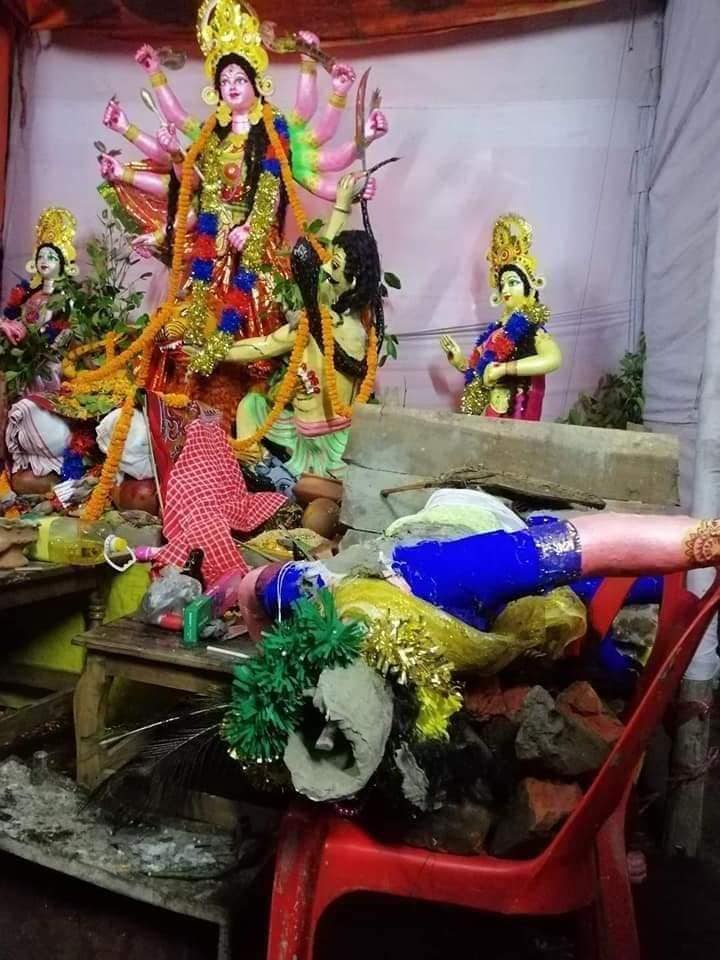
The mayhem of October 2021 followed the discovery of a copy of the Holy Quran at a Durga Puja pavilion at Nanuar Dighir Par in Cumilla city on 13 October. A photograph spread on social media, and with it the rumour that Hindus had desecrated the Quran. Mobs attacked puja venues and temples across the country. At least four people died in Chandpur when police fired on a mob attacking puja venues, and more deaths followed elsewhere. In Rangpur’s Pirganj, a mob angered by an allegedly blasphemous Facebook post torched Hindu homes in Majhipara; the fire service counted 29 houses, two kitchens, two animal sheds and 20 haystacks gutted, though other reports at the time gave different counts.
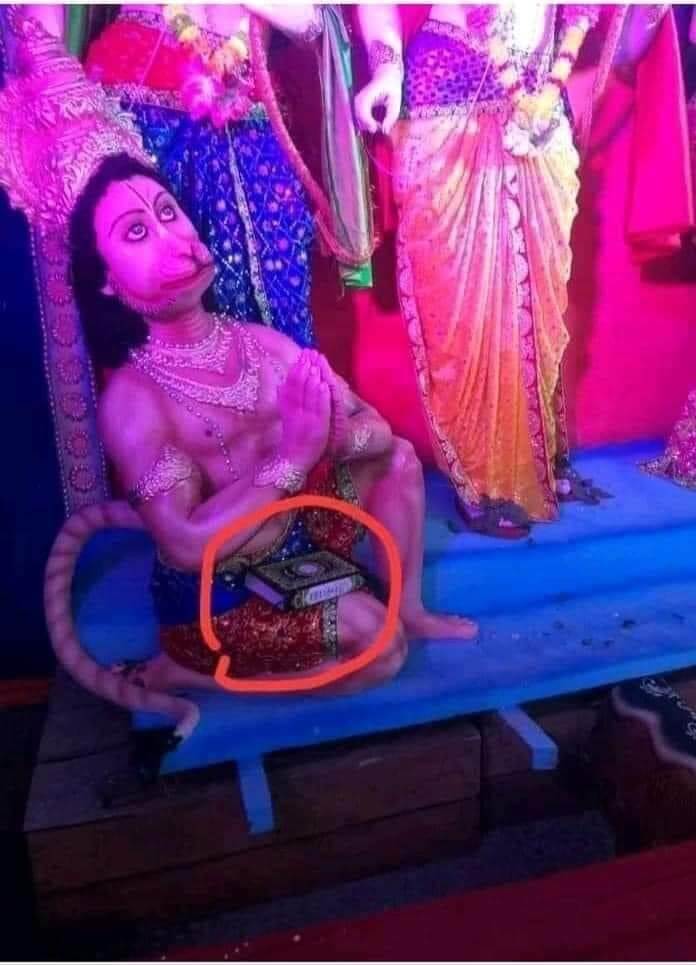
Then came the twist that should have shamed all of us. Police identified the man who placed the Quran there from CCTV footage, and on 21 October 2021 they arrested Iqbal Hossain, a 35-year-old Muslim man, in Cox’s Bazar. The footage reportedly showed him taking the Quran from a nearby mosque, entering the puja venue with it and leaving without it. The then home minister suggested he may have acted on others’ instructions to stoke communal tension. Nine months later, Hindu leaders were still complaining that police had not filed a charge sheet against him.
Think about what that means. Whole communities were punished for an act that, according to the police’s own investigation, a Muslim man committed. Instead of verifying the photograph and finding the actual culprit, many in the majority vented their anger on the Hindu community across the country. In these moments the commonplace accusation is always the same: someone from a minority, or a secular intellectual, has hurt majority religious sentiment through a post, a comment, an opinion or a desecrated object. The accusation itself becomes a licence for violence.
Communal violence in Bangladesh after August 2024
When I first wrote this piece, I could not have imagined how much worse things would get. After Sheikh Hasina’s government fell in August 2024, the Bangladesh Hindu Buddhist Christian Unity Council reported 2,010 incidents between 4 and 20 August 2024. The interim government dismissed that report as false and exaggerated. A police review later classified 1,234 incidents as political and 20 as communal, and found 161 claims false.
That gap between “political” and “communal” became the central argument of the next two years. For 2025, the Unity Council claimed at least 522 communal incidents. On 19 January 2026, the Chief Adviser’s press wing said police had recorded 645 incidents involving minorities in 2025, finding communal elements in 71. ASK, which compiles its figures from newspaper reports, documented 42 attacks on the Hindu community in 2025, and found that at least seven Hindus were among the 197 people killed in mob violence that year. The numbers differ because the methods differ. But I find it telling that so much official energy went into proving that attacks were “political” rather than into making sure they stopped. A Hindu family whose home is burned because it is assumed to support a particular party is still a Hindu family whose home is burned.
Two cases capture the period. On 25 November 2024, Hindu monk and former ISKCON leader Chinmoy Krishna Das was arrested in a sedition case over the alleged desecration of the national flag; the next day, lawyer Saiful Islam was killed in a clash on the Chattogram court premises during his bail hearing. In August 2026, the High Court granted Das bail in two cases, but he remained in custody over four other pending cases, including murder and treason.
The second case is harder to write about. On 18 December 2025, a Hindu garment worker named Dipu Chandra Das was beaten to death by a mob in Bhaluka, Mymensingh, over an alleged remark about the Prophet; his body was tied to a tree and set on fire. People questioned afterwards could not say where or how he had supposedly insulted Islam. The interim government condemned the killing and the Rapid Action Battalion arrested seven suspects. An accusation, a crowd, a killing: this is what communal sentiment does when nobody stands in its way.
2026: a new government, the same fear
Bangladesh voted on 12 February 2026. The BNP-led alliance won 212 seats, and Tarique Rahman was sworn in as prime minister on 17 February. Some minority leaders praised the election as fair. Yet the documentation has not stopped. The Human Rights Congress for Bangladesh Minorities (HRCBM), an advocacy group, recorded 824 incidents affecting minorities across 63 districts in January–June 2026, and a further 498 between July and September 2026. These are an advocacy group’s figures and have not, to my knowledge, been independently verified.
And as I update this piece during Durga Puja 2026, the old ritual repeats. On 15 October, the Bangladesh Puja Udjapan Parishad reported 34 incidents of idol vandalism and temple attacks during preparations, with arrests in 11 cases, in districts including Sylhet, Rajbari, Panchagarh, Netrokona and Tangail. Its general secretary said that security cannot be limited to the five days of Puja. Around 10,000 Border Guard Bangladesh personnel were to be deployed for the festival. The Parishad also acknowledged that most cases from the previous year had moved forward, with charge sheets filed. That is progress. But a festival that needs border guards is not a festival celebrated in freedom.
Communalism and communal violence
To measure our own conviction toward communalism, we must look at a few habits we treat as normal. First, the mass instigates communal violence by sharing falsified, unverified or rumour-based information on social media or in the community. We pour out condemnation and hatred and accept the claim instantly, without rational consideration. In this sense social media does more harm than good to communal cohesion; many attacks on secular thinkers and minority communities have been mobilised through Facebook. Cumilla, Pirganj, Shalla, Narail and Bhaluka all began with a post, a photo or an accusation.
Then, when bloodshed follows clashes between state forces and religious protesters, we call the dead “Shahid”. Instead of condemning such communal actions, we promise those deaths heaven, and so encourage the next mob to act in the name of Allah or jihad. The Quran says in chapter 3, verse 169: “And never think of those who have been killed in the cause of Allah as dead. Rather, they are alive with their Lord, receiving provision.” People apply ‘Shahid’ indiscriminately to deaths in communal violence or in political campaigns for theocracy. In the majority, there is hardly anyone to discourage such a stand against minorities.
Again and again communal sentiment flares up, and again and again violence erupts, especially against Hindus. After independence, secular-minded people expected communalism to fade as education, science and civil society grew. What we actually got is a more one-eyed, partial and communal majority, and a civil society that is as good as dead. Literacy has climbed to nearly three-quarters of the population. Why is education not making people more open-minded?
Whatever the way a Quran ends up at a puja venue, and whoever the culprit may be, that does not give us the right to terrorise the whole Hindu community and make them insecure in a country for which people of every faith fought in 1971. It was a secular, non-sectarian ethos that united them for a country with freedom of space, speech, living and liking.
Majoritarianism and the secularism debate
The religious majority sits in the driving seat, and Islam is the state religion under the Constitution. In a state where one religion enjoys national privilege, the minorities develop a sense of discrimination and the majority a sense of majoritarianism. The political theorist Nahshon Perez, in his article “Hegemonic Religions, Majoritarianism, and the Legitimate Limits of Governmental Religious Bias” (Religions, 2020), examines what he calls the religious majoritarian approach: the claim that majorities may shape religion–state institutions around the majority religion, so long as minority rights are upheld. The catch, of course, lies in that last condition.
That debate is no longer theoretical for us. In January 2025, the Constitution Reform Commission led by Professor Ali Riaz recommended removing secularism, along with nationalism and socialism, from the constitution’s fundamental principles, replacing them with equality, human dignity, social justice, pluralism and democracy. The Unity Council denounced the proposal as an assault on Bangladesh’s founding values. In the February 2026 referendum held alongside the election, voters approved implementing the July National Charter, with the revised official count showing 47,225,980 “Yes” votes against 21,960,231 “No”. As of this update, I have not been able to confirm whether parliament has actually removed secularism from the constitution, so I will not claim that it has.
Pluralism is a noble word. But respect for pluralism without a firm separation of religion from state tells a mob nothing about where the line is. Secularism, properly understood, means conducting public affairs on the basis of civil rather than religious law, so that no citizen’s rights depend on their faith. In Bangladesh and India, the communal mind has twisted secularism into a stand against religion. Fanatics degrade the idea precisely because it gives people of all faiths an equal social and rational footing. That perversion will end only when we separate religion from state affairs successfully.
We are communal, partly as a nation, because we have hardly ever raised the majority’s voice against the vandalism of minority houses and temples or the grabbing of their land, and because we justify such acts as retribution for what happens to Muslims in India or Myanmar.
Nothing except religious identity seems to matter. Wherever you go and whatever you do, your faith is asked first, and it decides your honour, acceptance or rejection. A religion decides whether one is called Malaun (a slur used against Hindus, meaning “accursed”) or blessed, not a human being.
We are communal because we are not egalitarian. As a majority, we take precedence over minorities and display communal supremacy in almost every corner of civic and social life. We instinctively believe this country belongs to one religion, and that others have no right to coexist socially or nationally. But a majority occupying a country does not make the country theirs alone. Democracy and humanistic morality do not work that way.
We cannot force others to respect our religion; respect must come from within. The holiness of a holy book does not depend on where it is placed, but on how one treats it. Does the presence of the Gita disturb the holiness of a mosque? Does the Quran lose its holiness when a Hindu touches it? It is worth remembering that the first complete Bengali translation of the Quran was the work of Girish Chandra Sen, a Brahmo missionary, published between 1881 and 1886, whom Bengali Muslims came to call “Bhai Girish Chandra”. Is that translation unholy? We must not be so irrational. Exclusivism is not the answer; humanity is.
We often hear “হিন্দুদের মাঝেও ভালো মানুষ আছে, খৃষ্টানদের মাঝেও ভালো মানুষ আছে”, “there are good people among Hindus and Christians too”. It implies that a Hindu or Christian is good only if they show deference to the majority religion. We must accept and respect others’ faith unconditionally. Isn’t this exactly what Buddhist majorities in Sri Lanka or Myanmar, a Hindu majority in India and Christian majorities in Europe say about Muslim minorities? We must be more secular.
If the majority religion takes precedence in social and national affairs and shapes state decisions, minorities will feel discriminated against, and the tyranny of the majority will seep into every level of society. The sociologist Louis Wirth defined a minority group as people singled out for differential and unequal treatment because of their physical or cultural characteristics, who therefore regard themselves as objects of collective discrimination. When minorities feel threatened, they draw together into associations to protect themselves and their cultural identity. That is not separatism; it is self-defence against a majority that has not made them feel safe.
The minority rights
The UN human rights office’s guide Minority Rights: International Standards and Guidance for Implementation (2010) sets out the rights of persons belonging to minorities. Three stand out for our context:
- The right to enjoy their own culture, to profess and practise their own religion, and to use their own language, in private and in public.
- The right to participate effectively in cultural, religious, social, economic and public life.
- The right to participate effectively in decisions that affect them at the national and regional levels.
On that third point, minority leaders complained in 2025 that no minority representative was included in any of the reform commissions. The Puja Parishad’s demands this year include a minority protection law and a National Minority Commission. Neither demand is radical. Both are overdue.
Summary: how are we communal?
We are communal when we think a Muslim becomes a Hindu just by visiting a temple, as if a cowshed could turn a human into a cow. Can a Hindu become a Muslim just by visiting a mosque?
Why do minorities still have to celebrate their festivals under police and border-guard protection? Do we ever ask that question? Are we not fostering a discriminatory ideology by accepting it as normal? Are we drifting toward a minority-free state?
In Casablanca, the Vichy police captain Renault tells the Nazi major Strasser that he is trying to cooperate, but “we cannot regulate the feelings of our people.” Our law enforcement agencies are in a similar bind. They can enforce the law, but they cannot regulate the religious sentiment of the mass. That work belongs to us. People must realise that everyone has an equal right to life and culture, and that other faiths have the same right to practise, preach and celebrate.
A fabricated incident must never be allowed to jeopardise the peace of an entire community. We have to remember that the way we treat our minorities here shapes the moral case we can make for Muslim minorities elsewhere. If the victim is a Hindu here today, it can be a Muslim brother in India or somewhere else tomorrow.







