
Last updated on January 13th, 2026 at 05:12 am
Ever wonder why you feel like an outsider in your own life? Like you’re watching a movie of yourself, unsure of the plot or your role in it? Reading Girl Interrupted felt like someone had finally transcribed the silent, chaotic script playing in my own head during my most lost years.
Girl Interrupted is a piercing memoir that argues the line between “sane” and “insane” is not a solid wall but a blurry, shifting borderland, often policed more by societal expectation and convenience than by absolute truth.
Kaysen’s firsthand account is supported by her inclusion of actual hospital documents—her diagnosis, nurse’s notes, and intake forms—which she juxtaposes with her personal narrative, creating a powerful case study that challenges psychiatric labels. Research, such as the continued debates around the subjectivity of the Borderline Personality Disorder diagnosis (more commonly assigned to women, as Kaysen notes), echoes her central critique.
Girl Interrupted is Bbest for: Readers interested in mental health narratives, feminist critiques of psychiatry, memoirs with sharp wit, and anyone who has ever felt “interrupted” in their own life’s path.
Not for: Readers seeking a straightforward, plot-driven story or a definitive medical treatise on mental illness. It is also intensely personal and claustrophobic at times.
Table of Contents
1. Introduction
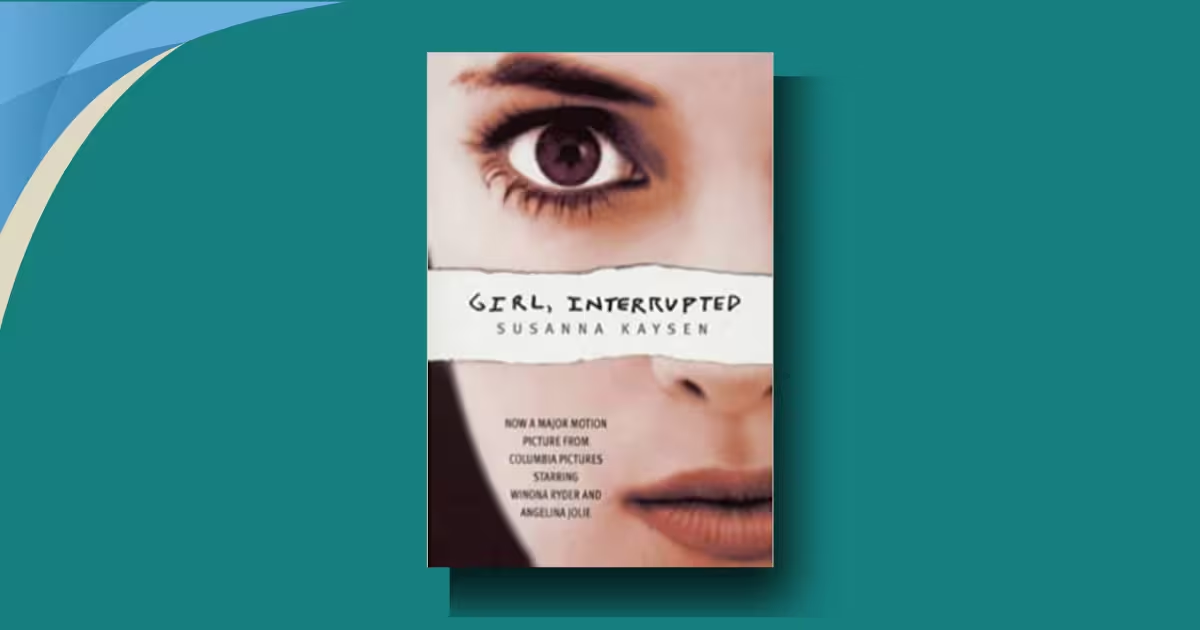
Girl Interrupted is a memoir written by Susanna Kaysen, published in 1993. It recounts her nearly two-year stay at the McLean Hospital, a prestigious psychiatric institution in Belmont, Massachusetts, beginning in 1967 when she was eighteen years old.
The title is taken from the Johannes Vermeer painting Girl Interrupted at Her Music, which becomes a central metaphor for Kaysen’s experience of a youth derailed and scrutinized.
The book quickly became a landmark in the genre of mental health memoir, praised for its unsentimental clarity and dark humor.
It was adapted into a major motion picture in 1999 starring Winona Ryder and Angelina Jolie, which brought the story to a wider, though significantly altered, audience. Kaysen’s work stands out for its literary quality and its incisive interrogation of the very systems meant to “treat” her.
2. Background
The late 1960s, when Kaysen was hospitalized, was a period of profound social upheaval. The counterculture movement challenged every established norm, from politics to personal identity. Yet, within the walls of McLean, a different kind of rebellion was happening—a silent, internal one.
The hospital itself was renowned, “as renowned for its famous clientele—Sylvia Plath, Robert Lowell, James Taylor, and Ray Charles—as for its progressive methods of treating those who could afford its sanctuary” (Page 2).
This historical context is crucial. Kaysen entered the system as a young woman who rejected the traditional paths laid out for her—college, a conventional career—a rebellion that itself became pathological.
Her memoir examines the clash between a society in chaotic flux and the rigid, often arbitrary, frameworks used to categorize and contain non-conformity, especially in young women. The “progressive methods” of McLean still involved seclusion, cold wraps, electroshock therapy, and a barrage of powerful drugs like Thorazine, painting a complex picture of treatment in that era.
3. Girl Interrupted Summary
The memoir is not a linear narrative but a series of vignettes, reflections, and reproduced hospital documents.
It begins with Kaysen’s admission. After a brief, twenty-minute interview with a psychiatrist she’d never met before, she is put in a taxi and sent to McLean.
The diagnosis: “depressive reaction” and “borderline personality.” She signs herself in voluntarily, a choice she later frames as a form of profound negation, “a very big No—the biggest No this side of suicide” (Page 36).
Life on the ward, “South Belknap Two,” is meticulously detailed. We learn the topography of this “parallel universe”: the double-locked doors, the blackboard where patients sign out their destinations, the terrible vinyl-chaired living room, and the favored TV room on the “lunatic side” of the hall. The rhythm of the ward is set by the relentless “checks”—staff looking in on patients every five, fifteen, or thirty minutes. Click, swish, “Checks,” swish, click. “It was our metronome, our pulse. It was our lives measured out in doses slightly larger than those famous coffee spoons” (Page 46).
Kaysen introduces us to the constellation of young women who become her world. Georgina, her roommate, is a fellow “borderline” whose reality is slippery.
Lisa, a charismatic sociopath, is the ward’s anarchic spirit, constantly escaping and being dragged back, her defiance slowly eroded by medication.
Polly, who set herself on fire as a teenager, is shrouded in scar tissue and a saintly kindness that eventually shatters into screams of “My face! My face!” (Page 16). Daisy, whose ritualistic consumption of laxatives and chicken in her single room culminates in her leaving the hospital for an apartment and, soon after, suicide.
The narrative weaves between these portraits, Kaysen’s own episodes (like her terror that she has no bones inside her body), and philosophical musings on insanity.
She distinguishes between the “viscosity” of depression—where time is thick and slow—and the “velocity” of mania—where a single thought explodes into a fractal cascade of associations (Page 62-64). She explores the power dynamics with the staff, from the trusted, no-nonsense head nurse Valerie to the horrifying evening nurse Mrs. McWeeney, who seems as unstable as the patients.
A pivotal moment comes with the arrival of Alice Calais, a seemingly timid girl who later explodes and is transferred to maximum security.
Visiting her, Kaysen sees a harrowing future: cells with barred windows, patients smeared in their own waste. Alice’s fate serves as a stark warning of what lies “farther on” down the road of mental illness. Kaysen’s own therapy, first with the clueless Dr. Wick and then with an analyst named Melvin, feels largely futile, a game of cryptic non-communication.
The memoir’s climax is not a dramatic escape but a gradual, bureaucratic transition. After a marriage proposal—a socially acceptable exit strategy in 1968—Kaysen is discharged on “visit” status.
The book ends with documents: a psychiatrist’s letter urging the phone company to install her line, another to the registry of motor vehicles. These mundane papers underscore the struggle to re-enter a world that now views her as permanently “tainted.”
In a final, powerful coda, she reflects on the Vermeer painting, seeing in the girl’s interrupted moment a parallel to her own arrested youth, a life snatched and fixed, forever defined by its interruption.
4. Girl Interrupted Analysis
4.1. Girl Interrupted Characters
The characters are not just patients; they are archetypes of suffering and survival, their diagnoses often reflecting a singular, overwhelming response to pain.
Susanna Kaysen is our guide, a wry, observant, and deeply intelligent narrator. Her “insanity” often manifests as a hyper-clarity, a peeling away of the “covering or shell that works to protect us” from the absurd and terrifying fluidity of reality (Page 35).
Her journey is less about recovery in a traditional sense and more about a painful negotiation: learning to live within a system while secretly questioning its fundamental premises.
Her character development is her evolving understanding that the hospital was both a prison and a refuge, a place that stripped her bare but also protected her from a world for which she felt utterly unfit.
Lisa is the book’s volatile heart. She represents pure, unadulterated rebellion against the system’s constraints.
Her razor-sharp wit, escapes, and relentless challenging of authority make her a hero to the other girls. However, her tragic arc shows the system’s crushing power. After a final escape attempt, she returns broken, “zonked” on medication, watching TV silently—a fate worse than seclusion. Her later appearance, with a child and a life of suburban normalcy, is shocking.
When she reveals the stretched skin on her stomach—“Kids… That’s what happens” (Page 129)—it’s a complex metaphor: motherhood has physically and socially tethered the once-untamable Lisa, a different, perhaps more permanent, form of containment.
Polly is living symbolism. Her self-immolation attempted to burn away an unseen torment, leaving her in a “slipcovered” body of scar tissue.
She becomes the ward’s angel of mercy, until she can no longer bear the prison of her own flesh. Her breakdown is a devastating reminder that internal wounds, even when immolated, can still fester.
Daisy’s pathology is a grotesque ritual of control—over her body (via laxatives and chicken) and her environment (her coveted apartment with its sign, “If you lived here, you’d be home now”). Her suicide after achieving this “freedom” suggests that for some, the imagined escape can never match the reality, and the internal chaos cannot be housed.
4.2. Girl Interrupted Themes and Symbolism
The Borderline: The central theme is the permeability of the border between sanity and insanity. Kaysen argues we all inhabit this borderline at times.
The psychiatric diagnosis of Borderline Personality Disorder becomes a literal and metaphorical label for this state of in-betweenness. She dissects the diagnosis itself in a later chapter, critiquing its vagueness and its gendered application.
Institutionalization as a Parallel Universe: The ward is a world with its own laws, language, and logic. “In the parallel universe the laws of physics are suspended… Time, too, is different.
It may run in circles, flow backward, skip about from now to then” (Page 7). This framing challenges the reader: which world is more “real” or rational?
Interruption vs. Stasis: The Vermeer painting symbolizes the violent act of being frozen in time, defined by a moment of pathology. Kaysen’s life, her music, was interrupted.
Yet the hospital also creates a bizarre, timeless stasis—a world of endless “checks” and cyclical routines where progress is measured in privilege levels, not personal growth.
The Gaze and Objectification: The patients are constantly watched—through the chicken-wire windows of seclusion rooms, during supervised shaving, by the blackboard.
This medical gaze seeks to categorize and control. Kaysen reverses this gaze, turning her sharp observation onto the doctors, nurses, and the system itself, reclaiming a sense of agency through narration.
Symbols: The security screens on the windows represent the illusion of safety and the permanent barrier between the patients and the world.
The tunnels under the hospital symbolize the hidden, interconnected workings of the institution (and perhaps the mind itself)—a warm, mapped labyrinth that is preferable to the chaotic world above. Plastic utensils (“Sharps”) embody the infantilization and removal of potential, even the potential for self-harm, rendering patients powerless in mundane, humiliating ways.
5. Evaluation
1. Strengths
Kaysen’s prose is the book’s greatest strength: crisp, darkly funny, and devastatingly perceptive. Her description of mental states—like the “velocity” of a racing thought—is some of the most lucid writing on the subject I’ve ever encountered.
The structure, blending memoir with facsimile documents, is brilliant. It forces the reader to confront the cold, bureaucratic reality of her case alongside the hot, subjective truth of her experience, creating a powerful dialectic.
The character sketches are unforgettable, each girl etched with empathy and brutal honesty.
2. Weaknesses
The fragmented, vignette-style narrative, while artistically compelling, can feel disjointed. Readers craving a strong, driving plot may find it meandering.
Some of the philosophical musings, though insightful, occasionally drift into abstraction, momentarily pulling away from the emotional core of the ward.
The focus is almost exclusively interior and institutional; we get very little sense of the outside world or the other lives she might have led, which, while perhaps intentional, can feel claustrophobic.
3. Impact
The book resonated intellectually as a fierce critique of psychiatric labeling, and emotionally as a profound portrait of young womanhood in crisis.
It didn’t make me feel “better” about mental illness; it made me feel seen in moments of private strangeness. It challenges the reader’s own comfort with these labels.
When Kaysen asks, “Was everybody seeing this stuff and acting as though they weren’t?” (Page 35), it’s a haunting question that lingers long after the last page.
4. Comparison with Similar Works
It belongs on the shelf with Sylvia Plath’s The Bell Jar for its depiction of a young woman’s crack-up and critique of 1950s/60s femininity.
It shares the institutional exposé quality of Ken Kesey’s One Flew Over the Cuckoo’s Nest, but from a patient’s perspective that is introspective rather than heroic. Compared to more contemporary memoirs like Kay Redfield Jamison’s An Unquiet Mind, Kaysen is less focused on the medical model and more on the existential and social experience of being deemed “mad.”
5. Adaptation
The 1999 film, directed by James Mangold, is a significant departure. It creates a more conventional narrative, centering on a fictionalized friendship between Susanna (Winona Ryder) and Lisa (Angelina Jolie, who won an Oscar).
The film amplifies plot, romance, and a clearer “recovery” arc. While powerful and well-acted, it loses the book’s essential ambiguity, philosophical depth, and fragmented, document-based structure.
The movie made the story more palatable for a mass audience but softened its most challenging and innovative edges. It grossed approximately $48 million worldwide against a $40 million budget—a modest commercial performance that has been overshadowed by its enduring cult and critical status.
6. Personal Insight & Contemporary Relevance
Reading Girl Interrupted today, amidst a global conversation about mental health that is both more open and more medicalized, is striking. Kaysen’s critique feels urgently relevant.
We now openly discuss serotonin and CBT, but the pathologizing of young women’s pain—particularly anger, sadness, and rejection of norms—persists. The rise of TikTok diagnoses and the casual use of terms like “borderline” or “narcissist” in everyday language echo the labeling Kaysen feared, where complex human experiences are reduced to tidy, often stigmatizing, categories.
A 2023 study in the Journal of Personality Disorders continues to note the gender disparity in BPD diagnosis, with women diagnosed at rates up to 3 times higher than men, a statistic that underscores Kaysen’s suspicion that the diagnosis can be a tool for social control.
Her memoir teaches a crucial lesson: to look beyond the chart and see the person. In an age where our inner lives are often filtered through the prism of clinical terminology, Kaysen reminds us that the story—messy, contradictory, and deeply human—is what truly matters.
It’s a call for narrative over diagnosis, a principle that remains vital in therapy, advocacy, and simply understanding each other. For a modern exploration of these themes, the anthology The Collected Schizophrenias by Esmé Weijun Wang offers a brilliant, intersectional continuation of this conversation.
7. Girl Interrupted Quotes
- “Insanity comes in two basic varieties: slow and fast. I’m not talking about onset or duration. I mean the quality of the insanity, the day-to-day business of being nuts.” (Page 62)
- “Viscosity and velocity are opposites, yet they can look the same. Viscosity causes the stillness of disinclination; velocity causes the stillness of fascination.” (Page 63)
- “I wasn’t a danger to society. Was I a danger to myself? The fifty aspirin—but I’ve explained them. They were metaphorical. I wanted to get rid of a certain aspect of my character.” (Page 34)
- “After all, I was eighteen, it was spring, and I was behind bars.” (Page 94)
- “Lunatics are similar to designated hitters. Often an entire family is crazy, but since an entire family can’t go into the hospital, one person is designated as crazy and goes inside.” (Page 78)
- “I have to admit, though, that I knew I wasn’t mad… So the opportunity to be incarcerated was just too good to resist. It was a very big No—the biggest No this side of suicide.” (Page 36)
- “What I felt was complete desolation. Desolation, despair, and depression.” (Page 124)
8. Conclusion
Girl Interrupted is a masterpiece of the memoir form—a book that is as intellectually rigorous as it is emotionally raw. It refuses easy answers or comforting narratives of recovery. Instead, it offers a relentless, beautifully written examination of a mind and a system in conflict.
I would recommend this book unequivocally to readers of literary nonfiction, to those interested in the history of psychiatry, and to anyone who has ever felt on the outside looking in.
Its power lies not in providing solace, but in providing company. Kaysen assures us that the bewildering landscape of the “parallel universe” is one she has mapped, and in reading her account, we feel less alone in our own moments of quiet strangeness.
It is a significant, enduring work because it dares to question the very definitions of illness and health, and in doing so, affirms the complexity of the human spirit.







