
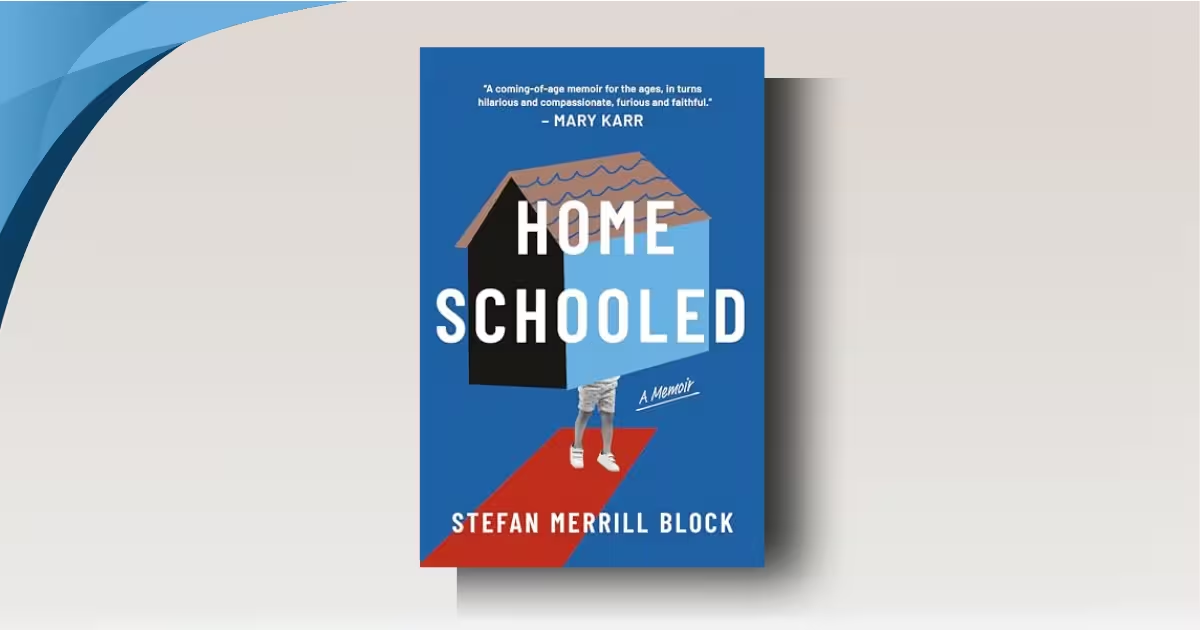
Do you ever feel trapped in the rigid routines of traditional schooling, wondering if there’s a better way to nurture a child’s curiosity and spirit? Stefan Merrill Block’s Homeschooled: A Memoir dives deep into that question, revealing how one family’s bold choice reshaped a young life in ways both liberating and heartbreaking.
Homeschooled is best for parents considering homeschooling, educators interested in alternative learning models, or anyone who’s navigated family mental health challenges—it’s a raw, insightful look that could spark meaningful discussions on child development.
However, it’s not for readers seeking a feel-good, inspirational tale of homeschooling success; if you’re looking for practical how-to guides or avoid triggers around depression, isolation, and suicide attempts, you might bounce early due to its heavy emotional weight.
Table of Contents
1. Introduction
Homeschooled: A Memoir is a poignant coming-of-age story penned by Stefan Merrill Block, published on October 1, 2024, by Hanover Square Press, an imprint of Harlequin. The book spans 209 pages in its hardcover edition, blending humor, fury, and compassion as praised by memoirist Mary Karr on the cover.
As a memoir in the non-fiction genre, Homeschooled explores themes of education, family dynamics, mental illness, and adolescence, set against the backdrop of 1990s suburban Texas.
Stefan Merrill Block, born in 1982, brings credibility as an acclaimed novelist with prior works like The Story of Forgetting (2008), which dealt with Alzheimer’s, and Oliver Loving (2018), inspired by a school shooting.
His background in creative writing from Washington University in St. Louis and personal experiences with family mental health issues—his grandfather was institutionalized—infuse the narrative with authentic introspection.
Block has shared in interviews, such as one with The New York Times in 2024, that this memoir stems from his own homeschooling years, offering a rare insider’s view on unregulated education in America.
Purpose: The central thesis of Homeschooled argues that while homeschooling can free children from the soul-crushing conformity of public schools, it risks profound isolation and harm when intertwined with parental mental instability.
Block illustrates this through his story, emphasizing how a mother’s fierce love can become a double-edged sword, ultimately advocating for balanced oversight in alternative education.
As he reflects in the Author’s Note, this isn’t just a personal catharsis but a call to examine how society fails vulnerable families.
2. Background
To fully appreciate Homeschooled, it’s essential to understand the rise of homeschooling in the U.S. during the 1990s, a period when the movement exploded from fringe to mainstream.
According to the National Center for Education Statistics (NCES), homeschooling numbers grew from about 850,000 students in 1999 to over 1.7 million by 2011, but in the early ’90s, it was even more unregulated in states like Texas.
A landmark 1994 Texas Supreme Court ruling in Leeper v. Arlington Independent School District affirmed homeschooling as a private school equivalent, with no curriculum requirements or testing—essentially, parents could declare their home a “school” without oversight.
This freedom appealed to diverse groups, from religious conservatives (about 75% of homeschoolers per a 1997 HSLDA study) to progressive unschoolers, but it also masked risks, as seen in abuse cases reported by NPR in 2023 retrospectives.
Block’s story unfolds in Plano, Texas, a booming suburb north of Dallas that symbolized the era’s economic optimism. In the 1990s, Plano’s population surged 128% to over 285,000 by 2000 (U.S. Census data), fueled by tech jobs at companies like Texas Instruments.
Yet, beneath the shiny new homes and pools, it grappled with teen suicides—earning the grim nickname “Suicide Capital of America” in the late ’80s, with 11 deaths between 1983-1989, as detailed in a 1994 Texas Monthly article. This context mirrors Block’s themes of hidden despair in seemingly perfect settings.
From my perspective in Bangladesh, where formal education is often rigid and exam-focused (with over 80% of students in public systems per UNESCO 2022 stats), Block’s memoir resonates as a cautionary tale on the perils of unchecked alternatives, much like debates here on madrasa vs. secular schooling.
3. Homeschooled by Stefan Merrill Block summary
Homeschooled: A Memoir is a poignant and often harrowing coming-of-age story that chronicles the author’s isolation and complex relationship with his mother after being pulled out of public school in fourth grade.
The narrative traces Stefan’s journey from a shy, imaginative boy in Plano, Texas, to a deeply lonely adolescent struggling to re-enter a world from which he has been sequestered for years.
Part One: The Descent into Isolation
The memoir opens with a stark scene of pre-adolescent despair: ten-year-old Stefan deliberately throws himself halfway off a cliff near his home, not to die, but to injure himself badly enough to win back his mother’s affection and attention after a fight.
This act establishes the central dynamic of his life: his emotional well-being is inextricably tied to his mother’s moods, and he has learned that his unhappiness is a powerful tool to secure her love.
Stefan’s mother, Deborah, is portrayed as a brilliant, charismatic, but deeply unstable woman. Since the family’s move from idyllic Indianapolis to sterile, sprawling Plano, Texas, her demeanor has darkened.
She is filled with conspiracy theories (e.g., white people photosynthesize, modern medicine is harmful) and a simmering rage often directed at her family. She sees the public school system, particularly Stefan’s fourth-grade teacher Mrs. Malek, as a soul-crushing machine designed to stamp out creativity.
Stefan’s complaints about school—some genuine, some exaggerated for effect—become the catalyst for her “solution”: homeschooling.
Despite misgivings from the school principal and his own internal fears, Stefan agrees, partly to soothe his mother and partly to escape a school where he feels like an outsider.
He is assured it will be temporary, just for the spring semester. Thus begins what he calls “the experiment.”
Initially, homeschooling is a delightful escape. It feels like a perpetual summer vacation filled with museum trips, movies, and creative projects. His mother’s pedagogical philosophy, heavily influenced by libertarian educator John Holt, rejects structured curriculum in favor of “following passions.”
Math is the only formal subject; the rest of the day is for Stefan to read, write stories, and draw, turning his interests into “projects” to impress his mother.
She fervently believes she is cultivating a hidden genius, the “Leonardo da Vinci” of his generation, and that she is saving him from a system that would destroy his specialness.
This idyllic bubble is fragile. Stefan’s loneliness for peer interaction grows. His only friend, Noah Polk, becomes a lifeline, but their friendship sours under the strain of Stefan’s isolation and competitiveness, and ends when Noah’s mother is asked to pay a babysitting fee.
Stefan’s attempts to articulate his need for socialization are met with his mother’s deflection or anger; she frames other children as “bad influences” who would make him “mediocre.”
The family’s summer trip to their ancestral lake house in New Hampshire highlights the tensions. Stefan’s beloved Nana is beginning to show signs of dementia, which triggers his mother’s own unresolved childhood trauma.
In a pivotal moment in a kayak in “The Haunted Place,” a marsh where she was once quarantined as a child for a suspected polio scare, his mother shares stories of family misfortune and her deep distrust of institutions.
When Stefan tries to broach returning to school, she persuades him to stay home “just one more semester.” Trapped both physically in the boat and emotionally by her vulnerability, he agrees, setting a pattern of deferred departure that will last for years.
Part Two: The Cult of Two
Back in Texas, what was meant to be a single semester stretches into years. Stefan enters a surreal and increasingly confined existence. His mother’s theories grow more eccentric and intrusive.
Convinced his toddler blond hair symbolizes their lost happiness, she subjects him to painful peroxide treatments in the pool, turning his hair a fluorescent orange.
In a bizarre attempt to correct his poor handwriting (which she blames on him not crawling enough as a baby), she forces Stefan and his reluctant older brother Aaron to crawl on all fours around the house for months, causing physical pain and humiliation.
The family dynamic fractures. Aaron and their father, a kind but overworked psychologist, exist in a separate sphere—”linear learners” and “technicals,” in his mother’s taxonomy—while Stefan and his mother are the sensitive “global learners” and “creatives.” Stefan becomes his mother’s sole emotional partner, her “best friend.”
He internalizes the belief that their bond is sacred and that the outside world is threatening and corrupt.
This isolation is briefly punctuated by visits from his grandmothers. His sweet, fading Nana offers genuine companionship and a glimpse of unconditional love, leaving him with a Goethe quote: “Be bold, and mighty forces will come to your aid.” In stark contrast, his glamorous, blunt Grandma Mimi immediately identifies the homeschooling as “craziness” and confronts his mother.
Stefan, in a subconscious act of rebellion, behaves poorly during her visit, prompting a confrontation that ends with his mother shoving him, causing him to hit his head.
This first instance of physical violence is a watershed, yet Stefan apologizes, cementing the pattern of accepting abuse to maintain the relationship.
The death of his childhood friend Caleb from a sudden heart arrhythmia plunges the family, and particularly his mother, into profound grief.
Her need for Stefan intensifies, making the prospect of leaving her seem even more impossible. To cope with his loneliness, Stefan escapes into two secret worlds.
First, he begins a compulsive, secret self-harm, using a math compass to prick his hip. Second, he discovers the early internet, finding solace in Nickelodeon chat rooms where he can anonymously be “SBLOcK13,” a normal teenager flirting with girls like “SNICKERZ4U.”
This online fantasy collapses horrifically when “SNICKERZ4U” turns out to be an adult man, shattering Stefan’s fragile sense of connection.
Part Three: The Impossible Return
After Nana’s death from a fall related to her dementia, a shift occurs. Stefan, now fourteen, finds a reservoir of desperate courage.
Over a birthday lunch where his mother literally bites into a shard of glass hidden in his cake—a grotesque metaphor for the hidden danger of their life—he finally insists on returning to school for ninth grade. The return is a brutal shock.
He is utterly unprepared socially or academically. His mother, perhaps sabotaging him, sends him with a bulky typewriter (for a supposed “dysgraphia”) and a rolling filing cabinet decorated with the outdated slogan “Where’s the Beef?”, making him an instant target for bullies. He is christened with cruel nicknames like “Where’s the Beef?” and “Mini-Burt.”
His homeschool education, rich in idiosyncratic knowledge but devoid of test-taking skills or standard curriculum, leaves him flunking quizzes. He eats lunch hiding in bathroom stalls.
The memoir details his painful, incremental adaptation. He learns to trade on his oddness, becoming a “nerd jujitsu” court jester for a popular crowd in exchange for occasional companionship.
He endures physical bullying, hiding his injuries and shame from his mother. Academically, he begins the long, arduous process of teaching himself how to learn in a system he was taught to despise.
A compassionate history teacher, Mrs. Byatt, recognizes his bravery, offering the first external validation of his struggle.
Themes and Resolution
The memoir is more than a story of unusual education; it is an examination of a symbiotic and coercive relationship. His mother’s homeschooling, framed as liberation, becomes a gilded cage.
Her ideology, a blend of John Holt’s unschooling and her own trauma-born distrust of the world, serves to keep Stefan emotionally captive. The narrative explores how isolation can be a form of abuse, stunting social and emotional development.
Stefan’s voice evolves from the confused, eager-to-please child to the painfully self-aware adolescent, using the tools she gave him—reading, writing, and complex analysis—to understand and ultimately escape the prison she built.
The “boy from Nowheresville,” a fictional character from his own childhood stories who could teleport into other lonely minds, becomes a metaphor for his own experience: a spirit longing for connection, trapped in an anonymous life, finally choosing the painful solidity of his own skin to be seen, even if it means being seen as a target.
The memoir ends not with a tidy resolution, but in medias res, during the arduous first semester of his return.
The cracks in the family’s foundation are literal (a fissure splitting the house) and figurative. His mother has started a successful math tutoring business, transferring her need for purpose onto other children, while Stefan remains in the trenches of high school, battling acne, bullies, and academic failure.
The future is uncertain, but the essential act—the bold, desperate step back into the world—has been taken.
The “mighty forces” that come to his aid are not external saviors, but his own grim perseverance and the dawning realization that a life of isolated “specialness” is a life half-lived.
His story is ultimately one of survival, a testament to the human need for community and the painful, necessary journey of breaking free to become oneself.
4. Homeschooled takeaways
- The complexities of homeschooling: We learn that homeschooling can offer freedom and personalized education but often leads to isolation, lack of structure, and social challenges, as the author describes his unstructured days filled with self-directed learning mixed with family chaos.
- Impact of parental mental health on children: The memoir illustrates how a parent’s struggles with depression, anxiety, or unconventional beliefs can profoundly affect a child’s emotional development, teaching empathy and the need for boundaries in family dynamics.
- Resilience in adversity: Through the author’s experiences of family dysfunction, moves, and personal setbacks, readers see how overcoming hardships builds inner strength and adaptability, turning potential trauma into personal growth.
- The value of social interaction: The book highlights the downsides of limited peer contact in homeschooling, showing how it can lead to awkwardness or delayed social skills, emphasizing the importance of community and friendships for healthy development.
- Self-discovery and identity formation: Readers can learn about navigating one’s sense of self in an unconventional environment, as the author explores his “specialness” and grapples with fitting into broader society.
- Family bonds amid dysfunction: It teaches that even in quirky or troubled families, deep love and loyalty persist, but honest communication is key to healing relational wounds.
- Critique of traditional education: The narrative contrasts homeschooling with public school, revealing how rigid systems can stifle creativity, while also acknowledging their role in providing stability and routine.
- Dealing with loss and grief: Stories of family members’ illnesses or absences demonstrate ways to process sorrow, using humor and reflection as coping mechanisms.
- The role of humor in serious topics: Readers learn to use wit and irony to address heavy subjects like mental illness or family strife, making difficult experiences more relatable and bearable.
- Cultural and geographical influences on upbringing: Moving between places like Texas and Indiana shows how environment shapes perspectives, teaching adaptability to new cultures and settings.
- Questioning authority and norms: The author’s rebellious moments encourage readers to challenge societal expectations, particularly around education and family roles, while weighing the consequences.
- Importance of professional help: The book underscores seeking therapy or medical intervention for mental health issues, as opposed to relying solely on family or self-help.
- Creativity in learning: It demonstrates how unstructured education can foster imagination, such as through self-taught projects or reading, inspiring alternative approaches to knowledge acquisition.
- Forgiveness and reconciliation: Lessons on mending relationships with parents or siblings after conflicts highlight the power of understanding and time in family healing.
- Personal agency in education: Readers learn that taking ownership of one’s learning path, even in flawed systems, can lead to profound insights and lifelong curiosity.
5. Critical Analysis
Evaluation of Content: Block masterfully supports his thesis with vivid anecdotes and logical progression, drawing from personal evidence like journal entries and family letters.
For instance, he contrasts early homeschooling joys (“baking as fractions”) with later neglect, showing how lack of oversight exacerbated Mom’s illness. The book contributes meaningfully to education discourse, aligning with studies like a 2022 Harvard Law Review on homeschool abuse risks .
It fulfills its purpose by humanizing statistics—e.g., 10-20% of homeschoolers face educational neglect per Coalition for Responsible Home Education —through Stef’s story, making abstract issues tangible.
6. Strengths and Weaknesses
What struck me most positively was Block’s innovative blend of humor and heartbreak; lines like Mom’s “ear shape theory” had me chuckling through tears, reminding me of my own quirky family tales from Bangladesh.
The emotional authenticity—raw depictions of isolation—made it relatable, and the 1990s nostalgia (AOL chats, Weird Al) added charm.
However, a weakness is the occasional pacing lag in introspective sections, where repetition of Mom’s theories feels biased toward sympathy without deeper psychological analysis.
Gaps in Dad’s perspective left me wanting more balance, and some might see it as overly focused on negativity, ignoring homeschooling successes (only 5% of U.S. kids homeschooled in 1990s, but growing positively for many).
7. Comparison with Similar Other Works
Briefly, Homeschooled echoes Tara Westover’s Educated (2018) in escaping fundamentalist homeschooling, but Block’s is less extreme, more suburban-mental-health focused.
Unlike David Sedaris’ humorous Me Talk Pretty One Day (2000), it’s furious rather than whimsical. It pairs well with Jeanette Walls’ The Glass Castle (2005) for dysfunctional parenting, though Block’s adds online-era isolation.
8. Conclusion
I wholeheartedly recommend Homeschooled: A Memoir to parents, teachers, or memoir enthusiasts seeking depth on education and mental health—it’s ideal for general audiences craving emotional stories, not just specialists.
If you’ve pondered homeschooling’s double edges, this book will enlighten and move you. From my reading nook in Bangladesh, it reminded me how family love, unchecked, can both build and break us.







