Last updated on October 25th, 2026 at 05:14 pm
Influential Western novels worth considering include Pride and Prejudice, 1984, Frankenstein, Don Quixote, and War and Peace. Their strengths differ: Austen offers social comedy, Orwell examines political control, Shelley questions a creator’s responsibilities, and Cervantes and Tolstoy offer broader reading projects.
My recommendation is simple: choose the question that interests you before choosing the book with the biggest reputation. Start with Pride and Prejudice for relationships, 1984 for power, or Frankenstein for responsibility. Save the longer commitments for when you want to spend more time inside one fictional world.
I have arranged this guide to help you make that choice. You will find brief premises, evidence of significance, honest cautions, and specific questions to carry into your reading. The numbers identify the selections; they do not claim to measure literary greatness.
Table of Contents
Influential Western novels at a glance
For a first purchase or library visit, I would use the following matches. These are my editorial recommendations, rather than measured difficulty scores.
| Your reading preference | My suggested starting point | What I would bring to the reading |
|---|---|---|
| Relationships and sharp conversation | Pride and Prejudice | A willingness to question first impressions |
| Politics and arguments about truth | 1984 | Attention to how authority uses language |
| Ethical questions about invention | Frankenstein | Patience with competing accounts of responsibility |
| Wealth, ambition, and disappointment | The Great Gatsby | A habit of questioning the storyteller |
| A narrator you can argue with | The Catcher in the Rye | Sympathy without automatic agreement |
| Justice and moral education | To Kill a Mockingbird | Questions about whose perspective receives attention |
| Guilt and self-justification | Crime and Punishment | Tolerance for emotional pressure |
| Comedy and mistaken certainty | Don Quixote | Room for a wandering reading experience |
| Obsession and demanding prose | Moby-Dick | Willingness to slow down |
| A sustained, expansive reading project | War and Peace | A flexible schedule and a character notebook |
You do not need to work through the table in order. I would rather see you finish one book with curiosity than abandon three because someone called them compulsory.
What counts as an influential Western novel?
An influential Western novel, as I use the term here, is a work whose importance extends beyond an individual reader’s enjoyment through its narrative methods, cultural presence, critical reception, or continuing public readership.
Those are different kinds of evidence. A book can change how writers represent thought. Another can supply language for political debate. A third can maintain a strong connection with readers without introducing an entirely new literary technique.
For instance, Cambridge scholarship identifies Austen’s free indirect discourse as arguably her greatest technical contribution to the novel. This is a method of bringing a character’s perspective into third-person narration.
In contrast, the Orwell Foundation documents how expressions associated with 1984, including “Big Brother” and “doublethink,” entered everyday English.
I would also separate influence from popularity. Reader votes offer evidence of enthusiasm among participants. They cannot establish an objective hierarchy of literature.
Finally, “Western” describes this article’s chosen literary scope. It does not mean that these books represent every culture or deserve priority over other traditions. This is a starting shelf with clear limits, not a complete account of world fiction.
A note on the title
This guide concerns the broader literary tradition associated with Europe and North America. It is not a list of cowboy or frontier novels.
1. Why start with Pride and Prejudice?
Pride and Prejudice is my first recommendation if you want social observation and relationships to draw you into a classic.
Jane Austen’s 1813 novel centres on Elizabeth Bennet and Mr Darcy, with marriage, money, family expectations, and mistaken judgments shaping their relationship. Penguin describes it as both humorous and concerned with the difficulty of finding a suitable, financially secure husband.

I find the most useful reading question here is not “Will they marry?” It is “What would persuade me that my first judgment was wrong?”
That shifts your attention from the destination to the process. Look for moments when a character’s confidence seems stronger than the evidence available to them. Then ask whether your own confidence has followed the same pattern.
There is a technical reason to pay attention to perspective. Cambridge’s discussion of Austen’s style connects her representation of speech with ambiguity, error, and the development of methods for representing consciousness.
My caution is about expectations. I would not approach this as a romance in which conversation merely fills the space between major events. Treat the conversation as an event.
If a scene feels quiet, ask who has gained social advantage, who has embarrassed themselves, and who has misunderstood what just happened. That small change in attention can give you much more to notice.
A question to keep: When does good judgment become pride in your own judgment?
2. What makes 1984 more than a warning about surveillance?
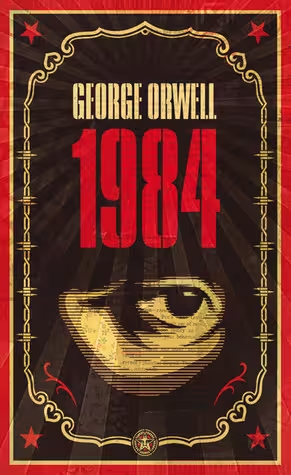
1984 matters because its account of power includes the control of records, language, and accepted reality, alongside the monitoring of individuals.
Published in 1949, George Orwell’s novel follows Winston Smith, whose work at the Ministry of Truth involves rewriting newspaper material to match the Party’s version of events. The Orwell Foundation also identifies the book as the source of terms including “thought police,” “Newspeak,” and “doublethink.”
I would read it with a specific distinction in mind: being watched and being prevented from proving what happened are different problems.
A camera may record an event. A controlled archive determines whether that record survives, whether anyone can consult it, and whether a contradictory account carries consequences. That is the aspect I would keep returning to as Winston does his work.
Orwell described one of his ambitions in “Why I Write” as making “political writing into an art.” The phrase helps explain why the novel deserves attention as a constructed story as well as a political argument. (George Orwell, “Why I Write,” via the Orwell Foundation).
My practical advice is to resist immediately matching every fictional institution to something in today’s news. Establish what the institution does inside the book first. Comparisons become more useful when you can explain the mechanism rather than simply announce a resemblance.
Choose this book when you want a reading experience that gives you an argument to examine, not just a warning to repeat.
3. Why read Frankenstein beyond its famous premise?
Frankenstein rewards reading because the ethical problem continues after the act of creation.
Mary Shelley’s novel was first published in 1818. The Bodleian Libraries records an initial print run of 500 copies and notes that Shelley was not named as its author in that edition. That modest beginning provides useful context for a work now receiving sustained institutional attention.
The British Library’s description emphasises Victor Frankenstein’s rejection of the being he creates and the rage and loneliness that follow. It also places the book within the development of modern science fiction.

My preferred way into the novel is through a practical question: what does someone owe to a life they have deliberately brought into existence?
That question keeps responsibility in view. It asks you to consider care, preparation, recognition, and the willingness to remain involved after the exciting part of a project ends.
I would also resist choosing a side too quickly. Sympathy can be necessary without settling every moral question. Understanding why someone suffers does not require approving everything they do.
For a reading group, try keeping two lists. On one, record each character’s explanation of their behaviour. On the other, record the obligations you think that explanation leaves unanswered.
The gap between those lists is where I would begin the discussion. It gives you something more precise to debate than whether ambition is good or bad.
4. The Great Gatsby and the price of belonging
The Great Gatsby is the selection I would offer to someone interested in ambition but suspicious of the promise that success solves everything.
F. Scott Fitzgerald’s 1925 novel follows wealthy Jay Gatsby’s pursuit of Daisy Buchanan. The Library of Congress identifies class, wealth, social status, and the American Dream among its central concerns.
The distinction I would keep in mind is between acquiring money and being accepted. Those are separate achievements, and treating them as interchangeable can make a reading of Gatsby too simple.

I would also pay attention to the account you receive. Nick Carraway narrates the novel and becomes involved in Gatsby’s world. That gives you a reason to examine the description of an event alongside the event itself. (Fitzgerald’s novel, available through Project Gutenberg) Project Gutenberg
For example, when a description makes someone attractive, ask what produced that effect. Was it an action, an image, a choice of words, or an assumption you supplied?
You do not have to solve every symbol. I would rather follow one repeated detail carefully than collect a page of interpretations that the surrounding sentences do not support.
My caution is to avoid expecting an uncomplicated success story or an uncomplicated romance. Bring an interest in what people want their lives to mean, and in the costs they are prepared to overlook while pursuing that meaning.
For discussion: Which is more difficult to surrender: a desired future or your preferred version of the past?
5. What does The Catcher in the Rye offer beyond teenage rebellion?
The Catcher in the Rye offers an opportunity to examine a narrator closely without assuming that agreement is the price of understanding him.
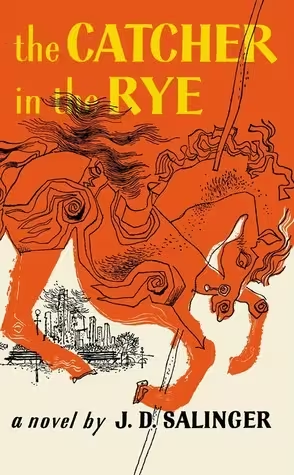
J. D. Salinger’s novel follows Holden Caulfield through New York and centres on his troubled relationship with adulthood, innocence, and perceived falseness. Hachette identifies its original publication year as 1951 and continues to publish it through Little, Brown.
My advice is to set aside the question of whether Holden would make pleasant company. Try asking what his manner of speaking makes possible, and what it helps him avoid.
An impatient reading can turn every complaint into the same complaint. I would instead mark the moments when your response changes. Perhaps you feel irritated, then protective, then doubtful. Ask what in the narration caused each shift.
This approach does not require diagnosing a fictional person. You can describe uncertainty, contradiction, hostility, or tenderness without attaching a clinical label.
I would choose this novel when you want to spend time assessing a voice rather than following a large sequence of external events. If you want action to supply the main reason to turn a page, another selection may fit your current mood better.
One useful exercise is to write a short response to Holden after a reading session. Address one specific assertion. Explain where you agree, where you hesitate, and what you would ask him next.
That can turn frustration into a more attentive conversation with the book.
6. How should you read To Kill a Mockingbird critically?
Read To Kill a Mockingbird with attention to its moral argument and to the perspective through which that argument reaches you.
Harper Lee’s novel follows Scout Finch and her family in the American South, including her father Atticus’s defence of Tom Robinson against a false accusation of rape. It received the 1961 Pulitzer Prize for Fiction.
There is also specific evidence of its continuing public appeal. In PBS’s The Great American Read poll, it received 242,275 votes out of nearly 4.3 million votes cast overall, according to the Pulitzer organisation. PBS announced the result in 2018. These are vote totals, not a count of unique readers or a scientific measure of literary quality.
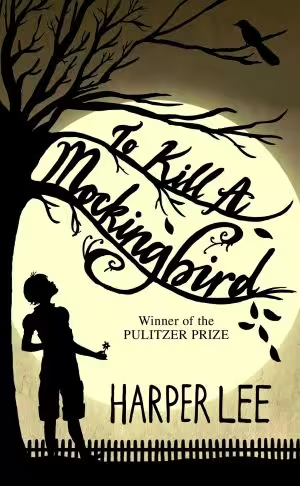
My recommendation is to let admiration produce further questions.
You can ask what a character’s courage achieves, where its limits lie, and whose experience remains outside your immediate view. Those questions make a discussion more useful than deciding whether the novel deserves unconditional approval.
For a book club, separate personal conduct from the operation of institutions. Identify a moment you consider admirable, then ask whether admiration answers the larger problem presented.
I would also leave room for disagreement about emphasis. Different readers may focus on moral education, the courtroom, childhood, or the distribution of sympathy.
Choose this book if you want an accessible starting point for a serious conversation, while remaining willing to question the terms of that conversation.
7. Crime and Punishment and the failure of self-justification
Crime and Punishment is my recommendation when you want moral argument to carry emotional pressure.
Fyodor Dostoevsky’s novel concerns Raskolnikov, an impoverished young man in St Petersburg who attempts to justify murdering a pawnbroker. Penguin Random House describes the book as a psychological study that combines crime, suspense, and philosophical and religious questions. Its author biography dates the novel to 1866.
I would approach it through the distance between an argument and the person making it.

An explanation may sound coherent in isolation. Reading becomes more interesting when you ask what the explanation allows someone to avoid acknowledging. Who bears the cost? What has been left outside the calculation? What happens when another person refuses to remain an abstraction?
Those are questions to test against the novel, rather than answers to impose before starting.
My caution concerns reading conditions. I would not choose this as a comfortable background book for a particularly distracted week. Give yourself enough time to remain with a difficult exchange instead of treating every conversation as a delay before the next event.
A small notebook can help. Record a claim made by a character, the circumstances in which they make it, and whether their later behaviour supports it.
You do not need a formal philosophy course to do that. You need curiosity about how people make exceptions for themselves.
A question to keep: When does a moral principle become permission to do what you already wanted?
8. Why does Don Quixote belong on this list?
Don Quixote belongs here because there is a strong scholarly case for its contribution to later fiction.
Miguel de Cervantes published its two parts in 1605 and 1615. In The Cambridge Companion to Cervantes, Alexander Welsh describes a dual influence: the book offered a model for realism, while its central character became a model of idealistic heroism confronting ordinary reality.
Its premise involves a man who attempts to act according to the chivalric romances he has read. Cambridge’s introduction to the novel presents that mismatch between a literary model and everyday action as central to the work.
The question I would carry into it is personal: which stories have supplied my expectations of how life should work?
You might think about romance, professional success, heroism, or the need to appear consistent. The point is not to force a modern analogy onto every episode. It is to notice when an expectation shapes what someone can recognise.
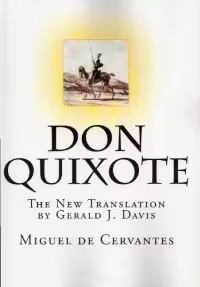
I would give this book a patient schedule. Read for the quality of an encounter rather than treating each chapter as a unit to complete.
You may also want to discuss the humour with someone. Ask what makes an episode funny, who pays for the joke, and whether amusement changes into discomfort.
For me, those questions provide a better reason to continue than the obligation to finish a famous title. They make room for comedy and judgment to remain unsettled.
9. What makes Moby-Dick worth the extra effort?
Moby-Dick is worth considering if you want a novel that asks for sustained attention to language, knowledge, and obsession.
Herman Melville’s 1851 novel concerns Captain Ahab’s pursuit of the white whale. The Library of Congress describes that story as an American myth whose references extend beyond readers of the book into wider culture.
The text also contains chapters devoted to whales and whaling, alongside its developing narrative. You can inspect that structure directly in the complete book available through Project Gutenberg.
My advice is to make a conscious decision about that structure before committing. If your immediate priority is a tightly paced pursuit, I would start elsewhere.
If you are willing to pause, try asking what a technical passage contributes beyond information. Does the attempt to classify something make the world feel clearer, stranger, more manageable, or less manageable?

You do not have to admire every interruption. A useful response can include impatience, provided you examine what you expected and what the passage actually did. I would also read a difficult paragraph aloud before searching for an explanation. Listen for changes in pace and emphasis. Then paraphrase the paragraph in plain language.
That gives you two ways to encounter the prose: as an arrangement of sounds and as a sequence of claims.
For discussion: When does commitment stop looking admirable and start requiring resistance from everyone around it?
10. War and Peace and the limits of personal control
War and Peace is the book I would choose when the reading itself can become a longer-term commitment.
Leo Tolstoy’s novel connects private lives with military and historical events, including Napoleon’s invasion of Russia. Pierre Bezukhov, Prince Andrei Bolkonsky, and Natasha Rostov are among its central figures. Penguin Random House’s reader’s guide dates the work to 1869 and describes its combination of everyday life, love stories, battle, and arguments about history.
Virginia Woolf called Tolstoy “the greatest of all novelists,” in a quotation reproduced by Everyman’s Library. I would take that as an invitation to assess his work, rather than a verdict you must share.
My practical recommendation is to begin with relationships. Keep a brief list of who knows whom and what each person currently wants.
Do not turn the notebook into a second reading assignment. A few lines are enough. Its purpose is to reduce the work of remembering so you can pay attention to a scene. I would also allow your pace to vary. Some sessions may invite several chapters; others may leave you considering one conversation or argument.
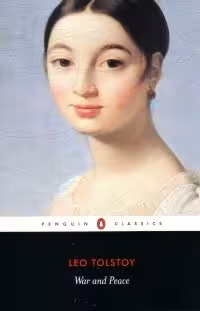
The question I would return to is how much control a person can reasonably claim over a life shaped by other people and larger events.
That gives the project a focus beyond finishing a large book.
What reading order should you follow?
Follow your interests first, then increase the commitment when you want a different kind of challenge.
For someone asking me for a general route, I would suggest:
- The Great Gatsby
- Pride and Prejudice
- 1984
- Frankenstein
- To Kill a Mockingbird
- The Catcher in the Rye
- Crime and Punishment
- Don Quixote
- Moby-Dick
- War and Peace
This is a suggested sequence, not a historical ranking or a promise that every step is harder than the last. I would happily move Pride and Prejudice to the beginning for someone who loves social comedy, or Frankenstein for someone drawn to ethical debate.
A practical alternative is to choose three books rather than ten.
My suggested starter set is Pride and Prejudice, 1984, and Frankenstein. Read one, then decide whether you want a similar experience or a change.
Try a modest routine:
- Set aside 20 minutes for a reading session.
- Finish at a natural stopping point when possible.
- Record one question, rather than summarising everything.
- Review whether you want to continue after several sessions.
Those numbers are a proposed routine, not a research-based prescription. Adjust them to your day.
If you stop, identify the reason. Was it the subject, the prose, the edition, or simply the wrong moment? That answer is more useful than deciding that classics are either for you or beyond you.
Which edition or translation should you choose?
Choose an edition whose text, notes, and presentation help you continue reading with confidence.
For a translated novel, I would begin by checking that the translator is named. Then compare samples of the same passage where possible. Read enough to encounter dialogue as well as description.
Ask yourself:
- Can I follow the sentence without repeatedly starting again?
- Do the characters sound distinct?
- Are unfamiliar references explained?
- Is the book complete or abridged?
- Is the physical or digital layout comfortable?
I would not declare one translation universally best. A sample that works for your reading needs is more useful than a confident recommendation with no explanation.
For Crime and Punishment, for example, Penguin publishes editions translated by David McDuff and Oliver Ready, among others. Their named translator information gives you a concrete starting point for comparison.
Frankenstein requires a different check. Shelley’s original publication appeared in 1818, and she published a revised edition in 1831. The Bodleian timeline documents both versions. Before buying, check which text the edition uses.
Finally, I would check an introduction for spoilers. You can save it until after the novel and still use the notes when needed. Scholarship should support your encounter with the book, not require you to surrender the experience in advance.
Frequently asked questions
Which influential Western novel should a beginner read first?
My first recommendation is Pride and Prejudice for readers drawn to relationships and conversation. I would suggest 1984 instead if political questions are your strongest interest. Choose based on curiosity, then sample the prose before committing.
Is this an objective list of the ten most influential novels?
No. It is an editorial selection supported by different kinds of evidence. I would distrust a precise ranking unless its criteria and limitations were clear. My aim is to explain why each selection merits consideration and help you decide what to read.
Why is The Odyssey missing?
The Odyssey is an Ancient Greek epic poem, rather than a novel. It belongs in a broader guide to influential literary works, but including it here would blur the category this article promises to cover.
Do I need to understand every reference?
I would not make complete understanding a condition of continuing. Mark a reference when it affects your grasp of a scene. Consult the notes, then return to the story. You can revisit unresolved details after you know what the book has asked you to care about.
Should I finish a classic I dislike?
Only if continuing serves a purpose you still value. I would give a difficult book a fair chance, but I would also distinguish productive difficulty from obligation. You can pause, change editions, try another selection, or return later with a clearer reason to read.
How can I get more from these books?
Choose one question before each session and test it against specific passages. Discuss a disagreement. Reconsider a first impression. Write down a sentence you cannot yet explain.
I would begin with one book that makes you want to ask the next question. That is a useful enough reason to open it.