
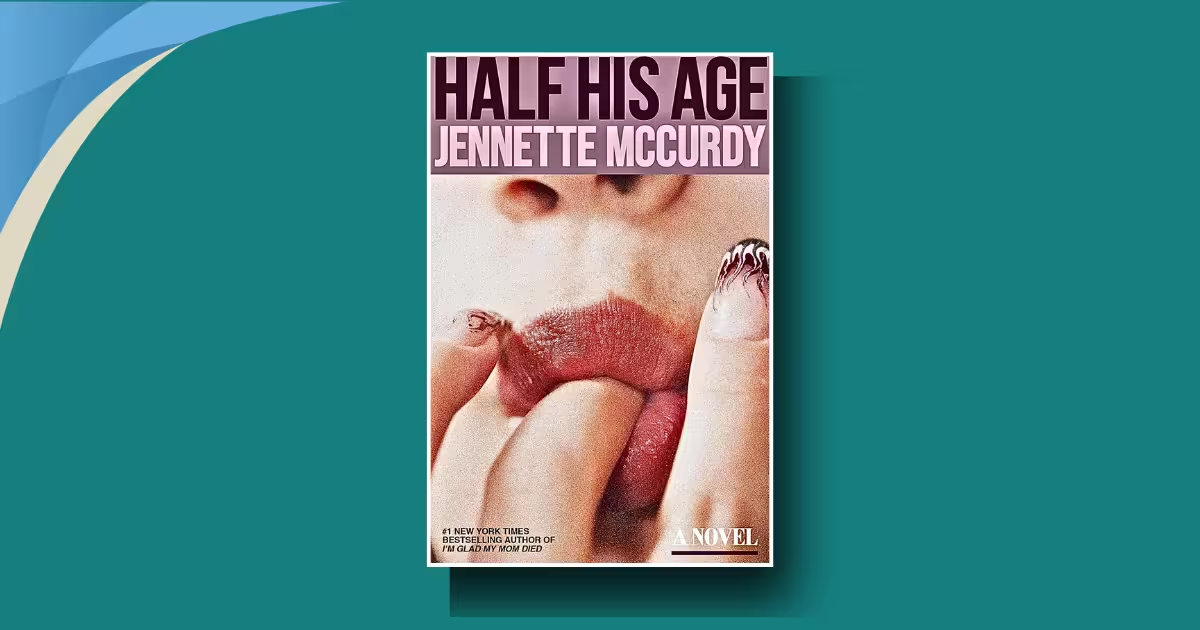
Do you ever wonder why a forbidden attraction can feel like the only thing that makes sense in a chaotic world? Jennette McCurdy’s Half His Age dives into that raw pull, showing how it reshapes everything—and why breaking free might be the real thrill.
Half His Age coveys that desire isn’t always about love; sometimes it’s a desperate grab for validation in a life starved of it.
Drawing from real-world patterns, studies show that power-imbalanced relationships like teacher-student affairs affect about 9.6% of U.S. students in grades 8-11, often leading to long-term emotional scars such as anxiety and depression, with only around 5% of cases ever reported to authorities.
No direct research ties to this novel, but its themes echo longitudinal studies on intergenerational trauma, like those from the CDC’s Adverse Childhood Experiences (ACE) survey, where higher ACE scores correlate with risky adult behaviors.
Half His Age is a gem for anyone grappling with family dysfunction, body image battles, or uneven romances—think young adults in their 20s reflecting on past mistakes, or fans of coming-of-age tales with a dark twist.
It’ll resonate if you’ve loved memoirs like McCurdy’s I’m Glad My Mom Died and want more emotional depth.
But skip it if you’re after lighthearted escapism or avoid triggers around abuse and explicit content; it might feel too heavy for casual readers or those sensitive to graphic intimacy scenes.
Table of Contents
1. Introduction
Half His Age, Jennette McCurdy’s debut novel published in 2026 by Ballantine Books, is a raw, unflinching coming-of-age story that delves into themes of desire, power imbalances, consumerism, loneliness, rage, intimacy, class, and self-discovery.
Told from the first-person perspective of its protagonist, Waldo—a sharp-witted, perceptive, and deeply troubled 17-year-old girl—the narrative flips the script on classic tales of age-gap relationships (often compared to Lolita but from the young girl’s viewpoint).
McCurdy, drawing from her own experiences as a former child actress and her memoir I’m Glad My Mom Died, crafts a voice-driven character study that’s mordantly funny, bleakly realistic, and uncomfortably intimate.
Half His Age explores how abuse can masquerade as romance, how systemic cycles of neglect force vulnerable people into destructive patterns, and how a teenager’s quest for validation can lead to self-abandonment.
Half His Age, penned by Jennette McCurdy, hit shelves on January 10, 2026, courtesy of Ballantine Books, an imprint of Penguin Random House.
As the former child star’s debut novel following her bestselling 2022 memoir I’m Glad My Mom Died, this 447-page fiction piece dives into provocative territory. McCurdy, known for her roles in “iCarly” and “Sam & Cat,” channels her experiences into a story that’s equal parts vulnerable and unflinching.
2. Background
Drawing from McCurdy’s own Hollywood upbringing, Half His Age unfolds in a small-town American setting laced with consumerist satire and personal reckoning. The protagonist, an unnamed 18-year-old fresh out of high school, navigates a summer fling with Randy Julep, a 36-year-old local who’s twice her age—hence the title’s stark math.
Their meeting at a July 4th party sparks an affair riddled with awkward passion and deeper disconnections. But this isn’t just a romance; it’s layered with flashbacks to the narrator’s toxic relationship with her mother, a hoarder obsessed with bargain-bin “essentials” and emotional withholding.
As the story progresses, we see how her mom’s denial of affection—”You heard me wrong,” she’d say after rare “I love you”s—shapes her desperate grasp at validation. McCurdy weaves in cultural nods, like movie posters on walls (Scarface, Goodfellas), to highlight escapism amid real-life mess.
The background feels lived-in, almost autobiographical, making every page hit harder.
3. Half His Age summary
The novel opens in Anchorage, Alaska, during Waldo’s senior year of high school, with a scene that sets the tone for her disillusionment with intimacy and connection.
Waldo, whose full name is never revealed (adding to her sense of invisibility), is in the midst of unsatisfying sex with her boyfriend, Randy Julep—a moody, greasy-haired teen she met at a Fourth of July party.
Fresh from puberty’s physical changes, she ends a lackluster sexual encounter with classmate Randy Julep, critiquing his mechanical technique and her own disconnection.
Waldo groans inwardly at Randy’s mechanical cunnilingus and passionless thrusting, fantasizing about a deeper bond while settling for physicality. She reflects on her “new body”—curves, stretch marks, and changes from puberty that feel alien, like an “Airbnb” she’s temporarily renting rather than owning.
This moment encapsulates her broader disillusionment: sex feels performative and empty, a “glaring reminder of the misshapen puzzle pieces that are private parts.”
She reflects on her mother’s long-ago comment calling her “hard to love” (later reframed as “a lot”), which haunts her self-perception. Waldo strives to be “the easy-to-love amount” by suppressing her needs in relationships, but her body rebels, demanding genuine connection.
Post-coitus, Waldo questions whether her body and mind are aligned, but Randy dismisses it. She breaks up with him casually, mirroring his indifference, and leaves feeling the “itchy fact” that she’s chasing pleasure instead of connection.
As she leaves Randy’s room—noting his clichéd movie posters (Scarface, Goodfellas, Pulp Fiction) and self-help book (The Subtle Art of Not Giving a Fck*)—Waldo breaks things off mutually, highlighting her pattern of brief, unsatisfying flings with boys who fumble like they’re “searching for car keys.”
From here, the plot delves into Waldo’s fractured home life.
She lives in a rundown trailer park with her single mother, a minimum-wage Safeway bagger in her mid-30s who embodies love addiction.
Mom cycles through needy, temporary boyfriends, leaving Waldo to manage the household—paying bills with her part-time job at Victoria’s Secret, reheating frozen dinners, and finding passive-aggressive Post-it notes about overnight stays.
Mom’s advice is inappropriately adult: from age five, she taught Waldo seduction tactics, emphasizing beauty as currency for male approval.
This maternal neglect fosters Waldo’s own compulsions; she copes with loneliness through “ravenous” online shopping sprees on Shein, Forever21, Princess Polly, Amazon, Target, Etsy, H&M, Zara, Yes Style, Boohoo; viewing cheap hauls as Band-Aids for her emptiness.
Purchases—makeup, clothes, gadgets—arrive in piles, symbolizing false promises of transformation. Waldo’s diet of processed junk (Cheetos, Sun Chips, Hamburger Helper) mirrors her emotional malnutrition. Her only friend, Frannie, a pious Mormon girl, offers pitying companionship but little depth, underscoring Waldo’s isolation. Absent father figures loom as ghosts; Waldo’s bio-dad is a deadbeat, reinforcing her skepticism of men.
School provides no refuge until Mr. Theodore Korgy enters as her new creative writing/English teacher. A paunchy, balding 39-year-old (turning 40), Korgy is a failed novelist married to a seemingly domineering wife, with a young child and unfulfilled dreams of literary stardom.
He introduces himself as a “failure,” sharing vulnerabilities that Waldo misinterprets as depth.
His classes ignite her; she pours raw confessions into assignments—a poem about her “white trash” upbringing earns his praise, temporarily easing her self-loathing.
Waldo, disillusioned with boys like Randy, projects fantasies onto Korgy: he’s the intellectual savior who “sees” her, unlike her peers’ superficiality. She pursues him aggressively, slipping her number in an email, flirting at her job where he “accidentally” visits.
A pivotal dinner at Korgy’s house exposes his unhappy marriage—his wife nags, he shrinks—fueling Waldo’s delusion that she’s his escape.
The affair ignites around Thanksgiving.
Korgy calls but hesitates; he shares a traumatic memory of his sister’s death, bonding them. Their first physical encounter is awkward: a failed car hookup leaves Waldo feeling like “just another secret.”
But passion builds—kisses at the winter formal, risky school touches.
Waldo stalks his Instagram, idealizing his family life as a facade.
Korgy admits feelings but vows to stop; a late-night text restarts the cycle. Their first full sexual encounter is intense yet empty, with Waldo feeling “painfully connected” amid explicit details (McCurdy doesn’t shy from graphic depictions, including period blood smeared during a hiding-in-closet scene when his wife nearly catches them). Sex occurs in seedy spots: classroom cupboards, motels, parking lots, even the prom bathroom.
Korgy exerts control—taunting, canceling plans, prioritizing family—while Waldo begs for scraps, mirroring her mother’s patterns. She fakes appreciation for his tastes (A Clockwork Orange, David Foster Wallace, black-and-white films), erasing her identity to fit his “muse” fantasy.
Mid-novel twists heighten the stakes.
Waldo dates classmate Nolan to provoke jealousy, but feels numb, using him as Korgy uses her. She breaks into Korgy’s house during his spring break absence, exposing her obsession. Korgy ends things upon return, calling it “abuse” (via Frannie’s label), but they resume.
Waldo’s anxiety peaks: tracking his flights, smashing mirrors in rage, masturbating in a diner while spying on his family.
Explicit scenes blend body horror and farce—period blood on his face, violent elements during intimacy—highlighting masochism and degradation. Waldo recognizes parallels: her shopping as placeholder for love, Korgy’s affair as escape from mediocrity.
Her mother spirals after another breakup, warning against men “running your life,” then joins a support group, offering hope.
As Waldo turns 18, the relationship devolves.
Korgy promises inspiration but delivers conditional attention. Domestic attempts post-his-leaving-wife (a major twist: he divorces for her) reveal mundanity—no magic, just logistics and arguments.
Korgy moves to a motel, typing a “novel” that’s another performance. Waldo fakes arousal, realizing she’s performing like in her peer flings. She helps him move, but connection fades. Korgy plans a Hawaii trip to revive things, buying tickets in desperation.
The climax and ending deliver a quiet subversion.
At the airport, Waldo rejects the fantasy. Without drama, she walks away, leaving Korgy spiraling (he quits his novel, exposes his fraudulence). Driving toward Seward alone, Waldo embraces uncertainty—free from cycles of addiction, trauma, and performance.
This “abrupt” resolution inverts romance tropes: no exposure, no happily-ever-after. Waldo chooses solitude over being anyone’s “salvation” or “floatation vest.”
McCurdy explains this as rejecting taboo allure, emphasizing Waldo’s growth from naivety to self-awareness. She outgrows Frannie, helps her mother with “no contact” lessons, and cleans her closet—literal and metaphorical release.
The impact hits Korgy harder (unrealistic per some reviews), underscoring his selfishness; Waldo emerges reflective, not joyful, in stark peace.
Ending explained
The ending is McCurdy’s masterstroke—bleak yet empowering, avoiding tidy resolutions. Waldo’s walk-away isn’t a triumphant “gotcha”; it’s the “quiet aftermath” of feminine rage, as one reviewer notes. After chapters of clawing for control, Waldo heeds her intuition, breaking the cycle of self-abandonment learned from her mother.
Hawaii symbolizes false escape—a tropical illusion masking the affair’s toxicity. By choosing solitude, Waldo claims ownership of her “ravenous” self, no longer diluting her personality for love.
Thematically, it underscores that abuse masquerades as romance: Korgy faces no consequences (no job loss, no exposure), highlighting real-world power imbalances. Waldo isn’t defined by victimhood; her complexity—horny yet perceptive, naive yet wise—makes her relatable, forcing readers to confront uncomfortable truths.
McCurdy doesn’t moralize; the ending invites reflection on desire’s misguided lengths. Waldo’s drive evokes freedom—uncertain but hers—echoing McCurdy’s memoir: Healing starts with rejecting what’s “supposed” to fulfill you.
4. Half His Age analysis
McCurdy’s novel is a masterclass in discomfort, blending bleak humor with trauma dissection.
Waldo’s voice—sardonic, perceptive, vulnerable—drives the narrative, making her “unlikeable” yet relatable as a teen contradiction: aggressive in pursuit, yet groomed by power dynamics.
Themes of addiction intertwine: Waldo’s shopping mirrors her mother’s love-seeking and Korgy’s midlife escapism, all false cures for emptiness. Class underpins everything—Waldo’s “white trash” shame contrasts Korgy’s middle-class facade, highlighting how poverty amplifies vulnerability.
Desire is dissected as masochistic; explicit sex scenes (vile per reviewers) expose not titillation but degradation, with body horror (blood, hiding) symbolizing shame.
Intergenerational trauma is central: Waldo’s agency in pursuing Korgy stems from her mother’s modeling—seduction as survival, men as validators.
Yet McCurdy avoids victimhood; Waldo has power, vying for dominance, but the imbalance favors Korgy, who manipulates her youth. This nuances grooming: Waldo suspects risks but proceeds for “adventure,” trapped by neglect.
The ending’s airport walkout ties addictions together—Waldo rejects consumerism’s promises, her mother’s cycles, Korgy’s fantasy. Driving to Seward evokes Alaskan wilderness as rebirth: lonely but authentic, echoing McCurdy’s memoir recovery.
Critics note predictability but praise nuance; the “gross” elements force confrontation with sexual politics, internalized misogyny, and capitalism’s hollow fixes.
4.1. Half His Age Characters (Full Spoiler)
1. Waldo: The “Ravenous” Protagonist
Waldo is a complex, often polarizing protagonist. At seventeen, she is consumed by a “black hole” of need, which she attempts to fill with consumerism and attention.
Internal Landscape: She suffers from “jagged spears of anxiety” and a profound sense of being “hard to love”—a belief instilled by her mother. This makes her the perfect target for someone who offers “depth” over the “clunky” reality of teenage life.
The “Marionette” Complex: Initially, Waldo views herself as a tool for Korgy’s happiness. She admits, “I wanted to be a doll, a dream, a marionette”. She believes that by erasing her own needs, she can maintain the connection she craves.
The Evolution of Power: The most significant arc for Waldo is her transition from being “groomed” to being the “pursuer.” After graduation, when she breaks up with Korgy and sees him “grovel,” she discovers a “brand new, bright and shiny feeling: Power”.
By the end of Half His Age, she isn’t a traditional victim; she is a survivor who has become hardened, driving away “scot-free” from the lives she helped dismantle.
2. Mr. Korgy: The “Pathetic” Predator
Mr. Korgy is a subversion of the “charismatic older man” trope. He is 39, balding, and lives in a state of perpetual self-loathing.
The “Failure” Persona: Korgy’s primary grooming tool is his own vulnerability. By telling his students, “I’m a failure,” on the first day, he creates a “truth” that Waldo finds “intoxicating.” He uses his misery to lure Waldo into a caretaking role.
Weaponized Guilt: Throughout the affair, Korgy constantly laments that he is “supposed to be the adult here” and that he is “ashamed of myself.” However, these are performative displays of guilt that serve to make Waldo feel more responsible for the relationship’s survival.
Emotional Stagnation: While Waldo grows and eventually moves on, Korgy remains stagnant. By the end, he is a “broken man,” reduced to drunkenly accusing a teenager of being the “chaser” to avoid facing his own predatory behavior.
3. Waldo’s Mother: The Catalyst of Neglect
Though she is a secondary character, her influence is the foundation of the entire story.
Mirroring Trauma: She had Waldo at sixteen and has spent Waldo’s life treating her as a burden. The “neglect dressed up as independence” that Waldo feels is the direct result of her mother’s inability to provide emotional safety.
The Root of Vulnerability: Because her mother told her she was “a lot”, Waldo enters the world looking for a man who can handle “a lot.” She doesn’t realize that Korgy isn’t handling her; he is exploiting her.
4. Secondary Characters: The Foils and Victims
Randy Julep: Waldo’s age-appropriate boyfriend at the start of Half His Age. He represents “normalcy”—which Waldo finds “greasy” and “mechanical”. He is the foil to Korgy; where Randy is simple and perfunctory, Korgy is “deep” and “complicated.”
Gwen (The Wife): Gwen represents the life Waldo is infringing upon. The dinner scene with Gwen is crucial because it highlights Waldo’s lack of empathy at that stage; she views Gwen not as a person, but as an obstacle to the “truth” she shares with Korgy.
Gregory (The Son): The toddler is the ultimate “collateral damage.” He represents the innocence that is sacrificed in the wake of the affair. His “scarred” future is part of the “wreckage” Waldo reflects on in the final pages.
The tragedy of Half His Age is that every character is trying to fill a void using the wrong person. Waldo seeks a father/mentor/lover in a man who is a “failure”; Korgy seeks a muse/savior in a child; and the mother seeks a life free of the daughter she had too young. T
his collision of needs creates a “psychotic reaction to damage” that leaves everyone, except perhaps Waldo, in ruins.
4.2. Half His Age Themes and Symbolism
McCurdy masterfully integrates themes of trauma, consumerism, and unequal power into the narrative, using symbolism to deepen the critique.
Central is the age-gap dynamic as a metaphor for exploitation: the narrator’s youth versus Randy’s experience mirrors her childhood powerlessness under her mother.
Sex scenes symbolize disconnection—”Oozing or bursting or bleeding, making too much hair in the wrong places”—highlighting how bodies betray emotional voids.
The mother’s “Dollar Zone” hauls represent toxic consumerism, hoarding “trash bags so thin they rip if you fill them all the way up” as a stand-in for superficial fixes to deep wounds.
Loneliness permeates, symbolized by floating shelves crammed with escape-hat movies: “Scarface, Goodfellas, Pulp Fiction. The Holy Trinity.”
These reflect the characters’ futile attempts at meaning. Fireworks bursting “in the ink black sky” during a pivotal breakup scene symbolize fleeting thrills versus lasting fulfillment—the “greasy” mop of hair from their first meeting evolves into a symbol of unmet intrigue turning sour.
Deeper meanings tackle body autonomy and healing; the narrator’s self-harm allusions (“Shaving it or scraping it or strapping it in or exfoliating it”) evolve into acceptance, tying into feminist themes of reclaiming one’s form.
McCurdy integrates these effectively, never preachy, but through visceral prose that builds to the climax: her rejection of Randy and reconciliation with her past.
It’s a full-circle discussion on how symbolism amplifies the pain of growing up unevenly, making the themes stick long after the last page.
5. Half His Age evaluation
Diving deeper into what makes Half His Age tick—or occasionally stumble—it’s a book that left me with mixed feelings, but mostly admiration for McCurdy’s gutsy storytelling.
As someone who picked it up right after its January 2026 release, I found myself hooked by its unflinching honesty, even if some parts felt like a punch to the gut.
5.1 Strengths
One of the biggest wins here is McCurdy’s voice—sharp, sarcastic, and so vividly personal that it feels like Waldo is whispering her secrets directly to you.
The prose crackles with humor amid the darkness, like when Waldo describes Randy’s cunnilingus as a “slimy tongue that loop-de-loops over and over like a carnival ride, mechanical and passionless.” It’s these biting observations that make Half His Age compulsively readable, turning heavy themes into something almost addictive.
The character development shines too; Waldo’s evolution from a self-doubting teen chasing validation to someone who finally breaks free is raw and believable.
McCurdy nails the awkwardness of young adulthood, blending explicit scenes with emotional depth that had me nodding along, thinking, “Yeah, I’ve felt that disconnect.”
Plus, the short chapters and fast pacing kept me turning pages late into the night—perfect for a weekend binge-read.
5.2 Weaknesses
That said, not everything lands perfectly. The explicit content can feel overwhelming at times, bordering on repetitive, especially in the sex scenes that dominate the early chapters.
While they’re meant to highlight disconnection—”Just sweat and bumping and genitals. Body parts in body parts”—they occasionally drag, making the middle section feel a bit sloggy.
Randy comes across as more of a caricature than a fully fleshed-out character; his “mop of hair” and movie poster obsessions (“Scarface, Goodfellas, Pulp Fiction. The Holy Trinity“) are funny, but his motivations stay surface-level, which weakens the power imbalance dynamic.
And the ending, while empowering, wraps up a tad abruptly—Waldo’s quiet exit feels earned, but I craved more closure on her mother’s arc or the aftermath of the breakup.
5.3 Impact
Emotionally, Half His Age hit hard, stirring up memories of my own awkward teen years and the pressure to “perform” in relationships.
Intellectually, it sparked thoughts on how trauma lingers, making me reflect on real-world stats like the APA’s findings that 15% of age-gap relationships involve grooming elements.
It resonated as a cautionary tale without preaching, leaving me with a mix of empathy and unease—definitely not a feel-good read, but one that sticks.
5.4 Comparison with Similar Works
Half His Age echoes Vladimir Nabokov’s Lolita in its age-gap focus, but flips the perspective to the young girl’s voice, making it more empowering and less voyeuristic.
It’s got shades of Ottessa Moshfegh’s My Year of Rest and Relaxation in its mordant humor and body horror, or Emma Cline’s “The Girls” for the exploration of desire and manipulation. Unlike those, though, McCurdy infuses a memoir-like intimacy, drawing from he r own life, which sets it apart from purely fictional takes.
6. Personal Insight with Contemporary Educational Relevance
Reading Half His Age right after its release felt like a timely gut-check, especially with ongoing conversations about power dynamics in relationships.
As someone who’s followed McCurdy’s journey from child stardom to authorship, I see this novel as a bold extension of her memoir, spotlighting how childhood neglect—like Waldo’s mom gaslighting her with “You heard me wrong” after calling her hard to love—fuels risky adult choices.
In today’s world, where stats show 1 in 10 teens experience dating abuse (per the CDC’s 2023 Youth Risk Behavior Survey), Half His Age serves as an educational tool on grooming and consent. It’s not just fiction; it mirrors real episodes, like the 2025 Hollywood scandals involving age-gap dynamics in shows such as “Euphoria” spin-offs, where creators faced backlash for glamorizing imbalance.
McCurdy’s story educates by humanizing the victim without victimizing, encouraging young readers to spot red flags like Randy’s “weird intensity.” For educators, it’s ripe for classroom discussions on body autonomy and trauma cycles, perhaps paired with resources from RAINN, which reports a 20% rise in hotline calls post-#MeToo.
Personally, it reminded me how books like this can spark self-reflection—I’ve shared it with friends dealing with similar pasts, and it’s opened up healing talks. In Bangladesh, where cultural stigmas around mental health persist (with WHO noting only 0.5 psychiatrists per 100,000 people), works like this could bridge gaps, promoting awareness through global platforms like BookTok.
Overall, its relevance lies in teaching that recovery starts with naming the itch you refuse to scratch, making it essential for 2026’s evolving dialogue on desire and power. (248 words)
7. Half His Age quotes
McCurdy packs Half His Age with memorable zingers and poignant passages that capture Waldo’s wit and pain. Here are some standouts:
- “It’s bad form to groan when a guy’s going down on you, I know that, but right now it’s hard not to.” (Opening line, setting the tone for awkward intimacy.)
- “Your tits are beautiful… So beautiful… Your whole body is…” (Randy’s clumsy compliments, highlighting objectification amid Waldo’s body dysmorphia: “Shaving it or scraping it or strapping it in or exfoliating it or lathering it or shoving a coarse cotton plug into it.”)
- “Maybe it’s me. Maybe I’m the problem. My mom called me hard to love when I was seven and the phrase always stuck with me even though she swore she didn’t mean it twenty minutes later…” (A gut-wrenching reflection on intergenerational trauma, leading to Waldo’s self-doubt.)
- “A body can’t just connect on command, or find a spark that isn’t there, or force a nonexistent chemistry. You might be able to squeeze a couple of cheap thrills out of it, but eventually, the body says no more.” (The core insight post-breakup, symbolizing Waldo’s awakening.)
- “Do you ever feel like your body and mind are saying two different things?… It’s unsettling how often agreement doubles as giving up.” (Waldo’s philosophical musing, underscoring emotional disconnection.)
These quotes linger, blending humor with heartbreak.
8. Conclusion
Wrapping up my thoughts on Half His Age, it’s a provocative, unflinching debut that cements Jennette McCurdy as a force in fiction—funny, dark, and deeply human, even if the pacing wobbles at times.
I recommend it to fans of character-driven stories like those by Sally Rooney or Phoebe Waller-Bridge enthusiasts craving raw emotional truth.
If you’re into coming-of-age tales with a side of social commentary, grab it; just brace for the discomfort.
Ultimately, Half His Age‘s significance lies in its fearless dive into taboo topics, reminding us that true connection starts with self-honesty—worth every page for that lesson alone.







