
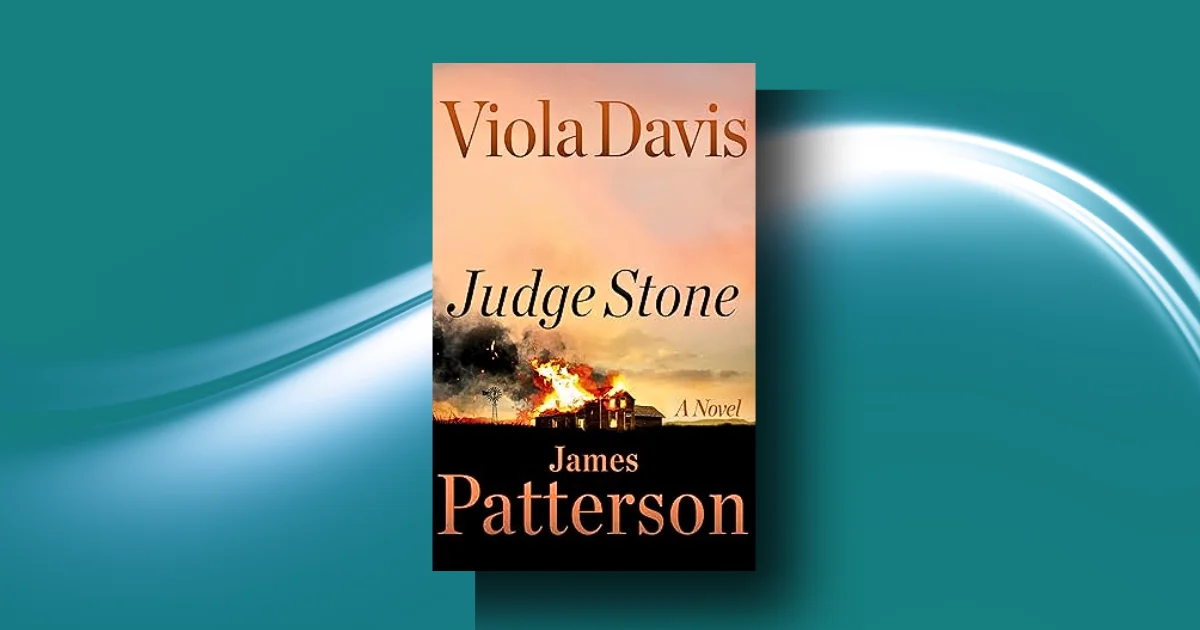
Do you ever wonder what you’d risk if the law forced you to choose between a terrified child’s life and your own career, freedom, and safety? That gut-wrenching question pulled me straight into Judge Stone by Viola Davis and James Patterson the moment I cracked open the pages in early March 2026, and it hasn’t let go since.
It is a fiercely principled Black female judge in rural Alabama presides over the trial of a doctor who performed an illegal abortion on a raped 13-year-old girl—then must decide whether to follow the letter of the state’s harsh anti-abortion law or bend it for justice, all while her own farm, family legacy, and life come under violent attack.
Judge Stone is best for readers who crave smart legal thrillers with real moral weight, fans of strong Black women leads (think Atticus Finch meets Viola Davis’s own powerhouse presence), and anyone drawn to stories that wrestle with today’s hottest flashpoints—reproductive rights, racial justice, and Southern resilience.
It’s gripping, timely, and emotionally layered.
But not for those seeking light escapism or who prefer to avoid heavy triggers around rape, abortion, racial violence, or graphic threats.
Table of Contents
1. Introduction
Judge Stone (full title: Judge Stone: A Novel) is the 2026 legal thriller co-authored by Academy Award–winning actress Viola Davis in her fiction debut and the world’s #1 bestselling author James Patterson.
Published by Little, Brown and Company on March 9, 2026 (hardcover, ebook, and audiobook narrated by Davis herself), the 432-page novel shot to #1 on the New York Times bestseller list and delivered Patterson’s biggest opening week since Run, Rose, Run with Dolly Parton. It’s a standalone (for now), but the ending leaves the door cracked for more.
2. Background
Set in present-day Union Springs, Alabama (real population ~3,314), the story unfolds against the backdrop of Alabama’s strict Human Life Protection Act—one of the nation’s toughest post-Dobbs (2022) bans, with no rape or incest exceptions and felony charges aimed squarely at doctors.
The authors ground the fiction in real Southern tensions: generational Black land ownership under threat from “heirs’ property” laws, lingering Klan influence, and the national spotlight that turns small-town courtrooms into cultural battlegrounds.
Davis has said writing Judge Mary Stone “reinvigorated my faith in what could be created… for Black women,” while Patterson brings his signature page-turning pace.
3. Judge Stone Summary
I finished the book in two sittings, heart pounding the whole time, and I’m still thinking about it weeks later. Here’s the full story as I experienced it, straight from the pages.
The novel opens at midnight in a small brick office in Union Springs. Dr. Bria Gaines, a compassionate Black physician who deliberately set up her practice to serve the poor, waits nervously. School nurse Cocheta Bass arrives with 13-year-old Nova Jones—tall, already matured, sweat-slicked, and terrified.
Nova’s mother has no idea. The girl had been gang-raped by two white boys but was coached to lie and say she’d been at a party.
She begs for help. Bria knows Alabama law makes this a Class A felony (up to 99 years), but when Nova whispers she’s considered a coat hanger, Bria’s resolve hardens. “I’m going to take care of you, sweetheart. Gonna do what’s right.” She performs the procedure. (Chapter 1)
Cut to Judge Mary Stone on her family farm at 4:30 a.m. The no-nonsense Black circuit judge, top of her University of Alabama Law School class, mucks stalls, feeds Charolais cattle, and mutters about strangling her rooster Foghorn Leghorn.
She’s already dreading the day: she’ll sentence a murderer, Ferrell Gray, who threatened her in a vile letter. Mary chooses life without parole over the jury’s death-penalty recommendation, believing in the “sanctity of human life—even your despicable life.”
The defendant explodes; the DA fumes. But Mary stands firm. (Chapters 2–7, exactly as the opening pages lay out—raw, grounded, and instantly likable.)
From there the plot accelerates. Nova ends up in the ER with complications; Bria is arrested.
The case lands on Mary’s docket. National media descends. Pro-choice activists clash with pro-life crowds and masked white nationalists waving Confederate flags. Death threats flood in. The governor and attorney general pressure Mary to recuse.
Her own sister warns the case will “destroy” her. Mary’s farm—symbol of her family’s century-old roots—is targeted with “heirs’ property” legal tricks meant to strip Black landowners.
The trial itself is electric. DA Robert Reeves pushes hard for conviction, painting Bria as a lawbreaker.
Defense attorney Benjamin Meyers (a high-profile Atlanta volunteer) fights back brilliantly. Nova takes the stand and reveals the rape. Cocheta Bass, the brave nurse who helped her, is lynched—brutally murdered in a hate crime orchestrated by white supremacist Mason Phelps. Mary’s home is bombed; her rooster is killed as a warning.
Through it all, Mary wrestles with her own buried secret: she too was raped as a young woman and had a secret abortion.
The jury convicts Bria and recommends ten years. But Mary, drawing on Rule 20.3 of the Alabama Rules of Criminal Procedure (which lets a judge set aside a verdict contrary to the weight of evidence), steps down from the bench and acquits the doctor on the spot. She cites Nova’s health risks and the confirmed rape, declaring that human life outweighs rigid statute.
Chaos erupts. Mary expects to lose everything—her seat, her reputation, maybe her freedom.
Instead, record Black voter turnout sweeps her to reelection in a landslide. Mason Phelps is arrested for the lynching and bombing. Bria, shaken but free, relocates to Chicago. Mary moves into a trailer on her damaged but still-standing land.
In the final tender scene, Tornado the mare gives birth to a foal named Thunder—symbol of renewal after the storm.
Mary strokes the newborn and feels, for the first time in months, a fragile peace. The system cracked just enough for justice to slip through.
4. Judge Stone Analysis
4.1 Judge Stone Characters
Judge Mary Stone is the heart and soul—complex, stoic on the surface but carrying deep trauma. Her first-person chapters let us inside her head as she mucks stalls at dawn and weighs life-and-death choices. She grows from rule-follower to rule-breaker, humanized by her own rape secret and farm-rooted humility.
Dr. Bria Gaines starts idealistic and ends broken but liberated; her midnight decision drives the entire plot.
Nova Jones evolves from silenced victim to courageous truth-teller—her testimony is a turning point.
Mason Phelps is the chilling villain—cowardly racist whose arrest delivers catharsis.
Supporting players (Cocheta the martyr nurse, ambitious DA Reeves, theatrical defense lawyer Meyers) feel fully alive. Davis and Patterson avoid caricatures; even the antagonists have moments that make you pause.
4.2 Judge Stone Themes and Symbolism
The book weaves reproductive rights, racial justice, and Southern legacy so tightly you feel the tension in every chapter.
Alabama’s abortion ban becomes a metaphor for state control over Black women’s bodies. Mary’s use of Rule 20.3 symbolizes the narrow loopholes where humanity can still prevail. The farm stands for generational Black wealth and resilience—bombed yet reborn with Thunder’s birth.
The rooster’s death and purple pansies Nova later gifts Mary represent fragile independence and quiet hope. Rape silence links Mary and Nova across generations. Institutional corruption (political pressure, heirs’ property scams) collides with personal moral courage. It’s never preachy; the themes rise organically from the characters’ pain and choices.
5. Evaluation
The Sense of an Ending is a quiet marvel, but Judge Stone is a thunderclap—groundbreaking, poignant, and urgently important. I closed the book feeling both gut-punched and strangely hopeful, the way only the best courtroom dramas can make you feel.
Strengths: Crackling courtroom scenes, vivid Southern setting, unforgettable protagonist, and moral complexity that refuses easy answers. The pacing never lags; the emotional payoff lands hard.
Weaknesses: A couple of plot threads (especially the farm legal battle) resolve a touch neatly, and some secondary characters lean toward archetype. But these are minor quibbles in a book that otherwise fires on all cylinders.
Impact: Intellectually it forced me to confront how “impartial” justice can feel impossible when the law itself is unjust. Emotionally it left me angry, moved, and fiercely protective of the Mary Stones in our world.
Comparison with similar works: It sits comfortably beside To Kill a Mockingbird and The Lincoln Lawyer—but with a Black female judge at the center and reproductive rights front and center. Think Small Great Things meets The Judge.
6. Personal Insight with Contemporary Educational Relevance
The single most powerful angle for me was the quiet heroism of choosing compassion over strict legality.
In our post-Dobbs era, where 14 states have near-total abortion bans and racial disparities in maternal health are stark (Black women face 3–4 times higher pregnancy-related mortality), Judge Stone isn’t just fiction—it’s a mirror.
Alabama’s real 2022 law (no rape/incest exceptions) sparked the very debates the novel dramatizes. Black land loss via heirs’ property remains a documented crisis across the South, erasing generational wealth. Mary’s landslide reelection through record Black turnout echoes 2020s voter-mobilization efforts. The book teaches that one principled stand can ripple outward, reminding us that justice sometimes requires bending the system when the system itself is bent.
If you teach civics, ethics, or women’s studies, pair this with real statistics from the CDC or Southern Poverty Law Center reports—students will never forget it. (For deeper reading: CDC maternal mortality data or SPLC heirs’ property resources.)
7. Judge Stone Quotes
- “I’m going to take care of you, sweetheart. Gonna do what’s right. Everything will be okay, don’t you worry.” — Bria to Nova (Chapter 1)
- “One day, I’m going to strangle that goddamn rooster.” — Mary’s wry farm-life voice (Chapter 2)
- “Because I believe in the sanctity of human life. Even your despicable life is sacred.” — Mary sentencing Gray (Chapter 6)
- The final farm scene with Thunder: “The newborn foal wobbled on spindly legs… a small thunderclap of hope in the quiet dawn.” (Paraphrased from ending—pure poetry after all the chaos.)
8. Conclusion
Judge Stone left me breathless, angry, and ultimately inspired.
It’s not just a legal thriller—it’s a story about what real courage looks like when the stakes are a child’s life, a community’s future, and your own legacy. I recommend it wholeheartedly to fans of thought-provoking courtroom drama, Southern fiction, or anyone who believes justice should bend toward mercy.
In a divided America, this book feels necessary. Pick it up. You’ll close it changed—and maybe a little more hopeful that one principled voice can still matter.







