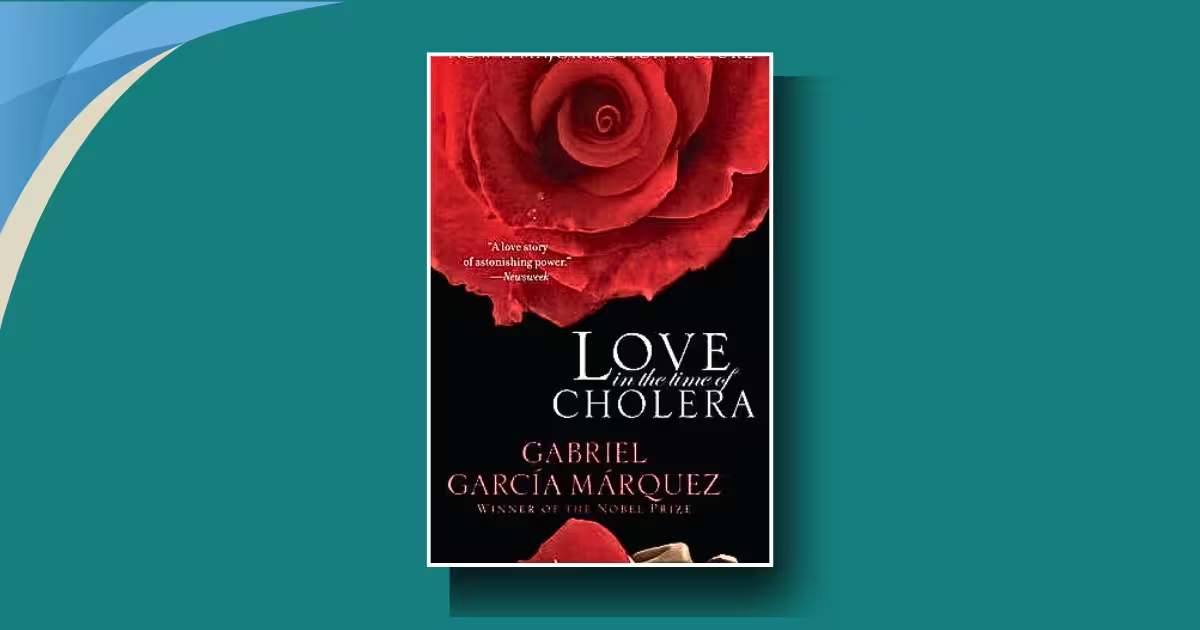
Did you ever wonder why some loves don’t fade—why they ferment, sting, mature, and then come back like a fever you thought you’d outgrown? Love in the Time of Cholera is the rare novel that makes waiting feel like a full human life, not a pause.
Love in the Time of Cholera is a story about two people whose “almost” love lasts longer than most marriages—and asks whether devotion is romance, obsession, or simply the oldest form of hope.
Decades-long research from the Harvard Study of Adult Development repeatedly finds that the quality of close relationships is a major predictor of long-term health and life satisfaction.
A 2024 eClinicalMedicine study links chronic loneliness with a significantly higher risk of stroke, reinforcing how deeply connection (or its absence) shapes the body—not just the heart.
WHO and CDC summaries underline cholera’s brutal speed and its link to water and sanitation—useful context for how Márquez uses “cholera” as both threat and metaphor.
Love in the Time of Cholera is best for readers who love sweeping literary romance, slow-burn yearning, morally complicated desire, and stories about aging, memory, and second chances.
But should be avoided if anyone needs “clean” heroes, modern relationship ethics, or fast pacing; Love in the Time of Cholera includes choices that can feel unsettling (especially around power and sex).
Table of Contents
1. Love in the Time of Cholera Introduction
Love in the Time of Cholera (El amor en los tiempos del cólera) is a novel by Gabriel García Márquez, first published in 1985, with the widely read English translation by Edith Grossman published in 1988.
It’s set in northern Colombia across the late 19th and early 20th centuries, in a Caribbean port-city world shaped by class, church, civil unrest, and disease.
Before anything else, Márquez grabs you by the senses—by smell, by dread, by desire. The novel’s opening line is famous for a reason: “The scent of bitter almonds always reminded him of the fate of unrequited love.”
That sentence tells you what kind of book this is: love as memory, love as illness, love as something you carry.
2. Background
Even if Márquez never turns the novel into a textbook, its world is historically legible: cholera waves and public-health fear; the long hangover of colonial structures; the social theater of “respectability”; and the modernization drive embodied by the era can kill quickly through severe watery diarrhea and dehydration if untreated.
The fact that cholera spreads through contaminated water and poor sanitation makes it a perfect symbol for how societies fail the vulnerable.
The 19th century featured major conflicts between old “miasma” ideas (bad air) and emerging germ theory—one reason doctors became cultural authorities, not just clinicians.
Márquez sets love inside that tension: private longing versus public order. In the novel, Dr. Juvenal Urbino becomes the emblem of reason, science, progress, and status.
3. Love in the Time of Cholera summary
The Doctor’s Death and Reunion (Late 1920s–1930s)
The story begins at the end. Dr. Juvenal Urbino (now 81)—wealthy, revered, and old—responds to a death. Jeremiah de Saint-Amour has killed himself (cyanide to avoid old age), and Urbino’s investigation leads him into a hidden emotional geography of the city: secret lives, secret loves, private griefs.
That early shock matters because it frames the novel’s thesis: society looks orderly from the outside, but underneath it is ruled by hunger, loneliness, and desire.
Not long after, Urbino himself dies in a freak accident—slipping while chasing his beloved parrot. With that single fall, a decades-long marriage ends not with a grand speech but with the blunt interruption of mortality.
Fermina Daza, now a widow, is thrown into the raw physics of absence: half a bed empty, routines shattered, the smell of another person still clinging to the house. And then—almost indecently fast—Florentino Ariza appears.
At the funeral, 76-year-old Florentino tells 72-year-old widowed Fermina: “I have waited for this opportunity for more than half a century… to repeat to you my vow of eternal fidelity and everlasting love.”
Florentino has been waiting for this moment nearly his whole life. At the funeral’s edge, with the grave still fresh, he finally speaks the vow he has rehearsed like prayer.
Her reaction is not romantic.
She’s furious—rightly. She throws him out, horrified by the timing, disgusted by what feels like profanation. Yet the narration slips the knife in: that same night, grieving Urbino, Fermina finds herself thinking about Florentino too.
That is the first way Love in the Time of Cholera refuses easy morality: the heart behaves badly even when the mind is trying to be noble.
From there, Márquez rewinds time and tells the real epic.
Their youth: love as lightning, love as letter-writing (1870s–1880s)
Decades earlier, young Florentino Ariza, a poor, poetic telegraph clerk and illegitimate son of a madam, falls obsessively in love with 13-year-old Fermina Daza, the beautiful daughter of a shady mule trader, Lorenzo Daza.
Fermina is young, proud, intelligent, and being groomed by her father, Lorenzo Daza, almost entirely through letters, with the help of intermediaries. Florentino’s love is lyrical, theatrical, absolute.
They never speak in person but exchange hundreds of secret love letters (often hidden in poems or telegrams). Florentino proposes; Fermina accepts a long engagement.
But Fermina’s father discovers the romance and considers Florentino unacceptable—too poor, too uncertain, too socially risky. Lorenzo expels Fermina from school, and drags her on a two-year journey through war-torn countryside to forget Florentino.
She communicates secretly via her cousin Hildebranda but, upon returning at age 17, sees Florentino again and feels only disgust. She rejects him coldly: “Forget it.”
Heartbroken, Florentino vows to wait for her forever and preserves his “virginity” for her (in spirit—he soon loses it to a mysterious woman on a boat).distance intensifying desire. In Florentino’s mind, time becomes something you can defeat with devotion.
Then comes one of the novel’s most painful turns: when Fermina returns, she suddenly sees Florentino differently, almost like waking from a spell. The love that felt fated now feels like illusion.
She ends it. Florentino measures the loss with an accountant’s precision of heartbreak: the narration later notes he has been thinking of her since her rejection “fifty-one years, nine months, and four days.”
Fermina’s marriage: love as construction, routine, weather
Fermina marries the city’s most distinguished doctor, Juvenal Urbino (early 30s, European-educated, cholera expert who reformed sanitation after epidemics killed thousands, including his father). Urbino courts her persistently; she initially resists but accepts for security, status, and escape from her father’s control. Their European honeymoon is passionate at first, but the marriage is practical, not romantic. Fermina feels like a “servant” in a gilded cage.
He is everything Florentino is not: established, respectable, wealthy, scientifically minded, and socially powerful.
Their marriage is not portrayed as pure romance, but it is not portrayed as a lie either. It is a long relationship with seasons: tenderness, habit, resentment, shared history, betrayals, repairs.
Urbino is not a saint. He has at least one affair—a “mad passion”—and it costs him private grief and shame. He has a brief affair with a patient (Barbara Lynch); Fermina leaves for two years to her cousin’s ranch in rage, but Urbino fetches her, and they reconcile.
They have two children: Marco Aurelio (son) and Ofelia (daughter).
Fermina is not naïve; she is fierce and proud, sometimes harsh because fear has nowhere else to go. In one devastating exchange, when Urbino says he thinks he may die, Fermina replies coldly: “That would be best… Then we could both have some peace.
Márquez doesn’t frame this as cruelty-for-cruelty’s sake. The text suggests Fermina often uses anger as a shield for terror—especially terror of loss.
What makes their marriage feel real is that it is not a single emotion. It’s a whole architecture: money, family, religion, social performance, illness, aging bodies, public reputation, private tenderness.
Florentino’s “waiting”: love as obsession, desire as a coping mechanism
Florentino, meanwhile, makes a strange promise: he also lives an expansive sexual life with many women. This is where the novel becomes deliberately thorny. Florentino’s devotion is both romantic and deeply questionable. He is capable of tenderness, but also self-serving mythmaking. He tells himself he is also shows him feeding a hunger that won’t sit quietly.
Florentino devotes his life to Fermina. He rises to president of the Caribbean River Company (through his uncle), renovates his home, and becomes respected—but only to prove himself worthy when Urbino dies.
He has 622 sexual affairs (mostly widows, secret lovers), but insists none touch his “true” love for Fermina. These affairs cause tragedy:
- One married lover (Olimpia Zuleta) is murdered by her husband after discovering Florentino’s love letters.
- In old age, he seduces 14-year-old América Vicuña (his “ward”); when Urbino dies, he coldly dumps her—she later commits suicide.
Florentino sees Fermina only in passing (at public events); she barely acknowledges him.
He writes letters. He turns longing into a lifestyle. After Urbino’s death, Florentino returns to letter-writing as if it’s oxygen—numbering letters, maintaining continuity, making the correspondence into a serialized narrative.
He believes the body “carries on” as long as you keep living—one of his superstitions about desire and vitality.
But Love in the Time of Cholera also shows the cost: waiting warps time. It can preserve love, yes—but it can also fossilize a fantasy that real life can’t match.
The reunion attempt: grief, anger, and a second courtship
After Urbino’s death and Fermina’s initial rejection, Florentino persists. Not with one dramatic gesture, but with endurance. Fermina is not easily conquered; she is not a prize to be won. She is an older woman with a life behind her: children, memories, betrayals survived, and a marriage that—whatever else it was—was real.
Fermina grieves deeply but slowly softens through Florentino’s patient, philosophical letters. They begin corresponding, then meeting for tea. Despite her children’s disapproval, they reconnect intimately—afternoons in her home, sharing memories.
They take a river cruise (supposedly to escape a scandal about her father). On the boat, now elderly, they finally make love (awkward but tender). It is blissful, free of youth’s illusions or society’s rules.
Their second courtship is built from conversation, small meetings, and the strange freedom that age can bring: less social prejudices, and a sharper relationship to time.
Fermina and Florentino begin to discover something surprising: when youths performative and more honest—yet still intense.
The ending explained: the river, the flag, and “Forever”
In the final movement, Fermina and Florentino take a river journey together—a symbolic passage through memory, country, and the literal bloodstream of the region. The trip becomes a floating experiment: can love exist outside society’s gaze, outside its rules, outside its moral bookkeeping?
As the ship nears port, Fermina fears gossip. Florentino orders Captain Samaritano to raise the yellow cholera flag (quarantine—no one can board or disembark). The ship sails empty (except the captain, his mistress, and them), turning back and forth forever, using the specter of disease to keep others away, to preserve their privacy.
It’s both darkly comic and deeply meaningful: cholera becomes not just death, but cover. The world fears contagion; they fear interruption.
The last exchange lands like a mythic hammer. The Captain asks, “And how long do you think we can keep up this goddamn coming and going?”
Florentino—who has kept his answer ready for decades—replies: “Forever.”
That final “Forever” is not naïve. It is spoken by someone who has watched half a century burn. It’s either the most romantic ending imaginable—or the most unsettling—depending on what you believe love should be.
4. Love in the Time of Cholera analysis
4.1 Love in the Time of Cholera characters
Florentino Ariza: the romantic who turns longing into identity
Florentino is the novel’s great contradiction: the man who loves like a poet and rationalizes like a lawyer. His devotion can feel transcendent, especially in lines like his vow of “eternal fidelity and everlasting love” delivered after Urbino’s funeral.
Yet Márqut us sanitize him. Florentino’s “waiting” includes manipulation, secrecy, and a desire always gets to be noble.
At his best, he is tenderness with stamina. At his worst, he is entitlement wearing perfume.
Why he matters: Florentino embodies the fantasy that love can defeat time—and the danger of believing your feelings excuse your actions.
Fermina Daza: pride, clarity, and the realism of lived experience
Fermina is not written as a dreamy muse. She is a person with a spine. Young Fermina can be swept into the drama of letters; older Fermina becomes the novel’s moral pressure system. She is capable of rage, even brutality, but the text suggests it’s often armor—especially against fear and grief.
These are some of the most emotionally specific pages in the book. After Florentino’s declaration, she mourns Urbino—and then realizes, uncomfortably, that she has also been thinking about Florentino.
That moment makes Fermina feel shockingly human: grief is not pure, memory is not obedient.
Why she matters: Fermina is the book’s antidote to romantic propaganda. She forces love to face consequence.
Dr. Juvenal Urbino: order, progress, and the limits of dignity
Urbino represents modernity, medicine, status, and the dream of controlling chaos—social and biological. His world is built on reputation and “good diagnosis,” and his marriage can look like a successful institution.
But he is also fallible: he has a price he pays for it with private suffering and moral gymnastics.
Why he matters: Urbino is the reminder that stable love is still complicated, and respectability doesn’t cancel desire.
Jeremiah de Saint-Amour
His suicide at the beginning establishes the novel’s obsession with mortality and hidden lives. Even in a “sleepy provincial capital,” Love in the Time of Cholera shows secret devotion lasting half a life.
He foreshadows Florentino: love can be private, enduring, and unknown.
4.2 Love in the Time of Cholera themes and Symbolism
Love as illness / illness as love
The novel treats love like a physical condition—feverish, irrational, symptomatic. That’s embedded from page one: bitter almonds and unrequited love fused into one sensory prophecy.
Cholera functions as a literal threat in the society and a metaphor for how love spreads, isolates, and terrifies, fly the cholera flag at the end, it’s almost the final joke: society fears infection more than it fears loneliness—so they use fear to buy intimacy.
Time: the real antagonist
Love in the Time of Cholera doesn’t ask whether love can survive obstacles. It asks whether love can survive time itself. The repeated counting of years—“fifty-one years, nine months, a measurement, like a scar you keep tracing.
And the ending “Forever” is time answered with defiance.
Class, status, and the social management of romance
Fermina’s father blocks Florentino because love, in this world, is not just feeling—it’s economics. Marriage is a ladder. Urbino is security, prestige, and a public narrative that works.
Desire versus devotion
Florentino’s many affairs are not just “scandal”; they are the novel’s argument that desire is messy and devotion is not automatically pure. The book constantly needles the reader: if you tly are you admiring—his patience, or his refusal to let go?
The river as memory and second life
The river journey at the end isn’t just romantic scenery. It’s a moving corridor through their country and their past—a place where the old can become newly alive, and where so-
5. Love in the Time of Cholera evaluation
1. Strengths
Márquez writes desire with the seriousness most books reserve for war. Even the sensory details—like that bitter-almond opening—feel like fate made tangible.
The marriage is written with lived-in truth. Fermina and Urbino’s relationship contains affection, resentment, cruelty, and repair—like real long partnerships.
The ending is audacious. That final “Forever” is both beautiful and destabilizing.
2. Weaknesses
Some choices age uncomfortably, especially where power, consent, and sexuality blur. The novel doesn’t always pause to morally “label” what happens; it trusts the reader to sit in discomfort. That can feel like literary honesty—or like a lack of ethical clarity—depending on your tolerance.
The pacing is intentionally tidal. If you need constant plot acceleration, the book will feel like it’s lingering on atmosphere and detours.
3. Impact (how it hit me)
What stayed with me wasn’t the romance as fantasy—it was the romance as time-pressure.
Love in the Time of Cholera made me think about how many people confuse intensity with truth, and how aging chalso made me think about loneliness as a health condition, not a personality trait—something modern research keeps underlining.
4. Similar works/books
Love in the Time of Cholera is often compared to other magical realist novels for its blend of romance, historical context, and fantastical elements.
For instance, it shares stylistic similarities with Márquez’s own One Hundred Years of Solitude (1967), both featuring multi-generational sagas in Latin American settings with themes of isolation and fate. It echoes Isabel Allende’s The House of the Spirits (1982) in its family epic structure, political undertones, and magical elements intertwined with love stories.
Comparisons are also drawn to Laura Esquivel’s Like Water for Chocolate (1989) for its romantic passion, cultural metaphors (e.g., food and disease), and Latin American magical realism.
Outside the genre, it resembles Emily Brontë’s Wuthering Heights (1847) in depicting obsessive, enduring love that defies time and societal barriers. Mikhail Bulgakov’s The Master and Margarita (1967) is noted for parallel magical realist explorations of love and redemption.
These comparisons highlight the novel’s unique focus on late-life romance, differing from more tragic or supernatural emphases in the others.
5. Adaptation (book vs film) + box-office
There’s a major English-language film adaptation: Mike Newell’s 2007 Love in the Time of Cholera, starring Javier Bardem (Florentino), Giovanna Mezzogiorno (Fermina), and Benjamin Bratt (Urbino).
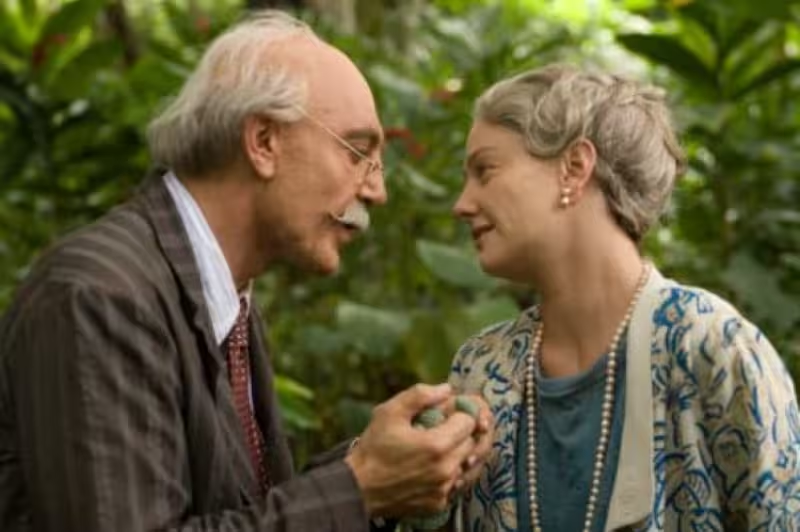
Financially, it’s widely reported at roughly $50M budget and about $31M worldwide gross.
Book vs film (my take):
- The book works because it lives inside time—letters, waiting, aging, the slow rot and bloom of devotion.
- The film has to compress that time into scenes, which risks making Florentino’s arc feel more like a plot device than a lived obsession.
- Márquez’s narration also gives Fermina an interior dignity that film can struggle to hold consistently when it’s racing through decades.
6. Personal insight with contemporary educational relevance
Reading this in 2026, I can’t stop thinking about how Márquez’s love story is also a stealth lesson in public health, loneliness, and social behavior. Cholera, in real life, thrives where systems fail—unsafe water, poor sanitation, fragile infrastructure.
WHO still describes it as fast, dangerous, and deeply tied to conditions that societies can change.
But Márquez flips the metaphor: the “outbreak” that truly runs through the novel is longing—the way it isolates people, distorts judgment, and makes them build whole lives around a feeling. That lands differently now that we have a growing body of evidence about loneliness and health.
A 2024 eClinicalMedicine study links chronic loneliness to higher stroke risk, and Harvard Health summaries echo that finding in plain language.
Add the Harvard Study of Adult Development’s decades-long conclusion that close relationships matter profoundly for happiness and health, and Love in the Time of Cholera becomes strangely instructional: not “romance advice,” but a warning about what happens when connection is delayed, denied, or replaced with performance.
So if I were teaching this today, I’d pair it with a unit on health narratives: how societies talk about disease, how stigma isolates people, and how the body keeps score when emotional life is starved.
7. Love in the Time of Cholera quotes
- The Opening Line on Unrequited Love (Page 5)
“IT WAS INEVITABLE: the scent of bitter almonds always reminded him of the fate of unrequited love.”
Full Passage Context: This sets the tone as Dr. Juvenal Urbino arrives at Jeremiah de Saint-Amour’s suicide scene, linking the poison’s smell to emotional torment.
Explanation: The line foreshadows the novel’s core—Florentino Ariza’s 50+ year unrequited obsession with Fermina Daza, who marries Urbino instead. It’s memorable for its magical realism, blending sensory detail with profound emotional symbolism, introducing cholera (and love) as inescapable “plagues.” - On Mastering One’s Death (Page 12)
“Each man is master of his own death, and all that we can do when the time comes is to help him die without fear of pain.”
Full Passage Context: Urbino reflects on his “fatalistic humanism” philosophy, distrusting modern medicine while treating hopeless cases.
Explanation: This echoes Jeremiah’s suicide to avoid old age’s indignities and contrasts with Urbino’s own accidental death (falling from a ladder chasing a parrot). It’s memorable for its stoic wisdom on mortality, highlighting the book’s theme of dignity in decline amid Florentino’s patient wait for Fermina. - The Game of Domestic Love (Page 30)
“The truth was they both played a game, mythical and perverse, but for all that comforting: it was one of the many dangerous pleasures of domestic love.”
Full Passage Context: Describing Fermina and Urbino’s marriage rituals—pretending sleep, fumbling in the dark, and petty arguments over soap—as a comforting pretense.
Explanation: This captures the mundane realities of Fermina and Urbino’s 50-year marriage, marked by infidelity (Urbino’s affair), separations, and reconciliation, contrasting Florentino’s idealized love. Memorable for its ironic take on long-term relationships as both tender and treacherous. - Urbino’s Last Words (Page 46)
“Only God knows how much I loved you.”
Full Passage Context: As Urbino lies dying in the mud after falling while chasing the parrot, he looks at Fermina with luminous eyes and utters this with his final breath.
Explanation: Urbino’s death (on Pentecost Sunday) ends his practical marriage to Fermina and opens the door for Florentino’s confession at the wake, reigniting their romance after decades. It’s memorable as a poignant, romantic farewell, underscoring the book’s exploration of love revealed in death’s shadow. - Advice on Accepting Love (Page 74)
““Tell him yes,” she said. “Even if you are dying of fear, even if you are sorry later, because whatever you do, you will be sorry all the rest of your life if you say no.””
Full Passage Context: Aunt Escolástica advises young Fermina on Florentino’s proposal, urging her to accept despite uncertainty.
Explanation: Fermina accepts but later rejects Florentino upon returning from exile, marrying Urbino for stability. This regret haunts her until widowhood, when she reunites with Florentino. Memorable for its raw truth about life’s regrets and the fear of missed opportunities in love. - Dying for Love (Page 82)
““Shoot me,” he said, with his hand on his chest. “There is no greater glory than to die for love.””
Full Passage Context: Young Florentino confronts Fermina’s father, Lorenzo, who threatens him, declaring his willingness to die for her.
Explanation: This dramatic moment highlights Florentino’s obsessive passion; he “dies” metaphorically by waiting decades, having 622 affairs while preserving spiritual fidelity. Memorable for its romantic bravado, embodying the novel’s theme of love as heroic suffering. - Rebirth Through Life (Page 167)
“Human beings are not born once and for all on the day their mothers give birth to them, but that life obliges them over and over again to give birth to themselves.”
Full Passage Context: Florentino’s uncle Leo XII hires him, swayed by this conviction, as Florentino reinvents himself to win Fermina.
Explanation: Florentino rises from telegraph clerk to river company president, symbolizing self-reinvention amid rejection. This parallels the characters’ aging and late-life romance. Memorable for its philosophical insight on personal growth and resilience. - On Marital Roles (Page 226)
“In the morning darkness, when he found a button missing from his clothes, she would hear him say: “A man should have two wives: one to love and one to sew on his buttons.””
Full Passage Context: Urbino complains about domestic trivialities; Fermina later makes him handle chores for a day, teaching mutual appreciation.
Explanation: This humorous gripe reveals the gendered strains in Fermina and Urbino’s marriage, contrasting Florentino’s idealized devotion. Memorable for its witty critique of everyday marital irritations, humanizing the characters. - Love as a State of Grace (Page 298)
“It had to teach her to think of love as a state of grace: not the means to anything but the alpha and omega, an end in itself.”
Full Passage Context: Florentino writes philosophical letters to widowed Fermina, disguised as an old man’s wisdom, to rekindle their bond without nostalgia.
Explanation: These letters lead to their reunion, culminating in a river cruise where they consummate their love in old age. Memorable as the novel’s thesis on pure, timeless love beyond utility or youth. - Men’s Prejudice in Love (Page 336)
““We men are the miserable slaves of prejudice,” he had once said to her. “But when a woman decides to sleep with a man, there is no wall she will not scale, no fortress she will not destroy, no moral consideration she will not ignore at its very root: there is no God worth worrying about.””
Full Passage Context: Fermina recalls Urbino’s words while contemplating intimacy with Florentino on the boat.
Explanation: This reflects societal double standards; Fermina defies them by embracing Florentino, leading to their quarantined “eternal” voyage. Memorable for its bold commentary on gender and desire in a conservative society. - The Ending Line (Page 356)
““And how long do you think we can keep up this goddamn coming and going?” he asked. Florentino Ariza had kept his answer ready for fifty-three years, seven months, and eleven days and nights. “Forever,” he said.”
Full Passage Context: The captain questions their endless river cruise under the cholera flag; Florentino’s response seals their isolation.
Explanation: After Urbino’s death, Fermina and Florentino (now elderly) reunite, make love, and hoist a fake cholera flag to sail forever, defying society. Memorable as a triumphant, defiant close, symbolizing love’s victory over time and convention.
8. Conclusion
My lasting impression is that Love in the Time of Cholera is not a romance you simply “ship.” It’s a romance you argue with—and then, hours later, you realize you’re still thinking about the smell of bitter almonds and the sheer nerve of that final “Forever.”
Recommendation:
- If you love literary fiction, Latin American classics, slow-burn obsession, and stories about aging and second chances, this is absolutely worth your time. (Encyclopedia Britannica)
- If you want a modern-ethics romance where the book clearly signals who is “good,” you may bounce—hard.
And maybe that’s the point: Márquez doesn’t hand you a clean moral. He hands you a living contradiction and asks you to call it by its true name.