Last updated on October 17th, 2026 at 09:43 am
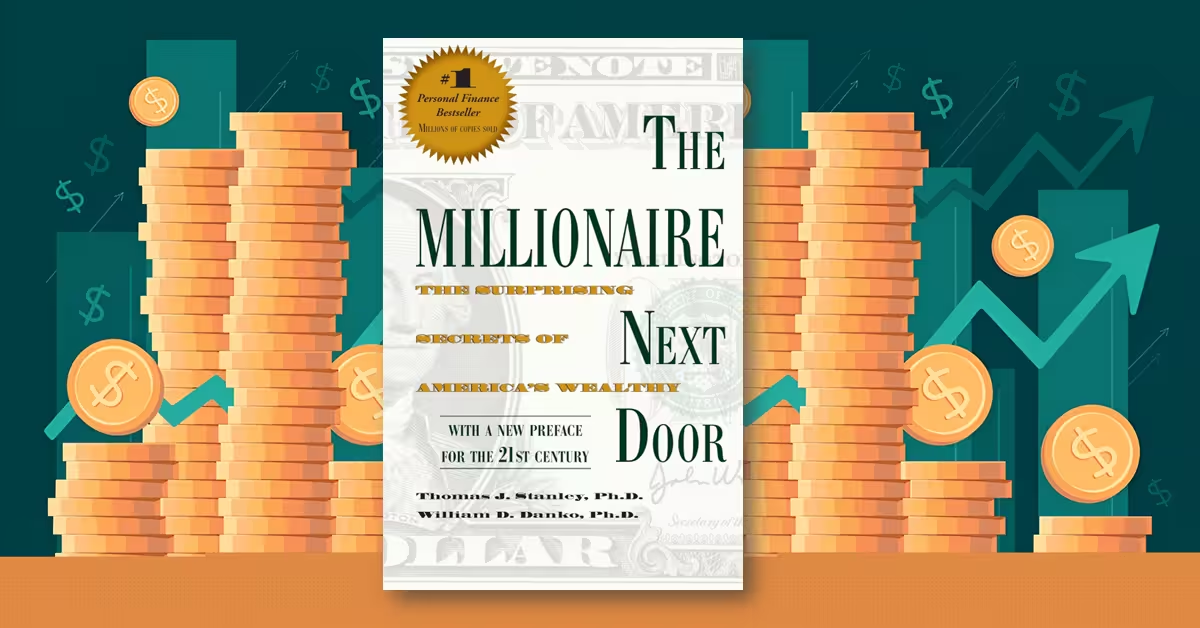
Picture a millionaire. You probably imagine a luxury car, a mansion and designer clothes. Thomas J. Stanley and William D. Danko spent years surveying wealthy Americans and found that the typical millionaire looked nothing like that. They drove ordinary used cars, lived in modest homes and spent far less than their neighbours. The Millionaire Next Door, first published in 1996, reported what they discovered.
Here are the book’s seven habits of quietly rich people, what still holds up, and its limits. This is general information, not financial advice.
Table of Contents
The Seven Habits
- They live well below their means. Frugality, not income, was the most common trait.
- They spend time, energy and money on building wealth. They plan, budget and track spending.
- They value financial independence over status. Looking rich matters less to them than being secure.
- Their parents did not support them financially as adults. Self-reliance was learned early.
- Their adult children are self-sufficient. They avoid what the authors call “economic outpatient care,” regular handouts that can weaken children’s independence.
- They spot market opportunities. Many run businesses that serve other wealthy people or fill practical needs.
- They chose the right occupation. Many are self-employed in unglamorous fields such as contracting, farming or small manufacturing.
Accumulators and Spenders
The authors divide people into “prodigious accumulators of wealth,” who have far more net worth than their income would predict, and “under accumulators,” who earn well but save little. They even offer a rough rule of thumb: multiply your age by your annual pre-tax income and divide by ten to estimate the net worth someone in your position might be expected to have. Doctors and lawyers with high incomes often fall short, while small-business owners with moderate incomes often exceed it.
What Still Holds Up
- Income is not wealth. What you keep matters more than what you earn.
- Visible luxury is often bought with debt.
- Steady saving and investing over decades build real security.
- Helping adult children too much can backfire for both generations.
Its Limits
- Dated data: the surveys come from the 1980s and 1990s. Housing, education and healthcare costs have risen dramatically since then.
- Survivorship bias: the authors studied people who became millionaires, not the many frugal business owners who failed.
- Very American: the occupations, tax rules and housing patterns reflect the United States.
- Repetitive: the same point about frugality is made many times.
Stanley, who died in 2015, and his daughter Sarah Stanley Fallaw later updated the research in The Next Millionaire Next Door (2018), which found that the core patterns still held.
How It Compares
It is more evidence-based than Rich Dad Poor Dad and more data-driven than The Psychology of Money, though both share its emphasis on behaviour. For more, see my list of books on building wealth.
Why It Matters in South Asia
In Bangladesh, as in many places, social pressure to spend on weddings, cars and appearances can be intense. This book offers a useful counterweight: the people who are truly secure are often the ones who look least impressive.
My Verdict
The Millionaire Next Door is not a get-rich guide. It is a reminder that wealth is mostly built quietly, through habits most people find boring. That lesson has outlasted its statistics.