
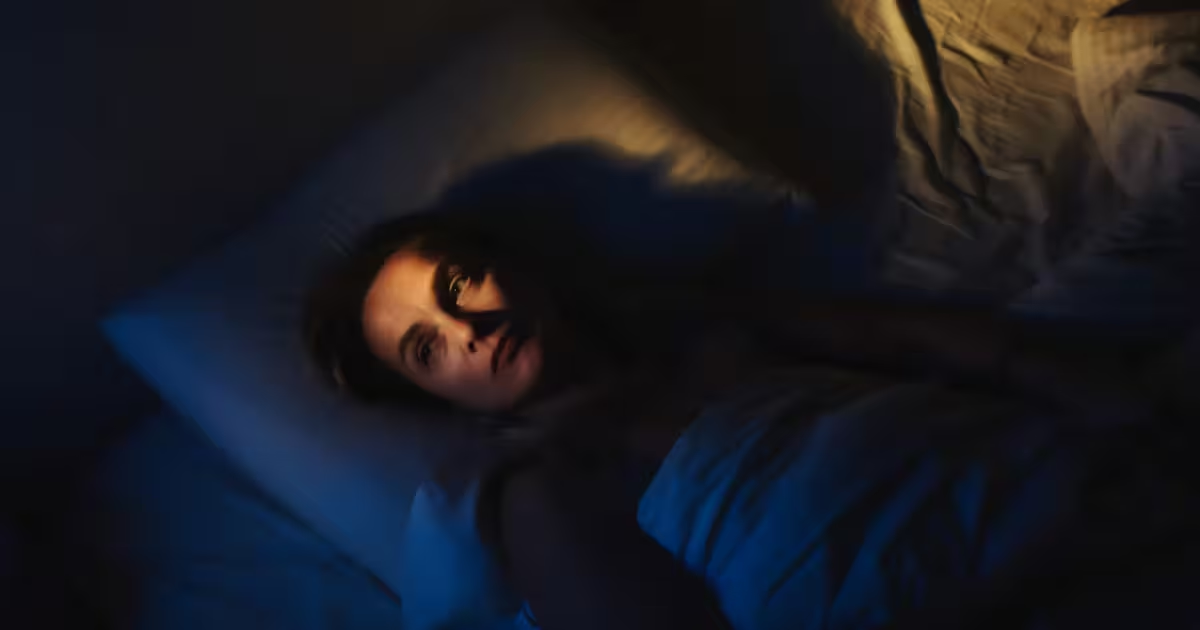
Sleeping with the lights on could be doing more than ruining your sleep, it could be reshaping your heart. A new study of over 11,000 UK adults found that nighttime light exposure above just 3 lux, about the brightness of moonlight or a hallway light under the door, is linked to measurable thickening in the heart’s left ventricle and early signs of heart dysfunction.
Published in the European Heart Journal, the research points to blackout curtains and dark bedrooms as more than just sleep hygiene advice, they may be a low-cost line of defense for your cardiovascular health.
Table of Contents
Summary
- A study of 11,071 UK Biobank participants found that people exposed to more than 3 lux of light while sleeping showed measurable thickening in the wall of the heart’s left ventricle three years later.
- The thickened muscle reduced the space inside the chamber and lowered the heart’s ability to flex during a heartbeat, an early marker of dysfunction. Similar changes turned up in the right ventricle and left atria.
- Researchers call this pattern “cardiac remodelling,” the same kind of structural change the heart undergoes under chronic stress or injury, and it can progress toward heart failure over time.
- Somewhere between a quarter and half of the effect traced back to shorter sleep duration (under five to six hours). The rest may involve other pathways, including blood pressure and stress hormones.
- Independent researchers note real limitations: a single week of light measurement, a wrist sensor that may not reflect what the eye actually receives, and a three-year gap before the heart scans. The study shows an association, not proof of cause and effect.
- The fix costs little: blackout curtains, warm-toned bedside lighting, covered standby LEDs, and a sleep mask if outside light persists.
The Study, in Plain Terms
Researchers led by Professor Lu Qi at Tulane University’s Obesity Research Center in New Orleans set out to answer a question earlier research had left open. Prior studies had already connected nighttime light exposure to a higher risk of cardiovascular disease, but nobody had tracked what that light exposure was actually doing to the structure of the heart itself.
The team drew on the UK Biobank, a long-running biomedical database holding health and genetic data from roughly 500,000 UK residents. For this study, 11,071 participants free of cardiovascular disease at the start wore a light sensor on their wrist for seven consecutive nights, logging exactly how much light reached them while they slept.
Three years later, each participant underwent a cardiac MRI, giving researchers a detailed look at heart structure and function.
The comparison was straightforward: people who slept in near-total darkness versus those exposed to more than 3 lux, a light level roughly equivalent to moonlight or the glow that creeps under a closed bedroom door. Sleep researchers generally recommend bedrooms stay below 1 lux for good sleep quality, so 3 lux is already on the brighter side of what’s considered ideal.
The findings, published in the European Heart Journal, showed that people in the higher-light group had thickening in the wall of the left ventricle, the heart’s main pumping chamber, which reduced the space available inside it.
Their heart muscle also showed a reduced ability to flex with each beat, an early sign of dysfunction. The researchers additionally found changes in the right ventricle and left atria, two other chambers of the heart.
What “Cardiac Remodelling” Actually Means
Qi described the pattern as cardiac remodelling, a term for structural and functional changes in the heart that typically show up in response to chronic stress or injury. In effect, the heart is adapting to a persistent burden, but that adaptation isn’t free. Over time, the same remodelling that helps the heart cope can leave it stiffer, weaker, and less efficient, raising the risk of heart failure down the line.
Dr. Andrew Freeman, who directs cardiovascular prevention and wellness at National Jewish Health in Denver and wasn’t involved in the study, framed the concern simply: a heart muscle that gets thicker, stiffer, or enlarged is not a heart moving in a good direction, and all three changes appeared to track with excess light and disrupted sleep.
Qi’s team also tried to pin down how much of the damage came from lost sleep itself. Between 24 and 49 percent of the impact on the heart was attributable to shorter sleep duration, defined as under five to six hours, which the researchers describe as a direct consequence of night light exposure.
The remaining share of the risk, they suggest, may run through other channels, such as light’s effects on stress response, blood pressure, and heart rate, independent of how long someone actually sleeps.
Where the Study Falls Short
No single study proves causation, and outside researchers were quick to point that out. Karl Lawrence, a lecturer at King’s College London’s Institute of Pharmaceutical Science, flagged several limitations. A week of light tracking is a short window for estimating someone’s overall exposure pattern over months or years.
A wrist-worn sensor also isn’t a reliable stand-in for the light dose actually reaching the eye, since hands and arms often end up under blankets or pillows while faces stay exposed, or vice versa.
Lawrence also questioned the three-year gap between the light-tracking week and the cardiac MRI, calling the link between the two “somewhat of a stretch” and noting that further research would be needed to establish causality rather than correlation.
That’s a fair caveat: the study is observational, and people who sleep in brighter rooms may differ from those who don’t in ways the researchers couldn’t fully account for, from shift work to underlying anxiety to neighborhood-level light pollution.
What Clinicians and Readers Can Do With This
In an editorial accompanying the study, Professor Thomas Münzel of University Medical Center Mainz argued it’s time for clinicians, especially those treating heart failure or atrial fibrillation, to start asking patients about their sleep environment: how dark the bedroom actually is, whether they work night shifts, and how much screen time happens after sunset.
His proposed fixes are inexpensive: blackout curtains, warm-colored bedside lighting, and covering the small standby LEDs on household electronics.
Münzel extended the argument to public health policy, pointing out that light pollution is one of the few environmental hazards cities can control directly through shielded fixtures, warm-spectrum bulbs, and motion-activated streetlights, all of which are already available and energy-efficient.
For anyone reading this in bed with a phone screen a foot away, the practical takeaways match standard sleep-hygiene advice, just with new cardiac stakes attached:
- Use heavy drapes, blackout curtains, or blackout shades on bedroom windows, and open them again in the morning for daylight exposure.
- Turn off hallway lights at night, and use draft-stopper strips or foam if light leaks under the door.
- Reach for a sleep mask if low light persists after other fixes.
- Choose bedside bulbs in warm white, deep amber, or red tones with low color temperatures rather than bright white or blue-toned light.
- Keep any night-light dim, floor-level, and reddish or brownish in tone rather than white or blue.
None of this requires new equipment or a big budget. It requires treating a dark bedroom as part of cardiovascular care rather than a personal preference.
The Bottom Line
This is an observational study, not a controlled trial, and it can’t prove that a bright bedroom alone causes heart disease.
But the sample size is large, the heart-imaging method is objective, and the dose-response relationship the researchers describe, more light correlating with worse cardiac markers, lines up with a growing body of research connecting circadian disruption to cardiovascular risk.
Combined with the near-zero cost of blackout curtains and a sleep mask, there’s little downside to taking the darkness seriously while the causal question gets sorted out in future research.







