

Did you really watch a movie just because everyone said it was terrible? That’s exactly what millions of people across China did in August 2026. And that’s exactly why Niu Lai, a low-budget, amateurishly animated film about a calf and a skylark, went from earning just 7,705 yuan in its first ten days to raking in over 26 million yuan at the box office.
I’ll be honest: when I first heard about Niu Lai, I thought it was a joke.
A film made by two people, a son and his 60-year-old mother, with no professional training, no trailer, no promotional campaign, and animation that looked like it came straight out of a 1990s video game? And yet, here we are. This 86-minute animated feature has become one of the most talked-about cultural phenomena of 2026, sparking debates about art, authenticity, AI, and what audiences truly value.
In this article, I’ll take you through everything you need to know about Niu Lai: the plot, the production, the controversy, and why this “terrible” film has captured the hearts and wallets of millions. Whether you’re a film buff, a curious observer, or someone who just wants to understand what all the fuss is about, stick around.
This story is wilder than you think.
Table of Contents
Overview
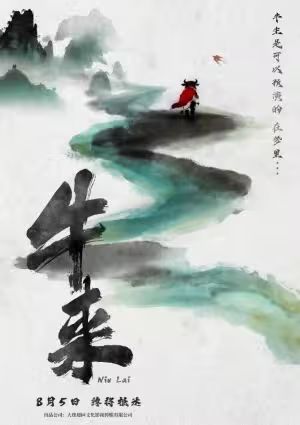
Niu Lai (牛来, pronounced roughly “nyoh-lie”) is an 86-minute Chinese animated film about a timid calf who wanders into a dream and comes back a warrior. It opened in Chinese theaters on August 5, 2026, to almost no attention and a jaw-dropping ¥7,169 (about $1,000) in ticket sales over its first nine days.
By the time I sat down to watch it in the third week of August, word of mouth, mockery, and a stock market pun had pushed its cumulative gross past ¥28 million, according to Maoyan, the ticketing platform that tracks Chinese box office data.
Here is the short version of my recommendation. If you love watching how internet culture turns failure into folklore, if you have any soft spot for outsider art made with more heart than money, or if you just want ninety minutes that will make you feel something you cannot quite name, watch it. If you need competent animation, a script that holds together, or a reason to trust a five-star review, skip it and read the rest of this piece instead, because I am about to save you the trouble.
Who Niu Lai Is Actually For
If you are the kind of viewer who tracks internet culture and enjoys watching a story unfold in close to real time, this film is genuinely worth your ninety minutes, not despite its flaws but partly because of them. If you are a parent looking for a family film with a straightforward, if simply told, message about courage and loss, it works on that level too, though I would watch the mother’s death scene first if you have a young or sensitive child. If you are a cinephile looking for craft, technical ambition, or a script that holds together scene to scene, this is not your film, and I would not pretend otherwise to sell you on it.
As of this writing, Niu Lai has not been reported as receiving any festival selections, critical awards, or industry recognition, and I have found no evidence that any are expected. Its entire cultural footprint rests on the box office story and the internet reaction to it, not on critical acclaim, and that is an important distinction to hold onto while reading anything, including this piece, that treats the film as a phenomenon worth examining.
Background
To understand Niu Lai, you first need to understand the people behind it.
The film was directed by Xin Yumeng and written by Sun Lifang, a son-and-mother team. Xin, whose background was in interior design and decoration, had never made a film before. Sun, in her 60s, taught herself screenwriting from scratch. Together, they were the sole crew members: writers, directors, voice actors, producers, and even composers. Sun wrote the soundtrack and performed the theme song herself.
The production company behind the film, Dalian Jingyuan Culture Film and Television Media, started as an interior design and decoration company in 2016 before pivoting to media production in July 2021. Xin and Sun are respectively the legal representative and financial officer of the company. In other words, this was a family operation through and through.
Production spanned five years and cost only several thousand yuan, a fraction of what even a low-budget indie film typically costs. To save money, they purchased second-hand equipment. Xin conceived the idea in 2021, drawing inspiration from the fact that 2021 was the Year of the Ox, the zodiac sign of his father.
The film received its public screening license from China Film Administration on 25 August 2025. It had no trailers, no interviews, and no promotional campaigns. The only advertisement was an online poster featuring a traditional ink wash painting design. Some cinema employees, lacking official physical posters, even filled display frames with hand-drawn posters.
The distributor, Tianjin Yamazaki Film, was reportedly advised against releasing Niu Lai due to its quality but chose to proceed because it was run by a friend of Xin.
The film premiered in 245 theaters on 5 August 2026. By 14 August, it had been reduced to just 4 theaters. Then something unexpected happened.
Niu Lai Plot Summary: A Dream Within a Dream
I want to be honest about something before I get into this. Niu Lai is not a plot-heavy film. Five years of work went into an 86-minute dream fable that spends most of its runtime on mood, repetition, and a handful of encounters rather than incident after incident, and I am not going to invent scenes that are not there just to pad this section out. What follows is the complete story, start to finish, as accurately as I can lay it out.
The film opens with a skylark drifting over a dreamscape, watching a young calf named Niu Lai grow up. From the start, Niu Lai is timid. He has spent his entire life sheltered by his mother and by the herd, and he is wary of almost everything, which the film treats less as a character flaw and more as a starting condition he has to grow out of.
One day, Niu Lai follows the skylark and falls into a long, immersive dream. This dream is not a side trip. It is the spine of the whole film, an extended trial that forces him to confront ideas of life and death that his sheltered upbringing never prepared him for. Deep inside this dreamed grassland, he meets a mysterious spirit serpent.
The serpent tells him, in essence, that there is no such thing as absolute safety anywhere in the world, and that he needs to learn vigilance and self-reliance if he wants to survive it.
Niu Lai does not fully grasp what the serpent means at first, but the film makes clear he holds onto the words anyway, and they sit with him for the rest of the story.
His next major relationship in the dream is with Bao La, a leopard who becomes his closest companion. This is where the film’s central irony shows up: Bao La is brave and protective, shielding the herd during a wolf attack and generally acting as Niu Lai’s guardian during the herd’s migration, but the herd distrusts and shuns him anyway, purely because he is a predator, even after he has proven himself.
It is a small, understated piece of social commentary sitting inside what otherwise plays like a children’s fable, and I think it is one of the more interesting choices Sun Lifang made as a writer, whether or not the execution lands.
The peace does not last. While the herd is migrating, the wolf pack returns and this time succeeds in attacking. To buy her son a chance to escape, Niu Lai’s mother sacrifices herself. This is the emotional hinge of the entire film, the moment everything before it has been building toward, and even watching it inside a film this rough around the edges, I felt it land. After this loss, Niu Lai stops being the frightened calf from the opening scenes.
He starts resisting the forces that have hurt his family and, in a turn that broadens the film’s target from wolves to something more pointed, the humans and the machinery that have damaged the forest the herd depends on. It is a small but real environmental note buried inside a family fable, and it is one of the film’s more ambitious swings.
Niu Lai eventually wakes up. The dream dissolves, but what he learned inside it does not. He carries the courage, the sense of responsibility, and the understanding he built in that dreamed grassland back into his waking life. The film closes with him standing firm, ready to protect what matters to him, reunited with the herd, now led by his father.
That is the whole story. It is a coming-of-age fable wrapped in dream logic, built around loss, self-reliance, and inherited responsibility, and it owes an obvious debt to older fable structures where an animal protagonist has to survive a trial to earn belonging in the herd. What makes it worth talking about is not the plot.
It is everything around the plot.
Niu Lai Analysis
Direction and Cinematography
Let’s be direct: the animation quality of Niu Lai has been widely described as “disaster-level,” “shocking,” and “crude”. The 3D modeling is stiff, the character movements are jerky, and the visual effects would look dated even by early 2000s standards.
But here’s the thing: that’s not necessarily a weakness in the eyes of its fans.
Many viewers have praised the film’s “hand-crafted” quality as a refreshing antidote to the polished, AI-generated content that dominates social media algorithms. One Weibo user wrote: “That’s some serious craftsmanship”. Another called it “pure handmade” and the biggest “dark horse” of the summer movie season.
The director’s vision, as far as I can tell, wasn’t about technical perfection. It was about telling a story , and doing so with whatever resources were available. Xin Yumeng has been quoted as saying the creators didn’t want to let precision get in the way of story. In an age where so much content feels factory-produced, there’s something almost rebellious about that approach.
Acting Performances
Since Xin Yumeng and Sun Lifang were the only voice actors, evaluating the performances is a bit tricky. Neither had professional acting experience. The dialogue has been described by some viewers as featuring Northeastern accents and, in one memorable review, “mental breakdown” levels of intensity.
Yet, as one BBC-interviewed audience member put it: “The director’s technique really isn’t good, but that pure-hearted sincerity is what makes him an artist”. Another viewer said: “If the score is 10, I give it an 8… It’s good because it’s truly bad to a certain degree, and I genuinely had a great time watching it”.
So, are the performances “good” in a traditional sense? No. Are they memorable and oddly endearing? Absolutely.
Script and Dialogue
The screenplay has been criticized for being confusing and unfocused. One film industry professional, speaking anonymously, said the film was “bad in every aspect imaginable, including the story”. A Douban user wrote: “The plot is intensely boring , it drove me crazy!”
That said, the story’s themes , courage, responsibility, loss, and self-discovery , are universal. The film’s emotional core, particularly the mother’s sacrifice, has resonated with many viewers. As one audience member told BBC: “Niu Lai’s story itself is good, and that’s what I find moving”.
The pacing, however, is another issue. The dream-within-a-dream structure can feel disjointed, and the 86-minute runtime reportedly drags in places.
Music and Sound Design
Sun Lifang, the mother of the duo, wrote the soundtrack and performed the theme song herself. For a film made on a shoestring budget, the music is surprisingly earnest. It’s not professionally produced, but it carries an emotional weight that fits the film’s themes.
Niu Lai Themes and Messages
Niu Lai explores several themes that resonate deeply with its audience:
- Courage and Responsibility: The protagonist’s journey from timidity to bravery mirrors the universal human experience of growing up and facing one’s fears.
- Loss and Sacrifice: The mother’s sacrifice is a poignant reminder of parental love and the costs of protection.
- Authenticity vs. Perfection: In an era of AI-generated content, Niu Lai stands as a testament to human effort , however flawed.
- Community and Belonging: The herd’s distrust of Bao La, despite his heroism, speaks to themes of prejudice and the difficulty of being an outsider.
Perhaps the most interesting theme, however, is the one audiences have projected onto the film: resistance against AI. As one social media user put it, “Niu Lai is good precisely because it’s honest”. In a world where algorithms produce increasingly flawless content, there’s something deeply human about a film that’s unapologetically imperfect.
Comparison
How does Niu Lai compare to other films in its genre or cultural moment?
Let’s start with the obvious: it’s nothing like Ne Zha 2 or other slick, big-budget Chinese animations. Those films are technically polished, professionally produced, and commercially viable from the start. Niu Lai is the opposite in almost every way.
Critics have compared its popularity to The Rocky Horror Picture Show (1975) and The Room (2003), cult classics that achieved fame precisely because of their flaws. Like those films, Niu Lai has become a shared cultural experience, something people watch because it’s bad, not despite it.
In terms of box office performance, Niu Lai has held its own against Hollywood blockbusters like The Odyssey and Spider-Man: Brand New Day. According to Bloomberg, the film ranked fifth at China’s daily box office by 18 August, with cumulative sales exceeding 20 million yuan.
That’s extraordinary for a film that made just 7,705 yuan in its first ten days.
What sets Niu Lai apart is its origin story. Made by two people over five years with second-hand equipment, it’s the ultimate underdog tale. And in an industry dominated by big studios and big budgets, that narrative resonates.
Audience Appeal and Reception
The reception of Niu Lai has been nothing short of polarizing.
On one hand, you have audiences who find the film hilarious, endearing, and oddly moving. One viewer told the BBC: “A movie brought me so much joy; if I still call it a bad movie, I think that’s unfair to it”. Another said: “In an era where AI is so popular, did the creative team choose a handcrafted, somewhat crude visual style to convey a sense of ‘returning to one’s true self?’”
On the other hand, you have critics and industry professionals who see Niu Lai as an embarrassment. The state-owned Beijing News warned that cinemas risk “losing the trust” of viewers if they “continue to lower their standard” with additional screenings. The commentary argued that Niu Lai “once again lowered the bar for audiences’ expectations of poorly made films”.
On Douban, China’s major film review platform, Niu Lai received a score of 5.9 out of 10 from over 25,000 users. The rating distribution is striking: 35.8% gave it five stars, while 37.8% gave it just one star. As one observer noted, the distribution resembles “ox horns” , polarized at both ends, with few middle-ground ratings.
Some viewers have called it “one of the worst films ever made”, while others have hailed it as “the true wandering poet of the twilight era”. One Douban user wrote: “Even the most 简陋 (crude) genuine emotion is greater than the most 精致 (exquisite) pretentiousness and grand narratives”.
The film has also gained international attention. BBC, The Guardian, Bloomberg, and other major outlets have covered its unlikely success. It’s scheduled for release in Singapore on 1 September.
Personal Insight: What Niu Lai Teaches Us Today
I’ll be honest: I went into Niu Lai expecting to laugh at it. And I did laugh , a lot. But somewhere between the jerky animations and the confusing plot, I found myself genuinely moved.
Here’s the thing: we live in an age of perfection. AI can generate stunning visuals in seconds. Algorithms can predict what we want to watch before we even know it ourselves. Everything is polished, optimized, and engineered for maximum engagement. And yet, somehow, much of it feels… hollow.
Niu Lai is the opposite of hollow. It’s messy, awkward, and technically flawed. But it’s also real. It’s the product of two people who refused to let their lack of training or resources stop them from telling a story. In a world that often feels dominated by faceless corporations and machine-generated content, that kind of human effort is rare , and increasingly precious.
One viewer told BBC: “The director’s technique really isn’t good, but that pure-hearted sincerity is what makes him an artist”. I think that sums it up perfectly.
Does that mean Niu Lai is a “good” film? By conventional standards, no. But maybe conventional standards don’t matter as much as we think. Maybe what audiences are really hungry for isn’t perfection , it’s connection. And Niu Lai, for all its flaws, offers that in spades.
The film’s success also raises uncomfortable questions about the film industry. As one industry professional put it, Niu Lai’s success “feels like an embarrassment to the Chinese film industry”. And they’re not wrong. When a film this technically flawed can outperform professionally produced blockbusters, what does that say about the industry? About audiences? About what we truly value?
I don’t have easy answers. But I do know this: Niu Lai has sparked a conversation that goes far beyond the film itself. And that, perhaps, is its greatest achievement.
Appreciations for Niu Lai
Here are some notable quotes about Niu Lai from various sources:
“You may regret for 80 minutes if you watch it, but if you don’t, you’ll regret it for life.” , Popular social media post about the film
“In an era where AI is so popular, did the creative team choose a handcrafted, somewhat crude visual style to convey a sense of ‘returning to one’s true self?’” , Douban user
“The director’s technique really isn’t good, but that pure-hearted sincerity is what makes him an artist.” , BBC-interviewed audience member
“It’s good because it’s truly bad to a certain degree, and I genuinely had a great time watching it.” , American viewer Aubrie
“Niu Lai is good precisely because it’s honest.” , Social media user
“Even the most crude genuine emotion is greater than the most exquisite pretentiousness and grand narratives.” , Douban user
“Bad in every aspect imaginable, including the story, special effects and almost every element that a movie is expected to have.” , Anonymous film industry professional
“This record is unprecedented and will likely remain so.” , Weibo movie-tracking account
Pros and Cons
Pros
- Genuine human effort: Made by two people over five years with no professional training , you can feel the dedication.
- Cult appeal: It’s so bad it’s good, making it a perfect candidate for midnight movie screenings.
- Authenticity: In an age of AI-generated content, Niu Lai feels refreshingly real.
- Emotional core: Despite the technical flaws, the story’s themes of courage, loss, and responsibility resonate.
- Shared experience: Watching Niu Lai has become a cultural event , something people do together.
- Underdog narrative: The story behind the film is as compelling as the film itself.
Cons
- Poor animation quality: The 3D modeling and character movements are dated and stiff.
- Confusing plot: The dream-within-a-dream structure can be hard to follow.
- Amateurish voice acting: The performances lack professional polish.
- Slow pacing: The 86-minute runtime reportedly drags in places.
- Polarizing reception: You’ll either love it or hate it , there’s little middle ground.
- Industry concerns: Critics worry it lowers standards for Chinese cinema.
Conclusion
So, what’s my final verdict on Niu Lai?
Honestly, I can’t recommend it in the traditional sense. If you’re looking for a technically polished, narratively coherent animated film, look elsewhere. Niu Lai isn’t that , and it doesn’t pretend to be.
But if you’re looking for something different , something that challenges your assumptions about what art should be, something that makes you laugh and think in equal measure , then Niu Lai is worth your time. It’s a film that succeeds despite (or perhaps because of) its failures. It’s a reminder that art doesn’t have to be perfect to be meaningful. And in a world that often feels overproduced and under-sincere, that’s no small thing.
Would I watch it again? Probably not. But I’m glad I watched it once. And I suspect millions of others feel the same way.
Final recommendation: If you’re curious about cult cinema, enjoy underdog stories, or just want to be part of a cultural moment, give Niu Lai a shot. Just don’t expect a masterpiece. Expect something far more interesting: a beautiful, chaotic, utterly human mess.
Rating: 3/5 stars , not for technical merit, but for heart, sincerity, and sheer audacity.







