Last updated on July 31st, 2026 at 02:04 pm
Ever wonder why some people seem to coast to success while others with equal talent grind for years and get nowhere? I’ll be honest with you: before I picked up Malcolm Gladwell’s Outliers, I bought into the myth. I believed that success was mostly about individual grit, intelligence, and making the right choices. If someone was a billionaire, a rock star, or a superstar lawyer, I assumed they simply outworked and outsmarted everyone else.
Then I read Outliers, and it completely upended how I see the world.
Table of Contents
Overview
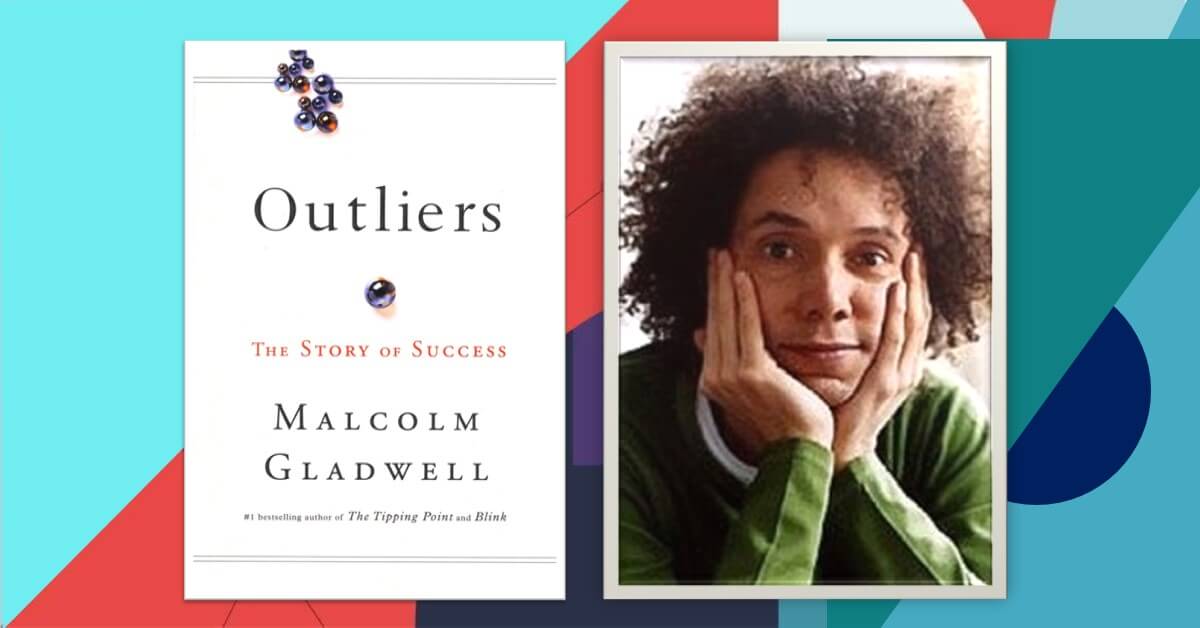
Outliers: The Story of Success isn’t another self-help book telling you to wake up at 5 AM and grind harder. Instead, it’s a provocative argument that we’ve been asking the wrong question about success. Gladwell doesn’t ask “What are successful people like?” He asks “Where are they from?”
Published by Little, Brown and Company on November 18, 2008, the book debuted at number one on The New York Times bestseller list and held that position for eleven consecutive weeks. It has since sold over 1.6 million copies worldwide.
Gladwell, a staff writer for The New Yorker and former business and science reporter at the Washington Post, takes us on an intellectual journey through the world of Outliers—the best and the brightest, the most famous and the most successful.
He examines why the majority of Canadian hockey players are born in the first few months of the year, how Bill Gates achieved his extreme wealth, why the Beatles became the Beatles, and how cultural differences play a large part in perceived intelligence.
The central thesis? Success isn’t primarily about individual merit. It’s about hidden advantages, extraordinary opportunities, and cultural legacies that allow certain people to learn, work hard, and make sense of the world in ways others cannot. As Gladwell writes in the introduction, “People don’t rise from nothing. We do owe something to parentage and patronage”.
Reader recommendation
Who will actually love this book?
If you’ve ever felt frustrated by the “just work harder” advice that dominates our culture, you’ll find Outliers validating and eye-opening. It’s perfect for people who enjoy questioning conventional wisdom, who are curious about sociology and psychology, and who want to understand why systemic inequalities persist. Parents, educators, managers, and anyone in a position to create opportunities for others will find the book particularly valuable.
Who should probably skip it?
If you’re looking for a practical step-by-step guide to becoming successful, this isn’t that book. Gladwell himself has said he’s “just trying to start a conversation”, not providing a blueprint. If you prefer hard data over compelling anecdotes, you might find his methodology frustrating.
The book has been criticized as “glib, poorly reasoned and thoroughly unconvincing” by The New York Times, and some readers feel Gladwell cherry-picks examples to fit his narrative. If you’re deeply committed to the “pull yourself up by your bootstraps” philosophy, you might find this book uncomfortable or even offensive.
Introduction
“Outliers: The Story of Success” by Malcolm Gladwell
- Publication Date: November 18, 2008
- Publisher: Little, Brown and Company
- Pages: 304 (A5)
- Genre: Non-fiction, Psychology, Sociology, Business
Malcolm Gladwell is a Canadian journalist, author, and public intellectual widely recognized for transforming complex ideas from psychology, sociology, history, and behavioral science into compelling narratives that appeal to a broad audience. He’s a staff writer for The New Yorker and was formerly a business and science reporter at The Washington Post.
His previous books, The Tipping Point and Blink, have sold nearly five million copies combined.
Context
Outliers sits at the intersection of psychology, sociology, and business. It’s part of a genre of popular nonfiction that Gladwell helped pioneer—taking academic research and making it accessible and entertaining for a mass audience.
The book challenges the deeply ingrained American myth of the self-made man, arguing instead that success is a product of circumstance, culture, and opportunity.
Purpose
The book’s central argument is that we’ve been thinking about success all wrong. Gladwell writes: “It is only by asking where they are from that we can unravel the logic behind who succeeds and who doesn’t”. He argues that outliers—people whose achievements fall outside normal experience—follow a peculiar and unexpected logic. Their success isn’t just about intelligence or ambition; it’s about:
- Hidden advantages (like being born in the right month for hockey)
- Extraordinary opportunities (like having access to a computer in 1968)
- Cultural legacies (like the work ethic passed down from rice farmers)
As Gladwell states in the introduction, “The values of the world we inhabit and the people we surround ourselves with have a profound effect on who we are”.
Background
To understand “Outliers,” you need to know where Gladwell is coming from. He’s a master storyteller who popularizes academic research. His previous book, “The Tipping Point,” introduced the idea that social phenomena spread like diseases. “Blink” argued that snap judgments can be as good as carefully considered decisions.
With Outliers, Gladwell takes on perhaps his most ambitious subject: success itself. He’s not interested in incremental achievement but in the extreme outliers—the Bill Gateses, the Beatles, the top 0.1% of performers in any field. What explains their extraordinary success?
The book is divided into two parts: Opportunity and Legacy. In Part One, Gladwell shows how hidden advantages and timing create opportunities for success. In Part Two, he demonstrates how cultural legacies—the traditions and attitudes we inherit from our forebears—shape our patterns of achievement.
Outliers Summary: 8 Lessons
1. The Matthew Effect—Success Breeds Success
Gladwell opens with Canadian hockey. If you look at the rosters of elite junior hockey teams, something strange jumps out: an overwhelming number of players are born in January, February, and March. In fact, 40% of players in elite Canadian hockey leagues are born between January and March.
Why? Because the cutoff date for age-class hockey in Canada is January 1. A boy born on January 2 plays alongside someone born on December 31 of the same year. At age nine or ten, that twelve-month gap represents an enormous difference in physical maturity.
Coaches select the “best” players for traveling all-star teams at age nine or ten, and they naturally choose the bigger, more coordinated kids—the ones born earlier in the year. These kids get better coaching, more practice, and better teammates. By age thirteen or fourteen, they really are better. The initial advantage snowballs.
Gladwell calls this the “Matthew Effect,” after the biblical verse: “For unto everyone that hath shall be given, and he shall have abundance. But from him that hath not shall be taken away even that which he hath”.
The implication is profound: We think we live in a meritocracy where the best rise to the top. But in reality, systems often reward those who were simply lucky enough to be born at the right time.
He shows that the selection process of the player from their early age—at school. “It locks children into the patterns of achievement and underachievement, encouragement and discouragement, that stretches for year on and on for years”. Meaning, the children who are born in the early part of the ear, and got admitted early at school give an advantage over, the children who got admitted in the later parts of the year.
2. Success Is the 10,000-Hour Rule of Practice Makes Perfect (But You Need the Opportunity to Practice)
This is probably the most famous concept from “Outliers.” Gladwell argues that “ten thousand hours of practice is required to achieve the level of mastery associated with being a world-class expert—in anything”.
He illustrates this through the story of Bill Joy, who co-founded Sun Microsystems and rewrote the Unix operating system. Joy happened to enroll at the University of Michigan in 1971, just as the school opened one of the first time-sharing computer centers in the world.
He could program for hours without the tedious punch-card system that dominated elsewhere. By the time he graduated, he had spent roughly 10,000 hours programming.
The same pattern appears with the Beatles.
Before their famous 1964 appearance on The Ed Sullivan Show, they had performed live an estimated 1,200 times—mostly in Hamburg, Germany, where they were forced to play eight hours a night, seven days a week. As John Lennon later said, “We got better and got more confidence. We couldn’t help it with all the experience playing all night long”.
What Bill Gates had was an incredibly lucky series of events. People like John Lennon, Paul McCartney, George Harrison, and Ringo Starr of the Beatles, Bill Joy, and Bill Gates got extraordinary opportunities to use 10,000 hours opportunity.
Billy Joy, from “Bill Joy got an extraordinary, early opportunity to learn programming on a time-sharing system as a freshman in college in 1971. Bill Gates got to do unlimited real-time programming as an eighth-grader in 1968 at Lakeside Junior High.
The Beatles were lucky to be invited to Homberg bars to practice throughout the weeks for 10,000 hours until they became famous. Bill Joy was fortunate to be at the University of Michigan, Bill Gates was fortunate that he came from a wealthy family to be at Lakeside School, where only wealthy kids were able to be admitted.
Regarding opportunity he says, “Biologists often talk about the “ecology” of an organism: the tallest oak in the forest is the tallest not just because it grew from the hardiest acorn; it is the tallest also because no other trees blocked its sunlight, the soil around it was deep and rich, no rabbit chewed through its bark as a sapling, and no lumberjack cut it down before it matured”.
The catch? You can’t put in 10,000 hours without access to the right opportunities. Bill Joy got lucky with the Michigan Computer Center. The Beatles got lucky with Hamburg. Talent matters, but opportunity matters just as much.
3. The Trouble with Geniuses While IQ Isn’t Everything
Gladwell introduces Christopher Langan, a man with an IQ of 195—higher than Einstein’s. Langan could teach himself to read at age three and breeze through college-level textbooks in two days. Yet he ended up working as a bouncer on Long Island, never achieving the academic success his intelligence seemed to promise.
Why? Because Langan lacked what psychologist Robert Sternberg calls “practical intelligence”—the ability to read situations correctly and get what you want from the world. He couldn’t navigate the bureaucratic systems of academia. He didn’t know how to advocate for himself.
Gladwell contrasts Langan with Robert Oppenheimer, the physicist who led the Manhattan Project. Oppenheimer tried to poison his tutor in graduate school—and got probation. He had no administrative experience and was considered impractical—yet he was chosen to lead the atomic bomb project.
The difference? Oppenheimer came from a wealthy, well-connected family. He attended the Ethical Culture School, one of the most progressive schools in the nation, where he was “infused with the notion that he was being groomed to reform the world”. He learned entitlement—the sense that he had a right to pursue his own preferences and to actively manage interactions in institutional settings.
Langan, by contrast, grew up in poverty with an abusive stepfather. His family had “less than zero knowledge” of how to navigate institutions. He learned constraint, not entitlement.
The 1930s were the time when the American economy went through the greatest transformation in history.
The lesson: Intelligence is necessary for success, but it’s not sufficient. You also need practical intelligence—and that comes from your family and community.
4. Success is Timing, Demographics, Culture, and Opportunity
Joe Flom built Skadden, Arps, Slate, Meagher & Flom into one of the most powerful law firms in the world. His story seems like a classic rags-to-riches tale: poor Jewish immigrant kid overcomes discrimination and builds a billion-dollar firm.
But Gladwell shows that Flom’s success was anything but random.
First, timing. Flom was born in the 1930s, during a demographic trough. The generation born in the 1930s was much smaller than the generations before and after. That meant smaller class sizes, better teachers, more college opportunities, and less competition for jobs.
Second, culture. Flom’s parents were garment workers. The garment industry was entrepreneurial and meaningful—it required autonomy, complexity, and a clear connection between effort and reward. Flom learned these lessons at home.
Third, opportunity. The old-line Wall Street law firms wouldn’t hire Jews in the 1940s and 1950s. So Flom and other Jewish lawyers had to take the work the white-shoe firms disdained: litigation and hostile takeovers. When the corporate takeover boom hit in the 1970s, Flom was perfectly positioned. He’d been practicing takeover law for twenty years while the establishment firms ignored it.
He convincingly proved that American billionaires like John D. Rockefeller, (1839), Andrew Carnegie (1835), Frederick Weyerhaeuser, (1834), Jay Gould (1836), Marshall Field (1834), George F. Baker (1840), Hetty Green (1834), James G. Fair (1831), Henry H. Rogers (1840), J. P. Morgan (1837), Oliver H. Payne (1839), George Pullman (1831), Peter Arrell Browne Widener (1834), Philip Danforth Armour (1932) were lucky to be billionaires because the time they were born: 1930s.
People born before 1954 and after 1955 did not get that opportunity. For them, success is a combination of the opportunity to practice, hard work, and the 10,000 general rules of success.
The lesson: Success is a product of being born at the right time, inheriting the right cultural values, and being excluded from the “right” opportunities.
5. Success is Culture
This is perhaps the most controversial chapter in the book. Gladwell examines why Korean Air had a disproportionately high crash rate in the 1980s and 1990s—seventeen times higher than United Airlines.
His explanation? Power distance. In Korean culture, there’s a deep respect for hierarchy. Subordinates are expected to defer to superiors. In the cockpit, this meant that first officers were reluctant to challenge captains, even when the captain was making a mistake.
Gladwell contrasts this with the Avianca crash in 1990, where the Colombian first officer used extremely “mitigated” speech—hints rather than direct commands—when trying to tell the captain they were running out of fuel. The air traffic controllers, who were New Yorkers with a low-power-distance culture, didn’t take the hints seriously. The plane crashed.
For people to succeed or to be a failure in their professionalism, our cultural legacy is also responsible. Both success and failure correlate with our culture and cultural legacy.
Such as, why students from Japan, Korea, Singapore, and Taiwan are better in mathematics than their American peers, our agrarian culture happens to explain a lot, according to Malcolm.
The reason why so many Korean airline crashes happened so frequently can be explained through the ‘culture honour’ lens. ‘Culture honour’ means a person is ready to respond to fight at the slightest challenge to his reputation, which depends on his livelihood, wealth, subsistence or self-worth. Being successful means upholding self-worth.
The frequency of Korean Airlines’ crashes is related to Koreans’ high power-distance index (PDI). Power distance is concerned with attitudes toward hierarchy, specifically with how much a particular culture values and respects authority.
It happened because of high respect for the captain; the first officer and flight officers could not intervene with him even when he was wrong while flying.
Because of high respect for the pilot, flight officers tend to speak in “mitigated speech”, which refers to any attempt to downplay or sugar-coat the meaning of what is being said. We mitigate when we’re being polite, or when we’re ashamed or embarrassed, or when we’re being deferential to authority.
A cockpit is not for mitigated speech; it’s a place for command, especially when a crash is about to happen.
Malcolm shows that the 1990 Colombian airliner Avianca 052 crash was responsible not only for “fuel exhaustion”, but also because of mitigated speech. The first officer of the flight thought the air traffic controller in New York was angry with him when he reported the ‘fuel exhaustion ‘, and his high power distance was hurt.
He thought the man at the ATC disrespected him. The situation was not communicated properly due to Westerners’ “transmitter orientation” and Korean’s “receiver orientation”. Westerners believe that it is the speaker’s responsibility to communicate ideas clearly and unambiguously, while Asians believe that it is the listeners’ responsibility to make sense of what is being said by the speaker.
Korean Air did not succeed—it did not right itself—until it acknowledged the importance of its cultural legacy. Things for Korean Air changed when they wanted to leave their cultural legacy out of the cockpit. The change in their perception of cultural honour brought about success.
Therefore, we can acknowledge that success also depends on our opportunity to transform our relationship to our works. Cultural legacy plays a vital role in the way of our success and can be a great obstacle to it.
The lesson: Cultural legacies are powerful forces that persist generation after generation. They can be deadly if we ignore them. But they can also be changed—Korean Air turned itself around by switching to English in the cockpit and retraining pilots.
6. Success is not Higher IQ: Marita’s Bargain
Gladwell concludes with the story of KIPP (Knowledge Is Power Program) schools in the South Bronx. These are charter schools that serve low-income minority students. KIPP students start school at 7:25 AM and finish at 5:00 PM. They attend on Saturdays and for three extra weeks in the summer.
The results? By eighth grade, 84% of KIPP students are performing at or above grade level in math—on par with students in wealthy suburbs.
The secret? More time. KIPP students spend 50-60% more time learning than traditional public school students. They don’t have long summer vacations, which means they don’t lose ground while wealthier kids are attending summer camps and enrichment programs.
One KIPP student, Marita, wakes up at 5:45 AM and does homework until 11 PM. She’s given up her old friends and her free time. In return, she gets a chance to escape poverty.
Having a higher level of IQ is a precondition to success in the real world. Many people with higher IQ levels than Albert Einstein did not succeed. There is no relationship between IQ and success. Malcolm found that having an additional IQ does not seem to translate into any measurable advantage in the real world.
But that does not mean that there is no real difference between the IQ levels. To be successful, one just has to be intelligent enough. Just like in Basketball, after a certain point, height stops mattering, while one just needs to be tall enough at the initial stage.
An American college dropout named Christ Langan was famous for his IQ level. His IQ was 195, while Einstein had 150. He was born into a broken family, economically underprivileged and harsh conditions.
Malcolm has tried to tell us that for Christ Langan to have a higher IQ than Einstein does not make him smarter or more productive than Einstein. It simply means that people with a higher IQ can think better and more clearly, the way Langan mastered physics and mathematics.
“Having intelligence is not enough, but “Practical Intelligence”. “According to Robert Sternberg”, writes Malcolm, “Practical Intelligence” is a particular skill that allows you to talk your way of a “Murder rap” (a charge of murder).
The lesson: Marita doesn’t need a higher IQ or a better teacher. She needs opportunity. And opportunity means more time to learn.
7. Success is having practical intelligence
To Steenberg, “Practical Intelligence” is knowing what to say to whom, knowing when to say it, and knowing to say it with maximum effects.
‘White IQ is an innate ability, Practical intelligence” has to be learnt. It has to come from somewhere and the place where we seem to get this kind of attitude and skill is from our families.
Malcolm presents two family traits based on economic class: Middle Class and poor. Middle-class family parenting involved what is called “Concerted Cultivation”. A middle-class family attempts to actively “foster and assess a child’s talents, opinions, teaches to negotiate and reason”.
In concerted cultivation, a child is “taken to museums and gets enrolled in special programs and goes to summer camp, where he takes classes. When he’s bored at home, there are plenty of books to read, and his parents see it as their responsibility to keep him actively engaged in the world around him”. But for a child from a poor family, these are luxuries.
They teach their children to assert themselves with people in positions and authority. They are thought to have ‘the Sense of entitlement’.
On the other hand, there is the way poor families parent children. They follow the strategy of “accomplishment of natural growth.” They see it as their responsibility to care for their own.
“The poorer children were, to her mind, often better behaved, less whiny, more creative in making use of their own time, and had a well-developed sense of independence. But in practical terms, concerted cultivation has enormous advantages. The heavily scheduled middle-class child is exposed to a constantly shifting set of experiences. She learns teamwork and how to cope in highly structured settings. She is taught how to interact comfortably with adults, and to speak up when she needs to”.
This is practical intelligence” knowing your right, what to say when to say and assert yourself. Therefore, success is about class advantage. Being wealthier, going to better schools, and having a sense of entitlement does a lot more than having a higher IQ.
8. Success is the readiness with skill
From the calendar advantage, the happy accident of time to the ‘concerted cultivation, Outliers shows that successful people were successful because of their readiness with the skills the time necessitated. They were ready, having invested 10,000 hours into their profession before the revolution occurred. Moreover, no one succeeds from nothing.
They were just born at the right time in the right ethnicity. That’s why America’s Jews were successful lawyers or garment businessmen owing to the time and ethnicity.
However, regardless of one’s present disadvantage, the Outliers who did not triumph over adversities; rather, adversities ended up their opportunities. There are no self-made successful people.
People like Joe Flom, the successful takeover lawyer, used his adversity as stepping stones to success. Being a son of Jewish immigrant parents, growing up during the Great Depression, Joe could not attend powerful, white-shoe law firms. The elite WASP (white Anglo-Saxon protestant) law firms would not take cases related to corporate takeover and considered it ungentlemanly.
But, being one of the unemployed lawyers, he took the “whatever comes in the door” case. From the 1970s to 1980s, when the antipathy toward lawsuits fell, and the companies needed to be defended against a lawsuit from rivals, they needed people like Joe Flom for ‘Property Rights’.
Going by the logic of the 10,000-hours magic rule, Joe Flom had already put it in during his previous 20 years of practice of ‘proxy fight’, while on other white-shoe firms took such a case.
And when the time had changed, Joe had already become skilled with 10,000 hours at his disposal of proxy fights. And there was no better proxy fighter than him. The changed time changed him.
Nevertheless, throughout history, successful people were proven to be born at the right time and take advantage of the demographic, political and natural situation.
For American Jewish lawyers and businessmen, the 1930s were a magic time; 1955 was a magic time for software developers, while 1935 produced many entrepreneurs in history. Success also means taking advantage of time.
Outliers Analysis
What I Found Compelling
Outliers fundamentally changed how I think about success. Before reading it, I bought into the myth of the self-made man. I assumed that billionaires and rock stars got where they are because they were simply better than everyone else.
Gladwell demolished that assumption. He showed me that Bill Gates didn’t just “have a good idea”—he had access to a computer terminal in 1968, when almost no one else did. The Beatles didn’t just have talent—they had Hamburg, where they were forced to play for hours on end. Joe Flom didn’t just work hard—he was born at the right time, in the right culture, and was excluded from the “right” opportunities.
What I found most powerful was the idea that cultural legacies matter.
The work ethic of Asian rice farmers, the hierarchical respect in Korean culture, the entrepreneurial spirit of Jewish garment workers—these aren’t just interesting historical facts. They shape success and failure today.
The Roseto story that opens the book is a perfect metaphor. These Italian immigrants in Pennsylvania had the same diet and lifestyle as their neighbors, but they had dramatically lower rates of heart disease. Why? Because they had a strong community. They visited one another, cooked for one another, and had three generations living under one roof. The values of the world we inhabit have a profound effect on who we are.
What I Found Frustrating
I have to be honest: Gladwell’s methodology sometimes bothered me. He tells compelling stories, but he doesn’t always provide the data to back them up. The New York Times review called the book “glib, poorly reasoned and thoroughly unconvincing”, and I can see why.
The 10,000-hour rule is a great soundbite, but it’s been disputed. The authors of the original study that Gladwell cites have said he misused their research. Not everyone who puts in 10,000 hours becomes a world-class expert. And some people become experts with fewer hours.
The cherry-picking problem is real. Gladwell chooses examples that fit his thesis—Bill Gates, the Beatles, Joe Flom—but he doesn’t explain why other people with similar advantages failed. Why didn’t everyone at Lakeside School in 1968 become a billionaire? Why didn’t every band that played in Hamburg become the Beatles?
The lack of policy recommendations is another issue. Gladwell argues that we need to create more opportunities for everyone, but he doesn’t say how. Should we change school cutoff dates? Should we eliminate summer vacation? Should we mandate Crew Resource Management training for all organizations? He raises important questions but leaves the answers to us.
Strengths and Weaknesses
Strengths
1. Compelling storytelling. Gladwell is a master storyteller. He takes complex sociological concepts and makes them accessible and entertaining. I found myself reading “just one more chapter” long after I should have gone to bed.
2. Thought-provoking thesis. The idea that success is more about opportunity than individual merit is genuinely provocative. It challenges deeply held American beliefs about self-reliance and bootstraps.
3. Diverse examples. Gladwell draws on hockey, music, law, aviation, and math education. The variety keeps the book fresh and demonstrates that his thesis applies across fields.
4. Personal touch. The epilogue, where Gladwell tells his own family’s story, is powerful. He shows how his mother’s success depended on scholarships, family support, and historical circumstances. It’s a humbling acknowledgment that even his own success isn’t purely his own doing.
Weaknesses
1. Questionable methodology. Gladwell relies heavily on anecdotes and cherry-picked examples. He doesn’t always provide the data to support his claims, and he sometimes misrepresents the research he cites.
2. Oversimplification. The 10,000-hour rule is catchy, but it’s an oversimplification. Practice matters, but so do talent, luck, and other factors.
3. Lack of practical advice. If you’re looking for a step-by-step guide to success, this isn’t it. Gladwell identifies problems but doesn’t offer solutions.
4. Repetitive structure. Each chapter follows a similar pattern: present a puzzle, offer an explanation, provide examples. By the end, the formula feels a bit tired.
Comparison with Similar Works
The Tipping Point by Malcolm Gladwell. Gladwell’s earlier book explores how small changes can have big effects. It’s similar in style—compelling anecdotes and counterintuitive ideas—but focuses on social epidemics rather than individual success.
Blink by Malcolm Gladwell. Another Gladwell book, this one about snap judgments. Again, the style is similar, but the subject is different.
Grit by Angela Duckworth. Duckworth argues that passion and perseverance are more important than talent. While she agrees with Gladwell that effort matters, she places more emphasis on individual agency.
The Power of Habit by Charles Duhigg. Duhigg explores how habits shape our lives. Like Gladwell, he uses compelling stories and scientific research. But he offers more practical advice for changing habits.
Thinking, Fast and Slow by Daniel Kahneman. Kahneman’s book is more rigorous and data-driven than Gladwell’s. It’s also denser and less accessible. If you want the science behind Gladwell’s ideas, this is a good place to start.
David and Goliath by Malcolm Gladwell. Gladwell’s later book challenges our assumptions about advantages and disadvantages. It’s similar in style and subject to Outliers.
Conclusion
Outliers isn’t a perfect book. It’s not particularly rigorous, and it sometimes oversimplifies complex issues. But it’s an important book. It challenges us to think differently about success—to look beyond individual merit and see the hidden advantages, extraordinary opportunities, and cultural legacies that shape who we become.
I’ll never look at success the same way again. When I see a billionaire or a rock star or a superstar lawyer, I no longer assume they’re simply better than everyone else. I wonder about their birth date, their family background, their cultural legacy, and the opportunities they were given.
And that’s the point. Gladwell writes in the epilogue: “The outlier, in the end, is not an outlier at all”. Success is grounded in a web of advantages and inheritances—some deserved, some not, some earned, some just plain lucky. Understanding that doesn’t diminish success. It makes it more interesting—and more human.
About the author

MALCOLM GLADWELL is the author of the #1 international bestsellers The Tipping Point and Blink. He is a staff writer for The New Yorker and was formerly a business and science reporter at the Washington Post.