
Last updated on October 18th, 2026 at 09:10 pm
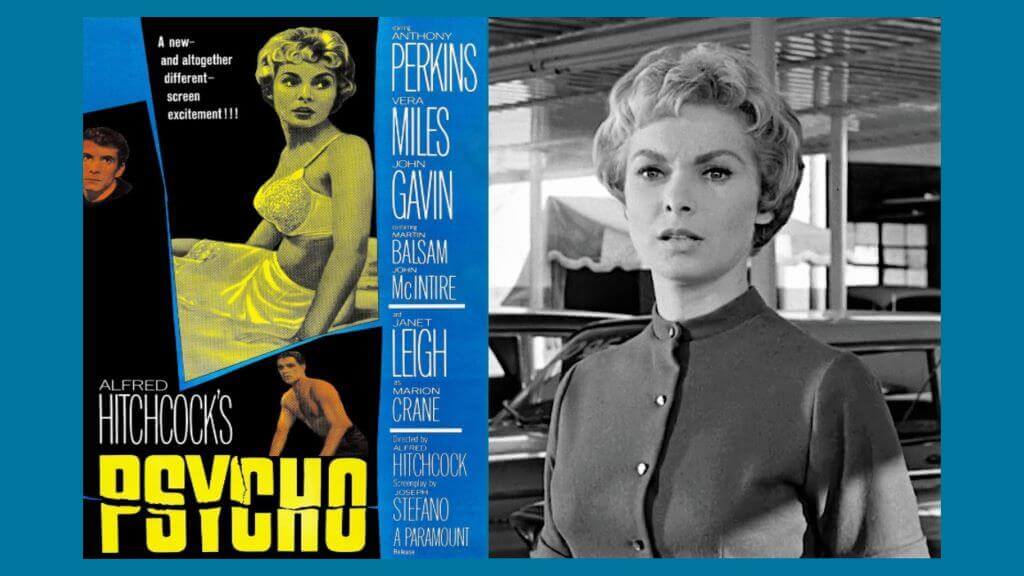
The Psycho 1960 film is the reason you cannot walk into a motel shower without a faint, irrational flicker of dread. It is also the reason a major studio director could walk away from a comfortable contract, finance his own movie with a television crew, and end up with the most profitable film of the year.
Alfred Hitchcock did not set out to make a masterpiece. He set out to make a quick, cheap shocker based on a paperback novel he had bought for $9,500. The result was a film that split critics, terrified audiences, and quietly rewrote the rules for what American cinema could show and say.
I have watched Psycho many times, and the thing that keeps bringing me back is not the twist.
It is the precision. Every frame feels like it was placed by someone who knew exactly how much the audience could take, and exactly when to push a little further. This article gives you the full picture: the production war, the plot, the psychology, the technical craft, and the legacy.
Whether you are a first-time viewer or someone who has read every book on Hitchcock, you should leave with a clearer sense of why this strange, nasty little film still matters.
Psycho (1960) was an independent, black-and-white production made for roughly $807,000 using Hitchcock’s television crew. It became a massive commercial success, earned four Academy Award nominations, and is now preserved in the National Film Registry.
Its shower scene and its narrative trick of killing the apparent protagonist halfway through changed horror cinema. The film’s power comes from its restraint, its score, and its refusal to explain its monster too early.
Who will appreciate this: This breakdown is for film students, horror fans, classic cinema newcomers, and anyone who wants to understand how a low-budget gamble became a cultural fault line. It is also for readers who are tired of plot summaries and want the production context, the critical fight, and the technical decisions that made the film work.
Table of Contents
Background: A Director, a Paperback, and a Studio That Said No
Psycho is based on Robert Bloch’s 1959 novel of the same name.
The book was loosely inspired by Ed Gein, a Wisconsin murderer and grave robber who was apprehended after killing two women. Hitchcock’s longtime assistant, Peggy Robertson, read a positive review of the novel and showed it to him.
Paramount’s studio readers had already rejected the premise, but Hitchcock acquired the rights anyway and reportedly ordered Robertson to buy up copies to preserve the story’s surprises.
Paramount did not want to make the film. The studio’s official position was that Bloch’s book was “too repulsive” and “impossible for films,” and executives denied Hitchcock his usual budget. Hitchcock responded by offering to finance the project himself and shoot it at Universal-International with his Shamley Productions crew. In place of his usual $250,000 director’s fee, he took a 60 percent stake in the film negative. The offer was accepted. Paramount distributed the film, but Hitchcock carried the risk.
This is the first reason Psycho matters. It is not a studio prestige picture. It is a director betting on his own instincts against the advice of the people who usually paid his bills.
Psycho 1960 Film Plot Summary
1. Marion Makes a Desperate Choice
The film opens in Phoenix, Arizona. Marion Crane (Janet Leigh) is a real estate secretary who meets her boyfriend, Sam Loomis (John Gavin), in a hotel room. They cannot marry because Sam is drowning in debt from his divorce. Marion returns to work and is handed $40,000 in cash by a client. She decides to steal it, packs her bags, and drives toward Sam’s home in Fairvale, California.
Sam is divorced, still paying alimony, and hesitant to marry again. Marion is tired of waiting for a future that never seems to arrive. She wants something real and pushes Sam to figure out how they can build a life together.
After their meeting, Marion goes back to work at a real estate office. That afternoon, a wealthy client named Tom Cassidy buys a property with $40,000 in cash. He says the money is meant as a wedding present for his daughter, as if wealth alone can guarantee her happiness.
Marion’s boss, George Lowery, tells her to deposit the cash at the bank. Instead, she takes it home. She claims she has a headache and leaves work early. Once she’s home, she starts packing. She has decided to run off with the money and start over with Sam.
That decision sets everything in motion. What begins as a desperate attempt to fix her life quickly turns into a nervous, paranoid journey with terrible consequences.
2. A Nervous Drive and an Unexpected Stop
Marion leaves Phoenix with the stolen cash. At an intersection, she spots Cassidy crossing the street. They only exchange a glance, but it rattles her. She worries he might recognize her and realize what she’s done.
She keeps driving as daylight fades. Eventually, exhausted, she pulls over and falls asleep in her car. The next morning, a highway patrol officer wakes her and starts asking questions. She hasn’t done anything wrong on the road, but his attention makes her nervous.
He checks her license and then lets her go.
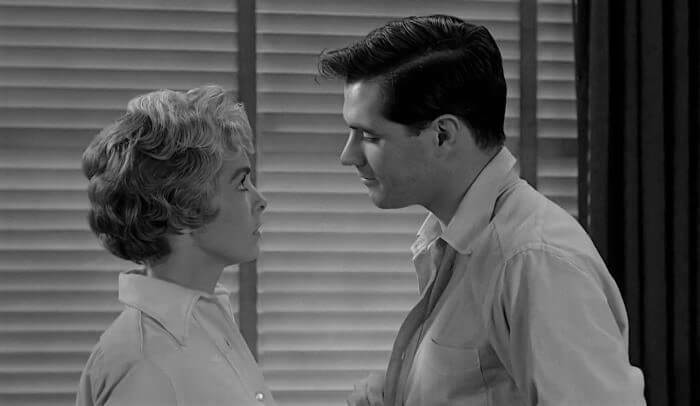
Marion can’t shake the feeling that the officer suspects her. When she stops at a used-car lot, she trades in her car and pays extra to make the switch. She hopes the new vehicle will make her harder to track. But the same patrol officer shows up again, watching her from across the street. His presence only makes her more afraid. She leaves the lot and gets back on the road, trying to put as much distance between herself and Phoenix as possible.
By evening, heavy rain makes it hard to see. Marion struggles through the storm until she spots a roadside place called the Bates Motel. With few options left, she decides to stop for the night.
3. Marion Meets Norman Bates
The motel looks quiet, almost abandoned. Marion finds nobody in the office, but she can see someone moving inside the big house on the hill behind the property. She honks her horn, and a young man comes down to greet her, apologizing for the delay.
He introduces himself as Norman Bates, the motel’s owner. Marion checks in under the name “Marie Samuels,” and Norman gives her a room near the office. He carries her things inside and tells her to call him if she needs anything.
Norman explains that the nearest place to get food is a fair distance away, so he offers to bring her something to eat at the office. While she waits, Marion tries to figure out where to hide the money. She ends up tucking it inside a folded newspaper and leaving it under a table lamp.
Their conversation is interrupted by an angry woman’s voice coming from the house above the motel. Marion assumes it’s Norman’s mother. The woman is furious that Norman has brought a female guest to the motel and says harsh things about Marion.
Norman brings Marion a simple meal anyway and apologizes for his mother’s behavior. The two start talking more comfortably. Norman comes across as shy and isolated. He tells her he likes taxidermy, especially preserving birds, and admits he doesn’t have many friends. When he asks where she’s headed, Marion gives a vague answer that makes it sound like she’s looking for somewhere private and far away.
As they talk, Norman begins to sense that Marion is running from something. Their conversation turns to the idea of being trapped—by circumstances, habits, and the choices people make. Norman thinks people often fight forces they can’t escape. Marion suggests that people sometimes create their own problems.
There’s an uncomfortable similarity between them. Both feel stuck, but they deal with that feeling in very different ways.
4. Norman’s Troubled Relationship with His Mother
Marion asks Norman why his mother is so hard on him. He explains that after his father died when he was young, his mother became emotionally dependent on him. Later, she got involved with another man, but he died too, leaving her even more isolated.
According to Norman, his mother has no one else. He feels responsible for taking care of her and can’t imagine leaving her, even though their relationship seems deeply unhealthy.
When Marion suggests that his mother might benefit from professional care, Norman gets defensive. He takes it as an attack on the woman he feels he has to protect. His reaction shows just how strongly he resists the idea of being separated from her.
Before leaving, Marion tells Norman that she plans to go back to Phoenix and face what she’s done. She has started to reconsider running away with the money.

After Marion returns to her room, Norman secretly watches her through a hole in the wall. That disturbing moment shows that his gentle manner hides something much creepier underneath.
Inside her room, Marion adds up her expenses and thinks about the money she took. She writes some calculations on paper, then destroys it and flushes the pieces away. She gets ready for bed and steps into the shower, as if she’s finally ready to put the day behind her.
5. The Shower Murder
While Marion is in the shower, a mysterious figure enters the bathroom. The person looks like an older woman and is carrying a large knife. Without warning, the intruder attacks Marion, stabbing her again and again.
The attack is sudden and brutal. Marion collapses in the bathtub as the water keeps running. The camera makes the violence feel chaotic through quick cuts and fragmented images rather than showing every detail.
When it’s over, Marion is dead. The money is still hidden in the newspaper.
Norman soon finds the body. He’s shocked by the blood, calls out to his mother, and then starts dealing with the aftermath. He cleans the bathroom, gets rid of the evidence, wraps Marion’s body, and puts it in the trunk of her car.
He gathers her belongings and drives the car away from the motel. He doesn’t realize the stolen cash is still tucked inside the newspaper. He pushes the car into a nearby swamp, and it slowly sinks under the water.
Norman’s cleanup is eerily efficient. It suggests he has dealt with something like this before, though it’s still unclear who the attacker really is and what Norman’s relationship to that person might be.
6. Marion’s Disappearance Raises Questions
Meanwhile, in Fairvale, California, Marion’s sister, Lila Crane, starts looking for her. She goes to Sam Loomis, hoping he knows where Marion went. Sam says he hasn’t seen her since their meeting.
Their search draws the attention of Milton Arbogast, a private investigator hired by Marion’s employer to find the missing money and track Marion down.
Arbogast questions people in the area and eventually ends up at the Bates Motel, where he meets Norman. Norman tells him about Marion’s visit but claims she left the next morning. Arbogast checks the register and finds the name “Marie Samuels,” the fake name Marion used.
The detective grows suspicious. Some details don’t add up, and Norman seems reluctant to talk about his mother. When Arbogast asks to speak with her, Norman refuses.
Arbogast leaves and calls Sam and Lila to update them. He says he’s making progress and plans to keep digging. Before long, he returns to the Bates property. This time, he goes into the house to try to speak with Norman’s mother directly. As he approaches an upstairs room, a figure suddenly appears and attacks him with a knife. Arbogast falls down the stairs, and the attacker strikes again, killing him.
Norman later gets rid of Arbogast’s body, and the detective becomes another missing person.
7. The Shocking Truth About Mrs. Bates
When Arbogast doesn’t come back, Sam and Lila get worried. They go to the local sheriff and explain that both Marion and the private investigator have disappeared.
During the conversation, they learn something strange: Norman’s mother, Norma Bates, has been dead for about ten years. She was murdered along with her lover, and authorities believed she had been poisoned.
That makes no sense. Sam and Lila believe they’ve seen a woman in the house on the hill, and Norman keeps talking as if his mother is alive. If Norma has been dead for a decade, who’s living in that house?
The sheriff brushes off their concerns and suggests they must have been mistaken. But Sam and Lila won’t let it go. They decide to go back to the motel and find out the truth themselves.
They check in pretending to be a married couple. Norman is suspicious of them, but he doesn’t immediately figure out why they’re really there.
Sam keeps Norman occupied while Lila searches for evidence. Her search leads her to the house on the hill, where she starts looking through the rooms, hoping to find Mrs. Bates.
Inside, the house feels oddly preserved, as if someone has kept living there despite all the years that have passed. Lila notices signs that a bed has been used recently, which only deepens the mystery.
When Norman realizes Lila has gone into the house, he attacks Sam and rushes upstairs to stop her.
8. The Final Confrontation
Lila keeps searching until she reaches the fruit cellar beneath the house. There she finds a seated figure dressed in old clothing. When she gets closer, she realizes it isn’t a living person at all—it’s a mummified corpse.
The horrifying truth comes out: Norman has been keeping his mother’s body instead of accepting that she’s dead.
Before Lila can fully process what she’s seeing, Norman enters the cellar. He’s wearing women’s clothing and a wig, carrying a knife, and acting as if he has become his mother. He tries to attack Lila, but Sam arrives in time and stops him. Sam restrains Norman and keeps him from killing her.
Norman is taken into custody, and the immediate danger is over. But the mystery of why he did all this still needs an explanation.
9. Norman Bates’s Disturbed Mind
At the police station, a psychiatrist explains Norman’s psychological history. Ten years earlier, Norman killed his mother and her lover after becoming intensely jealous of their relationship. He couldn’t cope with what he’d done, so he preserved his mother’s corpse and buried her coffin without the body.
Norman’s guilt and emotional dependence on his mother turned into a serious psychological disturbance. He created an internal version of her that could exist alongside his own identity. Sometimes he acted as Norman. Other times he became his mother and acted according to what he imagined she would think or do.
Whenever Norman felt attracted to another woman, the “mother” identity became threatening and possessive. In that state, he acted as if he were protecting his mother from a rival. That explains the murders of Marion and Arbogast: Norman’s behavior was being driven by the identity he had built around his dead mother.
After each killing, he slipped back into his usual identity and tried to cover up the crime. In his mind, his mother was responsible, which allowed him to distance himself from what he had done.
The psychiatrist’s explanation changes how the whole story fits together. The “living” Mrs. Bates wasn’t a separate person committing murders. She was an identity Norman took on, complete with his mother’s clothes and mannerisms.
By the end, Norman is alone in custody, with his mother’s identity having taken control of his thoughts. The mystery is solved, but the final moments are deeply unsettling: the personality Norman created seems to have swallowed the person he used to be.
Psycho isn’t just a story about murder. It’s a disturbing look at guilt, obsession, isolation, and what happens when a mind turns against itself.
Critical Analysis: Why the Psycho 1960 Film Still Works
The first thing to say about Psycho is that it is not really a mystery. The pleasure does not come from solving the case. It comes from watching the film manipulate you. Hitchcock and screenwriter Joseph Stefano made a structural choice that was radical for 1960: they killed the biggest star in the film at the end of the first act. Janet Leigh was the film’s most expensive and most recognizable performer, and she disappears roughly forty-seven minutes in. This decision disorients the audience. The rules you thought you understood no longer apply.
The second thing is the restraint. The shower scene is famous for its violence, but the violence is mostly implied. The knife never visibly enters Leigh’s body. The blood is chocolate syrup. The terror comes from the editing, the sound, and the rhythm of the cuts. Bernard Herrmann’s score for strings, with its shrieking violins, does more work than any prosthetic could. Hitchcock later said that “33% of the effect of Psycho was due to the music”. That may be an exaggeration, but not by much.
A major trait of the film is its economy. Hitchcock used 50mm lenses on 35mm cameras to approximate human vision, which pulls the audience into the space rather than keeping it at a distance.
The set was built on the same stage where Lon Chaney’s The Phantom of the Opera had been shot decades earlier. The Bates house was modeled on Edward Hopper’s painting House by the Railroad. Nothing is wasted. Every prop, every shadow, every line of dialogue is doing at least two jobs.
The film is also funny, in a dry, nasty way. Norman offers Marion sandwiches and milk. He talks about birds and taxidermy while a stuffed owl looms over them. The humor does not undercut the horror. It makes the horror more unsettling because it comes from a character who seems genuinely gentle.
Acting Performances: Perkins, Leigh, and the Supporting Cast
Anthony Perkins is the film’s engine. He plays Norman as a bundle of tics and hesitations, a man who seems more frightened of you than you are of him.
The performance is so effective that Perkins was typecast for the rest of his career. He reportedly said he would have taken the role again even knowing the consequences.
The genius of the performance is that it makes the audience sympathize with Norman before the truth is revealed. Stefano deliberately expanded the conversation between Marion and Norman to create that sympathy.
When Marion suggests institutionalizing Norman’s mother, Norman’s agitation reads as genuine pain, not villainy.
Janet Leigh does something difficult. She has to make Marion a sympathetic thief. Marion is not a hardened criminal. She is a woman who makes a bad decision and then decides to correct it. Leigh plays the moral turn with subtlety. The scene where she calculates the cost of the stolen money and decides to return it is one of the quietest and most important moments in the film. Leigh received an Academy Award nomination for Best Supporting Actress and won a Golden Globe.
Vera Miles as Lila and John Gavin as Sam are functional but not remarkable.
They are the investigators, the characters who move the plot forward after Marion’s death. Martin Balsam as Arbogast is more memorable. His scene with Norman in the motel office is a masterclass in escalating tension. Arbogast thinks he is in control.
He is not.
Themes and Messages: The Private Trap
The most quoted line in Psycho is Norman’s speech about the “private trap.” Everyone, he says, is caught in a trap of their own making. Marion is trapped by her desire for a respectable life and her willingness to steal for it. Norman is trapped by his mother, his guilt, and his inability to separate his own desires from hers.
The film is not subtle about this theme. It states it directly. But the statement lands because the film has already shown you the traps in action.
The psychoanalytic reading of the film is well established. Scholars have analyzed Psycho through the lens of the Oedipal complex, psychosis, and obsessive-compulsive behavior.
Norman’s jealousy of his mother’s lover, his murder of her, and his subsequent identification with her all fit a Freudian template. The psychiatrist’s explanation at the end is a formal diagnosis, but it is also a narrative convenience.
Hitchcock gives the audience an explanation so that the film can end. The explanation does not make Norman less frightening. If anything, it makes him more frightening because it suggests that his condition is coherent, rule-bound, and permanent.
A major theme is the fragility of domestic life. The film opens with Marion and Sam in a hotel room, trying to imagine a home together. It ends with a mummified mother in a fruit cellar. The Bates house is a museum of domesticity gone wrong: stuffed birds, childhood toys, a dead woman’s bedroom preserved as a shrine. Psycho suggests that the home is not a sanctuary.
It is a place where the past can be locked in a room and kept alive.
Gender and queerness are also central to the film’s reception. Norman’s cross-dressing was shocking to 1960 audiences, and the psychiatrist explicitly labels him a transvestite.
Later scholars have argued that the film’s depiction is more complicated, involving transgender and cross-dressing identities that the film does not fully resolve. The film does not offer a sensitive or accurate portrait of gender nonconformity. It uses Norman’s identity as a source of horror.
That is part of its historical baggage, and it is worth naming honestly.
Comparison: Psycho and the Horror That Came After
Psycho is often called the first slasher film, though some historians point to Michael Powell’s Peeping Tom, released a few months earlier, as a film with similar themes of voyeurism and sexualized violence. The distinction matters less than the influence.
David Thomson, in The Moment of Psycho, lists films that were made possible or informed by Hitchcock’s movie: Brian De Palma’s Dressed to Kill, John Carpenter’s Halloween, Tobe Hooper’s The Texas Chain Saw Massacre, and even Jaws and Taxi Driver.
The connection is not always direct. Sometimes it is a matter of attitude. Psycho taught filmmakers that they could manipulate an audience’s sense of safety and then take it away.
Compared to Hitchcock’s previous film, North by Northwest (1959), Psycho is a deliberate step down in scale and prestige. North by Northwest is a color, widescreen, star-driven thriller. Psycho is black and white, shot on a television schedule, with a cast that was affordable rather than glamorous.
That contrast is the point. Hitchcock was reacting against the expectations that had built up around him. He wanted to prove that he could scare an audience without the trappings of a big studio production.
The film also sits comfortably alongside other low-budget horror landmarks of the era. Blood Feast (1963) took the gore further. Night of the Living Dead (1968) took the independent production model further.
But Psycho was the proof of concept. It showed that a cheap, nasty film could reach a mass audience and make a fortune.
Reception: From Mixed Reviews to Critical Canonization
The initial reviews were polarized. Bosley Crowther of The New York Times called it a “low-budget job” with “slow buildups to sudden shocks,” though he later revised his opinion and included it in his top ten list of 1960. British critics were harsher.
C. A. Lejeune of The Observer was so offended that she walked out before the end and resigned her post as film critic. Alexander Walker of the London Evening Standard called it a “nasty essay into horror” with a “sick relish” for perversion.
Audiences did not care. The film broke box office records in Japan, France, Britain, South America, and North America. It was the second highest-grossing film of 1960, behind Spartacus.
Hitchcock personally earned more than $15 million from the project. The critical reassessment came quickly. Time magazine changed its opinion from “Hitchcock bears down too heavily” to “superlative” and “masterly”.
Modern reception is overwhelmingly positive. On Rotten Tomatoes, the film has a 97 percent approval rating based on 117 reviews. On Metacritic, it has a weighted average of 97 out of 100.
Roger Ebert, in his 1998 review, wrote that the film is immortal because it “connects directly with our fears: Our fears that we might impulsively commit a crime, our fears of the police, our fears of becoming the victim of a madman, and of course our fears of disappointing our mothers”.
The film was nominated for four Academy Awards, including Best Director for Hitchcock and Best Supporting Actress for Leigh. In 1992, the Library of Congress selected it for preservation in the National Film Registry.
It has appeared on Sight & Sound’s greatest films polls, the BBC’s list of the 100 greatest American films, and Variety’s list of the greatest movies of all time.
Personal Insight: What Psycho 1960 Film Teaches Us Today
The lesson I take from Psycho is not about shower safety or motel anxiety. It is about the value of creative risk. Hitchcock was one of the most successful directors in Hollywood. He could have kept making North by Northwest style pictures for the rest of his career.
Instead, he took a pay cut, financed his own film, used a television crew, and shot in black and white because he believed the material demanded it. The gamble paid off because he understood something that the studio executives did not: audiences are not afraid of low budgets.
They are afraid of being manipulated by someone who knows what they are doing.
This is relevant to anyone who makes things today. The tools are cheaper than ever. The gatekeepers are weaker than they have ever been. But the principle is the same.
If you have a clear vision and the discipline to execute it, you do not need permission from the people who control the traditional budgets. You need a crew you trust and a story that gets under people’s skin.
The other lesson is about restraint. Psycho is not a gory film by modern standards. The shower scene is a montage of suggestions. The knife never penetrates. The blood is syrup. The horror lives in the gap between what you see and what you imagine. That gap is where the film does its best work.
A lot of contemporary horror has forgotten this. It shows everything and explains everything. Psycho shows just enough and then lets your mind fill in the rest.
Finally, the film is a reminder that monsters are more frightening when they are human. Norman Bates is not a demon or a ghost. He is a lonely man with a terrible secret.
He eats candy corn. He talks about birds. He seems, at first, like someone you might feel sorry for. That is what makes the reveal so effective. You have already let him into your sympathy, and then he turns on you.
Quotations from the Psycho 1960 Film
“A boy’s best friend is his mother.” Norman Bates, in the motel office. The line is delivered with a smile that is meant to be reassuring and ends up being the opposite.
“We all go a little mad sometimes.” Norman to Marion. It is a line that sounds like an excuse and functions as a confession.
“My mother’s not herself today.” Norman to Arbogast. On a first viewing, it is a figure of speech. On a second viewing, it is a literal description of the film’s central horror.
“It’s not like my mother is a maniac.” Norman to Marion. The line is doing a lot of work. It is a defense, a warning, and a clue.
You make respectability sound disrespectful.
Now that’s not buying happiness. That’s just buying off unhappiness.
You can’t buy off unhappiness with pills.
Psycho (1960)
A hobby is supposed to pass the time, not fill the time.
Sometimes just one time can be enough.
We’re always the quickest to doubt people who have a reputation for being honest.
I buy unhappiness off.
Pros and Cons
| Pros | Cons |
|---|---|
| The shower scene remains one of the most technically accomplished sequences in cinema. | The psychiatrist’s explanation at the end feels dated and overly neat. |
| Anthony Perkins gives a performance that is both sympathetic and terrifying. | The film’s treatment of gender nonconformity is insensitive by modern standards. |
| Bernard Herrmann’s score is inseparable from the film’s impact. | Some of the supporting performances, particularly John Gavin’s Sam, are stiff. |
| The low-budget production gives the film a rough, immediate texture that a bigger budget might have smoothed away. | The pacing in the middle section, between Marion’s death and the investigation, is slower than modern audiences may expect. |
| The structural gamble of killing the lead actor halfway through still feels bold. | The film’s influence has been so thoroughly absorbed that first-time viewers may find it less shocking than its reputation suggests. |
Conclusion
Psycho is not the scariest film ever made. It is not even Hitchcock’s most emotionally complex film; Vertigo holds that title. But it may be his most influential.
It proved that a director could work outside the studio system and still reach a mass audience. It proved that horror could be psychological, intimate, and cheap. It proved that a black-and-white film with no major stars could become a cultural landmark.
If you have never seen it, watch it late at night with the lights off and your phone in another room. Do not read the plot in advance. Let the film do what it was designed to do.
If you have seen it many times, watch it again for the craft. Watch the way Hitchcock uses shadows and mirrors. Listen to the score. Notice how much of the violence happens off-screen. The film rewards attention.
Recommendation: Psycho is essential viewing for anyone interested in film history, horror, or the art of suspense. It is suitable for general adult audiences, though the shower scene and the film’s themes of murder and mental illness may be too intense for younger viewers.
It is not a film for people who want a comfortable, reassuring story. It is a film for people who want to understand how a master manipulator works.
Psycho

Director: Alfred Hitchcock
Date Created: 2026-11-05 21:50
4
Pros
- Groundbreaking shower scene and suspense technique
- Iconic performances from Anthony Perkins and Janet Leigh
- Influential low-budget production model
- Bernard Herrmann’s unforgettable score
Cons
- Dated psychiatric explanation in the final scene
- Insensitive depiction of gender nonconformity
- Uneven supporting performances
- Slower pacing for modern viewers







