
Last updated on June 13th, 2026 at 11:20 am
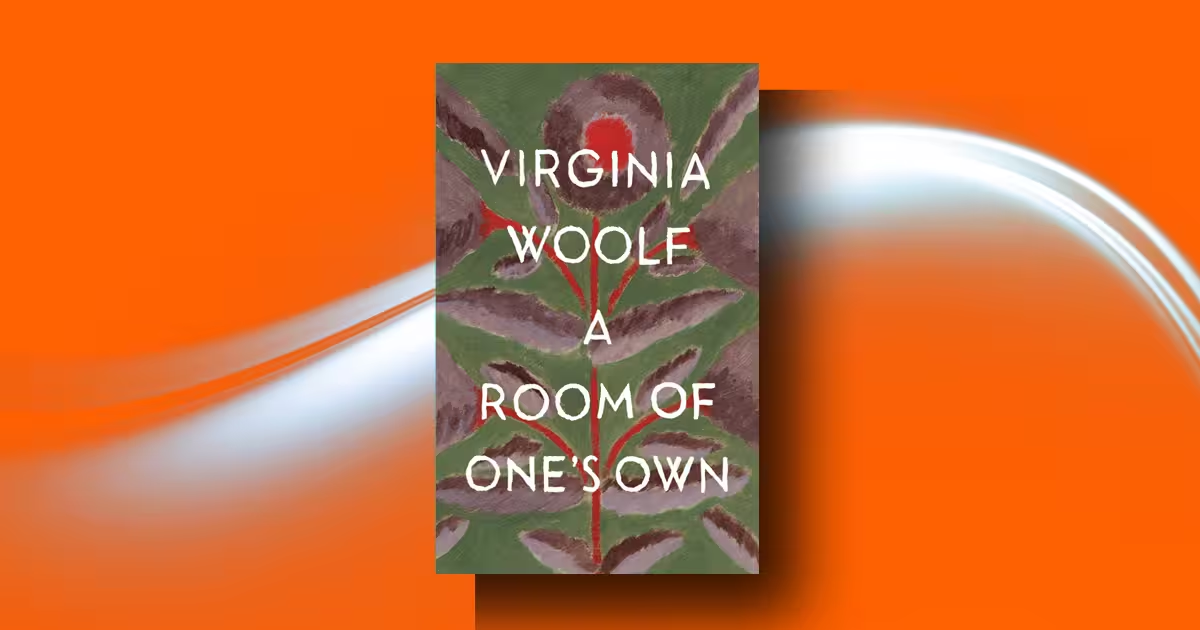
Why Virginia Woolf’s 1929 manifesto A Room of One’s Own remains the most urgent, unflinching argument for creative freedom you’ll ever read.
A Room of One’s Own is best for writers, artists, and anyone who has ever felt that their creative work is constantly interrupted by the demands of daily life. This book is a must-read for students of literature, feminist theory, and modernist studies. It is essential for those who want to understand the historical and material barriers women have faced in the arts.
However, readers whore are looking for a fast-paced, plot-driven novel or a conventional, step-by-step guide to creative writing may not enjoy it. It is not for those who dislike long, meandering sentences or stream-of-consciousness narrative styles may find it challenging.
Similarly, if you are seeking a contemporary, intersectional analysis of gender and class without the context of early 20th-century Britain, this book might feel like a preliminary text rather than a final word.
Table of Contents
Introduction
- Title: A Room of One’s Own
- Author: Virginia Woolf
- Publication Details: This extended essay was first published in September 1929 by Leonard and Virginia Woolf at the Hogarth Press in London.
The work is based on two lectures Woolf delivered in October 1928 at Newnham College and Girton College, the then only women’s colleges at the University of Cambridge.
Context of A Room of One’s Own
The book is a landmark work of modernist literature, feminist literary criticism, and social commentary. In it, Woolf uses a fictional narrator, “Mary Beton,” to explore the relationship between women and fiction.
The essay masterfully blends memoir, imaginative musings, and political analysis to investigate why there have been so few great female writers in the English literary canon. Virginia Woolf (1882–1941) was a central figure in the Bloomsbury Group and a pioneer of the stream-of-consciousness narrative technique.
Purpose of A Room of One’s Own
The central thesis of the book is stated unequivocally: “a woman must have money and a room of her own if she is to write fiction”. However, as the speaker notes, “that, as you will see, leaves the great problem of the true nature of woman and the true nature of fiction unsolved”.
The purpose is not to provide a definitive answer but to demonstrate how a woman’s lack of financial independence and private space has systematically stifled her creative potential throughout history. Woolf argues that for a woman to write, she needs more than just talent; she needs material security and the psychological freedom that comes with it.
Background
To fully appreciate Woolf’s argument, one must understand the historical context. The essay was written in the wake of World War I, a period of significant social upheaval. Furthermore, 1918 had granted some women over 30 the right to vote in the UK, and the topic of women’s roles in society was a highly charged, controversial subject.
Woolf herself notes the difficulty of tackling such a subject, saying, “when a subject is highly controversial—and any question about sex is that—one cannot hope to tell the truth. One can only show how one came to hold whatever opinion one does hold”.
This acknowledgment of bias and the personal nature of truth-seeking is a cornerstone of the book’s method.
Book/Content Summary of A Room of One’s Own
This summary aims to give you all the essential arguments and memorable moments from the book so you don’t need to revisit it for the core ideas.
Chapter I: The View from Oxbridge
The essay begins with the narrator contemplating the topic “women and fiction” by a river at “Oxbridge” (Woolf’s fictionalized version of Oxford-Cambridge). She is interrupted by a beadle who forbids her from walking on the grass, a privilege reserved for Fellows and Scholars, showing how women are immediately seen as trespassers in the hallowed grounds of male academia.
Denied entry to the library because she is an unaccompanied woman, she later enjoys a magnificent lunch at a men’s college. This leads to a crucial comparison: the wealthy men’s college lunch features soles, partridges, and wine, while the women’s college dinner at “Fernham” consists of plain gravy soup, beef, and prunes.
“The human frame being what it is, heart, body and brain all mixed together, and not contained in separate compartments…a good dinner is of great importance to good talk. One cannot think well, love well, sleep well, if one has not dined well.”
This contrast underscores how economic inequality shapes intellectual and creative life.
Chapter II: The Fury of the Professors
To find answers, the narrator goes to the British Museum. She is overwhelmed by the number of books written by men about women.
“Have you any notion of how many books are written about women in the course of one year? Have you any notion how many are written by men? Are you aware that you are, perhaps, the most discussed animal in the universe?”
She concludes that the professors who write these books are not objective but motivated by anger. This anger stems not from women’s inferiority but from a deep-seated need to feel superior.
“Possibly when the professor insisted a little too emphatically upon the inferiority of women, he was concerned not with their inferiority, but with his own superiority.”
Woolf famously argues that women have historically served as “looking-glasses possessing the magic and delicious power of reflecting the figure of man at twice its natural size”.
Chapter III: The Fictional Judith Shakespeare
This chapter is the emotional and philosophical core of the book. Lacking facts about Elizabethan women, Woolf imagines the story of Judith Shakespeare, the playwright’s equally gifted sister. While William goes to school, Judith is kept at home, mocked for her writing, and beaten by her father when she refuses an arranged marriage.
She runs away to London to pursue a life in the theatre, but is laughed at by the managers.
“…at last Nick Greene the actor-manager took pity on her; she found herself with child by that gentleman and so…killed herself one winter’s night and lies buried at some cross-roads where the omnibuses now stop.”
Her fate shows that genius alone is insufficient; it must be supported by material and social conditions. Woolf concludes, “it is unthinkable that any woman in Shakespeare’s day should have had Shakespeare’s genius”.
Chapter IV: The First Women Writers
Woolf traces the history of women’s writing, starting with aristocratic women like Lady Winchilsea and Margaret Cavendish, whose works are “deformed and twisted” by their own rage and bitterness at their restricted position.
She identifies Aphra Behn as a pivotal figure. As one of the first women to make a living by her pen in the 17th century, Behn showed that writing could be a profession for women.
“All women together ought to let flowers fall upon the tomb of Aphra Behn…for it was she who earned them the right to speak their minds.”
Chapter V: The Masterpieces of Jane Austen and the Brontës
Woolf examines the great women novelists of the 19th century. She argues that women wrote novels because it was the only form that could be practiced in the shared sitting-rooms they were confined to, unlike poetry which requires more focused concentration.
She praises Jane Austen for writing “without hate, without bitterness, without fear, without protest, without preaching,” which allows her mind to be “incandescent” like Shakespeare’s. However, she critiques Charlotte Brontë for allowing her rage against her restricted life to intrude upon her fiction, creating a “jerk” in the narrative that damages its integrity.
“She left her story, to which her entire devotion was due, to attend to some personal grievance.”
Chapter VI: The Androgynous Mind
In the final chapter, Woolf introduces the concept of the androgynous mind. She uses the metaphor of a man and a woman getting into a taxi to represent the harmonious fusion of male and female qualities, necessary for complete creativity.
“Coleridge perhaps meant this when he said that a great mind is androgynous. It is when this fusion takes place that the mind is fully fertilized and uses all its faculties.”
She warns that it is “fatal for anyone who writes to think of their sex”, arguing that an excess of masculinity or femininity hinders artistic creation. She then issues her famous call to action: for women to write all kinds of books, not just novels, and to make the material conditions possible for the next “Shakespeare’s sister” to be born.
Analysis of A Room of One’s Own
Frankly, reading A Room of One’s Own felt like being struck by a bolt of lightning that had been waiting ninety years to find me. It is a masterpiece of argumentative and poetic prose.
No other book has so systematically dismantled the myth of pure, merit-based genius while simultaneously building a practical, compassionate, and empowering path forward for creative women. It is as relevant today as it must have been in 1929, a fact that is both a testament to Woolf’s genius and a sad indictment of our slow progress.
Evaluation
As a work of feminist literary criticism, Woolf’s essay is groundbreaking. She effectively supports her central argument about money and a room of one’s own through a range of evidence: the fictional but powerful thought experiment of Judith Shakespeare; the historical contrast between the menus of men’s and women’s colleges; the psychological analysis of the “anger” in male-authored texts about women; and the comparisons between the writing styles of Jane Austen and Charlotte Brontë.
The essay is less about providing a rigorous sociological study and more about creating a persuasive narrative. Her use of a fictional narrator (“Mary Beton”) is a brilliant rhetorical device, allowing her to present personal impressions and speculative histories as a means to reach a larger truth.
The book fully fulfills its stated purpose: it leaves the “great problem” of women and fiction open-ended while making an unforgettable case for the preconditions of any creative life. As The Guardian noted, it is a “Brilliant interweaving of personal experience, imaginative musing and political clarity”.
Strengths and Weaknesses
Positive Experiences with the Book
Unparalleled Prose Style: Woolf’s writing is a joy to read. Her sentences are long, musical, and hypnotic. She turns a simple observation into a profound thought. For instance, her description of a luncheon party as a place where the “rich yellow flame of rational intercourse” is lit is a perfect example of this.
Intellectual Honesty: Woolf is refreshingly self-aware. She acknowledges her own biases, the limitations of her perspective, and the fact that she is inventing fictions to reach the truth. This makes her a trustworthy guide.
Enduring Relevance: The core problem Woolf identifies—that creative work requires uninterrupted time and financial security—is a universal truth for all artists, not just women. The “room of one’s own” has become a powerful metaphor for creative autonomy.
Unpleasant/Negative Experience with the Book
Lack of Intersectionality: A major weakness, widely noted by modern critics, is Woolf’s focus on the experience of a white, middle-class, educated woman. Her inheritance of £500 a year from an aunt is the key to her freedom. This ignores the vastly more oppressive conditions faced by working-class women and women of color, who had no “aunts” to provide for them and whose struggles for basic survival were far more pressing than writing novels.
Occasional Digressions: The stream-of-consciousness style, while often brilliant, can sometimes feel meandering. For a modern reader accustomed to concise, direct prose, the long, winding sentences can occasionally obscure the point being made.
Comparison with Similar Other Works
Compared to other foundational feminist texts, A Room of One’s Own is distinct in its method and tone. Mary Wollstonecraft’s A Vindication of the Rights of Woman (1792) is a more direct, political, and argumentative treatise. Simone de Beauvoir’s The Second Sex (1949) is a more systematic, philosophical, and encyclopedic work.
Woolf’s essay is more personal and literary than either of these. It’s less a political manifesto or a work of philosophy and more an extended, brilliant piece of literary criticism that uses its subject to argue for a broader social and economic revolution.
In this sense, it’s closer in spirit to later works like Adrienne Rich’s Of Woman Born or Carolyn Heilbrun’s Writing a Woman’s Life, which also blend the personal with the critical.
Conclusion
Recommendation for Potential Readers
A Room of One’s Own is not just a book; it is an experience and an argument that will reshape how you think about creativity, history, and success. Who will benefit most? Anyone who has ever tried to create something in the midst of a busy, demanding life.
Is it suitable for general audiences? Absolutely, yes. While some of the literary references may be unfamiliar, its central themes are universally accessible.
Woolf’s final, poignant message is one of hope. She imagines a future where women will have the “habit of freedom and the courage to write exactly what we think”. In doing so, they will bring the “dead poet who was Shakespeare’s sister” back to life.
This book shows us why this is so important and gives us the tools to make it happen. It is, without a doubt, a work of genius that remains a vital, inspiring, and necessary read nearly a century after its publication.







