
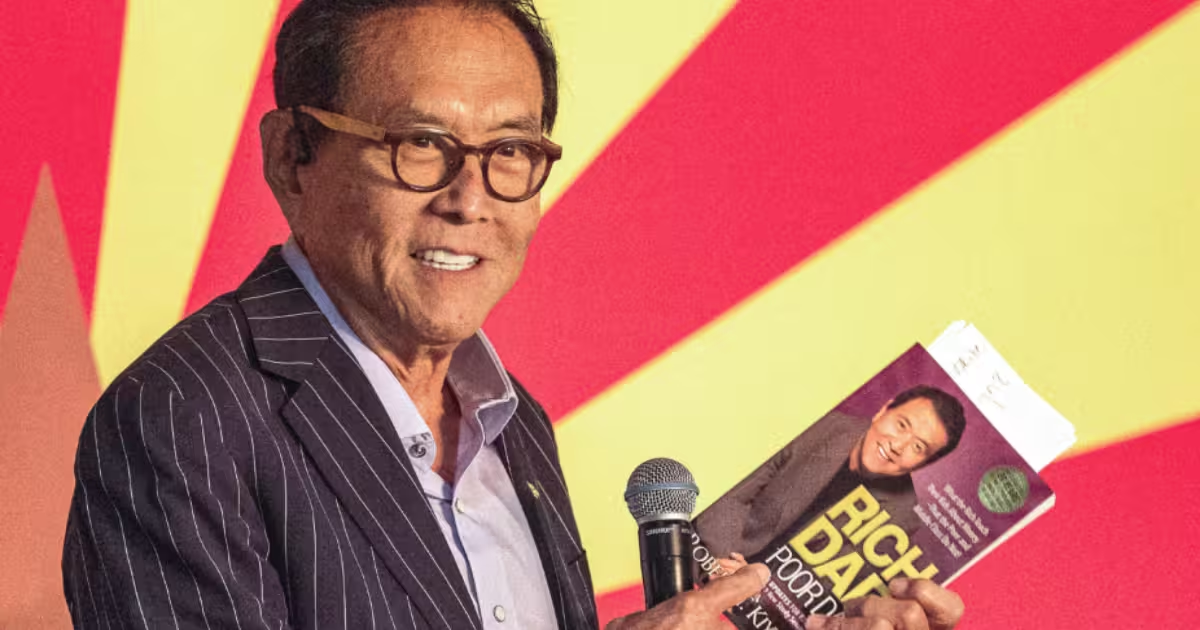
The Rich Dad Poor Dad author’s massive debt figure is a marketing move, and his ex-wife says it doesn’t mean what you think. Robert Kiyosaki debt makes journal headlines in mainstream media.
Robert Kiyosaki, the 79-year-old author behind the personal finance phenomenon Rich Dad Poor Dad,” has been making headlines for a number that would send most people into a cold sweat: $1.2 billion in debt.
But before you assume the self-help guru has gone bust, here’s the catch, that billion-dollar figure isn’t what it seems.
Table of Contents
Overview
Robert Kiyosaki claims to be $1.2 billion in debt, but the figure is tied to a shared real estate portfolio of 1,500 rental units, not personal money he owes. His ex-wife Kim clarified his personal share is far smaller (estimated at $30–$60 million).
Kiyosaki uses the massive number to draw attention to his strategy: borrowing against asset equity for tax-free cash flow while using LLCs as firewalls. Financial experts are split, one calls it a sound tax move, another warns it is extremely risky and warns average investors could face “Poor Dad bankruptcy” if the market turns.
Robert Kiyosaki Debt: The Truth Behind the Billion-Dollar Number
Kiyosaki first dropped the $1.2 billion figure during a June appearance on the “Get Rich Education” podcast. “So, I’m a billion two in debt,” he said, before adding a warning: “Should not do what I do, right?”
His ex-wife and longtime business partner, Kim Kiyosaki, later clarified things in a Vanity Fair interview. The debt isn’t personal money Kiyosaki owes, it’s tied to a real estate portfolio of roughly 1,500 apartment units that he owns with partners.
“We have a lot of apartment houses with our partners,” Kim told Vanity Fair. “So technically, yes, we have all this debt.”
So what’s Kiyosaki’s actual share? Vanity Fair estimated it could be somewhere between $30 million and $60 million, based on his claim that he earns about $3 million a year.
How the Strategy Works
Kiyosaki’s approach is built on a simple idea: use borrowed money to buy assets that generate income, rather than using cash or taking on debt for things that lose value.
Here’s how he does it. As his properties increase in value, he borrows more money against that increased equity. The loan proceeds aren’t treated as taxable income because he hasn’t actually sold anything.
He also structures each investment as a separate limited liability company. If one deal goes south, the others are protected. “Firewalls — that’s the way the rich play the game,” Kiyosaki told Vanity Fair.
Kim Kiyosaki said her former husband uses the eye-popping figure partly for attention. “He loves to say things that shock,” she told the magazine, adding that it gives him a platform to explain “why investment debt is good.”
Two Experts, Two Very Different Takes
Financial professionals who spoke to the New York Post were split on whether Kiyosaki’s strategy is genius or reckless.
David A. Perez, an enrolled agent and founder of Tax Maverick AI who uses a similar approach himself, called it “a great strategy” and said carrying large amounts of property-backed debt is “actually very normal.”
He pointed out that borrowing against property equity generally produces a tax-free loan because the property hasn’t been sold, though he acknowledged it can increase mortgage payments and reduce cash flow.
John Poole, founder of Scottsdale-based consultancy JPTD Partners, offered a much more cautious view. “I think there’s good debt and there’s bad debt, and then there’s $1.2 billion of debt, which you better know exactly what in the world you’re doing,” he told The Post.
Poole warned that leverage works beautifully on the way up but can become “like a chainsaw financially coming down” if property values stall or fall.
“It doesn’t go on forever. There has to be a payday,” Poole added. “Kiyosaki may call this the ‘Rich Dad debt,’ but for the average investor, it could turn out to be ‘Poor Dad bankruptcy’ really quickly.”
The Book That Started It All
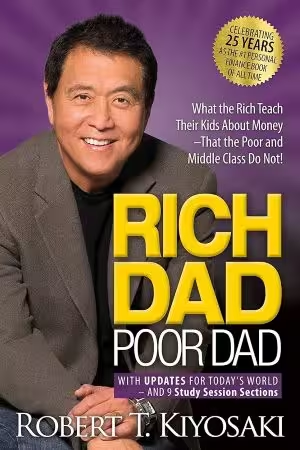
Kiyosaki first self-published *Rich Dad Poor Dad in 1997 through his own company, Cashflow Technologies. The book has since sold more than 44 million copies worldwide, according to Vanity Fair, making it one of the best-selling personal finance books of all time.
The book contrasts lessons Kiyosaki says he learned from his biological father, the “Poor Dad,” who was Hawaii’s state superintendent of education — with those from the father of his childhood best friend, the purported “Rich Dad.”
Interestingly, Kiyosaki’s estimated net worth is around $100 million, according to Celebrity Net Worth, meaning his personal debt exposure, even at the higher end of estimates, is still less than his total wealth.
Based on available data, I cannot confirm whether Kiyosaki’s debt strategy has been uniformly successful across all his properties, or whether any of his individual LLCs have ever run into trouble.
The Bottom Line
Kiyosaki isn’t hiding from his debt, he’s practically advertising it. And for him, that’s the point. He wants people to understand the difference between borrowing to buy assets that pay for themselves and borrowing to fund a lifestyle you can’t afford.
But as Poole pointed out, what works for a billionaire with decades of experience and a team of lawyers isn’t necessarily a blueprint for everyday investors. Kiyosaki himself seems to acknowledge this, he told podcast listeners they “should not do what I do” without proper education first.
Whether you see Kiyosaki as a savvy operator or a walking cautionary tale probably depends on how comfortable you are with the idea that $1.2 billion in debt can actually be a sign of wealth, not financial ruin.