
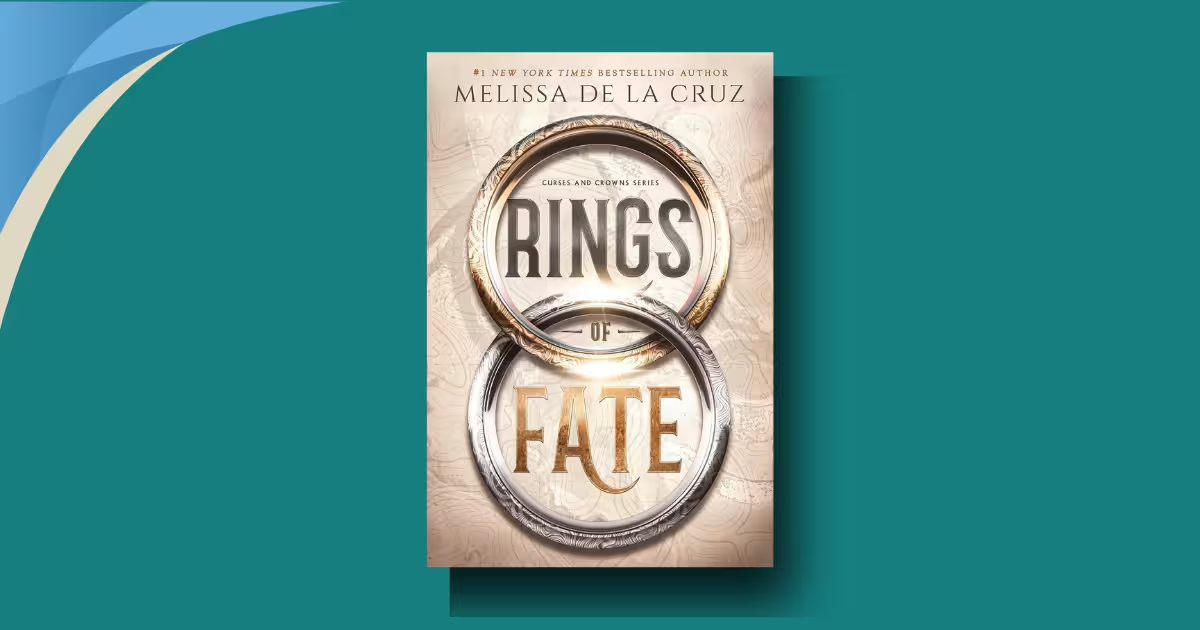
Have you ever picked up a fantasy romance hoping for a thrilling escape, only to find the characters lack the grit of real life? What if a story offered you a cursed prince who is more burdened than charming, and a heroine whose greatest weapon isn’tt magic, but her unwavering pragmatism? Rings of Fate is a New Adult romantic fantasy that masterfully combines the addictive “fake engagement” trope with a high-stakes quest, exploring themes of duty, self-worth, and the weight of carrying the world’s salvation—sometimes quite literally.
The novel builds on the proven appeal of the “romantasy” genre, which has seen massive growth, with titles by authors like Sarah J. Maas and Jennifer L. Armentrout dominating bestseller lists. Rings of Fate taps directly into this demand, offering a blend of slow-burn romance, political intrigue, and elemental magic that readers crave.
Rings of Fate is best for readers who love witty banter, grumpy-sunshine dynamics where the heroine is the grump, and fantasy with a strong, character-driven core. Not for those seeking hard magic systems, ultra-fast pacing, or a heroine who easily embraces her destiny.
Table of Contents
1. Introduction
Rings of Fate by Melissa de la Cruz, published in January 2026 by Entangled Publishing (Red Tower imprint), marks a compelling entry into the New Adult romantic fantasy landscape.
Known for her bestselling series like The Blue Bloods, de la Cruz here crafts a standalone tale that feels both fresh and comfortingly familiar.
It’s a story that promises a fairy-tale premise—a prince searching for a bride—and then systematically, and delightfully, subverts it through the eyes of a heroine who has no time for nonsense.
2. Background
The novel is set in the kingdoms of Alarice and Loegria, united by a treaty but strained by the looming threat from the neighboring Usurper King of Penrith.
This isn’t just a political threat; it’s a magical one, rooted in the ancient history of Albion. Decades prior, the dark lord Boreas corrupted the elemental magic known as the Whisting, creating the Unseen Death and monstrous assassins called the Kilandrar.
The only defense was the Rings of Fate, powerful artifacts crafted to contain the Whisting and defeat Boreas. This historical context of a fragile peace, a resurgent ancient evil, and legendary, almost-mythical weapons sets the stage for a quest that is as much about uncovering the past as it is about securing the future.
3. Rings of Fate summary
Part 1: The Prince and The Barmaid
In the backwater town of Evandale, Aren Bellamore is a twenty-five-year-old barmaid tired of her life. She’s exhausted by running the Raven’s Beak Tavern, caring for her ailing father, and fending off marriage proposals from drunken patrons.
Her only goal is to see her two beautiful younger sisters, Ophelia and Sonja, married well so she can finally be free. Her plans seem to align when Prince Dietan of Loegria arrives, touring Alarice to choose a bride as per a unification treaty.
However, Dietan’s quest is a ruse. His true mission is to find the reclusive sorceress Veteria, the last of the Vindar (ancient warrior witches). A decade ago, a young, curious Dietan accidentally touched the Rings of Fate in his father’s war room.
The Rings vanished, fusing into his back as painful, scarred brands, granting him the uncontrollable, dangerous power of the Whisting. He is cursed, a living vessel for the kingdom’s greatest weapon, and he needs Veteria’s help to remove them before the Usurper attacks.
Disguised, Dietan meets Aren at her tavern, and their chemistry is immediate—a clash of wit and world-weary skepticism.
Aren helps direct him to Veteria. Meanwhile, at the harvest festival, Aren’s sisters catch the eyes of Dietan’s companions: Ophelia with the charming Lord Jared, and Sonja with the stern General Marcus. Dietan himself remains conspicuously unattached.
The local Marquis of Evandale, a lecherous and power-hungry man, tries to force himself on Aren, furious she might distract the prince from his own daughters. Dietan intervenes, beating the Marquis and rescuing Aren, revealing a protective, fierce side beneath his princely facade.
This act, and their subsequent tense, charged interactions, lay the foundation for their relationship.
Part 2: The Wedding March
After Veteria reveals she cannot remove the Rings but confirms the Kilandrar are real and returning, Dietan is attacked by one in Aren’s tavern. In a brutal fight, both Aren (with her trusty iron skillet) and Dietan manage to injure the creature, a feat that shouldn’t be possible.
In the aftermath, tending to Dietan’s wounds, Aren sees the scarred rings on his back and fully understands his burden.
Dietan, desperate for a cover to travel to the Great Waste to seek the mad King Osian (another rumored source of powerful magic), publicly and clumsily proposes to Aren.
She, humiliated and thinking it a joke, refuses. After the Kilandrar kills one of his guards, the stakes become terrifyingly clear. Aren reconsiders. She agrees to a fake engagement, a “business proposition,” to be his cover on the Wedding March—the traditional royal tour to receive blessings before marriage.
Their journey is a tumultuous mix of forced public displays of affection, private bickering, and growing vulnerability. During a stop in Elspeth, Dietan kisses Aren’s cheek for the crowd, a moment that shocks both with its unexpected electricity.
They are forced to share rooms, navigating the intimate awkwardness of their arrangement. The Kilandrar continue to stalk them, confirming they are drawn to Dietan and the Rings.
Parts 3 & 4: The Great Waste and the Final Confrontation
The journey leads them into increasing danger. They finally reach King Osian’s domain in the Great Waste. Osian, a powerful but broken man, reveals a devastating truth: the Rings cannot be removed without killing Dietan because they chose him.
The Whisting, a sentient force, sought a worthy vessel to wield it against the returning darkness. Dietan’s “curse” is, in fact, a destiny he must learn to master, not reject.
This revelation shatters Dietan’s hope for a simple fix and forces him to confront his self-loathing and fear. Meanwhile, his bond with Aren deepens into real trust and love. They are captured by the Usurper’s forces, led by a vengeful Marquis of Evandale who has allied with the enemy.
In the climactic battle, Dietan must finally embrace his power. With Aren’s unwavering support—her steadfastness acting as his emotional anchor—he learns to channel the Whisting intentionally.
He doesn’t just unleash a storm; he commands it, using the full power of the Rings of Fate to defeat the Usurper’s armies and the Kilandrar. The Marquis is killed, and the immediate threat is neutralized.
The Ending
In the aftermath, Dietan and Aren return to Loegria as true heroes and a genuine couple. The “fake” engagement has become profoundly real. The novel ends with their royal wedding, a union that solidifies the alliance between the kingdoms not as a political duty, but as a partnership forged in fire.
Aren, once a barmaid, becomes a princess who earned her crown through courage and integrity.
Dietan, once a prince hiding a terrible secret, becomes a king who has integrated his power and found his equal. Ophelia marries Jared, and Sonja marries Marcus, securing happy endings for all. The story closes on a note of hard-won peace and a promise of a future ruled by partnership, not just power.
4. Rings of Fate analysis
4.1. Rings of Fate Characters
Aren Bellamore: Aren is the standout, a prototype of the “unlikely heroine.” Her strength isn’t mystical; it’s born of exhaustion and resilience. She is “tired all the way to my bones” (Page 18), yet her love for her family is absolute.
Her development is a journey from seeing herself as a caretaker whose dreams are secondary, to embracing her own worth as a strategist, protector, and leader. Her refusal to be a “servant they don’t have to pay” (Page 53) defines her.
Her relationship with Dietan works because she challenges him, calls him out on his privilege (“I suppose you grew up so used to everyone picking up after you,” Page 131), and sees the man beneath the crown and the curse.
Prince Dietan: Dietan’s arc is one of integrating a fractured self. He presents three faces: the charming, frivolous prince (a deliberate mask), the tormented, self-loathing curse-bearer, and the emerging true leader. His vulnerability is his driving force.
The memory of his childhood friend Cedric, who died because of the Rings’ activation, haunts him, fueling his guilt. His love for Aren begins with admiration for her strength and becomes the catalyst for him to stop running from his power. He learns that true strength isn’t in discarding his burden, but in shouldering it with purpose.
The Supporting Cast: Jared and Marcus are more than comic relief or loyal friends; they provide contrast to Dietan and legitimate love interests for the twins, ensuring Aren’s sisters have their own agency and narratives.
The Marquis is a effective, despicable villain representing petty, patriarchal corruption, while the Usurper and Osian represent larger, existential threats rooted in the misuse of magic and power.
4.2. Rings of Fate Themes
The Burden of Power & Destiny vs. Choice: The Rings of Fate embedded in Dietan’s flesh are the central symbol. They represent unwanted power, inherited duty, and the physical and emotional cost of saving the world.
The novel debates whether destiny is a prison or a purpose. Veteria and Osian reframe Dietan’s curse: “The wind will go where it finds purpose.
Clearly, it found purpose within your soul” (Page 91). His journey is about moving from seeing the Rings as a parasite to recognizing them as a part of his identity he must consciously wield.
Performance vs. Authenticity: Both protagonists live behind facades. Aren performs the role of the capable, unflappable barmaid, hiding her yearning and trauma. Dietan performs the role of the carefree prince, hiding his terror and guilt.
Their fake engagement is the ultimate performance, but it forces them to be more authentic with each other.
The Wedding March itself is a metaphor for the public scrutiny of relationships and the discovery of real love behind a ceremonial pretext.
Found Family and Equal Partnership: Aren’s biological family is her driving motive, but her found family becomes Dietan, Jared, and Marcus—a unit built on mutual respect rather than obligation. Her partnership with Dietan is the core thematic triumph.
She doesn’t become “the princess” by being chosen; she becomes his equal by fighting alongside him, challenging him, and choosing him back. Their union symbolizes a new kind of rule: one of collaboration.
5. Evaluation
Strengths & Pleasant Experiences
- Character-Driven Narrative: The greatest strength lies in Aren and Dietan. Their chemistry is palpable, rooted in witty, antagonistic dialogue that slowly softens into vulnerability. Aren’s voice is particularly refreshing; she’s “kind of a badass” (Page 131) not because she has hidden magic, but because of her pragmatic courage.
- Subversion of Tropes: The book smartly uses familiar tropes (fake engagement, chosen one, prince seeking bride) to explore deeper issues. Dietan isn’t a perfect savior; he’s a traumatized young man. The “chosen one” narrative is inverted—his power is a horrifying burden before it becomes a gift.
- Pacing of Romance and Plot: The balance between the escalating external threat (Kilandrar, Usurper) and the slow-burn romance is well-managed. Their first real kiss isn’t a grand moment but a desperate, charged encounter in the midst of danger, making it feel earned.
- Emotional Payoff: The ending satisfies on multiple levels. Dietan’s acceptance of his power is cathartic, and Aren’s transition to princess feels legitimate because the court sees what the reader has seen: her strategic mind and bravery. The dual weddings for the twins provide a warm, fulfilling closure.
Weaknesses & Negative Experiences
- World-Building Breadth vs. Depth: While the mythology of the Whisting, Rings, and Epochs is intriguing, some readers might wish for more granular detail about the magic system or the political landscapes of the three kingdoms. The focus remains tightly on the character and quest experience.
- Villain Nuance: The Usurper King of Penrith and even King Osian serve their purposes in the plot, but they are largely forces of nature or exposition devices rather than deeply explored characters. The primary human antagonist, the Marquis, is effectively hateable but purposefully one-dimensional.
- Pacing in the Middle: Some sections of the Wedding March, while important for relationship development, could feel slightly repetitive (arrive in town, public display, private tension) to readers craving constant action.
Impact
The book resonates intellectually through its theme of embowering responsibility. It challenges the notion that destiny is a gift, presenting it instead as a brutal weight that must be consciously accepted.
Emotionally, it resonates through Aren’s journey of self-worth. Her realization that she is not just a caretaker but a person deserving of her own adventure and love is powerfully moving.
The line, “I don’t ever want to marry. I will travel and read books” (Page 100) reveals a deep-seated yearning that her agreement to the fake engagement ultimately, and ironically, fulfills.
Comparison with Similar Works
Fans of Sarah J. Maas’s A Court of Thorns and Roses will find similar elements of a relatable, strong-willed female protagonist drawn into a world of magical politics and a romance with a tormented powerful male.
However, Rings of Fate is less explicit and more focused on a single couple’s journey.
It also shares DNA with Bridgerton-style historical romances in its use of the marriage-of-convenience trope and societal scrutiny, but transposed into a secondary fantasy world. It has the adventure quest feel of Naomi Novik’s Uprooted, but with a more pronounced romantic arc.
6. Personal Insight & Contemporary Relevance
Beyond its enchanting fantasy elements, Rings of Fate offers a poignant commentary on emotional labor and invisible burdens. Aren’s life is a case study in the mental load: managing a business, caring for family, and constantly deflecting societal expectations, all while her own dreams are deferred.
Her exhaustion is visceral. In a modern context where burnout, especially among women and caregivers, is a critical topic (the World Health Organization recognizes burnout as an occupational phenomenon), Aren’s arc is revolutionary.
She doesn’t find a magical solution to her burnout; she delegates, sets boundaries, and finally prioritizes her own quest. Her tool for fighting literal monsters is a skillet—the symbol of her domestic labor—repurposed as a weapon of her own liberation.
Dietan’s struggle mirrors the anxiety of a generation facing inherited crises—climate change, political strife, economic instability—feeling cursed with a responsibility they didn’t ask for.
His journey from helplessness to agency teaches that carrying the weight of the world doesn’t have to be a solitary endeavor; it can be shared with a partner who offers not rescue, but steadfast support.
The novel, at its heart, argues that true power lies not in solitary suffering or forced duty, but in authentic partnership and the courageous choice to embrace one’s own difficult path.
7. Rings of Fate quotes
On Weariness & Worth: “I’m tired all the way to my bones. And I’m only twenty-five.” (Aren, Page 18)
On Pragmatic Strength: “I could have handled it. It’s a lie, one even I don’t believe, but I’d rather throw myself from the roof than admit it to him.” (Aren, Page 73)
On Destiny vs. Choice: “The wind will go where it finds purpose. Clearly, it found purpose within your soul.” (Veteria, Page 91)
On the Burden of Power: “You are the one who is doomed to death, and all of Albion with him.” (Veteria, Page 88)
On Authentic Connection: “If you were my wife, you’d be the first to know my secret.” (Dietan, Page 73)
On Fight & Partnership: “You saved me, even at risk to yourself. Thank you.” / “Yeah…you saved me, too, so we’re even.” (Dietan & Aren, Page 117)
8. Conclusion & Final Recommendation
Rings of Fate is a triumph of character-focused romantic fantasy. Melissa de la Cruz delivers a story that is both a thrilling escape and a surprisingly grounded exploration of duty, self-discovery, and the transformative power of being truly seen by another person.
The world-building serves the characters, the romance sizzles with tension and tenderness, and the central thematic weight of the narrative lands with genuine emotional impact.
I highly recommend this book to:
- Readers who love slow-burn romance where the banter is as important as the kisses.
- Fantasy fans who enjoy quest narratives but crave deep character development over exhaustive lore.
- Anyone who appreciates a heroine whose strength is earned through resilience, not bestowed by birthright or magic.
- Fans of the fake-dating and marriage-of-convenience tropes looking for a fresh, fantasy twist.
Rings of Fate is significant because it proves that within a popular genre, there is still room for stories where the heart of the magic lies in human connection, where the greatest adventure is learning to value oneself, and where saving the kingdom feels rewarding because you’ve grown to deeply care for the people fighting to do it.
It’s a compelling, satisfying read that lingers long after the final page.







