
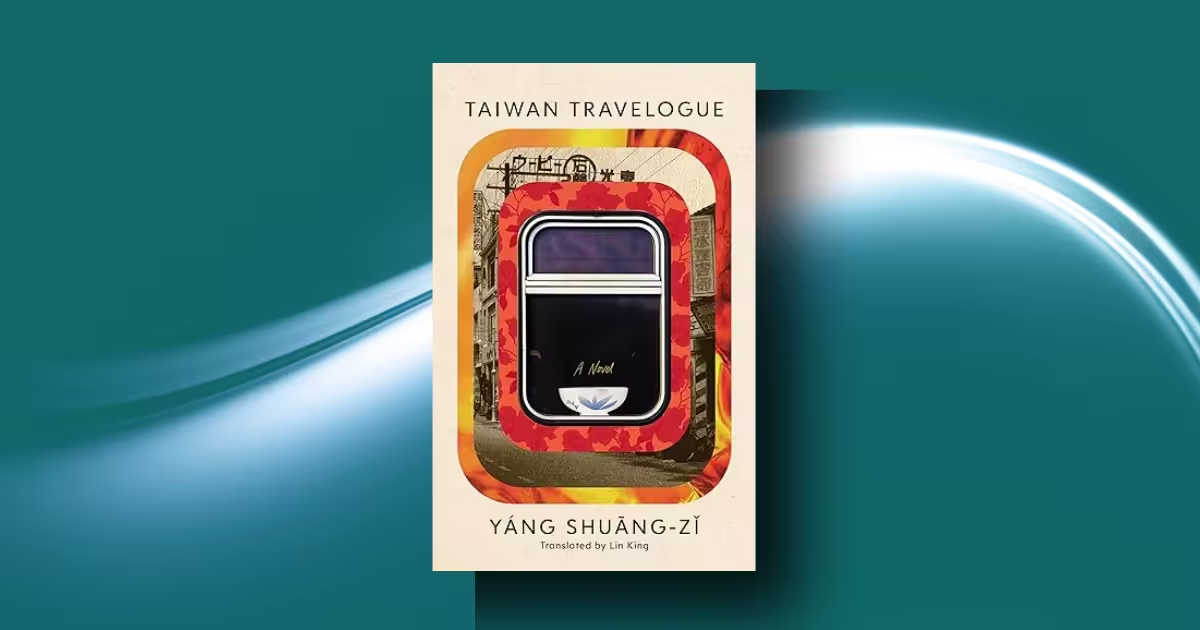
Did you know that the most celebrated translated novel of 2024 is built on a lie — and that lie is precisely what makes it so devastatingly true? Taiwan Travelogue by Yáng Shuāng-zǐ is not what it first pretends to be, and uncovering that pretense is one of the richest reading experiences literature in translation has delivered in years.
Taiwan Travelogue is a brilliantly constructed metafictional novel disguised as a rediscovered colonial-era travel memoir, using food, friendship, and forbidden longing to expose how power — imperial, gendered, and personal — distorts even the most well-intentioned relationships.
Best for: Readers who love historical fiction with depth; fans of food-driven narrative (think The Enchanted April but with braised pork and winter melon tea); anyone curious about Taiwan’s colonial past; queer literature lovers; metafiction enthusiasts; and readers who enjoy work that demands a second read.
Not for: Those who want plot-driven page-turners; readers allergic to footnotes and narrative frames; anyone who feels frustrated when a book deliberately blurs the line between author, translator, and character.
Table of Contents
1. Introduction
When Taiwan Travelogue (臺灣漫遊錄) landed in English in November 2024, published by Graywolf Press and translated by Lin King, it arrived carrying already extraordinary weight: it had won Taiwan’s highest literary honor, the Golden Tripod Award, in 2021; the Japan Best Translation Award in 2024 for its Japanese edition; and just months after its English publication, it claimed the 2024 National Book Award for Translated Literature in the United States.
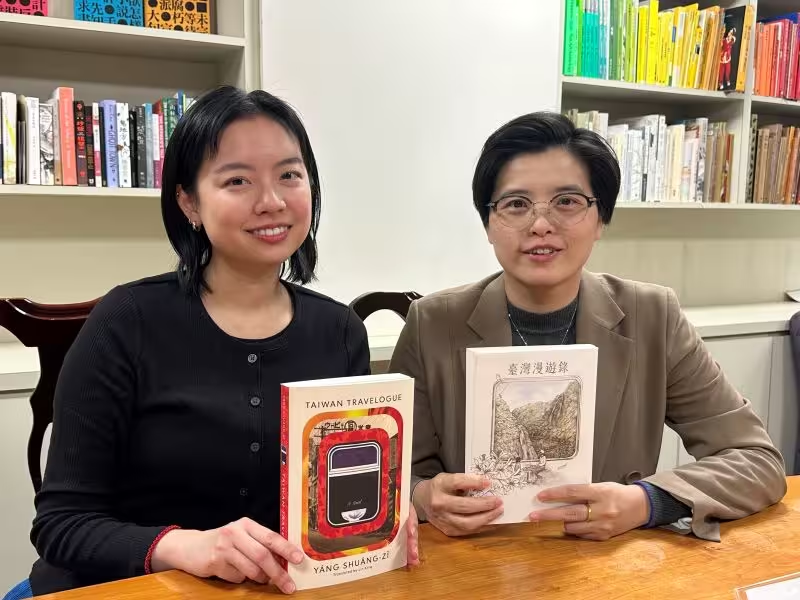
By early 2026, it was shortlisted for the International Booker Prize 2026. No other work of Taiwanese fiction in recent memory has swept the international literary calendar so thoroughly.
The author, Yáng Shuāng-zǐ (楊双子), is a Taiwanese writer born in 1984 in Táichūng.
The pen name “Shuāng-zǐ” translates as “twins” — a tribute to her late identical twin sister, Yang Jo-hui (楊若暉), who died of cancer in 2015. Yang Jo-hui had been a scholar of colonial-era Taiwanese literature and historical research; Yang Jo-tzu (楊若慈), the surviving twin, adopted the shared pen name as both memorial and declaration that the book belongs to both of them.
The translator, Lin King, is a writer and translator from Taipei who has received the PEN/Robert J. Dau Short Story Prize for Emerging Writers. Her translation work on Taiwan Travelogue is widely hailed as an act of literary bravery: “
She took a maximalist approach, broke countless translation ‘rules’, and ended up with an experimental, multilayered work.”
It was originally published in Mandarin Chinese by SpringHill Publishing in Taipei in 2020, presented then under the somewhat provocative cover credit: “Written by Aoyama Chizuko, translated by Yáng Shuāng-zǐ” — a conceit that sparked real controversy in Taiwan’s literary world, with some readers feeling deceived, before subsequent printings clarified that Yáng was the true author.
2. Background: Historical Context
To read Taiwan Travelogue without understanding the period it inhabits is to miss half its point. The novel is set in May 1938, a year of enormous imperial tension.
Taiwan had been under Japanese colonial rule since 1895, when China ceded the island to Japan at the end of the First Sino-Japanese War.
For over four decades, Japan had pursued an aggressive policy of assimilation — demanding the Taiwanese speak Japanese, adopt Japanese names, and subordinate their culture to the empire’s vision of a “model colony.”
By 1938, Japan’s military expansion in Asia — what the empire called the Nanshin-ron (Southern Expansion Policy) — was accelerating. The government-general in Taiwan was actively sponsoring cultural events, including bringing celebrated Mainland Japanese writers to Taiwan for lecture tours, as part of a soft-power campaign to project imperial harmony while real violence unfolded elsewhere.
The Pacific War, which would devastate both Japan and Taiwan, was already visible on the horizon.
Within Taiwan, society was sharply stratified. “Mainlanders” (Japanese nationals from the Japanese islands) occupied top bureaucratic and social positions. “Islanders” (the Han Taiwanese, including Hoklo and Hakka groups) were second-class citizens in their own land.
The wānshēng — ethnic Japanese born and raised in Taiwan — floated uncomfortably between both worlds.
Below all of them were the indigenous peoples, subjected to even harsher erasure. The word “lí-ya” — the Taiwanese equivalent of a colonial “you there!” — functioned as a slur thrown at Islanders to remind them of their subordinate status.
It was also a period of profound linguistic layering. Taiwan’s population spoke Taiwanese Hokkien, Hakka, various indigenous languages, Japanese (imposed as the national language), and increasingly Mandarin. This multilingual reality is not backdrop in Taiwan Travelogue — it is the novel’s very body, woven into every page.
The women’s position within this system deserves its own note. Female intellectuals in 1930s Japan existed in a narrow corridor: celebrated if they conformed to imperial femininity, dismissed or punished if they stepped outside it. Chi-chan, the Taiwanese interpreter, navigates not one but multiple overlapping hierarchies simultaneously — as a woman, as an Islander, and as someone whose origins are more complex still.
Yáng Shuāng-zǐ and her twin sister spent years researching this period for their historical fiction projects. The scholarship embedded in Taiwan Travelogue — the food history, the railroad timetables, the architecture of Taichū, the political geography of colonial women’s schools — is meticulous and palpable on every page.
3. Taiwan Travelogue Ploy Summary
The Nested Structure
Before the story proper begins, the reader encounters what appears to be a scholarly introduction, a series of paratexts — forewords, translator’s notes, editor’s notes, and afterwords — spanning from 2020 back to 1970. This is one of the novel’s most extraordinary achievements. The book is structured, as one reviewer memorably put it, “like peeling an onion: the smell is at first undetectable; but with each layer you peel, the smell gets more intoxicating, pungent, intense, and at the very end, it brings tears to your eyes.”
The fictional conceit presented to the reader: Taiwan Travelogue is a novel written in Japanese by a writer named Aoyama Chizuko (1913–1970), published in 1954, long out of print, and now retranslated into Mandarin Chinese by Yáng Shuāng-zǐ in 2020.
The story of how this “lost” manuscript was rediscovered — through a postcard glimpsed in a museum exhibit in Kitakyūshū in 2014 — mirrors with eerie precision the actual story of how Yáng’s twin sister and she began researching colonial-era Taiwan. Only: Aoyama Chizuko never existed. She is Yáng’s most elaborate invention.
The characters surrounding the fictional novel, however, weave real and invented threads together: Yáng’s translator’s note describes her own battle with illness while completing the translation, and her sister’s death — these details are true. The rest belongs to the architecture of the fiction.
Chapter I: Kue-Tsí / Roasted Seeds
The story opens in May 1938 at Kanjō Bridge Avenue in Taichū (present-day Taichung, in Tainwan), where Aoyama Chizuko — a celebrated young Japanese novelist — has just arrived on the island for a government-sponsored lecture tour.
Aoyama is tall, loud, irreverent, and possessed of a volcanic appetite that will drive nearly every chapter forward. She has absolutely no interest in the official government banquets arranged for her. She wants to eat what the Islanders eat.
At a busy marketplace, struggling to communicate with a young fruit vendor in a language she doesn’t speak, Aoyama is rescued by a petite young woman with dimpled cheeks and flawless Japanese.
The woman assists the transaction, the vendor gives Aoyama a packet of roasted seeds — kue-tsí — and the young woman demonstrates how to crack the shell with one’s teeth.
She disappears before Aoyama can properly thank her.
That same afternoon, at the arranged meeting point, Aoyama encounters her official City Hall liaison, the stiff and bureaucratic Mishima, who proceeds to frustrate her every attempt to eat authentic Taiwanese street food.
He books Mainland-style restaurants, declines to procure her tshenn-tsháu-à herb tea, and treats every Islander culinary experience as a health hazard. The comedy of their interactions is one of the novel’s great pleasures.
The waiting-room scene that closes Chapter I delivers the novel’s first electric moment.
When Aoyama is finally introduced to her new assigned interpreter — a young woman who comes highly recommended by the Nisshinkai women’s organization — she enters to find the same dimpled, bright-eyed woman from the market. “You …” she stammers.
The woman introduces herself with perfect composure: Ông Tshian-hóh in Taiwanese, Ō Chizuru in Japanese. Aoyama immediately nicknames her “Chi-chan.”
Their names, she announces, share the same kanji characters — surely, she declares, this is en, Buddhist fate.
Chapters II–VI: Building the Friendship (and Its Fault Lines)
The next several chapters follow Aoyama and Chi-chan through Taichū and across the island, with each chapter organized around a different dish.
Through silver needle vermicelli (bí-thai-bàk), jute soup (muâ-ínn-thng), sashimi, braised minced pork (bah-sò), and winter melon tea (tang-kue-tê), Yáng builds what is ostensibly a warm, even joyful friendship — while quietly, insistently embedding the power dynamics that undermine it.
Chi-chan moves into Aoyama’s days with meticulous care: she arranges the writer’s wardrobe for the tropical climate, secures her library card and bus maps, keeps a list of restaurants suitable for a woman dining alone, peels lychee for her without eating any herself, and cooks pot after pot of the braised pork they cannot stop talking about.
She is, in the novel’s own terms, “omnipotent” — and she performs this omnipotence in the service of a woman who is, however endearing, ultimately Aoyama’s colonial superior.
The cracks emerge subtly at first.
At a girls’ school, a male administrator demands Chi-chan clean Aoyama’s muddy shoes — treating her as a servant. Aoyama is outraged on her behalf and storms out. At the Taichū branch of the university, a scholar dismisses Chi-chan as “only” an Islander woman, barely worth the title of interpreter.
Aoyama refuses his luncheon.
She is consistent in her indignation, and the reader cheers for her — until the novel begins to ask whether indignation alone constitutes genuine respect.
The Tainan chapters introduce one of the novel’s most devastating scenes.
At the Tainan Railway Hotel, Chi-chan — dressed in a chōsan (an Islander-style long tunic) rather than Japanese-style clothing — is called “lí-ya” by the hotel receptionist and told the hotel is full, despite their reservation.
The insult is spat with contempt. Chi-chan’s response is measured, formal, and heartbreakingly effective: she presents her business card, cites Aoyama’s government sponsorship, and forces the receptionist into a groveling apology.
Later, in their suite, she explains to Aoyama what “lí-ya” means — not just as a word but as a structure of contempt. And then she apologizes to Aoyama for having “caused alarm.” Aoyama tells her it was not her fault. Neither of them says aloud what the reader begins to feel: that something in their dynamic mirrors the very structure Chi-chan has just named.
The dormitory night at the First Girls’ School in Tainan provides a wonderfully compressed subplot — a mystery involving a disappeared student, a mysterious photograph of a girl in riding pants and boots, a lavatory rumored to possess a “mythical dimension,” and Chi-chan quietly solving the entire puzzle before dawn while Aoyama sleeps.
Chi-chan deduces that two students, Islander Tân Tshiok-bi and Mainlander Ōzawa Reiko, have been meeting secretly in the lavatory; that the slur “lí-ya” between them has been converted into an endearment; that they are friends in a way that refuses the categories the school imposes on them.
Aoyama’s wonderstruck response — “Chi-chan, you are neither Watson nor Holmes. You are the Great Detective!” — is delightful, and reveals something true: Chi-chan’s intelligence is always more expansive than Aoyama’s framework for it.
Chapters VII–XI: The Relationship Deepens and Fractures
The middle chapters carry Aoyama and Chi-chan through curry, sukiyaki, leftovers soup (tshài-bué-thng), potato noodle stew (tau-mī), and savory cake (kiâm-n g-ko).
The novel’s food writing becomes more than gastronomic; each dish carries its own social history, its class connotations, its emotional weight.
A pivotal scene in Rokkō, a city midway through their travels, brings the friendship to a moment of radical candor — and, simultaneously, to its structural breaking point. Chi-chan’s distant relatives are encountered in a tearoom, and they jeer with barely concealed contempt: “To think that even someone who grew up on muâ-ínn-thng can dine in tearooms now!” — a reference to jute soup, the food of the poor.
The remark stings not just Chi-chan but the reader, who has come to understand that Chi-chan’s origins — the daughter of a concubine who was also a gē-tòa entertainer, raised partly by her mother’s friends in a Taichū café called Kohaku — are something she has carefully, expertly concealed behind the persona of the perfectly educated former schoolteacher.
It is around this point that Aoyama makes the mistake that costs her the friendship.
On a rain-soaked day in Kīrun, watching the harbor together and eating the local chikuwa fishcakes that Chi-chan has introduced her to, Aoyama reflects aloud that the Empire’s harsh methods are hateful but that one can still credit it with certain achievements — the development of the island’s infrastructure, the fishcake factories, the railways.
She frames the Empire as a polisher of raw jade, finds beauty in the products of occupation.
Chi-chan says nothing in response.
She changes the subject.
Only much later, after the friendship ruptures, does Aoyama replay that moment and realize what she missed: on Chi-chan’s face, for a single unguarded instant, had been displeasure — the same displeasure that Mishima showed when Aoyama said the same thing months later.
Aoyama had simply not seen it, or not wanted to.
The rupture comes after forty-four days of silence that follow an argument in a courtyard house (described obliquely) where Chi-chan essentially tells Aoyama they cannot truly be friends — not as equals — because the colonial gulf between them is unbridgeable.
Chi-chan will be married at the end of the year. She has a life that Aoyama has never truly tried to see. “Can Aoyama Chizuko and Ông Tshian-hóh really be called friends?” is the question she leaves Aoyama with, and it haunts the novel’s final chapters.
Mishima, the stiff City Hall bureaucrat, delivers the novel’s sharpest intellectual blow in Chapter XI.
Forced by Aoyama’s persistent questioning into honesty, he tells her that her tendency to praise or condemn the Empire based on her personal tastes — finding beauty in kiâm-n g-ko, in chikuwa, in colonial railways — is “intellectual arrogance.”
He tells her: “The way in which you talk about the Island’s flavors does not sound to me like you are appreciating them for being delicious, but more for being exotic, as one might appreciate a rare animal.”
He tells her that the temple she admired in Toyohara was not preserved due to the Empire’s benevolence, but through the Islanders’ own years-long campaign after the Imperial Army had damaged it.
And he ends, quietly but devastatingly: “There is nothing in the world more difficult to refuse than self-righteous goodwill.”
Aoyama, eating the last pieces of kiâm-n g-ko in her kitchen before dawn, weeping without quite knowing why, understands — at last — what she did wrong.
Chapter XII: Kam-Á-Bìt / Fruit and Jelly Ice
Chapter XII is the novel’s most contested chapter — in the fictional world and the real one.
Aoyama Yōko’s afterword explains that this chapter did not exist in the original manuscript; it was added by Aoyama Chizuko later, perhaps as a letter of apology, a dream of what might have been. In the real world, it is Yáng Shuāng-zǐ’s most tender and most aching invention.
On the last day of March 1939, Aoyama walks the full length of Taishō Bridge Avenue from the wealthier Kawabata District in the northwest to the poorer Chōkyōshitō neighborhood in the southeast — the path Chi-chan has walked to visit her two or three times a week for eight months, a path Aoyama has never once reciprocated.
She is walking, finally, toward Chi-chan rather than waiting for Chi-chan to come to her.
Outside a small Islander general store, Aoyama encounters an old shopkeeper who gives her uncooked sunflower seeds — the raw kue-tsí that Chi-chan had mentioned all the way back in Chapter I, when they first met.
And then: “Hehe. A gentle chuckle to my side.” Chi-chan is there. They speak in the shade of the store’s walkway, the raw seeds between them.
Aoyama, finally, apologizes — completely and without reservation. She names herself as a “despicable brute who has no regard for others, who always thinks she knows best, who is arrogant and doltish.”
She tells Chi-chan she is not seeking forgiveness, only understanding.
Chi-chan responds with her own confession — her first truly unmasked moment in the entire novel. She confirms that she had never truly opened her heart to Aoyama, and she is sorry. “The feelings that I hold within this shuttered heart are, nonetheless, real.”
They clasp each other’s hands with all their strength. Aoyama is returning to Kyūshū in two weeks. Neither of them says this out loud.
They walk arm-in-arm to a nearby market, eating their way through oyster pancakes, bí-thai-bàk vermicelli, sandwiches, and soup. The chinaberry flowers — khóo-līng-á, the Island’s graduation flower — fall in purple showers from the street trees.
Neither speaks of parting.
They end at a vendor’s cart on the Midori River Bridge, sharing one bowl of fruit and jelly ice — kam-á-bìt — “very sweet, very delicious” — in the last March afternoon of Aoyama’s year in Taiwan.
That is where the novel ends. Not with reunion or romance or resolution. With a bowl of shaved ice, shared in silence, beside a narrow river. Aoyama never returns to Taiwan.
Chi-chan is married and eventually emigrates to the United States with her husband and daughter. Decades later, Aoyama’s adopted daughter tracks Chi-chan (now Wáng Chiēn-hò) down in Missouri, delivers the novel, and fulfills her dying mother’s wish.
Chi-chan translates it into Mandarin herself. Her daughter publishes it. A scholar rediscovers it. The book you are holding exists.
4. Analysis
4.1 Characters
Aoyama Chizuko is one of literature’s great comic heroines — loud, impulsive, physically imposing (she towers over most men at 165 cm, nicknamed “the Great Cedar”), and constitutionally incapable of restraining her enthusiasms.
She is also deeply intelligent, genuinely kind-hearted, and — crucially — wrong about herself in ways she can only discover slowly.
Her growth is genuine but achingly incomplete. By Chapter XII, she has articulated her faults, made her apology, walked the half-hour from her world into Chi-chan’s. The bowl of shaved ice they share is a true thing. But she is still leaving in two weeks, and Taiwan is not leaving anywhere.
Ông Tshian-hóh / Ō Chizuru / Wáng Chiēn-hò is one of the most beautifully constructed supporting characters in recent fiction — except she is not really supporting anyone.
She is the novel’s moral center. Born the daughter of a concubine and a gē-tòa entertainer who died young, raised by three of her mother’s friends in a Taichū café called Kohaku, fluent in Taiwanese Hokkien, Mandarin, Japanese, and enough French to surprise anyone, she has achieved through sheer intelligence and discipline what should have been impossible given her origins.
She chose to become a Japanese-language schoolteacher. She is about to be married. She wears the Noh mask of perfect composure as a survival tool she was taught from childhood.
Chi-chan’s genius — the thing that makes her friendship with Aoyama possible at all — is also the thing that makes it impossible.
Mishima Aizō begins as near-parody — the relentlessly flat bureaucrat who refuses every request and lies with a straight face.
He slowly reveals himself as one of the novel’s most morally serious figures: a wānshēng (ethnic Japanese born in Taiwan) who is loyal to the empire he was born under while being unable to love it entirely.
His long speech to Aoyama about her intellectual arrogance — delivered finally, after her repeated promises that she will not take offense — is a masterclass in quiet devastation.
He names, with precision, exactly what Aoyama cannot see.
Madame Takada is Aoyama’s warm, aristocratic host — part Satsuma grande dame, part co-conspirator.
She facilitates the friendship with Chi-chan and laughs at Aoyama’s glutinous antics with the benevolence of someone who has seen everything.
The Nisshinkai women and the various school administrators fill out a colonial social world in which Japanese women enjoy privilege over Taiwanese men, while both Taiwanese women and wānshēng exist in between categories that the empire has no language for.
The students Ōzawa Reiko and Tân Tshiok-bi — the Mainlander and Islander whose friendship (and private romance) parallels the central relationship — function as a kind of hope-rhyme: proof that Aoyama’s dream of genuine friendship across the colonial divide is not impossible, only improbable, and only if both sides are willing to really see each other.
4.2 Themes and Symbolism
Food as Politics
Every chapter is named for a dish, and every dish carries a social history. The novel’s food writing is not comfort porn — or not only comfort porn.
When Chi-chan explains the difference between lóo-bah-pñg (braised pork belly over rice) and bah-sò-pñg (minced pork over rice), she is also explaining the difference between wealth and poverty, between family tradition and necessity.
When she describes her childhood dream of eating as much bah-sò as she wanted, Aoyama’s response — “Well, then, I suppose today is that day” — is both generous and careless: she is gesturing toward a deprivation she has never experienced.
“There is no such thing as an apolitical travelogue or food blog, Yang suggests. You must acknowledge your entanglement in social relations before engaging with another culture.”
The novel dramatizes this through Aoyama’s arc: her love for Taiwanese food begins as pure appetite, becomes something closer to understanding, and finally runs up against its own limits when she praises colonialism for producing good chikuwa.
The twelve dishes also function as a structural clock. With each chapter, each food shared, the friendship deepens — and the ingredients for its destruction accumulate.
The final dish, kam-á-bìt (fruit and jelly ice), is something cold and sweet eaten in farewell. The vendor’s call is described as “a shepherd’s song.” You feel the absence of everything that is not being said.
The Metafictional Conceit: Who Gets to Tell the Story?
The nested paratext — scholarly introduction, fictional afterwords, translator’s notes across decades — is more than a clever formal game.
It is an argument about whose voice survives. “Yang Shuang-zi’s Taiwan Travelogue, a National Book Award winner, is a nesting-doll narrative about colonial power in its many forms,” as Shahnaz Habib wrote in The New York Times Book Review.
Each layer of the “translation” history dramatizes how cultural artifacts travel: who carries them, who edits them, who is authorized to bring them to new readers.
That Chi-chan herself translates the novel into Mandarin — decades after Aoyama’s death — is quietly extraordinary.
Chi-chan gets to decide what Aoyama said. Chi-chan gets, finally, the last word. And then Chi-chan’s daughter edits it. And then Yáng Shuāng-zǐ retranslates it. And then Lin King carries it into English.
The book about two women navigating the power structures of colonial Taiwan is itself a demonstration that those structures can be, over time, inhabited and redirected, if not dismantled.
Colonial Power and “Self-Righteous Goodwill”
Mishima’s phrase, “There is nothing in the world more difficult to refuse than self-righteous goodwill,” is the novel’s thesis statement.
Aoyama means well at every point. Her protests on Chi-chan’s behalf are sincere. Her refusal to write imperial propaganda is principled.
And none of this excuses the paternalism embedded in how she relates to the Island and to Chi-chan. She sees Chi-chan as extraordinary — extraordinary precisely in the ways that mirror her own preferences. She dresses Chi-chan in kimono.
She decides what Chi-chan needs protecting from.
She walks the path from the wealthy district to the poor one only after forty-four days of separation and only when she has fully rehearsed what she wants to say.
This is not a novel that demonizes Aoyama. It is a novel that does something harder: it loves her and holds her accountable simultaneously.
Queer Desire and Impossibility
The word “love” is never used between Aoyama and Chi-chan, and the word “lesbian” does not appear.
This is historically accurate — neither Japanese nor Taiwanese culture in 1938 offered those women any language for what they felt — and it is also artistically precise.
The relationship between Aoyama and Chi-chan is modeled after the S (the first letter of the word “sister”) relationship portrayed in Japan’s shōjo shōsetsu — the girls’ novel genre that portrays high school girls’ romantic relationships.
The novel is, among other things, a work of “historical yuri fiction” — a genre Yáng Shuāng-zǐ has described as pioneering within Taiwanese literature.
Aoyama’s desire for Chi-chan is unmistakable: she watches her profile for hours on train rides, notices the warmth of her skin in lamplight, shields her body from falling flowers in her imagination.
Chi-chan’s desire is far more carefully hidden — revealed only in the retrospective translator’s note, where the older woman admits that she had perhaps been foolish not to follow wherever Aoyama might have led.
The Sakura and the Chinaberry Tree
Running through the novel is a symbolic opposition between the sakura (Japanese cherry blossom, imported and planted on the Island’s mountains, particularly on Alishan/Alisan) and the khóo-līng-á (chinaberry flower, the Island’s own graduation bloom). Aoyama dreams, repeatedly, of seeing the Alishan sakura with Chi-chan — “the sakura of Alisan.”
Chi-chan’s resistance to this plan, which Aoyama misreads as squeamishness about the transplanted Japanese tree, is actually something else: an objection to being taken to see the Empire’s flowers as though Taiwan’s own beauties were not sufficient.
In Chapter XII, the chinaberry blossoms fall on them both in the street — the Island’s own flowers, on their own terms, on a day of Aoyama’s choosing only because she finally came to Chi-chan’s neighborhood. The colonial sakura, they never see together.
Impact and Controversy
The original Mandarin publication stirred genuine controversy in Taiwan’s literary world, where Yáng Shuāng-zǐ’s decision to present the novel “as ‘written by Aoyama Chizuko, translated by Yáng Shuāng-zǐ'” resulted in some readers feeling tricked when they purchased what they believed was a genuine historical translation.
Subsequent printings corrected the authorial credit.
Far from damaging the novel’s reputation, this controversy drew additional attention to the deeper philosophical question the book was asking: What does it mean for a Taiwanese author to “translate” a Japanese imperial voice back into existence?
That question, once asked, is unanswerable in any purely formalistic way.
Internationally, the novel’s reception has been remarkable. Yáng Shuāng-zǐ’s acceptance speech at the 2024 National Book Awards — in which she invoked Taiwan’s geopolitical vulnerability and declared, “A hundred years ago, Taiwanese people already said, ‘Taiwan is the Taiwan of the Taiwanese.’
A hundred years later, today’s Taiwanese people still say the same thing” — circulated widely across Taiwanese social media and gave the literary event an unexpected political resonance.
Comparison with Similar Works
Readers who loved Pachinko (Min Jin Lee) will recognize a similar commitment to tracing the long shadow of Japanese colonialism through intimate personal lives.
Those who loved The Memory Police (Ogawa Yoko, translated by Stephen Snyder) will appreciate the formally inventive sadness.
The food-politics nexus calls to mind M.F.K. Fisher at her most politically alert. The metafictional apparatus recalls W.G. Sebald’s deployment of paratext and layered testimony.
And the queer longing-in-historical-constraint evokes Tipping the Velvet or Fingersmith (Sarah Waters), though filtered through a Taiwanese sensibility those novels cannot access.
More than any of these comparisons, Taiwan Travelogue feels like a companion to Wu Ming-yi’s The Man with the Compound Eyes and Shawna Yang Ryan’s Green Island in imagining Taiwan’s literary place in the world — books that tell the Island’s stories on the Island’s own terms, for the world’s readers
5. Conclusion
Taiwan Travelogue is not a book that comforts. It is a book that enlarges — your understanding of what friendship means across power, of what a colonial history does to the bodies and silences of the people living through it, of what it costs to see someone clearly and what it costs not to.
It is also, genuinely, one of the funniest and most sensuous literary novels published in any language in recent years.
Yáng Shuāng-zǐ has done what only the very best novelists can do: she has written a book that feels like a discovery rather than an invention — as though this story, these women, this bowl of fruit and jelly ice shared on a March afternoon in 1939, had always existed and was simply waiting for someone to find it.







