

Last updated on November 5th, 2026 at 07:20 am
In The Catcher in the Rye by J.D. Salinger, a boy alone in New York steps into a phone booth. He has people in mind, money for the call and plenty to say. He walks out without calling anyone. Published in 1951, the novel still feels current to me in that small interval between wanting company and deciding whose voice you can bear to hear. Follow Holden Caulfield’s calls and even his detours start to make sense.
Quick verdict
Verdict: Worth reading for the difference between what Holden says about people and what he remembers about them. His memories are often kinder.
Rating: 4.5/5
Best for: Readers who like an intimate narrator they can argue with.
Main strength: A voice that can give away a secret while trying to change the subject.
Main weakness: Several encounters repeat the same social embarrassment, and some women get little space beyond Holden’s first impression.
The short version: In The Catcher in the Rye, a teenager leaves boarding school early and tries to get through a few winter days before his parents expect him home. Watch what happens between chapter 9, when Holden rules out one person after another at a telephone, and chapter 21, when he finally risks waking somebody who knows him.
That decision does more to move the story forward than any change of address.
What is The Catcher in the Rye about?
The Catcher in the Rye follows sixteen-year-old Holden Caulfield through the days between his expulsion from Pencey Prep and the moment he must face his family. Manhattan gives him places to sleep, eat, dance and make calls. The harder thing to find is somebody he can tell why he came home early.
Little, Brown published The Catcher in the Rye in July 1951. It appeared as a book for adults and also found a young readership. That double audience makes sense to me.
A teenager might recognize the humiliation of hearing a teacher read a failed exam aloud. An older reader might wince at the teacher’s sincere belief that this will help.
Is The Catcher in the Rye worth reading?
Yes, especially if you enjoy the freedom to disagree with the person telling you the story. Early on, Holden remembers Jane Gallagher’s way of playing checkers.
He can picture exactly where she likes to leave her kings. A few pages later, his roommate has returned from a date with her, and Holden can hardly ask a question that gives anyone room to answer. I trusted the boy who remembered the board. I had reservations about the one conducting the interrogation. Salinger lets me know both.
Voice and pace. Holden is funny about the horse in Pencey’s advertisement because he has spent time at the school and can report on its conspicuous shortage of horses. His opinions about strangers seldom come with evidence quite that good. The pleasure lies in learning to tell the difference. The pace can drag when he goes looking for company, irritates somebody and starts over.
I found the repetition hardest going in the bars, where I could sometimes guess the outcome well before Holden did.
Who will enjoy it? Read it if a character’s choice of whom to telephone interests you as much as where he ends up. If you need a brisk chain of external events, try the opening two chapters first. You will have met the voice and seen it under pressure.
Spoilers begin here, including the ending. For a spoiler-free verdict, skip to the recommendation.
Holden’s weekend in New York and the ending explained
Leaving Pencey
The first person Holden tries to keep at a distance is the reader. Telling this story afterward, from a place where he has been recovering, he claims the right to choose a beginning. He chooses a Saturday before Christmas. His school is playing a big football game. Holden watches from a hill, apart from the spectators, with a particularly embarrassing afternoon behind him.
As manager of the fencing team, he left its equipment on the subway. The team had to come home without competing. He is also failing four subjects, and Pencey has told him he cannot come back after the holiday. Losing a team’s foils seems almost a relief to talk about beside that second failure.
Before he goes, he visits Mr. Spencer, his history teacher, who is ill and has asked to see him. Holden makes the trip in the cold. It matters to me that he goes voluntarily, because once he arrives he can barely stand to stay. Spencer reads aloud from Holden’s Egyptian history exam, including the little note Holden added to make his teacher feel better about failing him.
The note was a kindness when he wrote it. Hearing an adult read it back, while he sits there with nowhere to look, turns it into something excruciating. Holden invents a reason to leave. In the middle of this discussion of his future, his mind has wandered to the ducks on the Central Park lagoon.
Back in the dorm, Holden has to deal with the untidy boy next door, Ackley, and his handsome roommate, Stradlater. The evening changes when Stradlater mentions his date. Holden knew Jane Gallagher during a summer when their families lived near each other. The news makes him lively and talkative. He remembers her dog and her checkers games. He could walk downstairs and say hello while she waits. Somehow he never goes. Instead, while Stradlater is out, Holden writes the composition his roommate has asked him to do.
He chooses a baseball mitt that belonged to his younger brother Allie. Allie wrote poems on it so he could read in the outfield when play was slow.
Allie died of leukemia. On the night he died, Holden broke the windows in the garage with his fist. The injured hand kept him in the hospital and away from the funeral.
By the time Stradlater returns, we know what the mitt cost Holden to write about. Stradlater sees a paper that fails to follow his instructions. Holden tears it up. He presses Stradlater about Jane, gets an answer he finds intolerable and starts a fight he has little chance of winning. With his nose bleeding and even Ackley unable to offer much comfort, Holden makes his decision.
He will sell his typewriter, leave immediately and pay for a few nights in New York before his family expects him. He wakes the corridor on his way out. So much for slipping away unnoticed.
A stranger on the train, a stranger at the door
On the train Holden meets the mother of Ernest Morrow, a boy he dislikes. He gives her the school janitor’s name as his own and supplies her with a much nicer son for the duration of the journey. In his telling, Ernest is popular and too modest to stand for class president.
Mrs. Morrow listens with pleasure. Holden can be remarkably generous with strangers when he gets to write both halves of the encounter. Unfortunately, he carries the invention as far as giving himself an impending operation. By the time they part, the easiest conversation he has had all evening is one in which practically nothing he said about himself was true.
At Penn Station he gets inside a phone booth. His brother D.B. is far away. Calling his little sister Phoebe risks getting a parent on the line. Jane’s mother might answer at her house. He works through the possibilities until he has effectively talked himself out of company.
A cab takes him to the Edmont Hotel, where lighted windows across the way give him a view of other people’s private business.
Lonely enough to try a stranger, he telephones Faith Cavendish, whose number he got from an acquaintance. When she suggests meeting the following day, he lets the chance pass. He wanted somebody tonight. Tomorrow would require keeping an appointment with a person who might have expectations of her own.
He goes downstairs and dances with women visiting from Seattle. One is such a good dancer that for a while he genuinely enjoys himself. Conversation proves harder. Later, hearing the pianist Ernie perform, he becomes more interested in the way the audience admires the playing than in the music. An acquaintance of D.B.’s spots him and invites him to join her party. Holden excuses himself and ends up walking back to the hotel. In between these outings comes a quiet memory of Jane crying during a checkers game after an exchange with her stepfather. Holden remembers sitting beside her.
That afternoon they managed a closeness he spends much of this weekend trying to manufacture with clever remarks.
At the hotel, an elevator operator named Maurice offers to send a sex worker to his room. Holden agrees. When Sunny arrives, what he chiefly wants is for her to sit and talk.
The sight of her taking off an ordinary dress makes him think about the shop where she might have bought it. The seller could scarcely have guessed where the dress would end up. For a moment Holden gives Sunny a life outside this room, though he knows almost nothing about it. He pays the five dollars he understood Maurice to have quoted. Sunny says the price is ten.
Later she returns with Maurice, who hits Holden while Sunny takes the extra money. Alone again, Holden casts himself in an elaborate movie revenge scene. The movies he despises are ready to supply a part when being himself hurts too much.
The two calls to Jane
On Sunday, Holden arranges a date with Sally Hayes. At breakfast he meets two nuns and talks to one about Romeo and Juliet. He is especially interested in Mercutio, a choice that gives them something definite to discuss.
They have no shared history to defend, and the nun takes his opinion seriously. He gives them money for their collection and afterward wishes he had given more. I like this scene partly because it gives the weekend a different rhythm.
Holden is perfectly capable of listening when a conversation catches his interest. His private worries about money, class and what the nuns can afford carry on after they leave.
He buys a hard-to-find record for Phoebe and hears a small boy singing as he walks near the curb. Traffic is passing and the parents are ahead of him, but the boy keeps singing to himself. For a while Holden feels better. Then comes a small event that is easy to misremember. He actually dials Jane’s number. Her mother answers. He hangs up rather than asking whether Jane is there and immediately recognizes how little it would have cost to ask. Looking for Phoebe later takes his thoughts back to the Museum of Natural History.
He loved returning to displays he could count on finding exactly where he had left them. The visitor was the person who came back different. Jane, unlike a museum exhibit, has had a life since he saw her.
Sally and Holden go to a play, then skate at Radio City. Over drinks afterward, he asks her to run away with him. For the few minutes he is describing their life together, he means it. Sally hears practical questions in his proposal. Where will the money come from? What will happen when it runs out? Each answer she gives makes him more frantic to leave immediately.
Finally, he insults her. She cries, he apologizes, and the date disintegrates. Later he calls Jane again. This time nobody answers. I think the distinction matters. In the morning he helped cause the missed connection. In the evening an unanswered telephone is simply an unanswered telephone, however lonely the caller happens to be.
He arranges a drink with Carl Luce, an older acquaintance from school. Holden remembers Carl as a source of information about sex and tries to reopen that relationship in a public bar. Carl has outgrown the role.
The more insistently Holden asks personal questions, the sooner Carl wants to leave. Holden stays, gets drunk and telephones Sally late at night. Looking for the ducks afterward, he drops the record he bought for Phoebe. He saves the pieces.
Alone near the lagoon, he imagines his own funeral and remembers visiting Allie’s grave with his parents. Rain always bothered him there because the visitors could run for their cars and Allie had to stay. Cold, short of money and worried about what his death would do to Phoebe, he heads home to see her.
A suitcase, a carousel and the trip home
Holden gets into the apartment while his parents are out. He finds Phoebe sleeping in D.B.’s room. Before waking her, he looks through a school notebook, delighted by her way of experimenting with her middle name. She wakes, hugs him and starts telling him everything.
Then she works out why he is home early. Her anger is the price of reaching the right person. She knows him well enough to see the trouble and cares enough to make the conversation uncomfortable. When he hands her the pieces of the record, she wants to keep them.
It is one of the few gifts this weekend whose recipient can decide for herself what it is worth.
Phoebe challenges him to name something he likes. His thoughts go to the nuns, then to James Castle, a schoolboy who fell to his death after other boys cornered him. The boy was wearing a sweater borrowed from Holden. Holden names Allie, and Phoebe objects that their brother is dead. To Holden that hardly settles whether he can go on liking him.
Asked what he would like to become, he pictures children playing in a field of rye beside a cliff. He wants the job of catching any child who runs too close. Phoebe has already corrected the word he heard the boy singing. The Robert Burns lyric says “meet” where Holden heard “catch.” Meeting someone allows them a say in what happens. In the job Holden invents, he alone knows where the danger is.
He telephones a former teacher, Mr. Antolini, who offers him a place to sleep. Before Holden leaves, Phoebe lends him her Christmas money.
He begins to cry and gives her his red hunting hat. At the Antolinis’ apartment his teacher talks about the direction Holden’s life might take and what an education could give him. Holden is exhausted. He falls asleep on the couch and wakes to Mr. Antolini stroking his head.
Frightened, he makes an excuse and leaves. Later he wonders if he misjudged the gesture. Salinger gives us access to the alarm and the second thoughts. The teacher’s private intention remains beyond what Holden or the reader can establish.
By Monday morning he has slept on a station bench and can scarcely cross a street without feeling he might disappear before reaching the opposite curb. He silently asks Allie to help him across. He now imagines hitchhiking west and living where nobody expects him to speak. First he wants to return Phoebe’s money, so he leaves a note at her school asking her to meet him by the museum.
On a school wall he sees an obscenity and rubs it off. A second one has been scratched into the surface. His fingers cannot remove it. He has barely imagined a career protecting children before the job defeats him on a single staircase.
Phoebe arrives at the museum dragging one of his old suitcases. Inside are her clothes. She intends to go west with him. Suddenly his escape has a weight he can see her struggling to carry.
He refuses to take her and says he will stay home. She is angry, and for a while they walk apart. At the carousel she accepts money for a ride. When she reaches for the gold ring, Holden worries about a fall. He stays on the bench and lets her reach. On the next ride she gets the horse she wants. Rain soaks him as he watches, and he is happy enough to cry. He later confirms one practical fact that could get lost in the emotion of the scene. He kept his word to Phoebe and went home.
Chapter 26 takes us back to the place from which Holden has been telling the story. He got sick after going home. People ask whether he will apply himself at his next school, and he can only guess at an answer. What he can report is stranger and more convincing. Talking about the people he met has made him miss them, even some who treated him badly.
I believe the happiness at the carousel because Holden can locate it so precisely. There is Phoebe in her blue coat, visible each time the ride turns. A reader can believe in that afternoon and still wonder what will happen in September.
The Catcher in the Rye gives us the afternoon.
What do Jane, Phoebe and the catcher symbolize?
Jane gives Holden a way to remember intimacy; Phoebe makes him practice it in the present. His fondest memory of Jane is precise enough to set up a checkerboard. Yet the same girl once defended a boy Holden considered conceited. She could see something in him Holden had missed. Reading those memories together, I wondered which Jane he hoped would answer the phone: the girl with the familiar habits, or the one who might surprise him again.
Phoebe gets to surprise him. Her suitcase is my favorite object in the book because its meaning changes with the person carrying it. In chapter 15 Holden recalls how unequal luggage made sharing a room awkward for two schoolboys.
By chapter 25, his own old suitcase is in his sister’s hand. Money and taste have dropped out of the question. He sees what his plan would ask of a child he loves. The red hat changes hands too. When Phoebe puts it back on his head in the rain, the child he wanted to protect gets to look after him.
Allie helps explain the urgency of the cliff fantasy. Holden can remember a dead boy vividly enough to describe the writing on his mitt, but memory has no power to change what happened. In the rye field he can arrive in time, every time.
The gold ring offers a smaller, harder choice. He can stay close, pay for another ride and let Phoebe decide how far to reach. To me, that bench is the first job he invents for himself that somebody actually needs him to do.
Where does Salinger’s storytelling succeed or falter?
Salinger succeeds most when a remembered detail gives the reader grounds to challenge Holden. Sally has just heard a boy propose an expensive, improvised future in the woods. Her questions sound reasonable from my chair.
From his, they sound like a refusal to understand how badly he needs to leave. The scene allows both readings, even though only one person gets to narrate it. My reservation is about the women with whom he spends less time. I wanted to know what the excellent dancer from Seattle made of her partner.
His account gives me enough to imagine her answering back, then hustles her off the floor.
The comparison the novel invites is with David Copperfield. Dickens begins with David’s birth and a question about who will prove the hero of his life. Holden invokes David in his opening paragraph and skips his own birth altogether. It sounds like a joke about long books.
By the end it feels like an honest difference in what these storytellers can promise. Holden can tell me exactly how he felt on a wet bench. Ask him to explain the shape of his life and he is still waiting to find out.
Some readers meet Holden through a dispute about whether he belongs in school. In 2001 a school board member in Glynn County, Georgia, challenged the book over profanity. The book was retained. I would put the language beside the school-wall scene in any classroom discussion.
A narrator who swears freely spends part of his last morning trying to keep a younger child from having to read an obscenity. The question of who gets to hear which words is already troubling him from inside the novel. American Library Association ·
What does Holden reveal about loneliness today?
Holden shows how much company a lonely person can find without getting the conversation he needs. The CDC describes social connection partly in terms of the quality of relationships and whether they provide the support a person wants.
That distinction helped me read the difference between his night at the bar and his few minutes at breakfast with a nun. I would remember the breakfast as the more sociable occasion, even if the bar put him within talking distance of far more people.
A modern reader hardly needs a phone booth to recognize his hesitation. I think of opening a message thread, composing a perfectly ordinary hello and closing it because the answer might require an honest account of how things are going.
Five moments in The Catcher in the Rye sharpen that feeling.
- Leave room for a reply. Asking Jane’s mother one ordinary question would have kept the first call open.
- Give the other person a subject. Mercutio gives Holden and the nun something they can each bring an opinion to.
- Hear the practical question. Sally asking about money deserves an answer while they are discussing a shared future.
- Let somebody give something back. Phoebe has her own idea of who needs the hunting hat in the rain.
- Count quiet company. Watching from the bench is enough to make the afternoon worth staying for.
Three short quotes that changed my reading
- “I didn’t feel like getting involved in a long conversation and all with her. I’m not crazy about talking to girls’ mothers on the phone anyway. I should’ve at least asked her if Jane was
home yet, though. It wouldn’t have killed me. But I didn’t feel like it. You really have to be in the mood for that stuff.” Holden says this about asking for Jane when her mother answers. His own modest estimate of the risk makes the abrupt hang-up hurt. - “You can wear it a while.” Phoebe lends him the hat with the casual confidence of someone who expects to see him again. I hear a future in those six words.
- “I sort of miss everybody I told about.” The little qualifier keeps the admission in Holden’s voice. He has found something generous to say and still needs to edge his way into saying it.
Would I recommend it?
Yes. I would give it to someone who enjoys noticing the moment a speaker accidentally says what they mean. If verbal repetition wears you down or you want the last chapter to settle the narrator’s future, this may be a frustrating read.
My reason for recommending it is smaller and more personal. I came away remembering where a girl liked to leave her checkers.
For all the harsh things Holden says, he makes it possible for a stranger to care about that.
Reader FAQs
Does Holden ever call Jane Gallagher? Yes. He calls in chapter 16 and hangs up when her mother answers. He tries again in chapter 18 and gets no answer. We never hear a present-day conversation between Holden and Jane.
How old is Holden? He is sixteen during the events he describes and seventeen when he recounts them. That small distance lets him reconsider some actions while still sounding close to the boy who took them.
What does the title mean? Holden mishears a word in a Robert Burns lyric and imagines a job catching children before they fall from a cliff. Phoebe supplies the correct word. His mistake gives a wish to protect other people a physical shape.
Does Holden go home at the end? Yes. He explicitly says he went home after the carousel. The uncertainty concerns his recovery and his next school.
The Catcher in the Rye
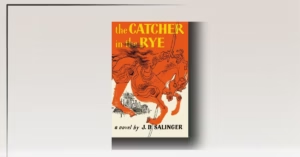
In The Catcher in the Rye by J.D. Salinger, a boy alone in New York steps into a phone booth. He has people in mind, money for the call and plenty to say. He walks out without calling anyone. Published in 1951, the novel still feels current to me in that small interval between wanting company and deciding whose voice you can bear to hear. Follow Holden Caulfield’s calls and even his detours start to make sense.
URL: https://www.sopranu.com/the-catcher-in-the-rye-themes-symbols/
Author: J. D. Salinger
4.5








0 thoughts on “The Catcher in the Rye by J.D. Salinger and Holden’s Missed Calls”