
Last updated on January 26th, 2026 at 11:53 am
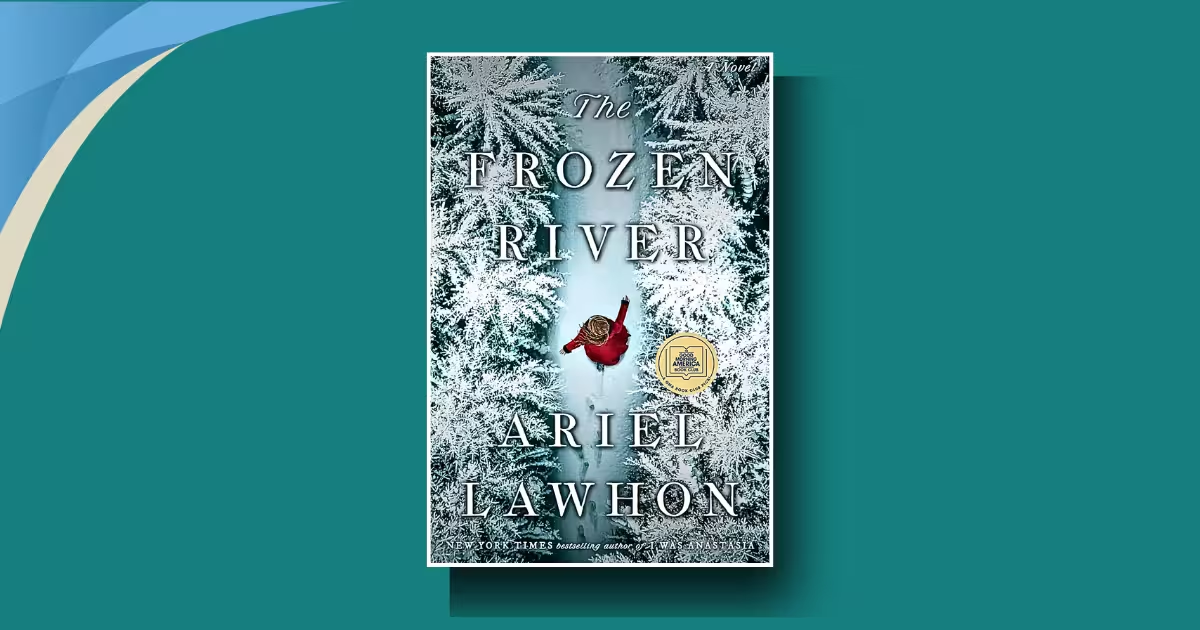
Winter doesn’t just freeze rivers—it freezes stories in place. In The Frozen River, a corpse lodged in ice forces a town to choose between truth and comfort, while a midwife with sharp eyes and sharper instincts refuses to let the dead be rewritten.
Ariel Lawhon’s novel is a mystery, yes—but it’s also a study in power: how violence hides behind reputation, how communities enforce silence, and how a woman’s knowledge becomes dangerous the moment it enters a courtroom.
Table of Contents
1. Introduction
Set in Hallowell, Maine, in 1789, The Frozen River follows Martha Ballard as she navigates a murder investigation intertwined with a rape accusation—both tied to influential figures in the community.
As Martha’s medical observations clash with courtroom politics and small-town alliances, the novel becomes less about uncovering a killer and more about the brutal math of survival in a system built to protect the right people.
This post is a full-spoiler review with a complete plot summary and the ending explained.
2. The Frozen River Review (FULL SPOILERS)
What this book is really doing (beyond “historical mystery”)
Yes, the hook is a body found in a freezing river and a town full of secrets. But the engine of the novel is evidence: who gets believed, what “counts” as proof, and what happens when a woman’s medical knowledge threatens the social order.
Lawhon builds Martha Ballard as someone the community relies on privately—births, injuries, sickness, death—while publicly minimizing her authority when it matters in court. That tension powers every major turn.
The setup
Martha Ballard is the town midwife in late-1700s Maine, married to Ephraim (a mill man), mother to grown children, and quietly indispensable.
Then a man’s body is found in the Kennebec River as it begins to freeze. The dead man is Joshua Burgess, a prominent figure in the community. The scene looks like an “accident” if you don’t look closely.
Martha looks closely.
She notices details that don’t sit right—what a body in water should look like, what marks mean, what’s missing, what’s been staged. From the start, the book tells you: Martha’s medical eye is a threat.
The second crime that’s actually the first
Running underneath Burgess’s death is the rape of Rebecca Foster, a minister’s wife. Rebecca has accused Colonel Joseph North and Burgess (and, historically, more than them) of assaulting her.
Martha examined Rebecca after the attack. The book doesn’t treat this as “backstory”—it treats it as the moral center. The town’s reaction is predictable and ugly: whispering, blame, “she must have tempted them,” politics, male alliances, and legal maneuvering.
This is where the “forensics” angle matters: Martha’s testimony isn’t gossip. It’s injury documentation, timing, and professional observation. But the system isn’t built to honor it.
Pressure closes in on Martha’s family
North isn’t just accused—he’s powerful. He can reach into property, courts, reputations, and the daily survival of families like the Ballards.
As Martha continues to speak up, the book escalates the retaliation:
- Legal and financial threats hit the Ballards.
- Martha’s son becomes entangled in suspicion around Burgess’s death.
- The community turns “murder investigation” into a weapon—less about justice and more about controlling the narrative.
Martha keeps doing what she always does: treating the sick, delivering babies, keeping records, and watching people carefully. Those “domestic” scenes aren’t filler—they’re how the book shows a woman building a case in plain sight.
What really happened to Joshua Burgess (the murder revealed)
Eventually, Martha forces the truth out of the men closest to the river that night.
Burgess didn’t simply fall into the Kennebec.
The killer is Sam Dawin—and the motive is vengeance and protection after Burgess assaults May Dawin (and after the town has already shown it won’t punish men like Burgess and North in any meaningful way).
Sam tracked Burgess through the woods, caught him, beat him, and hanged him. And Martha’s own son Jonathan was involved—he went with Sam that night.
It’s a gut-punch reveal because it reframes so much:
- Jonathan’s guilt and strange behavior stop being “teenage trouble” and become complicity.
- The river becomes less a crime scene and more a community garbage chute—a place to drop what powerful men do and what desperate men do in response.
Martha doesn’t respond like a detective chasing an arrest. She responds like a mother and a midwife: weighing harm, consequence, survival, and what “justice” even means in a system designed to deny it.
The climax: Martha vs. Joseph North (and the most talked-about scene)
North doesn’t stay a distant villain. The book drags him into Martha’s physical space.
In the climax, North corners Martha and tries to control her the way he controls everything else—through intimidation and violation. Martha reaches for a blade in Ephraim’s mill and fights back.
She doesn’t kill North.
She castrates him.
It’s as symbolic as it is brutal: the book turns the crime North keeps committing into the thing taken from him—his ability to keep using sex as power. And then, crucially, Martha does the midwife thing even when she hates it:
She stops the bleeding and keeps him alive, because letting him die in her husband’s mill would destroy the Ballards and hand North one last victory—turning her self-defense into her ruin.
They stage the explanation as a work accident, banking on the fact that North won’t want the truth known.
This is the book’s “severed justice”: the legal system fails, so the body pays.
The ending (explained clearly)
After the violence, the final pages don’t go “triumphant.” They go practical, which is one of the smartest choices Lawhon makes.
1. Rebecca’s baby—and Martha’s moral line
Rebecca gives birth to a child conceived through rape. Instead of forcing a neat resolution, the book shows how impossible this is emotionally and socially.
Martha helps arrange the baby’s safety—placing the child with someone who can protect them—because the town would weaponize the child’s existence against Rebecca.
It’s not framed as “problem solved.” It’s framed as harm reduced.
2. The confession and the quiet bargain
Martha confronts Sam Dawin directly and gets the full confession: Sam killed Burgess, and Jonathan helped.
Martha chooses not to expose them publicly. In effect, she makes a grim bargain:
- Burgess is gone.
- The town believes whatever it needs to believe.
- The men who did it will live with it.
- Martha will protect what remains of her family.
3. Court day: Jonathan steps forward
The closing public scene is not “the murder trial.” It’s something that looks smaller but is actually huge.
In court, Martha is required to name the father of an unwed woman’s baby (Sally Pierce). Before she can, Jonathan admits paternity, pays the fine, and publicly commits to marriage.
This moment does three things at once:
- It shows Jonathan choosing responsibility rather than secrecy.
- It mirrors the book’s theme: women pay for sex socially; men often don’t—unless they decide to.
- It gives Martha a final, quiet kind of relief: not perfect justice, but a son stepping out of cowardice.
4. The final emotional “click”
Jonathan worries Martha will hate him for what he did with Sam.
Martha doesn’t excuse it—but she contextualizes it, pointing him toward an older story from Ephraim’s past that explains why she understands how rage and protection can warp into violence.
And then the book closes the way Martha’s life does: a record of what happened, who came to the house, and the grounding refrain that her work and her world keep moving.
3. The Frozen River analysis
The Frozen River characters
1. Martha Ballard: the book’s “forensic mind”
My strongest takeaway is that Martha is written less like a modern detective and more like something rarer: a working professional whose expertise is dismissed until it becomes inconvenient.
Her midwifery functions like early forensics:
- she reads injuries without theatrics,
- she documents what happened when rumor is louder than fact,
- she understands bodies the way courts understand power.
2. Joseph North: not just a villain—an institution with a face
North is horrifying because he’s not chaotic. He’s protected. His confidence isn’t bravado; it’s experience. He behaves the way someone behaves when they’ve learned the system will catch them.
That’s why the castration scene lands as more than shock: it’s the first time North encounters a consequence he can’t lawyer away.
3. Jonathan and “complicity as a coming-of-age”
Jonathan’s arc is one of the book’s sharper moral blades. He is not the murderer, but he becomes an accomplice—then, later, chooses a public responsibility (paternity, marriage intent) that contrasts with his earlier secrecy.
It’s not redemption-by-speech. It’s redemption-by-choice.
The Frozen River Themes that actually stick
- Justice vs. legality: the law is present, but justice is not guaranteed.
- Power and believability: who gets believed is the real trial.
- Community as pressure cooker: small-town closeness becomes surveillance.
- The cost of survival: even “winning” leaves damage.
What worked (and what didn’t)
Worked: the blend of domestic labor + high stakes. Birth rooms and courtrooms feel like two fronts of the same war: who controls women’s bodies and stories.
Didn’t (for some readers): if you want a clean procedural with a neat legal wrap-up, the ending may feel morally unresolved—because it is.
4. Evaluation
You should read The Frozen River if you like:
- historical fiction where evidence and testimony matter more than vibes
- mysteries that end with moral weight, not just a culprit
- stories that stare directly at how institutions protect predators
You should probably skip it (or at least brace yourself) if you want:
- a cozy mystery tone
- a low-violence resolution
- a courtroom plot where the system reliably corrects itself
5. Comparisons
- A Midwife’s Tale (Laurel Thatcher Ulrich)
If you want the “midwife’s life rendered through records” feeling, this is the natural next step. - Burial Rites (Hannah Kent)
Similar in the sense that it’s historical, intense, and interested in how communities decide what “truth” is. - Alias Grace (Margaret Atwood)
If your favorite part is the ambiguity around testimony, power, and who gets believed, this scratches that itch. - The Mercies (Kiran Millwood Hargrave)
For readers who want historical fiction about women, power, and survival under social judgment.
6. Conclusion
The Frozen River doesn’t end with a neat courtroom victory—it ends with consequences.
By the final pages, the mystery is solved, but the deeper question remains: what does “justice” look like in a world designed to protect the powerful? Lawhon’s strongest move is making Martha Ballard’s work—her observations, her care, her records—the sharpest weapon in the room, even when the law refuses to recognize it.
If you want historical fiction that reads like a mystery but lands like an indictment, this one will stay with you long after the ice closes over the river.
8. FAQs
1. Who killed Joshua Burgess in The Frozen River?
Sam Dawin killed Burgess after Burgess assaulted May Dawin. Sam admits he beat Burgess and strung him from a tree.
2. Did Jonathan help kill Burgess?
Jonathan didn’t kill Burgess himself, but Sam says Jonathan was with him (“I took Jonathan”).
3. What happens to Joseph North at the end?
Martha castrates North when he attempts to assault her, then saves his life by treating the wound so he doesn’t bleed out.
4. Why doesn’t Martha report Sam (and Jonathan)?
The book frames it as a survival choice: the evidence is gone (rope burned), the system is corrupt, and exposing the truth would likely destroy multiple lives without delivering meaningful justice.
5. What is the last court scene about?
It’s about Sally Pierce’s baby. Jonathan publicly claims paternity, pays the fine, and posts intent to marry.







