
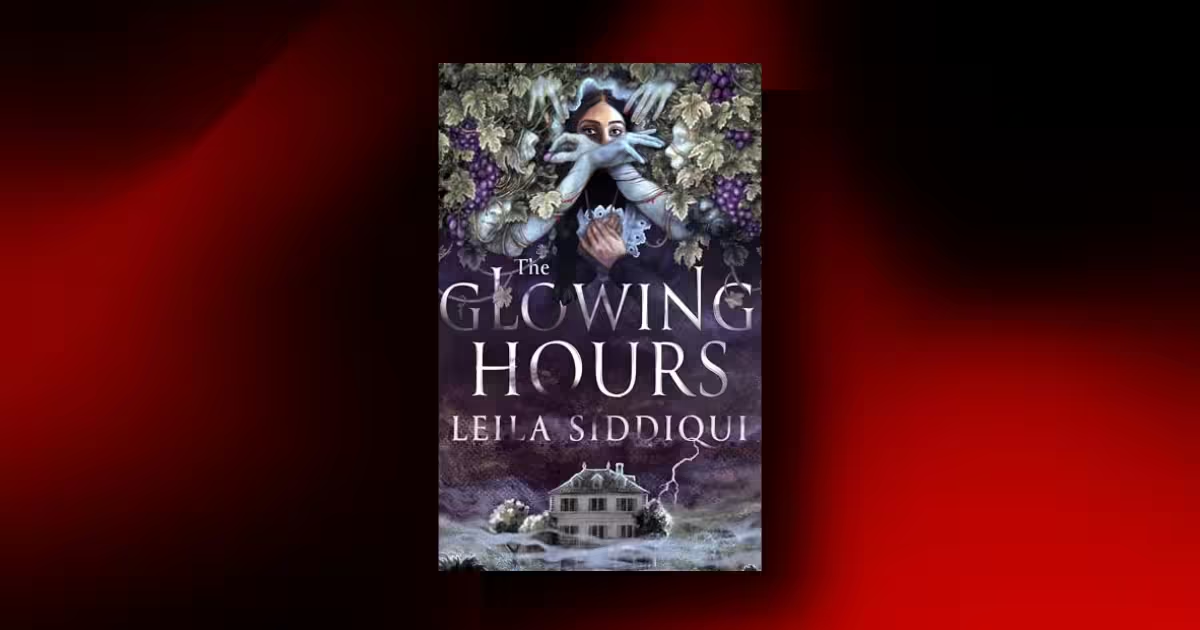
In a world of literary ghosts and historical legends, how often do we stop to wonder whose voices were silenced so that the “greats” could speak? If you have ever felt that history is a selective mirror reflecting only the powerful, The Glowing Hours by Leila Siddiqui is the haunting, necessary correction your bookshelf needs.
Best idea in a sentence: Leila Siddiqui’s The Glowing Hours reimagines the infamous 1816 summer at Villa Diodati through the eyes of an Indian maid, blending Gothic horror with a scathing critique of colonialism and the erasure of marginalized voices.
The Glowing Hours is best for fans of atmospheric Gothic horror, historical fiction enthusiasts (especially those obsessed with the Shelleys and Byron), and readers who enjoyed The Thirteenth Tale or Mexican Gothic.
Not for: Readers who prefer fast-paced action over slow-burn psychological dread or those sensitive to themes of historical gaslighting and trauma.
Table of Contents
1. Introduction
The Glowing Hours
Author: Leila Siddiqui
Publication Details: Published by Hell’s Hundred (an imprint of Soho Press), 2026.
This novel is a bold entry into the “New Gothic” genre, weaving together the real-life historical figures of the Romantic era with a fictional narrative that challenges their legacy.
2. Background
The novel is set primarily in 1816, the “Year Without a Summer,” when a volcanic winter cast a literal and metaphorical gloom over Europe.
While history remembers this as the birthplace of Frankenstein and the modern vampire story, Siddiqui uses this backdrop to explore the darker, unrecorded human costs of that summer, specifically focusing on the intersection of British Romanticism and Indian colonial identity.
3. The Glowing Hours Summary
In the Gothic historical novel The Glowing Hours by Leila Siddiqui, the narrative unfolds through a complex interplay of memory, tragedy, and the supernatural, centered on the lives of Mary Shelley and a young Indian woman named Mehrunissa Begum Hammersmith.
The story is framed decades after the events of 1816, as Mary’s daughter-in-law, Jane Shelley, visits an elderly Mehrunissa to return suppressed journal pages that reveal the dark, hidden truth of that “Year Without a Summer”.
The Beginning: London and the Journey to Geneva
The story begins with Mehrunissa (Mehr), the daughter of an Indian noblewoman and an Englishman, living in a state of precarious displacement in London.
Abandoned by her brother, James, and seeking a way to return to her ancestral home in Lucknow, she enters the service of Mary Shelley and her husband, the poet Percy Bysshe Shelley.
Mehr is initially struck by the chaotic and threadbare nature of the Shelley household, which contrasts with her own noble heritage—a heritage the Shelleys often dismiss or exoticize.
In the summer of 1816, Mehr travels with the Shelleys and Mary’s stepsister, Claire Clairmont, to Geneva. Claire is obsessively pursuing Lord Byron, with whom she has had an affair.
Upon arrival at Lake Geneva, they settle near Byron’s residence, the Villa Diodati. The atmosphere is immediately heavy with tension and an unnatural, persistent gloom caused by the volcanic winter of that year.
The Middle: Darkness at Villa Diodati
The core of the novel takes place at the Villa Diodati, where the group—including Byron and his young physician, John Polidori—is trapped indoors by incessant rain and storms. To pass the time, Byron proposes a contest to see who can write the most frightening ghost story.
As the group delves into the macabre, the boundary between fiction and reality begins to blur. Mehr experiences disturbing supernatural occurrences:
Sleepwalking and Apparitions: Mary Shelley begins to sleepwalk into Mehr’s room, her eyes transformed into “inky black” voids. Mehr herself sees figures in the shadows and hears a persistent, “lingering hum” that blankets the house.
The Haunted Painting: Mehr discovers a portrait in the villa that seems to change or communicate a sense of entrapment, leading her to fear she is losing her mind.
Death of Lucy: A fellow servant, Lucy, dies under mysterious and gruesome circumstances. Her body is handled with cold indifference by Byron, and Mehr later experiences a terrifying vision of Lucy’s corpse speaking to her, warning that Mary’s life is in peril and that Mehr must be the one to “make it end”.
Throughout this period, Mary Shelley is consumed by the creation of what will become Frankenstein. Mehr observes that Mary’s writing is fueled by a “rage the likes of which you would not believe”. The villa itself seems to feed on the group’s psychic energy, orchestrated by Byron, whom Mehr begins to see as a predatory figure who has “murdered” the spirit of those around him.
The End: The Confrontation and Escape
The climax occurs as the supernatural pressures within the villa reach a breaking point. Mehr realizes that the villa and the “monsters” being created within it are not just literary exercises but manifest forces threatening their lives.
She discovers her brother, James, is also entangled in the villa’s dark web, having been manipulated or held there.
Using a taweez (an amulet) given to her by her mother, Mehr finds the strength to resist the villa’s influence. She confronts the malevolent atmosphere and the group’s descent into madness. In the final chaotic moments, a “blinding white light” erupts, and the oppressive gloom of the villa is shattered.
The Escape: As sunlight finally streams into the villa, the group scatters in terror and relief. Mehr leads James out toward the lake, finally free of the “Year Without a Summer”.
Mary’s Promise: Before parting, Mary Shelley looks back at Mehr from the vineyard. Her gaze conveys a “promise” and the realization that their lives have been “irrevocably changed” by the horrors they shared. While Mary will go on to literary fame, she carries the scars of the summer with her.
The Legacy: The framing story concludes with the elderly Mehrunissa holding the suppressed journal pages given to her by Jane Shelley. Jane, wanting to protect Mary’s public legacy as a “great woman writer,” has excised the most disturbing and incriminating parts of the journals—those that detailed the true, supernatural darkness of Diodati.
Mehr is left with the choice to keep these memories or burn them, finally possessing the power over her own narrative that was denied to her during that haunted summer.
The ending reinforces that while Mary Shelley’s “monster” became a work of fiction, for Mehrunissa, the monster was the reality of the people and the place that nearly consumed her.
4. The Glowing Hours Analysis
4.1. The Glowing Hours Characters
Mehrunissa (Mehr) Begum Hammersmith: The protagonist and a descendant of the Nawab of Lucknow. Mehr is a woman caught between worlds—noble-born in India but relegated to a servant in England. Her development is the heart of the story; she transforms from a desperate woman seeking her brother’s approval to the literal savior of the villa’s inhabitants.
Mary Shelley: Portrayed not just as a grieving mother and brilliant writer, but as a woman possessed by a “rage the likes of which you would not believe”. Her relationship with Mehr is complex—Mary sees a kindred spirit in Mehr’s “silence,” yet she is ultimately complicit in the systems that marginalize her.
Lord Byron: The “monster” of the villa. Byron is depicted as a predatory, narcissistic figure who feeds on the energy of those around him. He orchestrates the psychic dissolution of the group, viewing their suffering as mere material for his poetry.
John Polidori: The tragic physician who senses the villa’s malice but is trapped by his own insecurities and Byron’s bullying.
4.2. The Glowing Hours Themes and Symbolism
The Taweez (Amulet): A symbol of Mehr’s heritage and ancestral protection. It is the physical manifestation of her power, eventually becoming the tool that breaks the villa’s curse by flooding the darkness with light.
Colonialism and Erasure: The “glowing hours” refers to the stolen moments of history. The book highlights how the “monsters” created by the Shelleys and Byron are metaphors for the very real colonial violence and human erasure occurring in the background of their lives.
The Haunted Painting: A symbol of entrapment. The shifting eyes of the portrait reflect Mehr’s own feeling of being watched and controlled within the European gaze.
5. Evaluation
The Glowing Hours is a poignant, bone-chilling masterpiece that effectively “un-ghosts” the marginalized figures of the 19th century.
Strengths: Siddiqui’s prose is incredibly vivid, particularly her descriptions of the suffocating atmosphere of Villa Diodati. The integration of Indian folklore and Muslim identity into a traditional European Gothic setting is seamless and groundbreaking.
Weaknesses: Some readers may find the pacing in the middle chapters as slow as the relentless Swiss rain, though this successfully mirrors the characters’ own feelings of stagnation.
Impact: The novel resonates intellectually by forcing a re-evaluation of the “Romantic” ideals, revealing the inherent selfishness and privilege behind the literary canon.
Comparison with Similar Works: It shares the feminist reimagining of Circe by Madeline Miller and the colonial Gothic tension of The Confessions of Frannie Langton.
6. Personal Insight: The Cost of Creation
The novel provides a striking commentary on the ethics of storytelling.
We often celebrate Frankenstein as a triumph of the imagination, but Siddiqui asks us to consider who was being “stitched together” in the real world to make that fiction possible. In a contemporary context, this mirrors our ongoing discussions about cultural appropriation and the “White Savior” narrative in literature.
The book reminds us that true “monsters” are often not the creatures of our dreams, but the people who use their power to silence others.
7. The Glowing Hours Quotes
- “I have love in me the likes of which you can scarcely imagine and rage the likes of which you would not believe.”
- “You will be the one to make it end. For yourself. For all of them.”
- “Their absurd and fanciful imaginations are poison to the mind.”
8. Conclusion
The Glowing Hours is more than a ghost story; it is a reclamation. It ends with Mehr finally walking into the sunlight, leaving the self-absorbed poets to their own shadows.
It is highly recommended for anyone who wants to see the “Year Without a Summer” through a lens that is finally, brilliantly clear.







