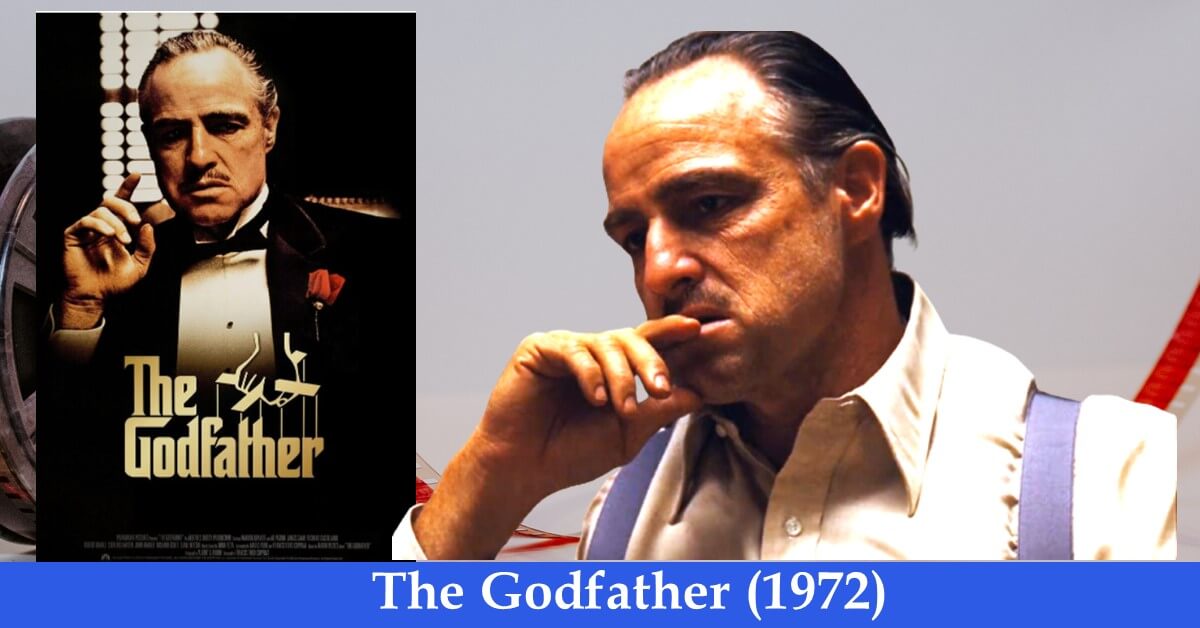
Last updated on October 27th, 2026 at 03:21 pm
The Godfather 1972 is worth watching because almost everything that makes it great was fought for against the people paying for it. The studio wanted a cheap, modern-day picture set in Kansas City. The director was nearly replaced. The studio resisted both of the actors who ended up carrying the film.
I watched it again for this review, and what struck me was how little of that chaos shows on screen.
What you see is a calm, dark, almost religious film about a family business. This review covers the full plot with spoilers, the ending, the acting, the themes, the awards and the criticisms that fans tend to skip.
The Godfather 1972 is one of the 25 best films that changed cinema history.
Table of Contents
The Godfather 1972 at a glance
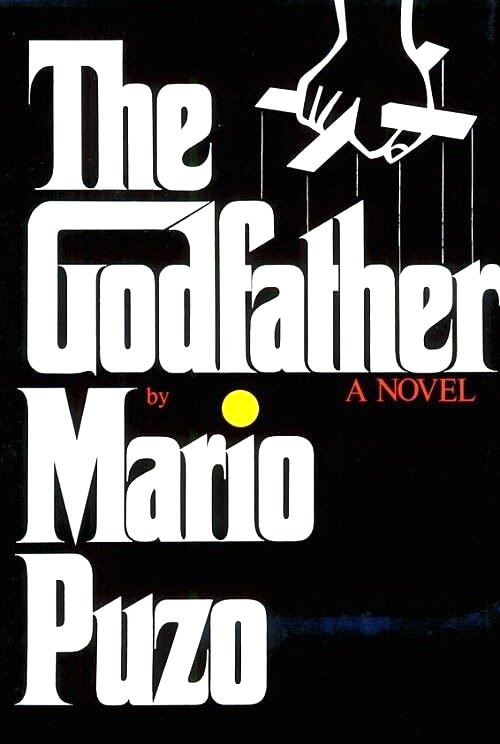
What it is: a 1972 epic gangster film directed by Francis Ford Coppola, adapted from Mario Puzo’s 1969 novel, running about 175 minutes.
Core story: Michael Corleone, a war veteran who wants no part of his father’s crime empire, ends the film as its ruthless new boss.
The twist most people miss: Paramount’s first plan was a contemporary, budget-friendly version. Coppola’s insistence on the 1940s setting is the reason the film feels like it does.
Awards: three Oscars at the 45th Academy Awards: Best Picture, Best Actor (Brando, who declined it) and Best Adapted Screenplay.
Legacy: ranked second on the American Film Institute’s 2007 list of the greatest American films, behind Citizen Kane.
My rating: 4.9 out of 5.
Biggest weakness: the women in the story are given very little to do, and the pace takes its time.
Quick verdict: A slow, shadowy tragedy that earns its reputation, and one of the few classics that rewards a second viewing more than the first.
Rating: 4.9/5
Who should watch it: If you like character-driven crime stories, patient filmmaking and stories about family loyalty going wrong, you will probably love it. If you need fast editing or strong female leads, you may bounce off. The Godfather 1972 runs close to three hours and spends long stretches in dim rooms where men talk quietly.
Why was The Godfather nearly a different, cheaper film?
Because Paramount was in financial trouble and wanted to save money. Paramount had just had a run of expensive failures, including the gangster flop The Brotherhood. The studio had bought the rights to Puzo’s book for $80,000 before it became a bestseller. Executives wanted the story moved to present-day Kansas City and shot cheaply on the studio backlot.
Coppola pushed back. His reasons, as recorded in that same account, included Michael’s time in the Marine Corps, the rise of corporate America and the postwar years. The book kept selling, and he won. Roger Ebert later wrote that the period setting was crucial and that bringing everything up to date to save money would have meant the movie simply wouldn’t have worked.
I agree.
The fedoras and long cars are not decoration. They put the story in a world where loyalty still seems like a rule rather than a trap.
Coppola was not even the first choice. Paramount’s list of directors who passed included Sergio Leone and Peter Bogdanovich. Coppola himself first said no, calling the novel “pretty cheap stuff”. He changed his mind largely because his company, American Zoetrope, owed money to Warner Bros. Money was the reason this film got made, and money nearly sank it.
Costs ran at around $40,000 a day during a slow stretch of production, and Coppola said he expected to be fired at any moment. Studio head Robert Evans reportedly approached Elia Kazan to take over. Coppola’s counter was to fire the people he believed were working against him.
In his words, “Like the godfather, I fired people as a preemptory strike.”
Even the production had a real-world mob angle. Joseph Colombo’s Italian-American Civil Rights League objected to the script’s use of the words “mafia” and “Cosa Nostra.” Those words were removed, and the league ended up backing the film.
What happens in The Godfather? Plot Summary
Part one: the wedding and the favors
The Godfather 1972 opens in the mid-1940s on the wedding day of Connie Corleone and Carlo Rizzi. Her father, Don Vito Corleone, head of a powerful New York crime family, sits in his study receiving requests, since tradition says no one can be refused on a daughter’s wedding day. Outside, his youngest son Michael, a decorated Marine, introduces his girlfriend Kay Adams to the family.
He tells her a few unflattering stories and makes one thing clear: he is not part of the family business.
Vito’s godson Johnny Fontane, a singer, begs for help. A Hollywood producer named Jack Woltz is blocking him from a film role. Vito sends his adopted son and lawyer, Tom Hagen, to Los Angeles. Woltz refuses. The next morning he wakes with the severed head of his prize racehorse in his bed, and Fontane gets the part.
Part two: the shooting and Michael’s first killings
Near Christmas, Vito is shot in the street. He had refused to back a narcotics deal proposed by Virgil Sollozzo, nicknamed “The Turk,” who has the support of the Tattaglia family.
The Corleone enforcer Luca Brasi tries to infiltrate Sollozzo’s side and is strangled. Vito survives, and his hot-tempered eldest son Sonny takes over the family. Sonny has Tattaglia’s son Bruno killed, and open war begins.
At the hospital, Michael realizes his father’s guards have been removed.
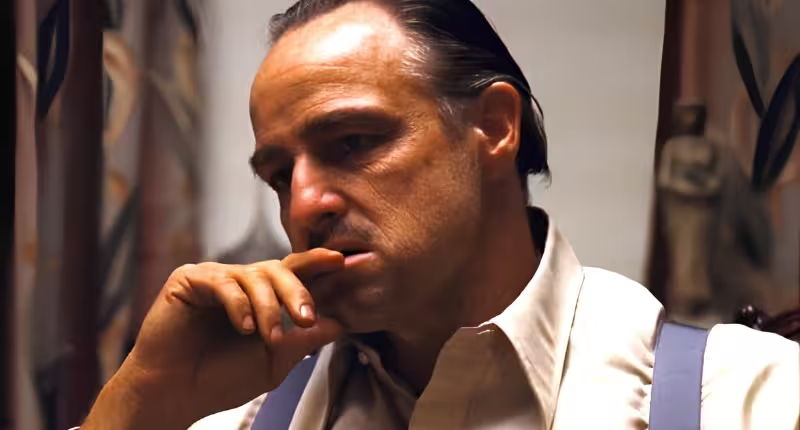
A corrupt police captain, McCluskey, has been paid off by Sollozzo. Michael moves his father to a new room and stands watch outside. McCluskey arrives, furious, and breaks Michael’s jaw. Hagen shows up with reinforcements and McCluskey backs off.
Keep your friends close, but your enemies closer.
~Michael Corleone
Michael, seen as the harmless one, volunteers to kill both Sollozzo and McCluskey at a dinner meeting. The family is amused at first, then agrees. A gun is hidden in the restaurant bathroom. Michael comes out and shoots both men. He is then sent to Sicily to hide.
Part three: Sicily, Sonny’s death and the peace
In Sicily, Michael falls in love with a local woman, Apollonia, and marries her. Back in New York, Sonny discovers that his brother-in-law Carlo has been beating Connie. After one public beating of Carlo and a warning, Carlo beats her again. Sonny drives off furious and alone, and he is ambushed and killed at a highway toll booth.
The wounded Vito returns to work and calls a peace meeting with the heads of the other families. He agrees to a controlled narcotics trade in return for an end to the killings and for Michael’s safe return. Right after the meeting, a car bomb meant for Michael in Sicily kills Apollonia instead.
Part four: Michael takes over and the baptism
Michael comes home, marries Kay and tells her the family will be legitimate within five years. He visits Las Vegas to buy out Moe Greene, a casino owner under whose protection Fredo has been living. Greene refuses and boasts of his backing from Barzini. Michael warns Fredo never to take sides against the family again.
Vito realizes that Barzini, not Tattaglia, planned Sonny’s death. He tells Michael that whoever offers to set up a meeting with Barzini will be the traitor.
Vito then dies of a heart attack while playing with his grandson in the garden. At the funeral, the family captain Tessio proposes that meeting, and so exposes himself.
Michael stands as godfather at his nephew’s baptism. As the priest speaks, his men kill the heads of the other New York families and Moe Greene in separate places. Tessio is taken away to be executed. Michael confronts Carlo, who confesses to helping set up Sonny’s death. Clemenza strangles Carlo in a car.
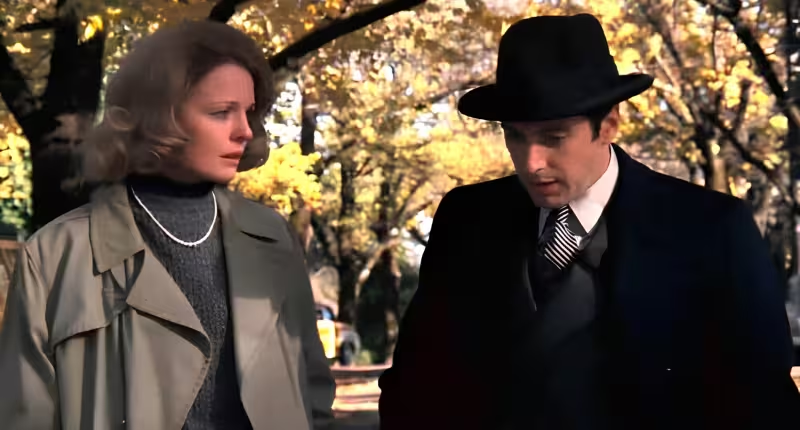
Connie accuses Michael of killing her husband. Kay asks him directly, and he says no. She is relieved. Then she watches the family captains enter the room and greet him as Don Corleone. Neri closes the door in her face.
What does the ending of The Godfather mean?
The ending shows Michael completing his transformation while shutting Kay out of the part of his life that now defines him.
The baptism is a clever device.
It places the language of rebirth and sacrament over a sequence of murders. While Michael promises to renounce evil in the church, his men are carrying out the opposite. As one explainer on Looper points out, the scene also sets up his promise to Kay about legitimacy, which the sequels spend their time breaking.
The final shot, of the door closing on Kay, was not the only ending Coppola made. Catholic World Report notes that he also shot an alternate ending taken from Puzo’s novel, also centered on Kay. The academic Jon Lewis, quoted in that piece, argues the alternate ending better fits the film’s link between family and religion. I disagree with him.
The door shot says everything the alternate version needs to say, and it says it without a word. Kay is not told the truth, and she does not need to be. She sees it.
How does the film look so dark, and why does it work?
Gordon Willis shot it in deliberate shadow, and the darkness is the point. Willis first turned the job down because the production seemed chaotic. After he accepted, he and Coppola agreed to avoid helicopters, zoom lenses and other modern devices.
They used what the record calls a “tableau” approach to make scenes feel like paintings. Willis underexposed The Godfather 1972 to give it a yellow tone. He used low light to show psychological change, and Sicily was shot to feel softer and more romantic than New York.
You feel this most in the opening study scene. Vito’s face is half in shadow while a mourning undertaker pleads for justice. The room feels like a confessional. This is also why I think the film still looks better than many films made decades later: it relies on lighting and framing rather than camera tricks.
The music matters just as much. Nino Rota’s score carries sadness and nostalgia even in the happy wedding scenes. An odd footnote: Rota’s original score was nominated for an Oscar and later removed after the Academy found he had reused a similar piece from the 1958 film Fortunella. It still won a Golden Globe, a BAFTA and a Grammy.
Who gives the best performances in The Godfather?
Marlon Brando and Al Pacino get the credit, but I would argue the supporting cast holds the film together.
Brando won the Best Actor Oscar and sent Sacheen Littlefeather to decline it, citing Hollywood’s treatment of American Indians. His Vito moves slowly and speaks softly. The famous cotton-in-the-cheeks look came from his own audition preparation, and the studio only agreed to cast him on conditions: a lower salary and a bond against delays.
Pacino’s job is harder. Michael has to start as a decent outsider and end as something cold. Pacino was reportedly unsure of himself early, forgetting lines in tests. On screen, that nervousness helps. The key moment is the restaurant scene before the killings, where he sits listening to Sollozzo while a train screeches by. His face barely moves, and you can see him making the choice.
The Godfather 1972‘s critics were not all convinced. Stanley Kauffmann of The New Republic thought Pacino was in over his head, which is a reminder that classics are not always loved immediately.
James Caan’s Sonny is the film’s energy, a loud, generous man who cannot control his temper and pays for it at the toll booth. Robert Duvall’s Tom Hagen is quiet and exact, the kind of performance that makes a scene work without drawing attention.
Ebert described seeing Duvall in the restored version and thinking, “There’s Tom Hagen,” which says how fully the actor disappeared into the part. John Cazale’s Fredo is small but unforgettable, and Diane Keaton does what she can with Kay, though the script gives her too little.
What is The Godfather really about?
It is about family loyalty as a form of power, and about how that loyalty can consume the people who defend it. Coppola himself decided The Godfather 1972 should not be about organized crime but about a family chronicle, and he described it as a metaphor for capitalism in America. That reading holds up.
Vito talks about favors the way a banker talks about credit. Michael’s promise to go legitimate in five years is a business plan.
A scholar quoted in the same record, George De Stefano, makes a sharp observation. Despite showing a rich and powerful family, no scenes depict prostitution, gambling or loan sharking. The violence is shown, but the everyday crime is mostly left out. I think that is why the Corleones feel almost respectable. We see them at weddings, funerals and kitchen tables. The film also, as De Stefano argues, treats the underworld as a response to a corrupt society rather than as an outsider’s nightmare.
A friend should always underestimate your virtues and an enemy overestimate your faults.
~Don Vito Corleone
A second theme is the cost of a good son. Michael starts as the family’s hope for a clean life. What he becomes instead is the reason that hope fails. Vito never wanted this for him, and I think that is the film’s real tragedy.
How does The Godfather compare with other crime films?
It is the standard that nearly every later mob story is measured against. The direct follow-up, The Godfather Part II, widens the story and many fans rank it equal or better. I think the first film is tighter, and the second is bigger. The third, released in 1990, was later re-edited as The Godfather Coda: The Death of Michael Corleone.
The influence on The Sopranos is easy to see. Silvio Dante does impressions of Pacino’s Michael, and Ranker has compiled a list of the show’s Godfather references.
Goodfellas, in contrast, is faster and louder and far less forgiving of its criminals. If The Godfather is an opera, Goodfellas is a police report with a great soundtrack.
How did critics and audiences react?
Very positively, though not unanimously. The film was the highest-grossing film of 1972. By the time of the Wikipedia snapshot I read, Rotten Tomatoes listed a 97% approval rating based on 155 reviews and Metacritic gave it 100 out of 100. Those scores can shift, so check the live pages before you publish.
Pauline Kael of The New Yorker called it popular melodrama that expresses a “new tragic realism”. Vincent Canby of The New York Times called it one of the “most brutal and moving chronicles of American life”. Roger Ebert named it the best film of 1972. Andrew Sarris of The Village Voice praised Brando but felt Michael was too focused on revenge.
Box office: Sources disagree. The Godfather 1972 earned between $250 and $291 million worldwide on a budget reported anywhere from $6 million to $7.2 million. Box Office Mojo lists a different original-release figure, so I would not quote a single number without noting the range.
Awards at a glance
| Award body | What it won |
|---|---|
| Academy Awards (45th) | Best Picture, Best Actor (Brando, declined), Best Adapted Screenplay |
| Golden Globes (30th) | Best Picture (Drama), Director, Actor (Drama), Screenplay, Original Score |
| BAFTA (26th) | Best Film Music (Rota) |
| Directors Guild of America | Outstanding Directorial Achievement (Coppola) |
| Writers Guild of America | Best Drama Adapted from Another Medium |
| Grammy (15th) | Best Original Score (Rota) |
The film was also selected for the National Film Registry in 1990.
Is The Godfather still worth watching today?
Yes, and the reason is stranger than most reviews admit. The film’s influence did not stay on screen. Real criminals have treated it as a manual and a mirror, and the evidence for that is unusual.
Personal insight: when the crime film becomes the training film
I want to spend this section on the part of the film’s legacy that unsettles me most. Gangsters did not just watch The Godfather. They absorbed it. Former Gambino underboss Salvatore “Sammy the Bull” Gravano said after seeing it, “I floated out of the theater.”
According to the same source, members of the Patriarca family altered their speech to sound more like Vito. In 2025, The Times reported that Sicilian mafia bosses were urging recruits to watch the film to learn the trade, worried that newcomers “lack a code of honour”.
I cannot confirm the Times report independently, since I only found it summarized in the Wikipedia article, but it fits the pattern.
That reversal is a real warning.
A film made to show the cost of that life became, for some of the people in it, a flattering portrait. Coppola set out to show a family corroded by power. Some viewers saw only the dignity. This matters beyond the mob. Any story that makes a powerful person look calm, wise and loyal can be borrowed by people who are none of those things.
There is a second, quieter lesson in Michael’s promise to Kay, that the family will be legitimate in five years. It is a very modern kind of lie. Many people and organizations promise a clean future while delaying the changes required to reach it. The film’s answer is brutal: the day you decide the clean future can wait, it has already been cancelled.
The film’s own history carries a third lesson. Paramount nearly smothered it with caution, and the studio’s instincts, move it, cheapen it, add a violence coach, would have produced something forgettable. The decisions that made it great were the expensive, stubborn ones. When I look at how much of today’s entertainment is shaped by safe choices, I see a case for trusting the creator who can explain why the harder choice is the right one.
Finally, the film’s reach still surprises me.
It shows up in Barbie, where Ken praises it, and a 10-episode drama, The Offer, dramatized its making in 2022. Fifty years on, the story of how it got made is almost as famous as the story it tells. For a viewer today, my practical advice is to watch it knowing both things: it is a great film, and it is also a film some people have misread on purpose.
Quotable lines
- “I’m gonna make him an offer he can’t refuse.” Vito Corleone. The American Film Institute voted it the second-most memorable line in cinema history in its 2005 quotes list.
- “Leave the gun. Take the cannoli.” Clemenza, after the killing of Paulie. Looper’s trilogy explainer uses it as a shorthand for the film’s mix of menace and routine.
- Roger Ebert on the score: things would have turned out better if only they had listened to the Godfather.
I kept this list short on purpose. Other famous lines exist, but I only included ones I could tie to a source I actually opened.
Pros and cons
| Pros | Cons |
|---|---|
| Brando and Pacino give career-defining performances | Female characters, especially Kay and Connie, are underwritten |
| Gordon Willis’s shadowy cinematography | The pace is slow for viewers used to modern editing |
| Nino Rota’s mournful score | Some critics at the time found the leads unconvincing |
| A tight, patient adaptation of a huge novel | The film can flatter its criminals, as real mobsters have shown |
| The baptism sequence is among the best-edited scenes ever filmed | Nearly three hours is a lot for a casual weeknight |
Conclusion
The Godfather 1972 deserves its reputation, but not for the reasons that get repeated most. It is not great because it is violent, quotable or famous. It is great because a young director refused to make the cheaper, safer film his bosses wanted, and because two actors and a cinematographer trusted him.
I give it 4.9 out of 5. It loses a fraction for the thin treatment of its female characters. If you have never watched it, start with the original and give it your full attention. If you have, watch the last two minutes again and notice who is standing on which side of the door.
Recommended for: fans of crime drama, film students, and anyone curious about how studios and directors fight.
Not ideal for: viewers who need fast pacing, or who dislike violence.
The Godfather

Director: Francis Ford Coppola
Date Created: 1970-01-01 00:32
4.9
Pros
- Career-defining lead performances; shadowy, painterly cinematography; Nino Rota's score; tight adaptation of a large novel; unforgettable baptism sequence
Cons
- Underwritten female characters; slow pace; nearly three hours long; risk of glamorizing its criminals