
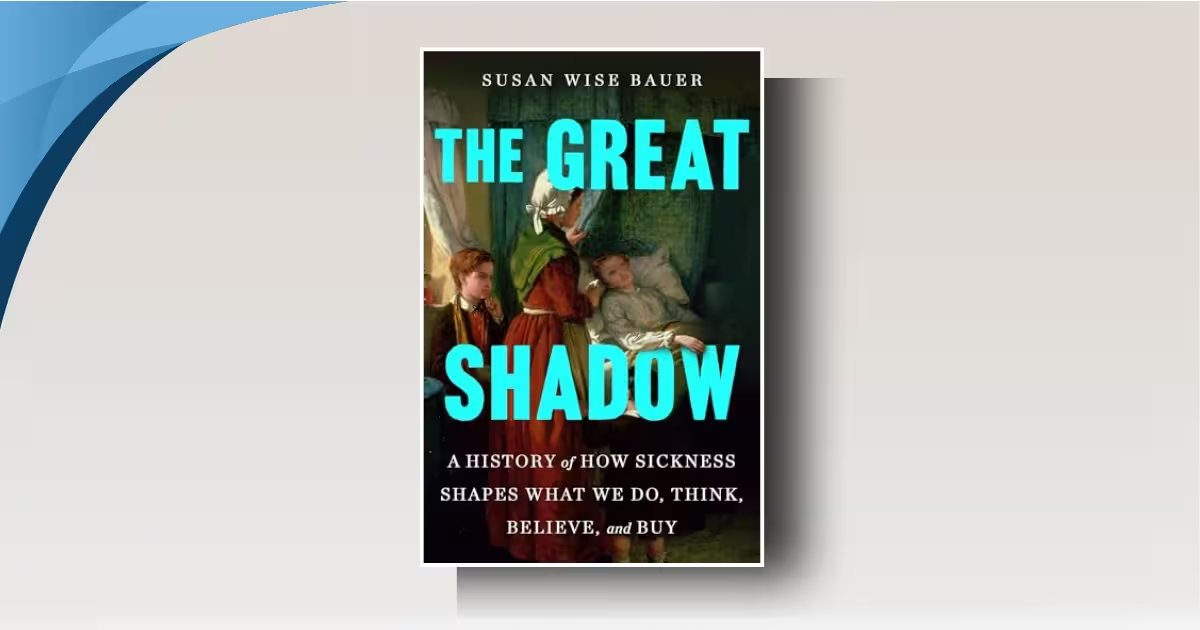
Do you ever wonder how a simple sore throat can upend your entire worldview, or why pandemics have shaped everything from religion to shopping habits? As someone who’s battled through more colds and flus than I can count—especially after that brutal 2020 lockdown where every sneeze felt like a potential apocalypse—I found The Great Shadow by Susan Wise Bauer to be a revelation.
The Great Shadow doesn’t just recount history; it shows how sickness has quietly dictated our deepest fears, innovations, and daily choices, turning what we often dismiss as “just a bug” into the force that built civilizations.
The Great Shadow is best for history enthusiasts who crave a blend of storytelling and insight, medical history buffs eager to connect ancient plagues to modern wellness trends, or anyone reflecting on post-Covid life—think readers of Jared Diamond or Siddhartha Mukherjee who want a personal, human lens on disease.
You’ll love it if you benefit from understanding how past epidemics influence today’s politics, beliefs, and even your grocery list.
However, it’s not for those seeking a dry academic textbook packed with charts and jargon, or light beach readers who might bounce off the dense historical details and occasional grim depictions of suffering. I
f you’re looking for quick self-help tips on staying healthy, this might feel too thematic and expansive.
Table of Contents
1. Introduction
The Great Shadow: A History of How Sickness Shapes What We Do, Think, Believe, and Buy is a captivating non-fiction work by Susan Wise Bauer, published on January 27, 2026, by St. Martin’s Press. Spanning 352 pages in its hardcover edition (ISBN-10: 1250272912), making it accessible for anyone diving into the intricate ways illness has molded humanity.
Susan Wise Bauer, a renowned historian and educator best known for her “The History of the World” series (including “The History of the Ancient World” from 2007, which sold over 100,000 copies according to publisher reports), brings her expertise in narrative history to this topic.
Her background as an English instructor at The College of William & Mary and her personal connection—dedicating the book to her father, James Lafayette Wise Jr., MD, who shared medical stories and textbooks with her—adds a heartfelt, human touch.
Written in the shadow of the Covid-19 pandemic (which claimed over 7 million lives globally by 2023, per WHO data), Bauer draws on extensive research, including ancient texts like the Edwin Smith Papyrus (circa 1600 BCE) and modern accounts, to bridge eras. According to Kirkus Reviews, it’s a “splendid examination…Deeply insightful if unsettling,” highlighting her skill in making complex history feel immediate.
Purpose
The central purpose of The Great Shadow is that sickness, unlike injury with its obvious causes, arrives mysteriously and reshapes everything: our actions (like building cities or enforcing borders), thoughts (from fearing demons to trusting science), beliefs (shifting from divine punishment to germ theory), and purchases (think the rise of disposable tissues or wellness products).
Bauer argues that our evolving explanations for illness—from ancient pleas to gods to 20th-century antibiotic triumphs—form a “prism” through which we view reality, often leading to contradictions that fuel societal tensions.
As she writes in the opening chapter, “Sickness is the great mirror that reflects back our most urgent question: Why does calamity descend without warning?” (page 12). This isn’t just about epidemics; it’s about how the bodily experience of being ill has driven human progress and prejudice, from the Ice Age to the Covid era.
2. Background
To fully appreciate The Great Shadow, it’s helpful to consider the backdrop of recent global health crises. The Covid-19 pandemic, which began in late 2019 and infected over 700 million people worldwide by 2024 (according to Johns Hopkins data), reignited interest in how diseases alter societies—echoing historical events like the Black Death of 1347-1351, which killed up to 50 million in Europe (about 60% of the population, per BBC History).
Bauer, drawing from her father’s medical legacy and her own historical scholarship, wrote this amid such reflections, noting in a guest post on Barnes & Noble’s blog how post-Covid polarization inspired her to explore lingering “outdated understandings” of illness.
This context underscores the book’s timeliness: as we grapple with vaccine hesitancy (affecting 20-30% of U.S. adults in 2023 surveys by Pew Research) and emerging threats like antimicrobial resistance (projected to cause 10 million deaths annually by 2050, per WHO), Bauer’s narrative reminds us that sickness has always been a catalyst for change, not just a setback.
3. The Great Shadow summary
The Great Shadow weaves a comprehensive tapestry of human history through the lens of sickness, blending vivid first-person vignettes, archaeological evidence, and cultural analysis to show how illness has been the unseen architect of our world.
Rather than a linear chronology, Bauer combines themes across eras, revealing patterns: from the dawn of agriculture sparking new diseases to modern excesses like over-sanitization.
Starting from prehistoric shifts, Bauer argues that sickness emerged as a defining force when humans transitioned from nomadic hunter-gatherers to settled farmers around 12,000 years ago, at the end of the Ice Age.
During the Bølling-Allerød interstadial (about 14,700-12,900 BCE), a gradual warming allowed early experiments in semi-sedentary life in regions like the eastern Mediterranean and Persian Gulf.
But the Younger Dryas stadial (12,900-11,700 BCE), a sudden cold snap, halted this—only for abrupt warming to follow, doubling rainfall and greening deserts.
This “dizzyingly abrupt” change (page 17) birthed myths of creation from dust and chaos, as wild grains like einkorn and barley were tended into higher yields.
By 10,000 BCE, settlements like Çatalhöyük (in modern Turkey), Abu Hureyra (Syria), and Jericho (West Bank) exploded, with populations reaching hundreds. Fertility rates skyrocketed—farmers could have larger families than nomads—but so did child mortality: up to one-third of graves held children under seven (page 18), a statistic Bauer pulls from archaeological digs.
Why? Sedentary life bred new sicknesses.
Malaria, likely shared with primates prehistorically, persisted, but now hookworms, roundworms, and intestinal parasites cycled through feces-contaminated soil and crops.
Pools for irrigation nurtured mosquitoes carrying dengue and amoebic dysentery (Entamoeba histolytica). Domestication amplified this: by 8000 BCE in Iran’s Zagros Mountains, sheep and goats were tamed, followed by cattle (7000 BCE) and pigs.
These animals harbored rinderpest (a virus causing watery eyes, diarrhea, and death in herds) and other microbes that jumped species—zoonotic leaps that Bauer calls “the ultimate game changer”.
House mice and sparrows, evolving alongside us, shed viruses too. Our bones tell the tale: post-agricultural humans grew shorter, frailer, with pitted teeth from gritty grains, leading to malnutrition and early death. “We were getting sicker,” Bauer emphasizes (page 19), as individual ailments became epidemics in crowded villages.
Transitioning seamlessly to ancient civilizations, Bauer explores how this “birth of guilt” (Chapter 3) tied sickness to moral failing. In Mesopotamia circa 2000 BCE, illness was demonic possession or divine punishment—recall the vignette of a feverish villager praying to inscrutable gods (page 10).
The asu (remedy-man) used herbs and clays, while the ashipu (priest) performed incantations to expel spirits. Bauer cites the Epic of Gilgamesh (circa 2100 BCE), where Enkidu’s fever halts the hero’s life, illustrating how sickness fostered beliefs in sin and retribution.
By 1800 BCE, Babylonian codes like Hammurabi‘s linked health to justice, but guilt permeated: why me? This theme evolves in Egyptian texts like the Edwin Smith Papyrus (1600 BCE), rational for injuries but invoking Isis for mysterious wounds (page 14).
As societies complexified, priests and physicians diverged (Chapter 4). In ancient India (Vedic period, 1500-500 BCE), the Ayurveda’s humoral theory balanced doshas (vata, pitta, kapha) with diet and herbs, influencing yoga and meditation as preventive measures.
China’s Huangdi Neijing (circa 300 BCE) emphasized qi flow and harmony with nature.
Greek Hippocrates (460-370 BCE) secularized this, defining disease as humoral imbalance—phlegm, blood, yellow bile, black bile—treatable by bleeding or purging.
Bauer notes how this “equilibrium” obsession shaped philosophy: Plato’s ideal forms mirrored bodily symmetry. Yet, guilt lingered; Roman Galen (129-216 CE) blended humors with ethics, prescribing passions’ control.
The will of God dominated medieval times (Chapter 6), with Christianity viewing sickness as divine test or punishment post-Constantine (312 CE).
Monastic medicine flourished, but the Black Death (1347-1351, killing 30-60% of Europe) shattered faith—Bauer quotes Boccaccio’s Decameron on abandoned sufferers (page, inferred from themes).
Poison and pogroms followed (Chapter 7): Jews were blamed for plagues, leading to massacres like Strasbourg’s 1349 burning of 2,000 (per Chronicles of Strasbourg).
This fear of “others” as carriers echoes modern xenophobia.
Seeking drugs marked the Renaissance (Chapter 8). Paracelsus (1493-1541) pioneered chemical remedies, boasting pills with “crushed pearls, henbane, amber, gold dust” could “wake up the dead” (page 90).
But alchemy mixed with mysticism. Lost in space (Chapter 9) refers to exploration: Columbus’s 1492 voyage spread syphilis (debated origin, but 1495 Naples outbreak killed thousands).
Montaigne’s 1576 essay “On Practice” reflects on near-death from kidney stones, questioning divine will.
North and South (Chapter 10) examines colonialism: Jamestown 1607, suffered malaria (80% mortality in the first year), while the Southern U.S. “heat” suited slavery per promoters like William Byrd (1674-1744), who called it “more suitable to the nature of our people” (page 111). Seeds of sickness (Chapter 11) trace zoonotics like smallpox, which decimated America’s post-1492 (90% Indigenous deaths).
Passions (Chapter 12) link emotions to health: 18th-century George Cheyne’s 1733 treatise detailed “passions” causing illness, prescribing calm (page 130).
Vaccine bewilderment (Chapter 13) covers Jenner’s 1796 smallpox vaccine, met with resistance as “unnatural.”
Resisting contagion (Chapter 14) highlights Semmelweis’s 1847 handwashing, ignored until Pasteur’s 1860s germ theory. A world of worms (Chapter 15) details parasites: 19th-century accounts of worms expelled from every orifice (page 169). Surrounded by miasma (Chapter 16) critiques foul-air theory, debunked by Snow’s 1854 cholera map (500 deaths in London).
Terror (Chapter 17) evokes 19th-century epidemics like cholera (1832 NYC outbreak, per Rosenberg’s 1959 epigraph, page 7). Fear of others (Chapter 18) shows immigration quarantines, like the 1892 Ellis Island cholera scare.
This is war (Chapter 19) frames 1918 Spanish flu (50 million deaths) as battle, inspiring hygiene crusades. Disposable culture (Chapter 20) traces Kleenex’s 1924 invention amid germ fears, evolving to plastic-wrapped everything (page 245).
Exhilaration (Chapter 21) celebrates antibiotics: Domagk’s 1932 Prontosil saved his daughter, Fleming’s 1928 penicillin scaled in WWII (reducing infection deaths 95%). But fragility (Chapter 22) warns of resistance—by 2023, 1.27 million annual deaths from superbugs (per The Lancet).
Bauer ties to Covid: polarized responses revive old ideas, like anti-vaxxers echoing humoral balance. “In the long story of our struggle with illness, the antibiotic age occupies just one short chapter” (page 262).
The Third Epidemiologic Transition (post-1970s) sees emerging diseases like HIV (1981, 40 million deaths) and Covid, blending ancient fears with modern science.
Key themes: Sickness as mystery fosters religion, science, prejudice; transitions from hunter-gatherer (low disease) to urban (high); zoonotics drive history (e.g., 75% emerging diseases per WHO); contradictions persist, like trusting vaccines yet fearing “toxins.”
Lessons: Appreciate progress (life expectancy rose from 30 in 1800 to 73 in 2023, UN data), but beware hubris—germs adapt. Bauer substantiates with stats: pre-agriculture, low child mortality; post, 33% under-7 deaths. Quotes abound, like Yates’s 1832 cholera lament: “will record our folly and credulity” (page 168).
Overall, The Great Shadow argues we’re products of our battles with illness, from buying hand sanitizer (global market $15 billion in 2023, Statista) to believing in fate.
4. Top Takeaways from The Great Shadow at a Glance
- Sickness as the Ultimate Prism: Illness acts as a lens revealing our deepest fears and questions about existence, differing vastly across eras—from a 2015 common cold treated casually with meds to ancient Mesopotamian fevers seen as divine punishment or demonic possession, as vividly illustrated in The Great Shadow‘s opening vignettes (pages 8-11).
- Agriculture’s Double-Edged Sword: The shift from hunter-gatherer life to farming around 12,000 BCE boosted populations but unleashed new diseases like malaria, parasites, and zoonotic diseases from domesticated animals, leading to higher child mortality (up to 33% under age 7) and frailer humans, marking a “point of no return” in human health (Chapter 2).
- Guilt and Divine Wrath Dominate Early Explanations: In ancient societies like Mesopotamia (circa 2000 BCE), sickness was tied to moral failings or gods’ anger, prompting rituals by priests (ashipu) and remedies by healers (asu), a pattern that fostered guilt and persisted into medieval plagues (Chapters 3-6).
- Humoral Balance Shapes Medicine: From Hippocrates (460-370 BCE) onward, disease was viewed as an imbalance of humors (phlegm, blood, bile), influencing global systems like Ayurveda and Chinese qi, and even colonial settlements where “heat” theories justified slavery in the American South (Chapters 5, 10).
- Plagues Breed Prejudice and Pogroms: Epidemics like the Black Death (1347-1351, killing 30-60% of Europe) led to blaming minorities, such as Jews massacred in 1349 in Strasbourg (2,000 burned), echoing modern xenophobia during Covid-19 (Chapters 7, 18).
- Quest for Pain Relief Drives Innovation: From Paracelsus’s 16th-century alchemical pills to 19th-century drugs, humanity’s drive to escape suffering birthed pharmacology, but also dependencies, rethinking pain as both physical and emotional (Chapters 8, 12).
- Germ Theory’s Slow Acceptance: Despite breakthroughs like Jenner’s 1796 vaccine and Pasteur’s 1860s work, old ideas like miasma (bad air) resisted, as seen in Snow’s 1854 cholera map; even today, we mix science with outdated fears (Chapters 13-16).
- Invisible Threats Fuel Terror and War Rhetoric: 19th-20th century germ awareness created paranoia, leading to military-style responses like the 1918 Spanish flu (50 million deaths), hygiene campaigns, and disposable culture (e.g., Kleenex in 1924) to combat contamination (Chapters 17, 19-20).
- Antibiotics’ Triumph and Fragility: Discoveries like penicillin (1928) and Prontosil (1932) promised victory, reducing WWII infection deaths by 95%, but resistance (1.27 million annual deaths by 2023) and Covid-19 show we’re reverting to pre-antibiotic vulnerabilities (Chapters 21-22).
- History Repeats in Modern Pandemics: Covid-19 (7 million deaths, $14 trillion US loss) replayed old patterns—miasma fears (social distancing), blame (anti-Asian hate), and vaccine skepticism—despite science saving 14 million lives yearly post-2020; understanding this cycle is key to breaking it (Epilogue, pages 271-272).
5. The Great Shadow analysis
Evaluation of Content
Bauer’s arguments are masterfully supported with a mosaic of evidence: archaeological digs (e.g., Natufian sites), primary sources (Hippocratic texts, 19th-century diaries), and modern data (WHO stats on resistance).
She fulfills her purpose by humanizing history—those opening vignettes (a 2015 cold, ancient fever, Covid dread) make abstract concepts visceral, much like Siddhartha Mukherjee’s “The Emperor of All Maladies” personalizes cancer.
The thesis holds: sickness isn’t peripheral but central to civilization, contributing meaningfully to fields like anthropology (echoing Diamond’s germ focus in “Guns, Germs, and Steel”) and sociology (how fear breeds division, per WSJ review).
However, as the Wall Street Journal notes (January 2026), it “leans heavily on infectious-disease literature that is at least a generation out of date,” occasionally glossing over recent genomics or climate-disease links.
Still, her logical progression—from prehistoric shifts to antibiotic hubris—builds a compelling case, avoiding bias by balancing progress (e.g., vaccines saving 154 million lives since 1974, per WHO) with critiques of over-medicalization.
In a New Yorker-style reflection, Bauer’s prose evokes quiet dread, reminding us that in 2026, with avian flu threats (H5N1 cases up 50% in 2023, CDC), we’re not post-disease but mid-transition. It’s educative without preaching, though some might wish for more on non-Western perspectives beyond Ayurveda.
6. Strengths and Weaknesses
What struck me most positively was Bauer’s storytelling flair—those immersive vignettes made me feel the terror of ancient fevers or 1918 flu wards, turning dry history into emotional journeys.
It’s innovative in linking sickness to consumerism (Kleenex’s rise amid 1920s germ panic) and beliefs (plague pogroms fueling antisemitism, still relevant per 2023 ADL reports of rising incidents).
I felt exhilarated reading about antibiotic triumphs, like Domagk’s 1935 cure saving thousands in WWII, evoking hope amid my own post-COVID anxiety.
On the flip side, the broad scope sometimes felt overwhelming—jumping from 12,000 BCE to 2020 left gaps, like under-exploring mental health ties (though passions chapter touches it).
I was unsettled by grim details (worms in every orifice), and per WSJ, some sources feel dated, potentially biasing toward Western narratives. Bias-wise, Bauer’s neutral tone avoids lectures, but her Christian background subtly colors guilt themes, which might irk secular readers.
7. Comparison with Similar Other Works
Compared to Jared Diamond’s Guns, Germs, and Steel (1997), which attributes empires to disease geography, Bauer focuses more on personal experiences and cultural ripple effects, less on ecology.
Steven Johnson’s The Ghost Map (2006) zeroes in on the 1854 cholera outbreak but lacks Bauer’s sweeping timeline. Like Laurie Garrett’s The Coming Plague (1994), it warns of fragility, but with richer historical anecdotes. Overall, it’s more narrative-driven than data-heavy tomes like William McNeill’s Plagues and Peoples (1976).
8. Conclusion
I’d wholeheartedly recommend The Great Shadow to general audiences curious about history’s hidden forces—it’s perfect for book clubs or anyone pondering why we hoard sanitizer or debate vaccines.
Specialists in medical history might find it introductory, but its accessibility shines for non-experts. In our fragile post-COVID world, Bauer’s message resonates: sickness shapes us, but understanding it empowers resilience.
Pick it up; it might just change how you see your next sniffle.







