

Last updated on January 13th, 2026 at 05:10 am
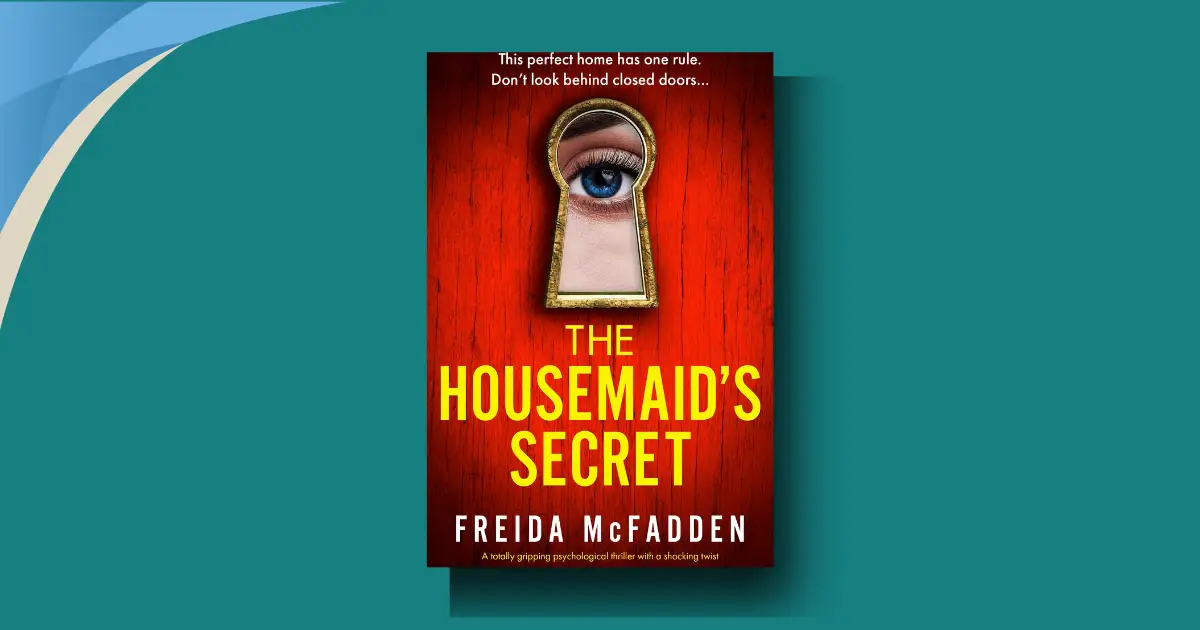
If you’ve ever looked at a “perfect” couple and thought, Something’s off… but I can’t prove it, The Housemaid’s Secret is basically a masterclass in that feeling.
And if you’ve ever tried to help someone who says they’re trapped, you’ll recognize the exact kind of danger this story warns about—quiet, strategic, and smiling.
Ever wonder why you sometimes feel guilty for not helping—yet also terrified that helping will drag you into someone else’s chaos?
This book grabs that fear, tightens it, and refuses to let go.
A housemaid tries to rescue an abused wife—then learns she’s been recruited into a revenge plot so twisted she can’t even be sure who died.
The Housemaid’s Secret is best for readers who love psychological thrillers with identity games, “I trusted the wrong person” dread, and late-stage reveals that reframe whole scenes.
Not for: anyone who avoids domestic-abuse themes, coercive control, or scenes where characters are manipulated into carrying legal risk.
Table of Contents
1. Introduction
The Housemaid’s Secret is the second book in Freida McFadden’s Housemaid series, originally published by Bookouture (Feb 20, 2023).
It’s also the book Goodreads readers voted the 2023 Best Mystery & Thriller winner—an award that signals just how widely this one landed beyond the usual thriller crowd.
McFadden is often described (by mainstream book profiles and her author bio) as a practicing physician who writes twist-driven thrillers, which tracks with the book’s clinical precision about control, fear, and escalation.
It is the second part of The Housemaid series.
2. Background
This novel keeps circling one question: Why do people watch suffering and do nothing—until it’s too late?
Early on, Millie and Brock discuss the Kitty Genovese story as it’s usually taught (bystander effect, “thirty-eight witnesses”), and the book directly calls out how that story was sensationalized.
In real life, multiple later investigations found the original “38 witnesses did nothing” framing was misleading; the details were more complicated than the viral lesson plan version.
That matters here because McFadden uses the Genovese myth the way thrillers use mirrors: you think you’re learning about other people’s inaction, then you realize the story is teaching you how easily you can be placed in the same position.
3. The Housemaid’s Secret Summary
The book opens by telling you—flat-out—that someone expects to be killed: “Tonight, I will be murdered.”
Millie Calloway is trying to build a clean, stable future, but her life is still haunted by danger and past consequences, which makes her especially sensitive to other people’s fear. She lands a housekeeping job in a wealthy Manhattan penthouse for Douglas Garrick, with a rule attached that immediately screams thriller: if the guest bedroom door is closed, she must leave the wife alone.
At first, Millie sees the closed-door situation like an emotional oddity—until she starts noticing bruises, desperation, and the kind of “help me” signals people use when they can’t say help me out loud.
Douglas’s control shows up not only in rage but in routine: Millie realizes he dictates Wendy’s food portions, and she understands Wendy’s thinness as something enforced, not natural.
That’s the first major “secret” the book makes you sit with: the abuse isn’t only bruises—it’s systems.
Millie wants to do the right thing, but “right” gets slippery fast.
Her boyfriend Brock is a lawyer, and his instinct is formal: call police, follow procedure—whereas Millie’s instinct is immediate: protect the person who’s bleeding in front of you, even if the paperwork can’t keep up.
The tension between those instincts becomes the trap-door beneath the whole plot: legal safety versus human urgency.
Millie starts quietly planning ways to help Wendy escape, including reaching toward Enzo—someone from her past who “knows all ‘the guys’” and can do off-the-books protection.
At the same time, the book keeps showing you Millie’s vulnerability: she’s still the kind of person predators try to corner, and she still has to fight her way out of that world.
That dual pressure—save Wendy, save herself—keeps tightening until the story snaps into its first “no turning back” event.
The night everything changes, Millie hears chaos behind the closed guest bedroom door: “the door to the guestroom is closed tight,” and Douglas’s voice booms from inside as if he’s caught Wendy doing something unforgivable. When Millie later sees Wendy, the abuse is undeniable—“her bruised face” is proof that time has run out for gentle advice.
Millie realizes Wendy is desperate enough to consider lethal force, and she understands exactly what that desperation does to decision-making: “him or me,” and mistakes get made.
Then the legal trap springs.
Detective Ramirez confronts Millie with a burner phone Douglas used to text her, and the messages—stripped of context—read like an affair schedule (“Will you be over tonight?” “Come tonight.”).
Worse, Millie admits she deleted the normal “groceries and laundry” messages—because Wendy told her to.
So Millie’s attempt to protect Wendy has now placed Millie in the crosshairs, exactly where an intelligent manipulator would want her.
The evidence pile grows: Ramirez produces a photo of a diamond bracelet with an inscription, blown up so Brock can see it clearly: “To W, You are mine forever, Love D.”
Ramirez then points out the devastating detail: Millie’s real name is Wilhelmina—W.
In that moment, the book makes you feel what Millie feels: the slow, sick shift from helper to suspect.
Now the story starts feeding you oddities that don’t fit. Millie sees Douglas in a place he shouldn’t be—watching her—while walking with a blonde woman who is not Wendy. It’s one of those scenes where you can feel the author laying track for a derailment: you can sense the lie, but you can’t see it yet.
Then comes the reveal that flips your brain over.
A news story shows a photo of Douglas Garrick—and Millie realizes she has never actually seen Douglas before, meaning the “Douglas” she worked for might not be Douglas at all.
The line that lands like a cold hand on your spine is Millie’s: “Who the hell did I kill last night?”
That’s where I’m going to pause this installment, because the second half is where the book cashes in every hidden clue—identity, motive, and a revenge ending that is not remotely “clean.”
Ending explained
Once Millie realizes the man in the penthouse might not be Douglas Garrick, the book turns into a chase for identity as much as safety.
And the smart part is how it weaponizes perspective: you’re shown how easy it is to believe an abuse narrative when you’re only seeing the bruises, the closed door, and the fear.
Millie keeps trying to solve the contradiction—why “Douglas” was texting her from a burner phone, why the evidence looks curated, and why Wendy’s “help me” moments keep steering Millie into risk.
The story is basically saying: if someone is smart enough, they don’t need to frame you with fake evidence; they just need to rearrange your real life until it reads guilty.
And Wendy is playing a much deeper game than Millie understands—right down to how “W” can point to Wendy or Wilhelmina, depending on who’s reading it.
Eventually, the “abused wife” storyline fractures, and Wendy’s own viewpoint shows what she’s capable of.
She describes Russell Simonds—Marybeth’s husband—as a man she wants badly enough to take home, and she admits that when she wants something, she’ll do whatever it takes to get it.
She frames her affair as love, while treating Douglas with cold contempt, even joking about his teeth and body like he’s a defective purchase.
Wendy’s sections read like a “how-to” manual for entitlement—she wants luxury, status, and freedom, and she wants someone else to pay the moral bill.
Then the violence becomes explicit—and messy.
A storm-night cabin sequence (the book’s classic “closed space” thriller arena) includes the power being cut: “Somebody cut the power,” and the cabin goes “pitch black.”
In that darkness, Wendy admits she pinned everything on Millie because Millie “made it way too easy,” and she keeps calling Millie “dangerous” as if she’s trying to rewrite reality out loud.
The cabin turns into a blood-soaked reckoning: Wendy sees Russell dead—“his throat slit”—and recognizes Millie did it, even though Russell “is not even the one she truly hates.”
This is where the moral arithmetic of the book gets nasty. Wendy did horrible things and expects sympathy because she can show bruises. Millie is willing to be “dangerous” if that’s what it takes to stop someone who weaponizes other people. And the story dares you to decide whether you’re still rooting for the “helpful” protagonist when help turns into violence.
The ending locks in the real revenge engine: Marybeth.
Wendy is forced to write and sign a confession, and she understands what it implies—“the confession ends with me saying that I am taking my own life,” meaning she expects to be killed by the end of the night.
Marybeth rejects any “I feel terrible” plea and tells Wendy she deserves to “die in a painful and horrible way.”
Then Marybeth switches methods: not stabbing (too suspicious), but poisoning—specifically digoxin, explained in vivid detail as agony followed by fatal arrhythmia. The coldest twist line is Marybeth’s: “You already have, Wendy.” So Wendy’s end is slow, medical, and controlled—exactly the kind of control she tried to exert over everyone else.
Finally, the epilogue reveals the last “secret,” and it’s Millie’s.
Brock asks about his extra bottle of digoxin, and Millie lies—because she remembers what digoxin can do “in large doses.”
Then she explains how Wendy’s fatal overdose didn’t come from Douglas’s stash as police assumed.
Millie reveals she met Marybeth—who worked for the “real Douglas Garrick”—and after their conversation, Marybeth chose to take “a little therapeutic drive out to that cabin in the woods.”
Millie ends on the book’s final moral signature: Wendy underestimated “an extremely dangerous person”—Millie—and “paid the ultimate price.”
That’s the ending, explained plainly: Millie didn’t just survive the trap—she redirected the trapper into someone else’s hands, and she did it with a smile you’re supposed to fear.
4. The Housemaid’s Secret
4.1 The Housemaid’s Characters
Millie is written as a “helpful person with a criminal shadow,” and the book repeatedly shows how that combination makes her both empathetic and terrifyingly competent under pressure.
Her defining weakness is also her defining strength: she cannot stop trying to help, even when help puts her at risk.
Wendy is the book’s trap in human form.
She performs victimhood convincingly enough to trigger Millie’s protective instinct, but her own narration shows entitlement, cruelty, and a willingness to “do whatever it takes.”
Her most revealing trait is not the violence—it’s the assumption that other people exist to be used.
Brock represents law, order, and the story’s warning about clean narratives.
He knows the Genovese story is “sensationalized,” which makes him factually smart—but his structure can’t protect Millie once the evidence is engineered.
Even when he’s right in principle, the thriller reality is faster than principle.
Marybeth is vengeance with paperwork.
She forces a confession (so the story becomes “suicide”), then chooses a death that reads natural enough to confuse suspicion.
And Millie’s final move—connecting Marybeth to Wendy—proves Millie’s growth is not “becoming better,” but “becoming smarter.”
4.2 The Housemaid‘s Secret Themes and Symbolism
Closed doors / unseen rooms: The guest bedroom door is the book’s central symbol: what happens “behind it” controls everyone’s choices, even when they never witness it directly.
Coercive control as routine: Wendy’s starvation is shown as a methodical system—food portions and daily rules that make her physically smaller and psychologically weaker.
Identity as evidence: The bracelet inscription (“To W…”) becomes a physical symbol of how proof can be re-aimed at whoever the story needs to hurt.
Bystander guilt: The Genovese discussion is the thematic seed—Millie’s “itch to help people who are in trouble” becomes the very lever someone can pull to destroy her.
Revenge as medicine: Digoxin is not just a poison; it’s the story’s metaphor for “clinical punishment”—slow, bodily, rationalized.
5. Evaluation
Strengths: The pacing is brutal in the best way—each revelation arrives right when your brain thinks it understands the rules, and then the rule changes.
The evidence manipulation (burner phone, deleted messages, “W” ambiguity) is especially effective because it feels plausible: it’s all real stuff, just rearranged.
Weaknesses: If you prefer thrillers where moral lines stay clear, this one will frustrate you, because the story wants you complicit in Millie’s “ends justify means.”
Some readers may also find the extremity of the final revenge arc emotionally harsh rather than cathartic.
Impact: Emotionally, the book leaves you with an uncomfortable lesson: being kind is not enough; you need strategy, boundaries, and proof—or your kindness becomes somebody else’s weapon.
Intellectually, it’s a sharp reminder that “evidence” can be storytelling, and the most dangerous liar is the one who doesn’t need to invent—only to edit.
Comparison with similar works: If you like Gone Girl’s war over narrative control, or twist-thrillers where “victim” and “villain” swap masks mid-sentence, this sits in that lane—faster, more direct, and less literary.
6. Personal Insight with Contemporary Educational Relevance
What The Housemaid’s Secret does well—almost too well—is show how “help” can be hijacked.
Millie’s impulse is the same impulse many people have in real life: you notice signs, you want to intervene, and you fear you’ll make it worse.
That tension matters because intimate partner violence is not rare; the WHO has estimated that roughly 1 in 3 women worldwide have experienced physical and/or sexual violence, often by an intimate partner.
And the bystander question is not just academic: the Genovese “lesson” (even when corrected) persists because people still freeze, rationalize, or assume someone else will act.
The practical takeaway I’d give a friend is simple: if you suspect abuse, prioritize safety + documentation + professional support, not heroics. Millie’s nightmare begins when her actions create a trail someone else can edit into “proof” against her.
In real life, that’s why many DV organizations recommend safety planning, confidential hotlines, and careful evidence preservation (screenshots, dated notes, trusted witnesses) rather than confrontations that escalate risk.
This book is fiction, but the warning is real: empathy without structure can become a trap—so build structure first, then act.
7. The Housemaid’s Secret Quotes
- “Tonight, I will be murdered.”
- “If the door is closed… please don’t disturb her.”
- “He controls every bite that goes into her mouth.”
- “The story was sensationalized by the New York Times.”
- “To W, You are mine forever, Love D”
- “Who the hell did I kill last night?”
- “Digoxin toxicity is extremely serious…”
- “You already have, Wendy.”
- “She underestimated an extremely dangerous person.”
8. Conclusion
The Housemaid’s Secret is a thriller about doors, evidence, and the terrifying power of a well-told lie.
It’s significant because it doesn’t just ask “who did it?”—it asks “who gets believed, and why?”
If you love twisty psychological suspense, unreliable “victim” narratives, and fast reveals that force you to reread your own assumptions, this is for you.
If you need your thrillers morally comforting, skip it, because this ending is not comfort—it’s consequence.