
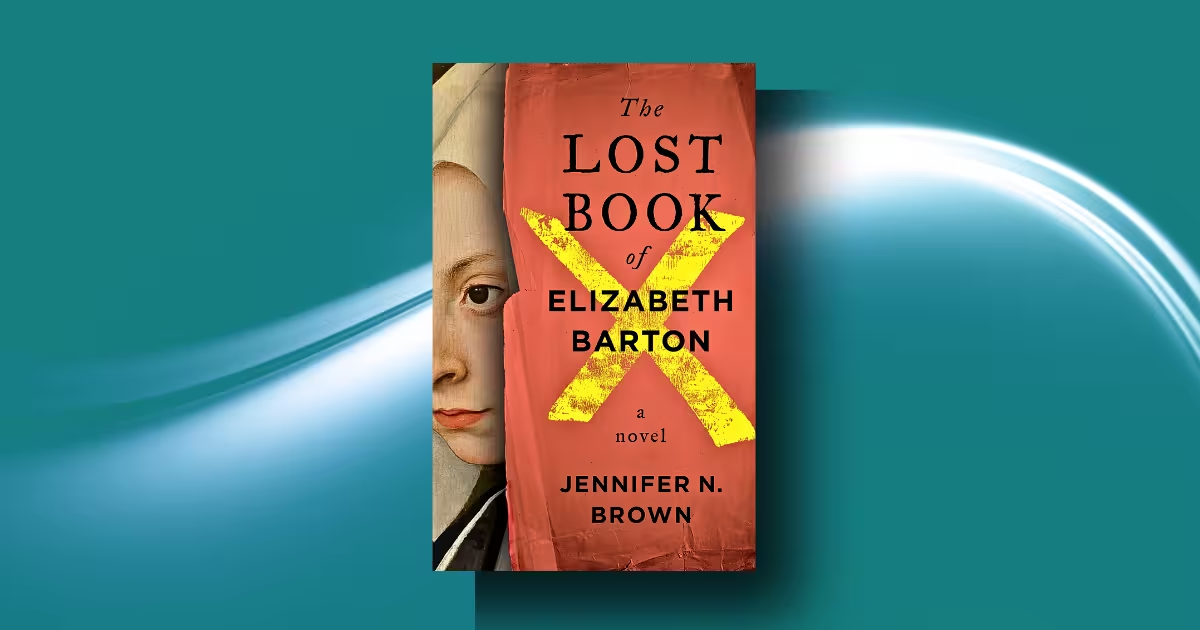
Do you ever wonder how a single voice from the past—silenced, burned, and buried for centuries—could suddenly upend everything you thought you knew about power, faith, and forgotten women? That question kept me turning pages late into the night with The Lost Book of Elizabeth Barton by Jennifer N. Brown (St. Martin’s Press, April 14, 2026).
As someone who runs probinism.com and devours historical fiction that turns long history into intimate human stories (think my roundup of the 30 best in the genre), I picked this debut up expecting a solid Tudor tale.
What I got was a masterful dual-timeline murder mystery that feels both timeless and urgently contemporary.
Brown, a medieval literature scholar and dean at Bentley University, draws on her deep expertise to breathe life into real history while crafting a page-turner that had me gasping at twists and lingering over its emotional punch.
In The Lost Book of Elizabeth Barton, a 16th-century servant girl’s prophetic visions thrust her into the deadly politics of Henry VIII’s court, only for her suppressed book to resurface in 2023—sparking academic stardom, deadly rivalries, and a hunt for hidden treasure at the very priory where she once lived.
The Lost Book of Elizabeth Barton is best for readers who crave atmospheric historical fiction with modern suspense (fans of Kate Morton, Philippa Gregory, or The Name of the Rose will devour it).
It’s perfect for book clubs, history buffs, and anyone who loves smart women navigating cutthroat worlds.
Not for pure romance seekers or those who want zero spoilers—because this review dives deep (full plot, ending, everything). If you hate academia snark or slow-burn dual timelines, you might bounce.
Table of Contents
1. Introduction
The Lost Book of Elizabeth Barton is Jennifer N. Brown’s stunning debut novel, published by St. Martin’s Press on April 14, 2026. Brown isn’t just any writer—she’s a respected medievalist specializing in literature by and for women.
Her academic background shines through without ever feeling lecture-y, making this a rare treat: fiction that respects history while delivering thriller-level tension.
2. Background: Historical Context
Elizabeth Barton (c. 1506–1534), the real “Holy Maid of Kent,” was a farm servant who began having visions around 1525.
Her prophecies—initially about purgatory and local deaths—gained her fame, a priory home at St. Sepulchre’s, and powerful patrons like Edward Bocking and Bishop John Fisher.
As Henry VIII pushed to annul his marriage to Catherine of Aragon and wed Anne Boleyn, Barton’s visions turned political: she warned the king would “burn in hell” if he proceeded.
Her book A Marveilous Woorke (printed ~1527) circulated widely until Henry’s men destroyed every copy after her 1534 arrest, forced confession, and execution at Tyburn—the only woman whose head graced London Bridge as a traitor. Brown uses this real erasure as the spark for her fiction, asking: What if one copy survived?
3. The Lost Book of Elizabeth Barton Summary
I finished this book in one breathless weekend, and let me retell it like I’m cornering you at a book club with wine in hand—because the plot is that addictive.
We open in 1534 at Tyburn: Elizabeth Barton, the “Mad Maid of Kent,” swings from the gallows. Her body jerks in the “Tyburn jig,” light as air, legs kicking uselessly while the crowd jeers. She dies terrified yet defiant, believing God will save her. Cut to Kent, 2023: “I am not dead,” thinks our modern heroine, Dr. Alison Sage, trapped in a suffocating priest hole, claustrophobia closing in, throat raw from screaming.
The dual timelines lock in immediately.
Historical arc (1525–1534): Nineteen-year-old Elizabeth, exhausted servant on the Cobb farm in Aldington, collapses in a fever on Easter 1525. She awakens with a vision of purgatory—demons prodding souls, including the wicked Cobb boy Julian, whom she predicts will die soon. He does.
Word spreads; priest Richard Master alerts monk Edward Bocking at Christ Church. Bocking, ambitious and skeptical of female visionaries (“ruled by the flesh”), examines her and buys in.
He takes her to Bishop Fisher, who tests her with a memento mori skull. Elizabeth, coached subtly, delivers anti-Lutheran prophecies. She enters St. Sepulchre’s Priory as the “Holy Maid,” exempt from chores while Bocking transcribes her “visions.” Pilgrims flock; the priory prospers. Her book circulates.
As Henry’s divorce crisis brews (1527–1533), Bocking and Fisher steer her prophecies against the marriage: Henry and Anne will burn in hell; the realm is imperiled. Elizabeth meets Cardinal Wolsey and Thomas More. She grows from naive girl to confident (if manipulated) prophetess, dictating to Bocking.
By 1533, arrested after Anne’s coronation, Elizabeth confesses under pressure that her visions were fabricated—though the novel leaves ambiguity: some feel genuine, others politically convenient. Hanged at Tyburn alongside allies, her head spikes London Bridge. Her book is ordered burned; Henry’s men succeed… almost.
Modern arc (2023): Dr. Alison Sage, NYU historian and single mom to twins Georgina and Tristan, stumbles on a miscatalogued manuscript in Belgian monastic papers—Elizabeth’s lost book, smuggled abroad during the Dissolution.
Her Atlantic City keynote “A Discovery in the Archives” is a bombshell; she’s suddenly academic rock-star. Invited to the ultra-exclusive Codex Consortium (seven scholars only) at crumbling Vale House Manor—right beside St. Sepulchre’s ruins—she packs her power stance and flies to Kent.
At the manor (June 2023), tensions simmer. Roger Sheffield (organizer, Oxford emeritus) pushes the Barton book and a local legend: monks hid priory treasure during the Dissolution. Old flame Wes (Westley) appears—charming, distracting.
Colleagues include Marla Shultz (award-winning historian), Charles Madingley (mentor), Brian, Arjun, and kitchen staff like Mrs. Bunch. Alison presents; they pore over the manuscript, debate visions, faith, and hidden codes. Romance flickers with Wes; Alison balances ex-husband Pete’s texts and mom-guilt.
Then murder strikes. A body is found (Alex, connected to kitchens). Police swarm. Alison, investigating with Wes, discovers clues tied to the Barton book and a transi tomb in the church (hellmouth fresco echoing Elizabeth’s visions).
Treasure hunt escalates—Roger obsesses; maps and ciphers surface. Twists pile: Wes is attacked (stabbed, bloody bubbles, left for dead in the church); Alison is drugged and trapped earlier. Suspicion falls on everyone—rivalries, affairs, academic jealousy.
Climax in the church: Marla, the polished senior scholar Alison admired, reveals herself as killer. She orchestrated the murder and attacks to seize the treasure (hidden via Barton’s clues in a secret step/tomb). Knife to Alison’s neck, Marla forces her to open it.
Alison fights back verbally and physically; police (DI Monroe) arrive thanks to earlier suspicions. Marla is arrested. Wes survives. The “treasure” is symbolic—perhaps manuscripts or gold—but the real prize is truth: Elizabeth’s voice, preserved.
Ending explained: Days after, with the Consortium shattered but Alison vindicated, she reflects in the manor.
The final modern chapter (Vale House, June 2023, Day 7) ties to historical echoes—Elizabeth’s execution parallels modern silencing of women. Alison decides to publish fully, honoring the “Holy Maid” not as madwoman but complex human. A quiet memento mori moment: she touches the hellmouth fresco, understanding how fear and power erase voices.
The Lost Book of Elizabeth Barton closes with Alison breathing free, no longer trapped—literal or figurative—while historical epilogue nods to the Dissolution’s long shadow. No neat romance; Alison chooses self and scholarship. Goosebumps on the last page, as one reviewer noted.
The timelines interweave brilliantly—Elizabeth’s visions mirror Alison’s “visions” of truth amid academic fog; priest holes and hidden steps link past and present. Full circle: the lost book survives because one copy fled abroad, just as Alison nearly doesn’t.
4. The Lost Book of Elizabeth Barton Analysis
4.1. The Lost Book of Elizabeth Barton Characters
Elizabeth Barton starts as a tired, illiterate servant craving stability. Her fever vision catapults her; she evolves into a poised prophetess, but Bocking’s coaching reveals her vulnerability—she echoes what men want to hear (“heretics will burn”). Complex: pious yet ambitious, manipulated yet agentic. Her final terror at Tyburn humanizes her.
Alison Sage is my favorite protagonist in years—flawed, fierce single mom juggling twins, ex Pete, and academia. Her growth from insecure keynote speaker to investigator who confronts Marla is raw.
Wes (ex-lover) adds romantic tension but feels secondary; Marla is chillingly believable as villain—polished mentor masking greed. Roger: pompous yet passionate. Supporting cast (Charles, Mrs. Bunch) add texture.
Everyone’s motivations—ambition, legacy, survival—feel authentic.
4.2. The Lost Book of Elizabeth Barton Themes and Symbolism
Faith vs. politics: Elizabeth’s visions weaponized against the Reformation echo modern misinformation. Women’s voices: both protagonists are used then erased. Memento mori (skull, hellmouth, Tyburn) recurs—reminders of mortality, tying personal death to historical erasure.
Treasure symbolizes lost knowledge; the priest hole claustrophobia mirrors suppressed truths.
Symbolism integrates seamlessly: the Barton book as “quill and ink” (God/manipulation); Alison’s power stance vs. Elizabeth’s kneeling before bishops. Brown handles ambiguity—were visions real?—without preachiness. Deeply effective.
5. Evaluation
The Lost Book of Elizabeth Barton is a groundbreaking debut—poignant, propulsive, and profoundly human. Like The Sense of an Ending or Hilary Mantel’s best, it lingers because it treats history as lived experience, not costume drama. I closed it thinking, “This is why I read.”
Strengths/Positive Experiences: Vivid dual timelines that never confuse; atmospheric manor (I felt the damp stone); complex female leads; scholarly details that educate without info-dumping. The murder reveal gave me actual chills.
Weaknesses/Negative Experiences: Pacing drags slightly mid-conference (too much academic chatter before the body drops); some secondary characters (Arjun, Brian) feel sketched. Treasure payoff is more symbolic than glittering—fine for literary thriller, but action fans might want more.
Impact: Intellectually, it sharpened my view of Tudor women’s erasure (relevant to my probinism.com historical fiction posts). Emotionally, as a parent and reviewer, Alison’s mom-guilt resonated hard. It left me fired up about preserving women’s stories.
Comparison with Similar Works: Echoes The Name of the Rose (medieval mystery, my site favorite) in scholarly intrigue and hellmouth symbolism, but more feminist and accessible than Eco.
Closer to Kate Morton’s dual timelines or The Tudors meets The Da Vinci Code—without conspiracy overload. Superior to many Tudor novels by grounding in real scholarship.
6. Personal Insight with Contemporary Educational Relevance
The core theme—how powerful men silence inconvenient women’s voices—hits hardest today. Elizabeth’s book was burned; Alison nearly dies protecting it. In 2026, with rising book bans and online harassment of female scholars (Pew Research: women in academia face 3x more online abuse than men), this resonates.
My probinism.com post on “We the Women” (hidden heroines) echoes this: history repeats when we ignore female testimony. Lesson? Amplify erased voices—whether Tudor prophets or modern whistleblowers. Stat: Only 47% of full-time professors are women (AAUP data).
Brown’s novel is activism in fiction form. Check resources like the Tudor History podcast or Women’s History Month archives for more.
7. The Lost Book of Elizabeth Barton Quotes
- Prologue: “She was gripped with terror, until the very last moment when it all went black.” (Elizabeth’s hanging—raw, visceral.)
- Elizabeth’s vision: “The voice said, I am with you, Elizabeth. And so is my mother, the Holy Mary. You have been chosen.”
- Alison in the priest hole: “I am so thirsty. The air is stifling and my mouth is sandpaper-dry. If I ever get out of here, I will never take a glass of water for granted again.”
- Memento mori moment: Fisher’s skull scene and later hellmouth: “It does not matter if you are a king or a pauper… Only you have the choice whether God will send you to heaven, purgatory, or hell.”
- Closing reflection (paraphrased from emotional payoff): Alison realizing the book’s survival means “voices like hers [Elizabeth’s] refuse to stay lost.”
8. Conclusion
Overall, The Lost Book of Elizabeth Barton left me exhilarated and reflective—a rare blend of scholarly rigor and thriller thrills.
It’s significant because it resurrects a real woman history tried to erase, reminding us power fears prophecy (or truth-telling) from the margins. Highly recommend for fans of intelligent historical fiction, dual-timeline mysteries, or anyone who loves a manor-house whodunit with heart.
If you read one 2026 debut, make it this. It’s the kind of book that makes you preorder the author’s next before the last page cools.
Grab a copy—you’ll thank me when you’re up past midnight, heart racing in that priest hole right alongside Alison. What are you waiting for?







