

Last updated on May 28th, 2026 at 01:57 pm
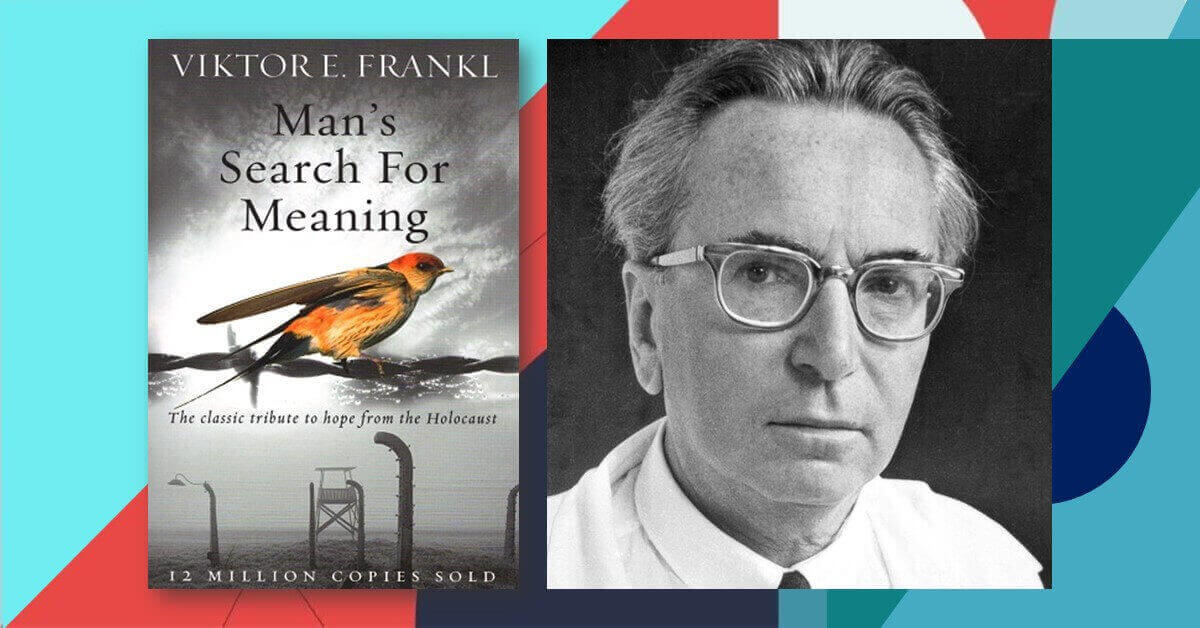
Do you ever feel that your pain, your losses, your sleepless nights are leading absolutely nowhere — that you are suffering for nothing? Man’s Search for Meaning by Viktor E. Frankl is the one book that will shatter that feeling and hand you back the one freedom no one can ever take from you.
Man’s Search for Meaning is best for readers wrestling with depression, grief, loss of purpose, existential emptiness, burnout, trauma, or anyone curious about psychology, philosophy, the Holocaust, or the raw science of human resilience.
Not For those looking for a light, quick-fix self-help read, or readers who cannot emotionally engage with first-hand Holocaust narratives; the book’s opening section is harrowing by design.
When, regarding success in real life, Malcolm Gladwell says that, success is an accumulation of opportunities and opportunities to invest 10,000 hours into our work; and to Vincent Peale, “A man who is self-reliant, positive, optimistic, and undertakes his works with an assurance of success magnetises his condition”, Frankl wrote that, “for success, like happiness, it cannot be pursued, it must ensue”.
Frankl says that a meaningful life must not lie in material success but in responsibleness to life.
Table of Contents
1. Introduction
Man’s Search for Meaning — originally published in German in 1946 under the title …trotzdem Ja zum Leben sagen (“…Saying Yes to Life in Spite of Everything”) — is one of the most important books written in the twentieth century.
Authored by Dr. Viktor Emil Frankl (1905–1997), an Austrian neurologist, psychiatrist, and survivor of four Nazi concentration camps, including Auschwitz-Birkenau, the book is a memoir, a psychological treatise, and a philosophical manifesto compressed into fewer than two hundred pages.
It was reportedly written in just nine days after Frankl’s liberation.
In terms of author credentials, Frankl was no ordinary witness.
He was already a practicing psychiatrist and the founder of what would become known as the “Third Viennese School of Psychotherapy” — logotherapy — before the war swallowed him. His credentials make his account uniquely layered: he was simultaneously prisoner and analyst, victim and scientist, a man who suffered enormously and refused to stop thinking about why.
The book’s central thesis is at once ancient and radical: life is unconditionally meaningful — even in, and perhaps especially through, suffering. Not meaning imposed from outside, not meaning handed to you by comfort or pleasure, but meaning discovered from within through your response to whatever life places before you.
As Frankl argues throughout, “It did not really matter what we expected from life, but rather what life expected from us.”
By 1997, the book had sold more than 10 million copies.
As of 2022, it had reached 16 million copies in 52 languages. A 1991 Library of Congress and Book-of-the-Month Club survey named it among the ten most influential books in American history — a staggering achievement for a slim memoir by a Holocaust survivor.
2. Background
Viktor Frankl was born on March 26, 1905, in Vienna, Austria. From an early age, he was fascinated by the psychology of meaning. By his twenties, he was corresponding with Sigmund Freud and Alfred Adler, and by the 1930s, he had already begun developing logotherapy as an alternative to Freudian psychoanalysis and Adlerian individual psychology.
In 1942, Frankl, his wife Tilly, his parents, and his brother were arrested and deported to the Nazi concentration camps. He was first sent to Theresienstadt, then to Auschwitz-Birkenau, and subsequently to two sub-camps of Dachau — Kaufering and Türkheim.
He was liberated in April 1945. His father died of exhaustion and pneumonia in Theresienstadt. His mother and brother were gassed at Auschwitz. His wife Tilly died in the Bergen-Belsen concentration camp. He was the only member of his immediate family to survive.
Specifically, it is worth noting that Frankl was prisoner number 119,104 — a fact he mentions to underscore how completely the camps stripped people of identity, reducing human beings to numbers. This context matters because the entire argument of the book emerges not from academic theory but from the furnace of lived experience.
Core Themes and Concepts
Frankl’s seminal work presents his experiences as a concentration camp prisoner alongside his psychological theory of logotherapy (from logos—meaning). The book argues that the primary human drive is not pleasure (Freud) or power (Adler), but the will to meaning. Even in unbearable suffering, humans retain the freedom to choose their attitude—”the last of the human freedoms.”
Key concepts include:
- Existential vacuum – inner emptiness from meaninglessness
- Noogenic neuroses – neuroses arising from existential frustration rather than psychological conflicts
- Paradoxical intention – a therapeutic technique using reverse psychology to break anxiety cycles
- Tragic optimism – remaining optimistic despite pain, guilt, and death
“If a certain quantity of gas is pumped into an empty chamber, it will fill the chamber completely and evenly, no matter how big the chamber. Thus, suffering completely fills the human soul and conscious mind, no matter whether the suffering is great or little. Therefore, the “size” of human suffering is absolutely relative.”
3. Summary of Man’s Search for Meaning
Part One: Experiences in a Concentration Camp
The first and longer section of the book is a psychological chronicle of concentration camp life, not so much a horror diary as a precise, almost clinical observation of the human soul under maximum pressure.
Frankl divides the prisoner’s psychological journey into three distinct phases: the period of shock following admission, the period of apathy and emotional numbness during prolonged imprisonment, and the psychology of liberation.
Phase One — Shock: Frankl describes arriving at Auschwitz in a cattle car packed with over eighty people, the train shunting toward a station bearing that dreaded name.
Initially, many prisoners clung to a phenomenon Frankl calls the “delusion of reprieve” — the condemned man’s irrational belief that something will intervene at the last moment.
The famous SS “selection” — one finger pointed left toward the gas chambers, one pointed right toward the labor camp — consumed roughly 90 percent of Frankl’s transport within hours of arrival.
Everything was stripped away: clothes, possessions, hair, and identity. Frankl recalls trying to save the manuscript of his life’s scientific work, only to have a fellow prisoner bellow one word at him: “Shit!” At that moment, Frankl describes something profound happening inside him — what he calls “striking out his whole former life.”
The past, the self he had built across decades, was gone. What remained was the bare fact of existence — and, he would discover, the inextinguishable capacity to choose his response to it.
Phase Two — Apathy: This is the long, grinding phase that occupies most of the memoir. Apathy, Frankl explains, was not weakness — it was a necessary psychological defense, a “protective shell” the prisoner built around himself to survive beatings administered for no reason, the sight of corpses dragged across the floor, the systematic humiliation of people reduced to numbers.
Hunger dominated consciousness so completely that even dreams were not of home or family but of bread and soup. Frankl recounts a prisoner “cook” who ladled soup equally without favoring friends — an act of perfect fairness that, in that context, was nothing short of heroic.
Yet, amid all this, Frankl observed something extraordinary: the human spirit refused to die entirely. He describes a moment marching in the predawn darkness toward a work site, feet raw, guards shouting, when his mind spontaneously summoned the image of his wife. “The truth — that love is the ultimate and the highest goal to which man can aspire,” he writes. “The salvation of man is through love and in love.”
This is one of the most luminous passages in the book — a man in Auschwitz, starving and frostbitten, arriving at one of humanity’s deepest truths.
He also describes prisoners who refused to despair, who gave away their last piece of bread, who comforted dying strangers. “We who lived in concentration camps can remember the men who walked through the huts comforting others, giving away their last piece of bread,” he writes. “They offer sufficient proof that everything can be taken from a man but one thing: the last of the human freedoms — to choose one’s attitude in any given set of circumstances, to choose one’s own way.”
That sentence is the heart of the book. Everything else — every page, every anecdote — flows toward and from that one, indestructible truth.
Frankl also documents the extraordinary power of meaning to sustain life. He recounts his senior block warden, a composer named F——, who dreamed that the war would end for him on March 30, 1945.
As that date approached and no liberation came, the man fell ill on March 29, became delirious on March 30, and was dead by March 31 — officially of typhus. Frankl’s chilling conclusion: “The sudden loss of hope and courage can have a deadly effect.”
He also notes that in the week between Christmas 1944 and New Year’s 1945, the camp death rate spiked dramatically — because prisoners had been sustained by hope of going home by Christmas, and when that hope evaporated, their bodies’ resistance collapsed.
One of the most devastating passages concerns Frankl’s decision not to escape with a colleague when the opportunity arose.
He was halfway through the escape preparations when a dying countryman looked at him with an accusing, hopeless gaze. Frankl made a snap decision: he would not go. “As soon as I had told him with finality that I had made up my mind to stay with my patients, the unhappy feeling left me,” he writes. “I did not know what the following days would bring, but I had gained an inward peace that I had never experienced before.”
Those who fled in the trucks were later herded into huts and burned alive. Frankl survived. The existential choice to remain — to bear responsibility for another human life — literally saved him.
Phase Three — Liberation: Contrary to what outsiders might imagine, liberation did not produce immediate joy.
It produced a profound numbness. “We came to meadows full of flowers. We saw and realized that they were there, but we had no feelings about them.” The liberated prisoners had to relearn feeling, word by word, step by step. Some, meanwhile, became bitter and disillusioned; others turned their suffering into a justification for cruelty, becoming the oppressors they had once been oppressed by.
Frankl observes that no group — guards or prisoners — was comprised entirely of decent or indecent human beings: “There are two races of men in this world, but only these two — the ‘race’ of the decent man and the ‘race’ of the indecent man. Both are found everywhere.”
Part Two: Logotherapy in a Nutshell
The second part shifts register — from memoir to theory — and explains the therapeutic system Frankl had been building since the 1930s, one which his concentration camp experience both tested and confirmed at the most extreme possible level.
The Will to Meaning: Logotherapy begins with a fundamental disagreement with both Freud and Adler. Freud argued that the primary human drive is the will to pleasure; Adler argued it is the will to power. Frankl argues for a third, deeper motive: the will to meaning.
A Johns Hopkins University survey of 7,948 students at 48 colleges found that 78 percent named “finding a purpose and meaning to my life” as their first goal, against just 16 percent who prioritized “making a lot of money.”
A separate public-opinion poll in France found that 89 percent of respondents said they needed “something” to live for, and 61 percent said there was something or someone for whose sake they were even prepared to die.
These statistics, Frankl notes, underscore just how primary the search for meaning is — not a secondary luxury but a foundational human need.
The Existential Vacuum: When the will to meaning is frustrated, logotherapy calls it “existential frustration,” which can give rise to what Frankl terms the “existential vacuum” — a widespread phenomenon of modern life.
Among his European students, Frankl found that roughly 25 percent showed a marked degree of existential vacuum; among his American students, the figure rose to 60 percent.
This vacuum, he argues, manifests as boredom, depression, aggression, and addiction. The “Sunday neurosis” — that peculiar depression that strikes people when the week’s busyness stops and inner emptiness surfaces — is a perfect illustration. In other words, what many people call depression or meaninglessness may actually be an unanswered existential question.
Three Paths to Meaning: Frankl identifies three routes through which meaning can be discovered. First: by doing a deed or creating a work — contributing something to the world.
Second: by experiencing something or encountering someone, most powerfully through love. Third, and most distinctively: by the attitude one takes toward unavoidable suffering. It is this third path — finding meaning in suffering — that distinguishes logotherapy from most other psychological frameworks, and it is the path that Frankl himself had to walk through Auschwitz.
He illustrates this with the case of an elderly doctor suffering devastating grief after his wife’s death. Rather than dispense therapeutic advice, Frankl simply asked: “What would have happened if you had died first, and your wife had had to survive you?” The doctor immediately understood: his grief was the price he paid so that his wife would not have to suffer it.
With that reframing — suffering as an act of love and sacrifice — the man shook Frankl’s hand and left, no longer crushed. “Suffering ceases to be suffering at the moment it finds a meaning,” Frankl writes.
Paradoxical Intention: One of logotherapy’s most practical techniques, paradoxical intention, instructs the patient to intend — even wish for — the very thing they fear.
A young physician terrified of sweating was advised to deliberately try to show people how much he could sweat. By attempting to increase his sweating, he found himself unable to sweat at all. The phobia, deprived of the anxiety that fed it, dissolved within a week.
A bookkeeper with such severe writer’s cramp that he was about to lose his job was told to try to write as badly as possible. The result: “I tried to scrawl but simply could not do it.” He was free within 48 hours. These techniques are not gimmicks; they work because they interrupt the feedback loop of anticipatory anxiety — the self-fulfilling fear that produces the very outcome it dreads.
The Tragic Triad and Tragic Optimism: In the 1984 Postscript, Frankl introduces what he calls the “tragic triad” of human existence: pain, guilt, and death.
Tragic optimism is not the denial of these realities but the affirmation that life remains meaningful in spite of them — indeed, through them. “Saying yes to life in spite of everything” is Frankl’s ultimate answer, and it is an answer earned through the gas chambers and barbed wire of Auschwitz, not theorized from a comfortable armchair.
4. Man’s Search for Meaning Analysis
Man’s Search for Meaning is one of those rare books that feels less like reading and more like being addressed directly — quietly, without flinching, by someone who has actually been to the bottom of human experience and returned.
It is, without question, one of the most important and morally serious books of the twentieth century, standing alongside Primo Levi’s If This Is a Man and Elie Wiesel’s Night as essential Holocaust testimony, and yet simultaneously transcending those categories by transforming personal catastrophe into a living philosophy.
What strikes me most, even after multiple readings, is the quality Frankl brings to his own suffering: a kind of radical lucidity. He does not wallow, he does not sentimentalize, and he does not moralize. He observes.
He analyzes. He then dares to ask the most unfashionable question possible — not “Why did this happen?” but “What can this suffering teach us?” — and in that asking, he transforms the Holocaust from a monument of despair into, paradoxically, one of the most compelling arguments for the resilience of human meaning-making ever written.
In terms of emotional impact, the first part of the book lands like a physical blow. Certain images stay with you permanently: the finger game at the selection ramp, the musician playing a violin at midnight while Frankl’s wife lay in another part of the camp, the dying young woman who spoke to a chestnut tree through her barracks window.
Yet the second part — the theoretical framework of logotherapy — is not a letdown; it is a revelation. Suddenly you realize that everything Frankl described in Part One was not simply memoir but data — the extreme empirical testing of a theory about the human will to meaning.
5. Evaluation Man’s Search for Meaning
Frankl’s arguments are consistently and rigorously supported — both by his own experience and by the clinical, statistical, and philosophical evidence he marshals in Part Two.
His three pathways to meaning (work, love, suffering) are not arbitrary; they are derived from lived observation and subsequently validated by logotherapeutic practice.
The Johns Hopkins survey data, the French public opinion statistics, and his own clinical case studies (the grieving doctor, the diplomat frustrated in his career, the woman with a washing compulsion relieved after sixty years) all cohere into a picture that is simultaneously empirical and humanistic.
He fulfills his book’s stated purpose — demonstrating that life is unconditionally meaningful, and that the last human freedom is the freedom to choose one’s attitude — with extraordinary completeness.
One could argue that the book does far more than it promises: it not only argues for meaning but enacts meaning, demonstrating by its own existence (a book written in nine days by a man who had just lost his entire family and three years of his life to genocide) that meaning persists.
6. Strengths and Weaknesses
Strengths:
First and foremost, the book’s greatest strength is its authority. Frankl does not theorize suffering from a distance — he survived it at its most extreme.
This gives his philosophical conclusions a moral weight that no armchair existentialist could match. Furthermore, the writing, while clinical in places, achieves moments of genuine literary beauty.
The passage about marching in the predawn darkness while holding the mental image of his wife is one of the most quietly moving pieces of prose in twentieth-century literature.
Additionally, the book is beautifully concise. At under 200 pages, it wastes nothing. Every sentence does work. This is extremely rare in psychological and philosophical writing, which tends toward sprawl. The interweaving of memoir and theory is also masterful — by the time you reach Part Two, you have already lived the evidence for the theory.
What’s more, the practical techniques of logotherapy — particularly paradoxical intention — are immediately applicable and surprisingly effective, giving the book a concrete usefulness beyond its philosophical value.
Weaknesses:
Nevertheless, the book is not without its shortcomings.
Some critics, notably Primo Levi, have questioned whether Frankl’s characterization of camp survival is too psychologically idealized — that his insistence on the power of meaning risks implying that those who did not survive simply lacked sufficient inner resources. This is a legitimate concern. Survival in the camps was, in brutal honesty, largely a matter of luck, timing, and arbitrary cruelty.
Frankl himself acknowledges the statistical reality — his survival odds were one in twenty-eight — but he does not always sufficiently foreground the role of pure chance versus the role of meaning-orientation.
Furthermore, Part Two feels somewhat compressed and academic compared to Part One’s vivid immediacy. Some readers find the shift jarring. The logotherapy section, while clear, occasionally reads as a theoretical primer that would benefit from more clinical depth — though Frankl did address this in his other twenty volumes of work.
There are also, however, drawbacks to the book’s very brevity: readers wanting a comprehensive treatment of logotherapy will need to turn to The Doctor and the Soul or The Will to Meaning for greater depth.
7. Comparison: books like Man’s Search for Meaning
Elie Wiesel’s Night (1960): Like Frankl, Wiesel writes from inside the Holocaust — specifically, Auschwitz and Buchenwald. Night, however, is more purely testimonial and more emotionally raw.
Whereas Frankl uses his experience as raw material for psychological theory, Wiesel bears witness primarily to loss and the rupture of faith. Both books are essential, but they serve different purposes: Wiesel confronts you with the horror; Frankl asks what you will do with it.
Albert Camus’ The Myth of Sisyphus (1942): Camus, like Frankl, confronts absurdity and meaninglessness — but his conclusion is different. For Camus, meaning cannot be found; one must create it in defiance of an indifferent universe. Frankl disagrees: meaning is real; it is there to be discovered, not invented.
This is one of the most important philosophical disagreements in twentieth-century existentialism, and Man’s Search for Meaning is the single best argument for Frankl’s position.
Viktor Frankl’s The Doctor and the Soul (1946/1955): Frankl’s earlier work offers a fuller, more technical treatment of logotherapy than the compressed Nutshell section of Man’s Search for Meaning. For those wishing to go deeper into the theory, this is the natural next step — though it demands more philosophical patience from the reader.
David Brooks’ The Second Mountain (2019): A modern examination of commitment and meaning, Brooks reaches many of Frankl’s conclusions about self-transcendence through contemporary examples.
Yet the book lacks the moral urgency of lived catastrophe. Frankl’s arguments about meaning carry a weight that no secondhand reflection can quite replicate.
Primo Levi’s If This Is a Man (1947): Arguably the greatest work of Holocaust testimony alongside Night, Levi’s memoir covers much of the same Auschwitz terrain as Frankl’s but from a more literary and anthropological angle.
Levi is more sceptical than Frankl about the consolations of meaning, and reading both side by side creates an invaluable tension.
8. Man’s Search for Meaning Quotes
1. The Ultimate Freedom (most famous passage)
“Everything can be taken from a man but one thing: the last of the human freedoms—to choose one’s attitude in any given set of circumstances, to choose one’s own way.”
2. Nietzsche’s Aphorism (repeated throughout)
“He who has a Why to live for can bear almost any How.”
3. Love as Salvation
“The salvation of man is through love and in love… In a position of utter desolation, when man cannot express himself in positive action… man can, through loving contemplation of the image he carries of his beloved, achieve fulfillment.”
4. The Meaning of Suffering
“Suffering ceases to be suffering at the moment it finds a meaning, such as the meaning of a sacrifice.”
5. Responsibility as the Essence of Existence
“Ultimately, man should not ask what the meaning of his life is, but rather he must recognize that it is he who is asked… each man is questioned by life; and he can only answer to life by answering for his own life; to life he can only respond by being responsible.”
6. The Categorical Imperative of Logotherapy
“Live as if you were living already for the second time and as if you had acted the first time as wrongly as you are about to act now!”
7. The Paradox of Success/Happiness
“Don’t aim at success—the more you aim at it and make it a target, the more you are going to miss it. For success, like happiness, cannot be pursued; it must ensue… as the unintended side-effect of one’s dedication to a cause greater than oneself.”
8. On Human Duality
“After all, man is that being who invented the gas chambers of Auschwitz; however, he is also that being who entered those gas chambers upright, with the Lord’s Prayer or the Shema Yisrael on his lips.”
9. Dostoevsky on Suffering
“There is only one thing that I dread: not to be worthy of my sufferings.”
10. Inner Strength and Outward Fate
“Man’s inner strength may raise him above his outward fate.”
11. The “Moslem” (prisoners who lost hope)
“We saw a comrade smoking his own cigarettes, we knew he had given up faith in his strength to carry on, and, once lost, the will to live seldom returned.”
12. On Perseverance
“Was mich nicht umbringt, macht mich stärker.” (That which does not kill me, makes me stronger.)
9. Conclusion
For me, Man’s Search for Meaning is one of the greatest and most moving books that I have come across as a reader.
The book is full of psychological terms like ‘time experience’, ‘Sunday neurosis’, nothingness, the theory that man is nothing but the result of biological, psychological, and sociological conditions or the product of heredity and environment; pan-determinism, a man’s disregard to his capacity to take a stand towards any conditions whatsoever.
This is not a comfortable book. It does not offer the false cheerfulness of much modern self-help, nor the intellectual distance of pure philosophy. What it offers is something rarer and more durable: the testimony of a man who looked into the very worst that human beings can do to one another, and came back carrying a lamp.
That lamp is the conviction that life is always, unconditionally, worth living — not because suffering ends, but because suffering, properly received, points toward something real and true.
Accordingly, I would recommend Man’s Search for Meaning without reservation to anyone who has ever suffered and wondered if it meant anything; to anyone in a mental health crisis, facing grief, trapped in numbness, or simply wondering why they exist. It is also essential reading for psychologists, therapists, philosophers, historians, and anyone who takes seriously the question of what a human life is for.
Because of this, it deserves its place not merely on bookshelves but in hearts — not merely read once but returned to again and again, as the professor who assigned it to a 19-year-old college student rightly advised: this is a book to revisit every few years of your life.
I would love to finish with the same thing that Frankl finishes Men’s Search for Meaning, that, “For the world is in a bad state, but everything will become still worse unless each of us does his best (like saints). So, let us be alert-alert in a twofold sense: Since Auschwitz, we know what man is capable of. And since Hiroshima, we know what is at stake.
Read Man’s Search for Meaning’s Bangla translations
About the Author

Viktor E. Frankl was a Professor of Neurology and Psychiatry at the University of Vienna Medical School. He was the founder of what has come to be called the Third Viennese School of Psychotherapy (after Freud’s psychoanalysis and Adler’s individual psychology)-the school of logotherapy. His writings have been called “the most important contributions in the field of Psychotherapy since the days of Freud, Adler and Jung” by Sir Cyril Burt, ex-President of the British Psychological Society.
Born in 1905, Dr. Frankl received the degrees of Doctor of Medicine and Doctor of Philosophy from the University of Vienna. During World War II he spent three at Auschwitz, Dachau, and other concentration camps.