Did you ever wonder what it truly feels like to lose the love of your life one month before your wedding—and then board the plane for your honeymoon alone? Laura Murphy’s The Solo Honeymoon doesn’t just answer that question; it takes you by the hand through every tear, every sunrise, and every fragile step toward hope.
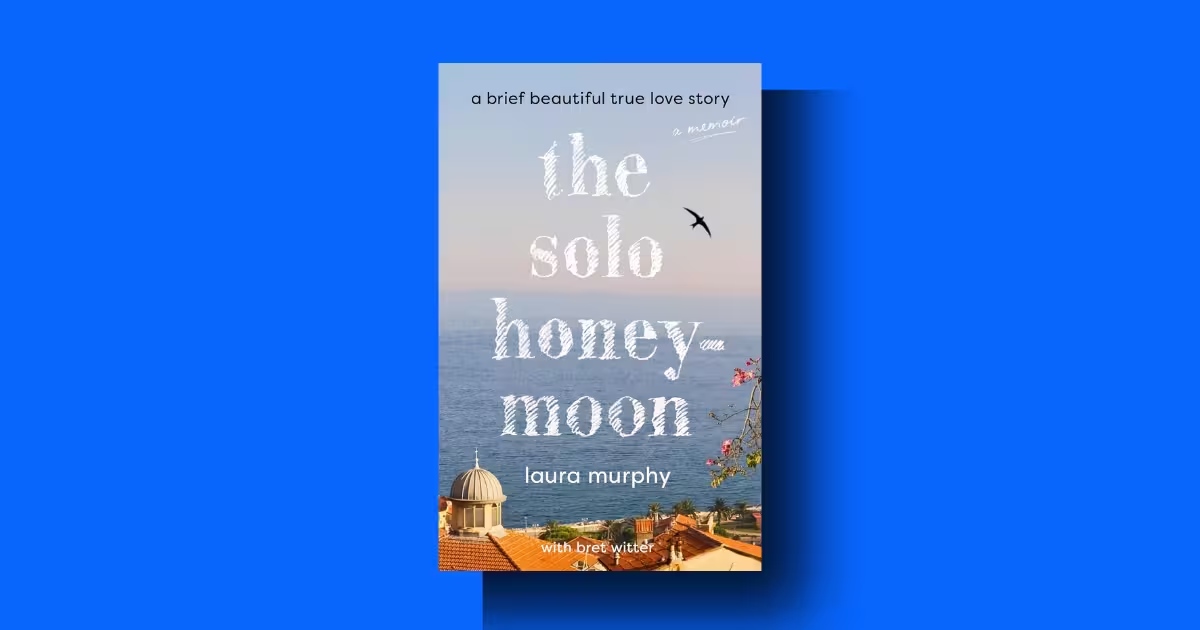
The Solo Honeymoon: A Brief Beautiful True Love Story is a visceral memoir by Canadian lawyer Laura Murphy (with New York Times bestselling co-writer Bret Witter) that alternates between two timelines: the three-year romance with her fiancé Devon O’Grady and her six-week solo journey across Europe after his sudden death from a ruptured dissecting aortic aneurysm at age thirty-two.
What began as private TikTok documentation for family exploded into a viral movement as millions followed Murphy’s raw question: “Is life still worth living?”
The Solo Honeymoon is less about grief’s darkness and more about love’s enduring light—a love story that happens to be a grief story, wrapped in travel memoir and packaged with unflinching honesty. At 256 pages (Dutton, July 14, 2026), it’s a profound exploration of what it means to choose life when everything you planned has crumbled.
The Solo Honeymoon is best for:
- Anyone navigating recent or long-term grief who needs to feel seen
- Readers who appreciate raw, unpolished memoirs over polished self-help
- Millennial and Gen Z audiences who connect with social-media-driven storytelling
- Those who loved The Year of Magical Thinking but want something more hopeful and less academic
- Travel lovers who enjoy emotional journey narratives
- Anyone who has ever lost a partner and wondered how to go on
Not for:
- Readers seeking a lighthearted beach read—this is emotionally demanding
- Those who prefer distance from raw grief and prefer grief handled with more reserve
- Anyone triggered by detailed accounts of sudden death or medical trauma
- Readers who dislike nonlinear timelines or social media integration in literature
- Those who believe grief should remain private—Murphy shares everything
Table of Contents
1. Introduction
Title and Author Information
Book Title: The Solo Honeymoon: A Brief Beautiful True Love Story
Author: Laura Murphy with Bret Witter
Publisher: Dutton (an imprint of Penguin Random House)
Publication Date: July 14, 2026
Pages: 256
ISBN: 9798217177257 (Hardcover)
Genre: Memoir, Grief Literature, Love Story, Travel Narrative
Laura Murphy is a Canadian attorney from Corner Brook, Newfoundland, who never intended to become a public figure. A lifelong book lover and self-described “private person,” she posted her solo honeymoon journey on TikTok initially for family and close friends.
Within days, millions were watching. Bret Witter, her co-writer, has collaborated on nine New York Times bestsellers, including two number-one bestsellers, with over 3 million copies sold worldwide.
Context
The Solo Honeymoon is a memoir that defies easy categorization. It’s a love story that begins with a classic meet-cute—a masked encounter during COVID, a twelve-floor stair climb, and a lawyer with six pairs of glasses.
It’s a grief memoir that refuses to wallow, even as it plunges readers into the author’s darkest moments. And it’s a travelogue spanning London, the French Riviera, Ireland, Bath, and the Tuscan hills of Castellina in Chianti—destinations chosen not for their Instagrammability but because they were the places Devon and Laura dreamed of visiting together.
What makes The Solo Honeymoon distinct from other grief memoirs is its origin story. Murphy’s TikTok documentation of her journey wasn’t calculated. She was in a “grief brain” fog, barely functioning, when she posted her first video: “My fiancé died a month before our wedding, and I’ve gone on our honeymoon alone to see if life is worth living.” That raw, unpolished honesty resonated with millions. The book expands far beyond those ninety-second videos, offering the full story social media could never contain.
Purpose
The book’s central thesis is deceptively simple yet profoundly radical: You can and will go on. As Murphy writes early in the memoir: “However hopeless you’re feeling right now, however meaningless your life may seem, I’ve been there, too.
You are not alone. You are not lost. You cannot die of heartbreak. I’ve written this book to prove this simple message: You can and will go on.” Yet she is careful not to offer false comfort or a tidy resolution. This is not Eat Pray Love, she warns; it’s “Cry Mope Chicken Wings.”
The purpose is not to sell healing but to document the messy, nonlinear, often contradictory reality of loving someone after they’re gone.
2. Background
The story begins in the depths of the COVID winter of 2021. Laura Murphy, then a law student at Dalhousie University in Halifax, Nova Scotia, returned to her native Newfoundland for Christmas. When a COVID outbreak sent her classes online, she applied for a summer internship at Curtis Dawe, a law firm in St. John’s.
The interview nearly didn’t happen: her phone died in the subzero cold, the elevator was broken, and she ended up pounding on a twelfth-floor fire door—only to have it opened by Devon O’Grady, a stylish young lawyer with circular glasses and an instant nickname for her: “Backpack Girl.”
What followed was a slow-burn romance that Murphy describes with aching detail. Devon was everything she hadn’t known she needed: kind to everyone, effortlessly stylish, obsessively healthy, and secretly struggling with self-worth.
He ran every morning at 4:00 A.M., ate raw vegetables for lunch, and had a running joke with every coworker. He was, as his cousin Brett put it, “the Glue Stick”—the person who made everyone around him better.
Their relationship deepened through sunrise hikes at Fort Amherst, picnics at Bottle Cove, and stolen moments between work hours. Devon proposed in a Mississauga hotel room—naked, disheveled, and spontaneous—after a winter storm nearly derailed their Arizona vacation. They bought a house in Corner Brook, adopted a second bernedoodle named Chewy, and started trying for a baby.
Then, on May 19, 2024, Devon collapsed in his office. He was thirty-two. The cause: a ruptured dissecting aortic aneurysm. “A major blood vessel near Devon’s heart tore open and his blood poured out into his chest,” Murphy writes. He died in her arms. Their wedding was scheduled for June 29.
Four months later, Murphy boarded a plane to London—alone.
3. The Solo Honeymoon Summary
The Solo Honeymoon unfolds across two interwoven timelines, shifting between the past (Murphy and Devon’s three-year relationship) and the present (her six-week solo journey across Europe). This structure allows readers to fall in love with Devon alongside Murphy, making his loss feel personal rather than abstract.
The Love Story Timeline
The Meet-Cute (Winter 2021): Murphy’s first encounter with Devon is straight out of a rom-com—minus the masks and COVID protocols. He opens a locked fire door, rescues her from embarrassment, and gives her a nickname that sticks. She doesn’t see him again until her first day of work four months later. “Backpack Girl!” he yells across the office.
The Sunrise Date (June 2021): Devon takes Murphy to Fort Amherst at 4:00 A.M. to watch the sunrise. He brings coffee, shares the story of his Aunt Sue’s death from brain cancer, and pulls out a small wooden heart inscribed with the word time—a reminder from his grandfather that “time is the most precious thing we have.” This becomes the book’s emotional anchor.
The First Kiss (June 2021): After weeks of workplace flirtation and carefully calculated distance, Devon kisses Murphy against her hallway wall. His glasses go askew. He leaves without a word. “I hit the wall,” she writes. “I mean: I slammed backward into the wall as Devon’s mouth covered mine.”
The Relationship Deepens (Summer-Fall 2021): Devon and Murphy navigate a long-distance relationship during her final year of law school. He visits her in Corner Brook, she visits him in St. John’s. They hike the East Coast Trail, attend family gatherings at North River and Snow’s Pond, and fall deeply in love. Devon’s kindness is constant: he drives seven hours to attend a friend’s wedding, then seven hours back, because “I did it for Janine.”
The Betrayal and Reconciliation (Winter 2022): Murphy discovers Devon has been flirting with women online. He confesses that he struggles with self-worth, binge-eating, and seeking validation when he feels low. “Devon loved everybody. Everybody. Except himself.” She forgives him, recognizing that his betrayal came from pain, not malice. “I want to help Devon through this. I want to show him he can be loved.”
The Engagement (March 2023): Devon proposes in a Mississauga hotel room—naked, sweaty, and disheveled—after a winter storm nearly derailed their Arizona trip. He tells the R-rated version to everyone: his mom, her mom, his sister, her sister. Murphy initially sanitizes the story for public consumption but eventually embraces its imperfect sincerity. “Not every moment has to be a sunrise to be special,” she writes. “It simply has to be sincere.”
The Move to Corner Brook (October 2023): Devon and Murphy leave St. John’s for her hometown. He embraces Bayman life: cutting Christmas trees, butchering moose, eating Pop’s homemade bread. He becomes a beloved figure in her family. They start trying for a baby. “Devon liked Frankie, if our first child was a girl. For a boy, we were in agreement. We’d name him Oscar. Oscar O’Grady.”
The Death (May 19, 2024): Devon collapses in his office during a client Zoom call. Murphy holds him as he dies. “I saw his face go white. I will never forget it. I see it at night, in the morning, when I beg for him, when I beg for release.” The medical explanation—a ruptured dissecting aortic aneurysm—offers no comfort. “Devon didn’t drink. He didn’t smoke. He ran every day. He ate carefully. He got exactly eight hours of sleep every night.”
The Solo Honeymoon Timeline
London (Weeks 1-2): Murphy arrives in a grief fog, unable to function. She sleeps for forty hours, eats at McDonald’s in her pajamas, and trauma-dumps on drunk American girls at 2:00 A.M. She posts her first TikTok: “My fiancé died a month before our wedding, and I’ve gone on our honeymoon alone to see if life is worth living.” It goes viral—two million views in two days.
She meets Justine, a fellow young widow whose partner died of a sudden cardiac event. They walk along the Thames, share their stories, and cry together. Murphy attends a James Bay concert and receives a video message from the singer: “Still I have a little hope.”
Nice (Week 3): Murphy reunites with her best friend Reb and Reb’s fiancé Kyle. The French Riviera is beautiful but hollow. Murphy wanders in a grief fog, unable to connect. At Le Plongeoir—a restaurant suspended over the Mediterranean—she breaks down during sunset. “This is a perfect romantic dinner. Devon should have been here.
These are the moments Devon lived for. He should have been here.” Her father flies in for a few days. They walk through the old town, talking about Devon. “It should be Devon. It would be Devon. Why isn’t it Devon?”
Ireland (Week 4): Murphy meets Devon’s mother Sarah and Aunt Lucy in County Louth. The drive is a disaster—Lucy can’t drive stick, they get lost repeatedly—but the destination is worth it: a whitewashed farmhouse with a thatched roof and a rainbow touching the ground.
Sarah and Lucy scream on a mountain for Devon. Murphy can’t scream, but she finally lets herself cry. “I took Sarah’s son away. I took him across the island of Newfoundland to be with me. And he died there, in my arms, four hundred miles from her home.” Sarah pulls her close: “Oh, Laura. You did.”
Bath (Week 5): Murphy visits childhood friend Romy and her husband Sam. They go to a Jane Austen festival, get attacked by monkeys at Longleat Safari Park, and talk books for hours. Murphy is in physical pain—her rheumatoid arthritis has flared up because she skipped her infusion to try for a baby—but Romy’s kindness sustains her.
The Washington Post article about her honeymoon is published. Reading it breaks her: “I can’t believe this is my life.”
Castellina in Chianti (Week 6): Devon’s father David rents Murphy an apartment in the Tuscan village Devon loved. She walks the cobblestone streets, eats gelato at Gelateria Dondoli, and visits the butcher shop where Devon ate the best burger of his life. Kathleen, Devon’s sister, joins her. They cry together through a thunderstorm, holding each other. “Life is fucked up,” they say, again and again. On David’s birthday, a friend gifts Murphy the handwritten lyrics to James Bay’s “Hope,” transcribed by ear.
Murphy runs toward the sunset with Kathleen, in their “I HATE RUNNING, BUT I LOVE DEVON” shirts. She doesn’t quite make it in time, but the sunset is beautiful anyway.
Florence (Week 7): Murphy spends three days alone, wandering, drinking wine, eating gluten-free pizza. She reads Cleopatra and Frankenstein. She relaxes. For the first time, she doesn’t force herself to experience the world. “For the first time since Devon died, the memories of him didn’t drown me. Thinking of him gave me, somehow, a place to lean when I was sore.”
Return to London and Cheltenham (Week 8): Murphy meets Devon’s ex-girlfriend (who cancels), goes backstage at Les Misérables, and walks along the Thames at sunrise. She attends the Cheltenham Literature Festival with Romy and Romy’s mother. She opens a copy of The Times—and finds herself inside it. “I couldn’t believe this was my life.”
After: Murphy returns to Newfoundland. Her parents sell the house she shared with Devon. She moves to St. John’s. She runs a 5K every sixth day of the month with Devon’s family and friends. She writes this book. She learns to live with grief—not as something to overcome, but as something to carry. “I will always hurt for Devon. I want to always hurt for Devon. But I am able to wrap myself in his memory and find comfort in it.”
4. The Solo Honeymoon Analysis
What Makes This Book Work
The Dual Timeline Structure
The book’s alternating structure is its greatest strength. By weaving together the past and present, Murphy allows readers to fall in love with Devon even as they mourn him. This isn’t a grief memoir that begins with loss; it’s a love story that happens to end tragically.
As Publishers Weekly notes, the narrative “shifts between two timelines: one tracks Murphy’s meeting and falling in love with her fiancé, Devon, then charts their relationship through his death, while the other recounts Murphy’s solo honeymoon across Europe.”
This structure ensures that Devon is never reduced to a tragic figure; he remains a fully realized person—quirky, kind, flawed, and deeply loved.
Raw Honesty
Murphy doesn’t sanitize grief. She documents the “grief brain” fog that left her standing in Heathrow for thirty minutes unable to remember her hotel name. She admits to trauma-dumping on strangers. She confesses that she didn’t tell Devon she loved him as he died—she only said, “Breathe, Devon, breathe. You’re going to be okay.”
This honesty is what made her TikTok go viral and what makes the book resonate. As Kirkus writes, “Murphy’s candor about the less picture-perfect moments of both the relationship and its tragic aftermath are mostly endearing.”
The Community of Grief
Perhaps The Solo Honeymoon‘s most unexpected gift is its portrait of community. Murphy’s TikTok audience becomes a lifeline—not because of the numbers, but because of the connection. “Somehow it was the kindness of strangers, the thousands who sent me a message in the hours after that post, and especially the young women who had lost a partner, who saw me because they were dealing with the same isolation and pain.” She meets Justine, a fellow young widow.
She connects with Kelsey Mulcahy, a New Zealander whose TikTok about losing her fiancé had pulled Murphy off the edge months earlier. She receives handwritten lyrics from a stranger. The book argues that grief, while isolating, can also be a bridge.
The Newfoundland Setting
Murphy’s deep roots in Newfoundland ground the book in a specific, vivid place. The descriptions of St. John’s—the colorful “Jellybean” row houses, the East Coast Trail, the fog and drizzle, the Baymen vs. Townies dynamic—give the memoir a sense of place that rivals the European travelogue. Devon, a Townie, becomes a Bayman through marriage.
He cuts a Christmas tree from the woods, butchers a moose, and eats Pop’s homemade bread. This transformation is both literal and symbolic: he becomes part of Murphy’s family, her world, her identity.
What Could Have Been Different
The TikTok Integration
The book’s origin as a viral TikTok series is both a strength and a limitation.
At times, the narrative feels like an extended caption—a series of vignettes that don’t always cohere. The TikTok fame is mentioned frequently, but the mechanics of virality (the pressure to post, the guilt of not responding, the commodification of grief) are only lightly explored. A deeper dive into the ethics and psychology of public grieving would have added another layer.
The Medical Explanation
Devon’s death—a ruptured dissecting aortic aneurysm—is devastating precisely because it’s inexplicable. Murphy spends pages researching, reading medical textbooks, and obsessing over what she could have done differently.
The doctors tell her it wouldn’t have mattered; if it had happened on an operating table, Devon would have died. Yet Murphy never fully accepts this. Her obsession with the “why” is understandable, but it also feels unresolved. Perhaps that’s the point: some deaths have no satisfying explanation.
The Arthritis Subplot
Murphy’s rheumatoid arthritis is mentioned throughout the book—she skips her infusion to try for a baby, her wrists and ankles flare up in Italy, she can barely hold her phone in Bath—but it never becomes a central theme. Given that chronic illness and grief are both forms of bodily betrayal, there was an opportunity to explore this connection more deeply. As it stands, the arthritis feels like an afterthought.
5. Strengths and Weaknesses
Strengths
Devon Comes Alive: The Solo Honeymoon‘s greatest achievement is making readers fall in love with Devon. He’s not a saint; he’s a flawed, funny, kind, and deeply human person. Murphy’s portrait of him—his six pairs of glasses, his raw vegetable lunches, his 4:00 A.M. runs, his “I love you still” gift—is so vivid that his loss feels personal. As Kirkus writes, “The most important thing this book needed to accomplish—create a vivid and endearing portrait of Devon for posterity—is done to a tee.”
Emotional Honesty: Murphy doesn’t pretend to have it together. She documents the backsliding, the crying jags, the days she couldn’t get out of bed. “This wasn’t Eat Pray Love; it was Cry Mope Chicken Wings.” This honesty is refreshing in a genre that often leans toward tidy resolutions.
The Supporting Cast: Murphy’s relationships with Reb, Kathleen, Sarah, David, Romy, and her father are as compelling as her romance with Devon. These are not supporting characters; they are co-protagonists in her grief journey. The book is ultimately about how love—romantic and familial and platonic—sustains us.
The Newfoundland Voice: Murphy’s writing is grounded in a specific place and culture. The descriptions of Newfoundland—the fog, the moose, the Trans-Canada Highway, the Baymen vs. Townies dynamic—give the book a distinct flavor that sets it apart from other grief memoirs.
Weaknesses
Pacing Issues: The book’s structure—alternating between past and present—can feel choppy. Some transitions are abrupt, and the timeline isn’t always clear. Readers may find themselves flipping back to check dates.
Underdeveloped Subplots: The arthritis, the TikTok fame, and the medical mystery of Devon’s death all feel underexplored. Each could have been a book unto itself; instead, they’re treated as secondary concerns.
Occasional Overwriting: Murphy’s prose is generally clear and direct, but there are moments of overwrought sentimentality. A few metaphors land with a thud, and some emotional beats are repeated unnecessarily.
The Ending: The book’s conclusion is hopeful but vague. Murphy moves to St. John’s, runs 5Ks with Devon’s family, and writes the book. But what comes next? The reader is left with more questions than answers.
6. Comparison with Similar Works
The Solo Honeymoon occupies a unique space in the grief memoir canon, but it shares DNA with several notable works.
Joan Didion’s The Year of Magical Thinking (2005): Both memoirs grapple with the sudden death of a spouse and the irrational thoughts that follow. But where Didion is analytical and detached, Murphy is visceral and emotional. Didion writes about grief from a distance; Murphy is in the thick of it, crying on the page. Murphy explicitly references Didion: “Joan Didion’s The Year of Magical Thinking made my grief feel seen.”
Nora McInerny’s The Hot Young Widows Club (2019): McInerny’s memoir (and podcast Terrible, Thanks for Asking) shares Murphy’s irreverent, darkly humorous approach to grief. Both authors refuse to sugarcoat their experiences. Murphy references McInerny directly: “The Hot Young Widows Club was almost the exact opposite [of Didion], and almost as good.”
Cheryl Strayed’s Wild (2012): Both books are journey narratives—physical travel that mirrors emotional healing. But where Strayed walks the Pacific Crest Trail to escape her grief, Murphy walks through Europe to confront hers. Strayed’s journey is solitary; Murphy’s is communal.
Elizabeth Gilbert’s Eat Pray Love (2006): Murphy explicitly rejects the comparison. Her journey is not about self-discovery through pleasure; it’s about survival through pain. “This wasn’t Eat Pray Love; it was Cry Mope Chicken Wings.”
Kelsey Mulcahy’s TikTok (2023-2024): Murphy credits Mulcahy’s viral TikTok about losing her fiancé with giving her hope. “Two years? Twenty-four months to learn to swim again? That felt like hope.” Both women documented their grief journeys on social media, creating communities of fellow mourners.
7. Conclusion
The Solo Honeymoon is not a book about getting over grief. It’s a book about learning to carry it. Laura Murphy doesn’t offer easy answers or five-step programs. She offers something rarer: companionship. “You are not alone,” she writes. “You are not lost. You cannot die of heartbreak.”
The book’s greatest gift is its portrait of Devon O’Grady—a man who was kind to everyone, who ran at 4:00 A.M., who ate raw green peppers like apples, who proposed naked in a Mississauga hotel room, who died too young and too suddenly. Murphy’s love for him is so palpable that it transcends the page. By the end, you mourn him, too.
The Solo Honeymoon perfect? No. The pacing is uneven, some subplots are underdeveloped, and the ending feels rushed. But perfection isn’t the point. The point is honesty. And on that count, The Solo Honeymoon delivers.
Who Should Read This Book?
- Anyone grieving a sudden loss: Murphy’s raw honesty will make you feel seen.
- Fans of memoir: This is a strong entry in the grief memoir canon.
- Millennials and Gen Z: The TikTok origin story and social media integration will resonate.
- Travel lovers: The European settings are beautifully rendered.
- Anyone who needs hope: Not the saccharine kind, but the real kind—the kind that says you can go on, even when you don’t want to.
Final Verdict
The Solo Honeymoon is a moving, honest, and ultimately hopeful memoir about love, loss, and the courage to keep going. It’s not for everyone—it’s too raw, too unpolished, too honest.
But for those who need it, it will be a lifeline. As Kirkus writes, it’s “a moving account of a brave response to a particularly cruel twist of fate, deeper and truer than TikTok could ever tell.”