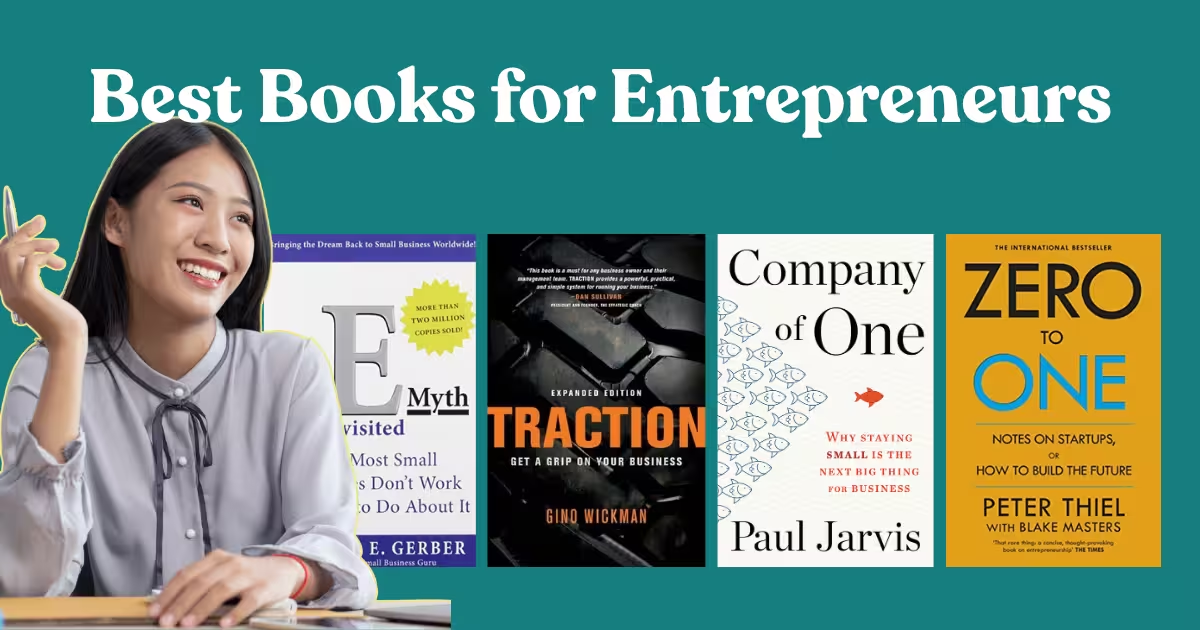

What are the best books for entrepreneurs? These 10 proven classics and modern essentials deliver frameworks for validating ideas, creating monopoly-like value, navigating crises, building systems, mastering persuasion, disrupting markets, and developing the habits and mindset that separate lasting companies from short-lived ventures.
Most books for entrepreneurs get recommended for the wrong reason: someone famous read them. That’s not a filter. Elon Musk’s reading list and your actual Tuesday morning problem (a client who won’t pay, a hire who isn’t working out, a product nobody wants) rarely overlap.
The ten books below are organized around specific problems founders run into, not around who name-dropped them in an interview.
I’ve read all ten, and I’ll be honest about where each one falls short, because a list that only praises books isn’t useful to anyone actually running a business.
Table of Contents
What makes a business book worth your time?
A business book earns a place on this list if it changes a decision, not just a mood. Motivational books feel good for a week and then evaporate. The books here got picked because they hand you a framework, a script, or a mental model you can use the next time you’re stuck, whether that’s a pricing call, a hiring mistake, or a negotiation you’re dreading.
10 Best Books for Entrepreneurs
1. Zero to One by Peter Thiel
I count Zero to One first as one of best books for entrepreneurs. Peter Thiel’s core argument in this book is that competition destroys profits, so the goal isn’t to compete better, it’s to build something nobody else is building. Thiel co-founded PayPal and was the first outside investor in Facebook, so the framework isn’t theoretical for him.
The useful part is his question: what do you believe that almost nobody else believes? That single line forces you to check whether your business idea is actually differentiated or just a slightly cheaper version of something that already exists.
Where it falls short: Thiel writes from the vantage point of Silicon Valley venture-scale startups. If you’re opening a bakery or running a consulting practice, half his examples won’t map onto your world. Read it for the thinking, not the playbook.
2. The Hard Thing About Hard Things by Ben Horowitz
Ben Horowitz ran Loudcloud through the dot-com crash, watched the stock price collapse from $10 to 35 cents, and still found a way to sell the company for $1.65 billion. That’s the experience behind this book, and it shows. Most business books talk about strategy when things are going fine. This one is entirely about what to do when they’re not.
The chapter on firing an executive you like is the most practical thing I’ve read on the topic. Horowitz doesn’t soften it. He gives you the actual conversation structure, and he’s clear that delaying it always makes it worse.
Where it falls short: it’s dense with startup-specific jargon (down rounds, cap tables, board dynamics) that will slow down a first-time founder who hasn’t raised venture money.
3. The Lean Startup by Eric Ries
Eric Ries built and shut down a startup called IMVU’s earlier version before landing on the build-measure-learn loop this book is built around. The idea is simple even if the execution isn’t: build the smallest version of your product that lets you learn something true about whether people want it, then adjust based on real data instead of your own opinion.
The concept of a minimum viable product came from this book and it’s now standard vocabulary in product development. That’s a rare thing for a business book to achieve.
Where it falls short: the book was written in 2011 and some of the software examples feel dated. The underlying method still holds up better than most of its imitators.
4. Shoe Dog by Phil Knight
This is a memoir, not a how-to book, and that’s exactly why it belongs on this list. Phil Knight built Nike from a car trunk selling Japanese running shoes into a company that now does over $50 billion a year in revenue, but he spends most of the book on the years he nearly went bankrupt.
He was juggling bank loans, chasing down late shipments, and at one point genuinely unsure if he’d have to shut the whole thing down.
Read this when you need to know that the fear you’re feeling right now, the one where you check your bank balance three times a day, is not a sign you’re doing something wrong. It’s what building a company from nothing actually feels like.
Where it falls short: there’s very little tactical advice here. If you want frameworks, skip to the next book. If you want to feel less alone at 2am, this is the one.
5. The E-Myth Revisited by Michael Gerber
Michael Gerber’s argument is that most small business owners are technicians who understand the work (baking, plumbing, design) but never learned to build a business around that work. The result is a business that can’t run without them physically present, which means they haven’t built a business at all, they’ve built themselves a job with worse hours.
The fix he proposes is to document your business like a franchise, even if you never intend to franchise it. Write down the exact steps for everything so someone else can do them at your standard.
Where it falls short: the book is repetitive and could say what it needs to say in half the pages. The fictional case study Gerber uses to illustrate his points drags on longer than it needs to.
6. Traction by Gino Wickman
Once you have more than four or five people, the informal way you’ve been running meetings and setting goals stops working.
Gino Wickman’s Entrepreneurial Operating System, laid out in this book, gives you an actual structure: a weekly meeting format, a way to set quarterly priorities, and a scorecard so problems surface before they become emergencies.
I’ve watched founders implement this and get visible relief within a month, mostly because meetings stop running long and nobody’s guessing what everyone else is working on.
Where it falls short: it can feel over-engineered for a five-person team. You may only need three of the tools in the system, not all of them at once.
7. Never Split the Difference by Chris Voss
Chris Voss spent 24 years as an FBI hostage negotiator before he started teaching negotiation to business school students and founders. The tactics in this book, mirroring, labeling emotions, asking calibrated “how” and “what” questions instead of “why,” were built for negotiations where the other side had a gun.
They translate surprisingly well to a vendor contract or a salary negotiation.
The most useful chapter covers getting to “that’s right” instead of “you’re right,” because the second one means the other person is agreeing just to end the conversation.
Where it falls short: some of the FBI stories are dramatic in a way that doesn’t always connect cleanly to a routine business negotiation. Skim past the war stories for the technique underneath them.
8. Company of One by Paul Jarvis
Paul Jarvis makes a case that most business books ignore: growth isn’t automatically good, and a lot of businesses would be healthier, and their owners happier, if they stayed small on purpose. He ran his own one-person business for years before writing this, so it’s not a theoretical argument.
If you’ve ever felt pressure to hire, raise money, or scale just because that’s what founders are supposed to do, this book gives you permission and a framework to say no to that pressure deliberately.
Where it falls short: it’s more of a mindset shift than a tactical guide. If you’re already committed to scaling fast, this book will frustrate you rather than help you. However, it duly takes its spot her as another of the best books for entrepreneurs
9. Start with Why by Simon Sinek
Simon Sinek’s argument, built around what he calls the Golden Circle, is that people don’t buy what you do, they buy why you do it.
Apple sells computers the same way every other computer company does, but their marketing leads with belief and purpose, and that’s why customers feel loyal to the brand in a way they don’t to competitors selling similar hardware.
This is the book to reach for when your marketing describes features accurately but still isn’t converting.
Where it falls short: the “why” framework, once popular enough to spawn a famous TED Talk, has been applied so widely since 2009 that some of it now reads as a cliché of itself. The core idea is still sound, even if the execution has been copied to death.
10. Atomic Habits by James Clear
This isn’t a business book, and that’s the point. Running a company is a test of your personal systems as much as your business ones, and James Clear’s framework for building habits through small, repeated actions applies directly to the discipline required to run a company without falling apart.
The 1% better every day math and the idea of habit stacking are useful for building the daily routines (exercise, sleep, focused work blocks) that keep you functional enough to make good decisions for years, not just for one adrenaline-fueled sprint.
Where it falls short: none of it is specific to business, so if you want company-building advice, this won’t give you any. It’s here because the founders who last longest are usually the ones who took care of themselves along the way.
How should you actually use this list?
Reading 10 books won’t change your business. Applying one framework from one book will.
Here’s the problem with most reading lists: they treat books as trophies. Finished. Checked off. Next.
The founders who get the most from these books do something different. They pick one. They read it slowly. They take notes on the specific actions it suggests. Then they test those actions in their actual business before moving to the next book.
Don’t read all ten back to back. Pick the one that matches the problem you have right now. If you’re validating an idea, start with The Lean Startup. If your team has outgrown your ability to manage it informally, go straight to Traction.
If you’re dreading a hard conversation this week, read the relevant chapter of Never Split the Difference tonight and use it tomorrow.
FAQs
What is the single best book for a first-time entrepreneur?
The E-Myth Revisited is the strongest starting point for a first-time founder because it addresses the most common early mistake: building a job for yourself instead of a business that can run without you.
Are business books actually useful, or is experience the only real teacher?
Books won’t replace experience, but the right one can save you from repeating a mistake someone else already made and wrote down. Use books to shortcut the learning curve, not to skip it entirely.
What’s a good book for entrepreneurs who don’t want to raise venture capital?
“Company of One” and “The E-Myth Revisited” are both written for founders building sustainable, self-funded businesses rather than venture-backed ones chasing rapid scale.
How many books should an entrepreneur read per month?
There’s no set number. One book read fully and applied to a real decision is worth more than five skimmed and forgotten. Match your reading pace to the problems you’re actually facing.