
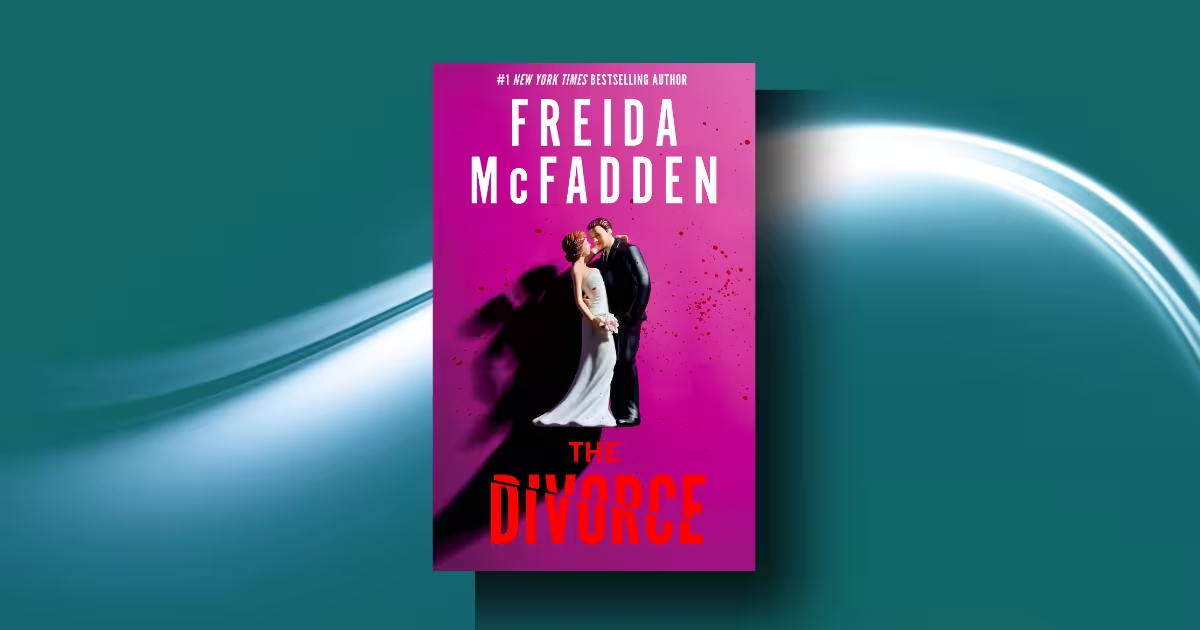
Did you ever wonder why some seemingly perfect marriages implode overnight, leaving you questioning every loving gesture you’ve ever witnessed? If that question sends a shiver down your spine, then The Divorce by Freida McFadden is the book you need to pick up.
I devoured this thriller in a single sitting, and it left me reeling—not just from the relentless twists, but from how terrifyingly plausible it all felt.
This isn’t just a story about a marriage ending; it’s a masterclass in gaslighting, maternal desperation, and the lies we tell ourselves to protect what we love. Let me walk you through why this book is the psychological gut-punch you’ve been searching for.
The Divorce tells the story of a wealthy husband’s sudden demand for a divorce that spirals into a lethal cat-and-mouse game after his wife discovers the younger woman he’s leaving her for isn’t just a mistress—she’s the biological mother of the child they’ve raised together.
The Divorce is best for fans of domestic noir, unreliable narrators, and twisty thrillers like Gone Girl or The Last Mrs. Parrish. If you love books where nothing is as it seems and the villain keeps shifting identities, you’ll be glued to these pages.
Not for readers seeking a light romantic drama or a straightforward divorce story. This novel is dark, manipulative, and packed with unlikable characters who make terrible choices—if you’re not comfortable rooting for morally gray protagonists, you might bounce.
Table of Contents
1. Introduction
Title and Author Information: The Divorce by #1 New York Times bestselling author Freida McFadden was published in 2026 by Poisoned Pen Press, an imprint of Sourcebooks.
McFadden, a practicing physician specializing in brain injury, has carved a niche in the psychological thriller genre with hits like The Housemaid and Never Lie. The Divorce continues her tradition of crafting tightly wound, page-turning suspense that explores the darkest corners of family life.
From the very first line—“When the police arrive, how will I explain the dead bodies in the house?”—the novel hooks you with a chilling promise.
And it delivers. I’ve read a lot of domestic thrillers, but this one stands out for how expertly it flips your perceptions, not once but several times, until you realize you’ve been played as thoroughly as the characters themselves.
2. Background
While there’s no sweeping historical context needed, The Divorce taps into a very contemporary anxiety: the vulnerability of stay-at-home parents in high-conflict divorces, the weaponization of mental health in custody battles, and the rise of coercive control narratives in the wake of the #MeToo era.
McFadden’s own acknowledgments hint at a personal connection—she thanks her parents for “the most miserable divorce the world has ever known” which inspired the book.
That raw, lived-in emotion bleeds through every page, making the story feel less like fiction and more like a cautionary tale whispered among friends.
The novel also reflects a modern legal landscape where “no-fault” divorce can still be brutally contested through character assassination, and where a well-connected spouse can manipulate the system.
I found myself nodding grimly at the mediation scenes, recognizing the echoes of real-life horror stories.
3. The Divorce Summary
Part I: The Trap Is Set
The story opens with Naomi Roth, a forty-two-year-old former crystal healer turned stay-at-home mom, arriving home with her five-year-old son Teddy after his karate lesson.
Immediately, something is off: the garage door won’t open, her house key doesn’t work, and the lock is brand new. Her husband Jeremy, a handsome hedge fund manager, meets her at the door with packed suitcases and a smooth smile.
He claims he’s surprising her with a full home renovation—a belated anniversary gift—and that she needs to stay at his late parents’ old apartment to get it ready for them.
Naomi is puzzled but goes along, even though Jeremy’s behavior feels wrong. He doesn’t kiss her goodbye, and her suitcases contain far too many clothes for a short stay, including her winter coat in April.
Once at the dingy apartment, Naomi cleans and settles in, but Jeremy drops the act.
He arrives without any luggage for Teddy and drops the bomb: “There is no renovation. Naomi, I want a divorce.” He coldly reveals he’s been unhappy for a long time, and he’s already retained a top divorce lawyer, Leonard Hardwick.
He’s tricked her into moving out to strengthen his custody case. When Naomi protests, Jeremy threatens, “Don’t make me be an asshole.” She later discovers he’s emptied their joint bank account and canceled her credit cards, leaving her with $25.
Determined to save her family, Naomi refuses to get her own lawyer, believing it’s a midlife crisis.
But her mother, a thrice-divorced cynic, insists there’s another woman. Naomi sneaks back to the house and catches Jeremy passionately kissing a stunning, raven-haired twenty-something named Veronica.
Confronting them, Veronica coldly introduces herself and says, “It was so good finally meeting you, Naomi.” Jeremy confesses he’s in love with Veronica and has introduced her to Teddy, who now calls her “Ronnie” and adores a stuffed elephant she gave him.
Part II: The War Escalates
Naomi, now aided by a scrappy divorce attorney Ezra Fletcher (recommended after Jeremy hired all the good local lawyers to block her), fights back. Mediation sessions turn brutal: Jeremy accuses Naomi of being irresponsible, tardy, and emotionally unstable, claiming Teddy’s nanny Rosita will testify against her.
He pushes for full custody, offering half a million dollars to make her agree. Naomi realizes Jeremy is gaslighting her—deliberately giving her wrong times then blaming her for being late. Ezra starts dismantling the prenup, but Jeremy plays dirty.
Meanwhile, Naomi digs into Veronica’s past.
She finds a drug possession charge for heroin and visits Veronica’s former employer in Westchester.
The housekeeper reveals that Veronica was hired as a live-in helper but tried to seduce the wealthy homeowner, Maxim Simington, and may have caused his wife’s near-fatal tumble down the stairs. Naomi becomes terrified for Teddy’s safety, especially when she finds her own kitchen knife stabbed into the stuffed elephant, its belly gored and smeared with red. Jeremy accuses Naomi of the vandalism, convincing everyone she’s unhinged.
Naomi suspects Veronica poisoned her homemade kombucha with crushed Tylenol after she became violently ill.
At Teddy’s extravagant sixth birthday party—organized by Jeremy and Veronica, where Naomi is unwelcome—she shows up anyway.
Tensions explode: Jeremy calls the police after accusing Naomi of smashing Veronica’s gift (which Veronica actually did herself to frame Naomi).
A cop handcuffs Naomi in front of the entire party and arrests her for trespassing and obstruction. Ezra gets her released, but Jeremy files a temporary order of protection, barring her from contacting Teddy for weeks.
Part III: The Truth Unfolds
The narrative shifts to Veronica’s perspective, revealing her heartbreaking backstory.
Six years ago, she gave birth to a son, Dominic, with her boyfriend Clay, both former addicts trying to get clean. Clay, while high, took the baby for a drive, passed out at a rest stop, and when he woke, the infant was gone.
A cop dismissed Veronica as a junkie; she never found her child.
Her friend Lola, working at a town hall, discovered a suspicious birth certificate: a woman named Naomi Paxson (Naomi’s mother) had issued a certificate for a boy named Theodore, born around the time Dominic disappeared, listing Jeremy Roth as the father. Veronica tracked the family down, befriended Jeremy under the guise of a running partner, and eventually began an affair to get close to Teddy.
A secret DNA test proves Teddy is indeed her son—probability of maternity: 99.9999998%. Before she can tell Jeremy, Naomi strikes.
On the day of Jeremy’s business trip to Boston, Naomi lures Veronica into the house, knocks her unconscious with a heavy rock, and drags her to the wine cellar.
There, Naomi ties her up, cuts off her beautiful hair with scissors, and plans to disfigure her face so Jeremy will no longer want her. Then Naomi finds texts revealing Veronica is pregnant. Enraged, she decides to kill her.
Ezra, worried about Naomi, shows up at the house.
He hears Veronica’s screams from the cellar, and Naomi, panicking, pushes him down the stairs. He lies motionless at the bottom, presumed dead. Veronica, regaining consciousness, sees Naomi preparing to burn down the house with both of them inside. Naomi smashes a bottle of scotch, ignites it, and leaves Veronica and the unconscious Ezra to die.
Part IV: The Final Twist
Miraculously, Ezra is still alive. He crawls to a wine bottle and strikes Naomi down just before the flames reach them.
He cuts Veronica free but insists she go upstairs to rescue Teddy while he stays behind—his leg is broken, and he knows he won’t make it. Veronica races to Teddy’s room, but he’s locked inside, refusing to open the door unless she says the secret code words Naomi and Jeremy taught him for emergencies.
The house is burning. In desperation, Veronica screams, “Teddy, I’m your…” and the door opens. She drags him out onto the roof just as fire trucks arrive.
In the epilogue, the ultimate bombshell drops. The story shifts to Jeremy’s point of view. He reveals he has known for years that Teddy isn’t his biological son.
Three years ago, a man named Clay Barkley—Veronica’s ex—tracked him down with evidence that Naomi stole the baby. Instead of returning Teddy, Jeremy arranged for Clay to die of a staged heroin overdose. He then planned to eventually get rid of Naomi too.
He deliberately sabotaged her throughout the divorce: he gave her false times, planted the mutilated elephant, spiked her kombucha with Tylenol, and manipulated events to make her appear insane so he could win custody and start fresh with Veronica.
He’d intended to kill Naomi with a sleeping-pill overdose after the divorce.
But the fire solved his problem perfectly. He ends the novel with a chilling vow: “And anyone else who tries to take my son will suffer the same fate.”
4. The Divorce Analysis
4.1 The Divorce Characters
Naomi Roth: Initially presented as a victim of a cruel, gaslighting husband, Naomi’s layers peel back to reveal a woman capable of kidnapping and murder. She’s fiercely maternal yet terrifyingly deluded, convinced she “saved” Teddy from a neglectful junkie.
Her downward spiral is both tragic and horrifying; her thoughts as she prepares to disfigure Veronica (“It’s just so unfair. It’s not like she earned her beauty in some way.”) expose a bitter, envious, and dangerously unhinged mind. I found myself oscillating between pity and revulsion—she’s a monster, but also a product of desperation.
Jeremy Roth: The true villain. Handsome, wealthy, and chillingly calculated, Jeremy is the master manipulator who pulls everyone’s strings. His calm demeanor masks a sociopathic willingness to murder anyone who threatens his possession of Teddy.
The epilogue reframes every earlier interaction: when he claimed Naomi was unstable, he was both projecting and engineering. His final lines cement him as one of the most disturbing characters in recent thrillers.
Veronica “Ronnie” Chesson: She’s the heart of the novel. A former addict who clawed her way clean, she never stopped searching for her stolen son.
Her infiltration of the Roth family is ethically murky, but her love for Dominic/Teddy is pure.
The moment she discovers the DNA test results is gut-wrenching. She’s no saint—she actively participated in the affair—but her redemption arc, capped by saving Teddy from the fire, makes her the emotional anchor.
Ezra Fletcher: The disheveled, briefcase-bursting lawyer with a heart of gold. He’s a breath of fresh air amid the toxicity.
His gentle romance with Naomi (though ethically questionable) and his ultimate sacrifice to save Veronica and Teddy show he’s the only truly decent adult in the story.
His death hits hard.
Teddy/Dominic: The innocent pawn. His love for rocks, his elephant, and his unwavering trust in his parents make the stakes devastatingly real. The “monkey videos” code word becomes a tool of both protection and near-tragedy.
4.2 Themes and Symbolism
Gaslighting and Psychological Abuse: The novel is a textbook study in coercive control. Jeremy systematically undermines Naomi’s reality—changing meeting times, denying he ever said things, and using her confusion to paint her as unstable. As Cora points out, “He’s gaslighting you. It’s so obvious!” This theme resonates deeply in today’s discourse on emotional abuse.
Motherhood as Obsession: Both Naomi and Veronica claim Teddy out of fierce, possessive love. Naomi’s mantra, “I rescued him from that horrible life,” mirrors Veronica’s “He is my son, and I love him more than anything.” The book asks: does love justify monstrous acts? It never offers a clean answer.
Class and Justice: Wealth buys Jeremy the best lawyers, corrupt connections to kill Clay, and the ability to frame Naomi. Veronica, with a drug record, is dismissed by police when her baby went missing—“Lady, get yourself cleaned up.” The system protects the rich and punishes the vulnerable.
Identity and Deception: Almost every character wears a mask. Jeremy poses as a devoted husband and father while plotting murders. Naomi plays the victim while hiding a kidnapper’s past. Veronica pretends to be a casual runner while investigating her son. The constant shifting of identities keeps the reader off-balance.
Symbolism of the Elephant: The stuffed elephant Veronica bought for infant Dominic and later gifted to Teddy represents maternal love and the stolen years. When Naomi stabs it, she’s literally attacking Veronica’s claim to motherhood. Its survival through the fire, still clutched by Teddy, symbolizes hope and the enduring bond between mother and child.
5. Evaluation
The Divorce is a brutally effective, unputdownable thriller that left me emotionally wrung out yet wildly impressed. Like The Sense of an Ending, it’s a poignant exploration of memory and self-deception, but with the pulse of a breakneck suspense novel.
Strengths:
McFadden’s pacing is masterful.
The first chapter grabs you by the throat, and the momentum never wavers. The three-part narrative structure, with shifting points of view, deepens the mystery and allows for jaw-dropping reveals.
I particularly loved how the epilogue recontextualizes the entire story—it’s a clinic in unreliable narration.
The character work is sharp; even the most despicable figures feel fully realized. The courtroom/mediation scenes are tense and grounded, thanks to obvious research.
Quotes like Naomi’s bitter reflection—“I can’t help but think how convenient it would be for her if I kicked the bucket”—perfectly encapsulate the paranoid, claustrophobic atmosphere.
Weaknesses:
Some plot points strain credulity.
Jeremy’s ability to orchestrate Clay’s murder and a staged overdose without any fallout seems too neat. The logistics of Naomi dragging an unconscious Veronica down a flight of stairs into a cellar without being seen by neighbors or triggering suspicion are glossed over.
Additionally, the romance between Naomi and Ezra feels underdeveloped and a bit convenient—more of a narrative tool than a believable connection.
A few early readers on Goodreads noted that the middle section drags slightly as Naomi falls into repetitive despair. I didn’t mind, but it’s fair criticism.
Impact/Controversy:
This book will leave you questioning every “amicable” divorce you’ve ever heard about.
It resonated with me on a visceral level: the terror of losing a child, the rage of being gaslit, and the desperation that can turn a reasonable person into a criminal. The revelation that Jeremy is the ultimate villain sparked intense discussion in my book club about how society often overlooks malevolent paternal figures when they’re wealthy and charismatic.
Comparison with Similar Works:
The Divorce sits comfortably alongside The Girl on the Train and The Wife Between Us, but it surpasses many of its peers with its dual mother narrative. Where Gone Girl examined a toxic marriage from within, this novel explores the external threat of a third party—and then flips it entirely.
Fans of McFadden’s The Housemaid will recognize her signature style: short chapters, domestic dread, and an ending that makes you want to immediately reread.
6. Personal Insight with Contemporary Educational Relevance
One of the most chilling themes in The Divorce is the weaponization of the legal system in custody battles—a reality for countless families today.
Jeremy’s strategy of bleeding Naomi dry financially, painting her as mentally unstable, and using her own arrest against her is textbook litigation abuse.
According to a 2022 study by the National Domestic Violence Hotline, 70% of survivors report that their abuser used court proceedings to continue their control, including false allegations of parental alienation or unfitness.
In the novel, Naomi’s very real struggles with time management are exaggerated and twisted by Jeremy, who himself engineered her tardiness. This mirrors actual coercive control tactics identified by Dr. Evan Stark, a leading researcher, who notes that abusers often create “crazy-making” scenarios to discredit their partners. The book serves as a stark reminder that divorce isn’t just an emotional rupture—it can be an arena for psychological warfare.
Five Lessons from the Book:
- Document everything: If Naomi had kept written records of Jeremy’s verbal instructions, his gaslighting would have been exposed sooner. In real life, text or email trails are crucial.
- Beware of isolation: Jeremy cut Naomi off from friends like Cheryl and Ashlyn by engineering public humiliation. Maintaining a support network is vital.
- Trust your instincts: Naomi knew something was wrong from the first broken garage door, but she talked herself out of it. If it feels off, it probably is.
- Background checks matter: Veronica’s discovery of Naomi’s past via a simple birth certificate search highlights how hidden truths can surface—both for protection and potential misuse.
- The system isn’t always fair: Jeremy’s wealth allowed him to hire all the best lawyers and literally get away with murder. Recognizing systemic inequality is the first step to advocating for change.
For more on post-separation abuse, visit the National Coalition Against Domestic Violence or read “Litigation Abuse: The Unseen Weapon” from the American Bar Association.
7. The Divorce Quotes
- “When the police arrive, how will I explain the dead bodies in the house? Only one dead body would be easier to explain.” (Opening line, setting the tone immediately.)
- “There is no renovation. Naomi, I want a divorce.” (Jeremy’s cold drop of the mask.)
- “She’s fourteen years younger than I am.” “And she’s great.” (Jeremy twisting the knife.)
- “It was so good finally meeting you, Naomi.” (Veronica’s fake pleasantness after being caught kissing Jeremy.)
- “You’re gaslighting me!” Naomi finally names the abuse during mediation.
- “Probability of maternity: 99.9999998 percent.” (The DNA test that changes everything.)
- “I’m sorry, but they’re my family now too. And I don’t think you’re going to be very happy if you try to get in our way.” (Veronica’s subtle threat in the supermarket.)
- “I’m not going to kill Veronica. But what if she wasn’t quite so pretty?” (Naomi’s chilling internal monologue.)
- “Help!” she hollers. “Please help me!” (Veronica’s muffled screams when Ezra arrives—a moment of pure panic.)
- “I want you to know that I will take very good care of Teddy… He will have a great life—I promise you that.” (Naomi’s twisted last words to Veronica before setting the fire.)
- “And anyone else who tries to take my son will suffer the same fate.” (Jeremy’s final, terrifying line.)
8. Conclusion
The Divorce is not just a thriller; it’s a razor-sharp dissection of marriage, motherhood, and the monstrous things we do in the name of love.
Freida McFadden has outdone herself, weaving a tale that begins as a familiar domestic drama and morphs into a conspiracy of terror with one of the most shocking final reveals I’ve ever read. I finished the book stunned, immediately flipping back to spot the clues I’d missed.
I wholeheartedly recommend this to:
- Fans of Lisa Jewell, Liv Constantine, and Rachel Hawkins.
- Book clubs seeking a layered, discussion-worthy plot.
- Anyone fascinated by psychological manipulation and unreliable narrators.
While it may be too bleak for some, if you appreciate a thriller that respects your intelligence and delivers twists you genuinely don’t see coming, The Divorce deserves a spot on your shelf. Just don’t start it late at night—you won’t sleep until the final page.







