
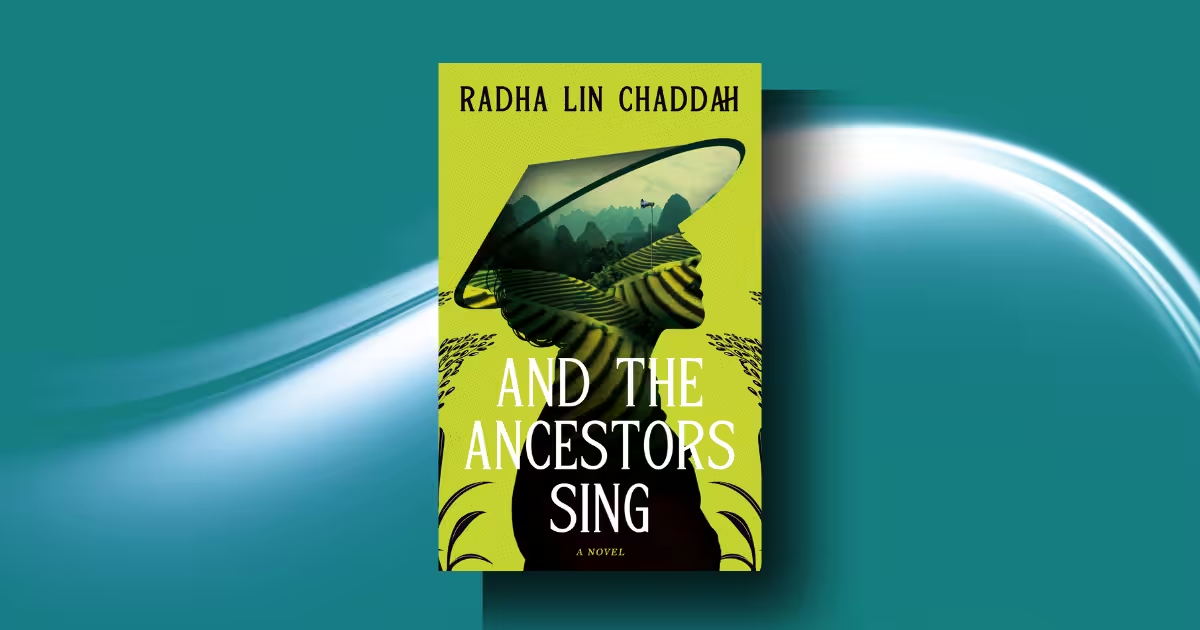
Did you ever wonder why “home” can feel like a love story and a bruise at the same time—why leaving can be an act of devotion, not betrayal? Radha Lin Chaddah’s And the Ancestors Sing puts that ache on the page, and it doesn’t let you look away.
A sweeping, multi-generational novel about rural-to-urban migration, survival, and the magnetic pull of ancestry—told through women and families trying to stay human while China transforms around them.
And the Ancestors Sing isbest for readers who like family sagas, social realism, and morally complicated characters; fans of multi-decade epics set against political and economic change; anyone interested in migrant life, hukou, and education dreams.
Not for: readers who want light pacing, tidy heroes and villains, or low-stress storylines—And the Ancestors Sing goes into exploitation, trauma, and systemic cruelty.
Table of Contents
1. Introduction
And the Ancestors Sing is a novel by Radha Lin Chaddah, published by Rising Action and distributed by Simon & Schuster (trade paperback; ISBN-13: 9781998672202).
The publisher lists February 3, 2026 as the publication date.
It is a novel that “brings to life…globalization and its impact on urban and rural China,” with particular strength in portraying mental health struggles.
2. Historical context
Although the novel is fictional, it’s anchored in recognizable realities of late-20th-century China: rural displacement, mass migration, and an urban system that rewards the registered and punishes the unregistered.
One of the book’s clearest “systems-on-the-page” explanations is its depiction of the hukou divide—how governance becomes easier when people are sorted into categories, and how that sorting decides who gets light, safety, schooling, and dignity.
The novel states it bluntly: officials divide people into “hukou-holding city dwellers” and “unregistered migrants,” making resource distribution “simple: the haves kept getting to have.”
That fictional portrayal matches the real historical arc: China’s rural-to-urban migration surged after Reform and Opening, and peer-reviewed work notes that the rural migrant population reached 291 million in 2017.
Education is also central.
The restored national college entrance exam (gaokao) returned in 1977; one historical summary reports 5.7 million registrants and 273,000 admitted in the first restored sitting.
So when this novel keeps returning to schooling, credentials, and the gatekeeping of city life, it’s not decorative—it’s the plot’s pressure system.
3. And the Ancestors Sing Summary
The story’s engine: loss → movement → reinvention
And the Ancestors Sing opens in the countryside with Lei, in an era where a woman’s life can be negotiated like a receipt. The publisher summary frames her early fate in transactional terms—bartered into marriage for small goods—before disaster forces migration.
From the start, the book writes rural life with a sensual vividness that makes later loss feel physical. There’s a folk song drifting over rapeseed fields, spring sweetness in the air, and Lei singing along—an early portrait of ordinary joy before the world breaks.
Then: catastrophe. An earthquake tears the ground out from under Lei’s family, and the aftermath is cramped, hungry, and intimate in the worst way—everyone sleeping on mats, their own home effectively erased. Lei wonders if anyone will ever believe the plain was once dry, dotted with “humble lives.”
Even the relief is bureaucratic: rations are measured, controlled, and parceled out only to “officially registered” families.
This is where the novel’s title starts to feel like a dare: What do ancestors mean when the land itself is gone?
Shanghai: survival, performance, and debt
The narrative expands to Shanghai and to LuLu, who arrives with ambition and ends up in sex work after factory doors close to her.
The city is not just a setting—it’s an argument. The book draws a literal lighting map of inequality: a harsh single streetlamp near migrant life, while the Bund glitters in neon “as signs of prosperity.”
That contrast becomes emotional, too: in the cold, Lei insists a photograph is “for the children,” negotiating even the price of light.
LuLu’s Shanghai chapters show how quickly the body can become both currency and battlefield. The novel makes you watch how “security” is offered—by men with power, by systems that prefer a poor woman quiet and grateful—and how every so-called opportunity comes with hidden teeth.
The rural “new village” illusion: progress built over graves
Back in Da Long, transformation arrives wearing the costume of development—new roads, model villages, tourist-friendly narratives. There’s a lake where a village once stood, and visitors admire the “new economy” without really seeing the drowned history under the surface.
A plaque exists, but it’s far, seldom read, as the novel remarks: “This was a country that The Party knew how to move along.”
That line haunted me because it isn’t shouted—it’s delivered like fact, like weather.
Children become the future—whether they want to or not
As time moves forward, Yan (Lei’s daughter) becomes a focal point of striving: school, achievement, the dream of “gone-ness,” the myth that leaving equals success. And the Ancestors Sing shows villagers half-proud, half-terrified, praying the ancestors keep her safe.
But at home, this dream fractures the family. Bo’s grief hardens into silence, and the tension becomes explicit when he challenges Yan at New Lake—why leave the ancestors’ place at all?
Meanwhile, Long (Lei’s son) is shaped by work, rage, and a world that doesn’t explain itself kindly. The book’s later sections suggest his mental state becomes a central tragedy—one the family can’t “tonic” away, no matter how much they love him.
LiLi, the “Cupcake Bride,” and the controlled marriage machine
One of the book’s most unsettling arcs belongs to LiLi—LuLu’s younger sister—who is pushed into a marriage arrangement engineered by Farmer Master Wang.
Her entrance is staged almost like a grotesque pageant: the crowd gawks, calls her “a prosperity cupcake,” and sexual jokes circulate while adults bargain over her life.
She is delivered into a household where she is treated as property, novelty, and womb.
This is where And the Ancestors Sing becomes intensely psychological. Wang is not merely controlling—he is strategic, constantly optimizing outcomes: legacy, heir, reputation. And the house contains Jiang, a son who reads the world in numbers and patterns, fragile under noise, brilliant in ways that don’t translate into “normal.”
When LiLi meets him, their first exchange lands like an ugly comedy: he calls her fat; she calls him old.
Funny—until you realize what it implies: everyone here is being appraised.
The ending (major spoilers): ghosts, lineage, and a child named “AiGuo”
By the late stages, the novel tightens around birth, guilt, and inheritance. A child, AiGuo, becomes the centerpiece of Wang’s obsession—his proof that he will “live on.”
In one of the book’s most horror-tinged scenes, Wang is confronted by a vision of LiLi—accusing him, refusing his attempt to convert her suffering into his legacy: “You too will live on, through AiGuo. That is what I cannot forgive.”
The imagery turns visceral, the cost of exploitation made literal.
Yet the novel’s final movement is not only punishment—it’s reordering. Yan appears holding the crying baby; Jiang takes AiGuo and calms him with practiced tenderness.
Then comes a crucial admission: Jiang is certain he is not AiGuo’s father, but he recognizes the child’s ancestry anyway, seeing lineage like a vast shimmering network. In his worldview, the distance between “father and son versus…brothers” becomes “of little consequence,” because AiGuo will need him.
That, to me, is where the title lands: the ancestors “sing” not as sentimental comfort, but as an inescapable chorus—passed down, reinterpreted, sometimes redeemed.
4. And the Ancestors Sing Analysis
4.1 And the Ancestors Sing Characters
Lei — The emotional backbone. Lei’s arc is not “rags to riches”; it’s endurance to endurance, the daily heroism of keeping children alive and keeping dignity intact. Her insistence—“This is for the children”—when even a photo’s flash costs extra, captures her entire ethic: spend on proof of love, even when the world calls it waste.
Bo — A portrait of damaged masculinity under pressure. He rarely gets the luxury of softness. After the quake, his withdrawal is described in physical terms—touch refusing touch, presence barely present.
He becomes the novel’s question: What happens to love when a man’s only language is survival?
LuLu — The strategist. LuLu’s intelligence is razor-edged because it has to be. In Shanghai, she learns the performance of respectability and the mechanics of purchase—how a city consumes women while pretending it doesn’t.
Her relationships are shaped by bargains, secrecy, and a constant calculus of risk.
Yan — The striver who refuses to stay small. The village mythologizes her “gone-ness,” and the book shows how aspiration becomes a kind of religion.
But Yan is not written as a clean symbol of success; she carries guilt, grief, and the knowledge that education can’t cure everything she loves.
Long — The tragedy of the unloved system. Long’s strength and labor value don’t protect him. The later narrative suggests his mind becomes a prison even before any literal confinement appears.
Lei remembering she couldn’t rescue him when he cried for help is one of the book’s sharpest depictions of maternal helplessness.
Farmer Master Wang — The novel’s corruption with a face. He treats people as inputs: bride price, purity, legacy. His bargaining over LiLi’s “purity” is written without romance—only control. By the end, his body becomes the stage for consequence, haunted by what he tried to erase.
Jiang — The most quietly radical character. He is hypersensitive to noise, obsessed with pattern, dismissed as “man-child” by officials, yet he becomes the one person capable of tenderness without ownership.
In the final pages, his acceptance of AiGuo (without insisting on conventional paternity) feels like the book’s alternative model of family: responsibility without ego.
4.2 Themes and symbolism
Home as gravity, not comfort. New Lake literally covers the old village; tourists admire the surface while the past stays submerged. The lake is the novel’s central metaphor: modernization that is real, beautiful even, and built over losses people are trained not to read.
Hukou and the politics of visibility. The single interrogating streetlamp over migrant life versus the Bund’s neon spectacle is symbolism you can see: who deserves illumination, who gets to remain in shadow.
Women’s bodies as battlegrounds of progress. Lei is traded; LuLu is consumed; LiLi is packaged. The “Cupcake Bride” scene is both grotesque and precise—how patriarchy makes a child into public entertainment before making her into private property.
Education as salvation—and as myth. The restored gaokao era created a national narrative of merit and mobility. Historically, millions registered for the first restored exam.
In the novel, that promise is both fuel and knife: it drives Yan outward, but it cannot repair Long, and it cannot undo what migration costs.
Ancestors as chorus: inheritance of harm and care. Jiang’s “family tree” vision reframes ancestry as a living network—beautiful, frightening, binding.
The ancestors “sing” as memory, duty, and consequence; you don’t escape the song—you decide what harmony you add.
5. Evaluation
And the Ancestors Sing felt marvelously unsentimental and quietly devastating: it watches people do what they must, then asks what that necessity costs their souls.
Strengths (what worked for me)
- Lived-in detail: fields, food, street corners, the economics of small choices—written so concretely the social critique never feels like a lecture.
- Systems made intimate: the hukou divide is not an abstract concept here; it’s light, paperwork, schooling, and the right to be seen.
- Psychological sharpness: the ending’s confrontation with legacy and guilt is chilling—consequence rendered as haunting.
Weaknesses (where I struggled)
- Emotional relentlessness: for some readers, the accumulation of hardship may feel heavy, with fewer “breathing” chapters.
- Scale can dilute closeness: because the novel spans decades and multiple arcs, some readers may wish for more time inside certain secondary characters.
Impact
What stayed with me is how And the Ancestors Sing refuses easy morality. People are harmed and also harm others; they love and also trade each other away.
And still, there are moments of care that feel almost rebellious—like Jiang taking responsibility for AiGuo without claiming him as property.
Comparison with similar works
Comparison with similar Works: Similar to Wild Swans by Jung Chang for historical sweep, but more intimate; or To Live by Yu Hua for survival themes, though Chaddah focuses on women’s voices.
6. Personal insight
While reading this, I kept thinking about how “merit” is often narrated like a clean staircase—study hard, score well, leave, succeed. The novel undercuts that fantasy from both sides.
In the countryside, Lei’s life is decided by transaction and disaster; in Shanghai, LuLu learns that effort doesn’t equal access when you’re structurally “unregistered.”
Historically, the gaokao’s restoration symbolized a reopening of educational mobility; millions registered in 1977, but only a fraction were admitted.
That ratio matters because it reveals a harsh truth we still live with globally: exams can be both ladder and trap, especially when resources are uneven.
Pair that with migration barriers—documented research notes that migration patterns and education access for children remain a major policy tension in China’s urbanization story.
So my contemporary takeaway is simple and uncomfortable: education helps, but it cannot substitute for belonging. If a system decides you’re “outside,” you can be brilliant and still be rationed—by law, by prejudice, by geography, by paperwork.
That’s why the novel’s final gesture—care without ownership, ancestry without ego—feels quietly radical. It imagines a form of responsibility that isn’t granted by the state or stamped by lineage, but chosen anyway.
7. And the Ancestors Sing Quotes
- “The haves kept getting to have”
- “Light is expensive.”
- “This was a country that The Party knew how to move along.”
- “Aiyah! But she is just a little girl!”
- “You’re old.”
- “She’s fat.”
- “Look at me! Look at what you did to me!”
- “the difference…was of little consequence”
8. Conclusion
And the Ancestors Sing is the kind of novel I’d recommend when someone tells me, “I want a book that teaches me something true about a society—but through people I’ll remember.”
It’s a migration story, yes, but more than that it’s a story about the price of becoming “new” while the old still calls your name from underwater.
Recommendation: If you like multi-generational literary fiction with social history, morally complex families, and themes of displacement, identity, and survival, this is worth your time.







