

Did you ever wonder how the weight of an entire nation’s history could rest on the shoulders of just three women? If you’ve ever felt like your personal struggles are isolated from the world around you, Wild Swans will shatter that illusion.
Wild Swans is a sweeping, deeply emotional memoir that traces the lives of three generations of Chinese women—the author, her mother, and her grandmother—offering a raw and intimate look at China’s turbulent journey through the 20th century.
Wild Swans is best for history buffs, memoir lovers, and anyone seeking to understand the human cost of political upheaval. Not for: Those looking for light, escapist fiction or readers sensitive to accounts of extreme political violence and systemic suffering.
Table of Contents
1. Introduction
Wild Swans: Three Daughters of China is a non-fiction masterpiece by Jung Chang, first published in 1991. Part family saga and part historical record, it chronicles the lives of Chang’s grandmother (a warlord’s concubine), her mother (a Communist revolutionary), and herself (a Red Guard turned scholar).
Wild Swans provides a rare, personalized lens into the social and political transformations of modern China.
2. Background
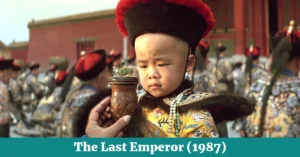
The narrative unfolds against the backdrop of China’s most chaotic century. It begins in the twilight of the Manchu Empire, moves through the brutal Warlord Era, the Japanese occupation of Manchuria (Manchukuo), and the Chinese Civil War.
Finally, it dives deep into the Maoist era, covering the Great Leap Forward and the harrowing decade of the Cultural Revolution (1966–1976).
3. Wild Swans Summary
The Concubine’s Tale (1909–1933)
The story begins with Yu-fang, Jung Chang’s grandmother, born in 1909. At age two, her feet were bound—a process involving crushing the bones of the arch to achieve the “three-inch golden lilies” considered the height of beauty and status.
In 1924, her father, seeking social advancement, arranged for her to become the concubine of General Xue Zhi-heng, a powerful warlord.
Yu-fang lived a life of “gilded imprisonment,” seeing her husband only briefly over six years. After giving birth to a daughter (Chang’s mother, Bao Qin), and following the General’s death, she made a daring escape from the Xue household to avoid having her child taken away.
She eventually found true love and stability with Dr. Xia, a kind Manchu doctor who treated her with the respect she never received as a concubine.
The Revolutionary (1930s–1950s)
Bao Qin (Chang’s mother) grew up during the Japanese occupation. Driven by a desire for a “New China” free from corruption and foreign rule, she joined the Communist underground at age fifteen.
She fell in love with Wang Yu (Chang Shou-yu), a high-ranking, idealistic Communist official. Their early marriage was defined by revolutionary austerity; Shou-yu was so committed to Party principles that he refused to use his official car to transport his pregnant wife, forcing her to walk long distances, which led to a miscarriage.
The Daughter of the Revolution (1950s–1978)
Jung Chang was born in 1952, a “child of the New China.” Her childhood was initially comfortable as the daughter of elite officials, but the political climate soured.
During the Cultural Revolution, Mao Zedong encouraged the youth (the Red Guards) to rebel against “class enemies.” Chang’s father, Shou-yu, became a target because he dared to criticize the extremism and the “cult of personality” surrounding Mao.
He was denounced, tortured, and eventually driven to a mental breakdown.
The Ending
Wild Swans concludes with the death of Mao in 1976 and the end of the Cultural Revolution. After years of manual labor as a “barefoot doctor” and a peasant in the countryside, Jung Chang won a scholarship to study in England in 1978.
The ending is bittersweet: while Chang finds freedom and the ability to tell her family’s story, she carries the profound grief of losing her father and grandmother to the “Maoist madness.”
4. Wild Swans Analysis
4.1 Wild Swans Characters
The Grandmother (Yu-fang): Represents the “Old China.” Her bound feet are a physical symbol of the patriarchal oppression women faced. Her resilience is quiet but fierce, seen in her escape from the Xue mansion.
The Mother (Bao Qin): A complex figure of transition. She is caught between her devotion to the Communist cause and the brutal reality of how the Party treated her family.
The Father (Chang Shou-yu): The moral anchor. His tragedy lies in his unwavering integrity. Unlike others who shifted with the political winds, he refused to lie, leading to his destruction.
The Author (Jung Chang): We see her evolve from a devoted young pioneer to a disillusioned witness of her parents’ suffering.
4.2 Themes and Symbolism
Bound Feet: Symbolizes the literal and metaphorical “binding” of women in traditional Chinese society.
The “Three Daughters”: Represents the evolution of China—from feudalism (concubine) to revolutionary zeal (mother) to modern globalism (Jung).
Power and Injustice: The book highlights how justice in China remained “arbitrary” and “capricious,” whether under warlords or the Communist Party.
5. Evaluation
The Wild Swans experience is an emotionally exhausting yet essential journey. Like a long-form piece in The New Yorker, it balances microscopic personal detail with the macroscopic shifts of history. Wild Swans is a harrowing, monumental, and profoundly necessary testament to the human spirit’s ability to survive systemic cruelty.
Strengths: The vivid, almost cinematic descriptions of Manchuria and the gut-wrenching accounts of the Cultural Revolution.
Weaknesses: The middle section, detailing intricate Party bureaucratic struggles, can feel dense, though it is necessary for historical accuracy.
Comparison: It is often compared to Falling Leaves by Adeline Yen Mah or Life and Death in Shanghai by Nien Cheng.
6. Personal Insight & Contemporary Relevance
Reading Wild Swans today is a chilling reminder of the dangers of totalitarianism and the cult of personality. In an era where “misinformation” and “cancel culture” are debated, the book shows the extreme endgame of these trends: a society where “people learned not to take any action on their own initiative” and where children were encouraged to denounce their parents.
Statistics show that during the Cultural Revolution, an estimated 0.5 to 2 million people died, but Wild Swans puts a human face on these numbers. It teaches us that “loyalty to a cause” should never supersede “loyalty to humanity.”
7. Wild Swans Quotes
- “To the Chinese, [stopping the family line] amounted to the greatest possible betrayal of one’s ancestors.”
- “Women have long hair and short intelligence.” (Traditional saying quoted in the book).
- “In political meetings today, people openly criticize Party leaders by name. The course of liberalization is irreversible.”
8. Conclusion
Jung Chang’s Wild Swans is more than a book; it is a bridge between the East and West. It is highly recommended for anyone interested in 20th-century history or feminist literature.
It remains significant because it refuses to let the world forget the millions of “small Chiang Kai-sheks” and ordinary citizens who were crushed by the gears of history.