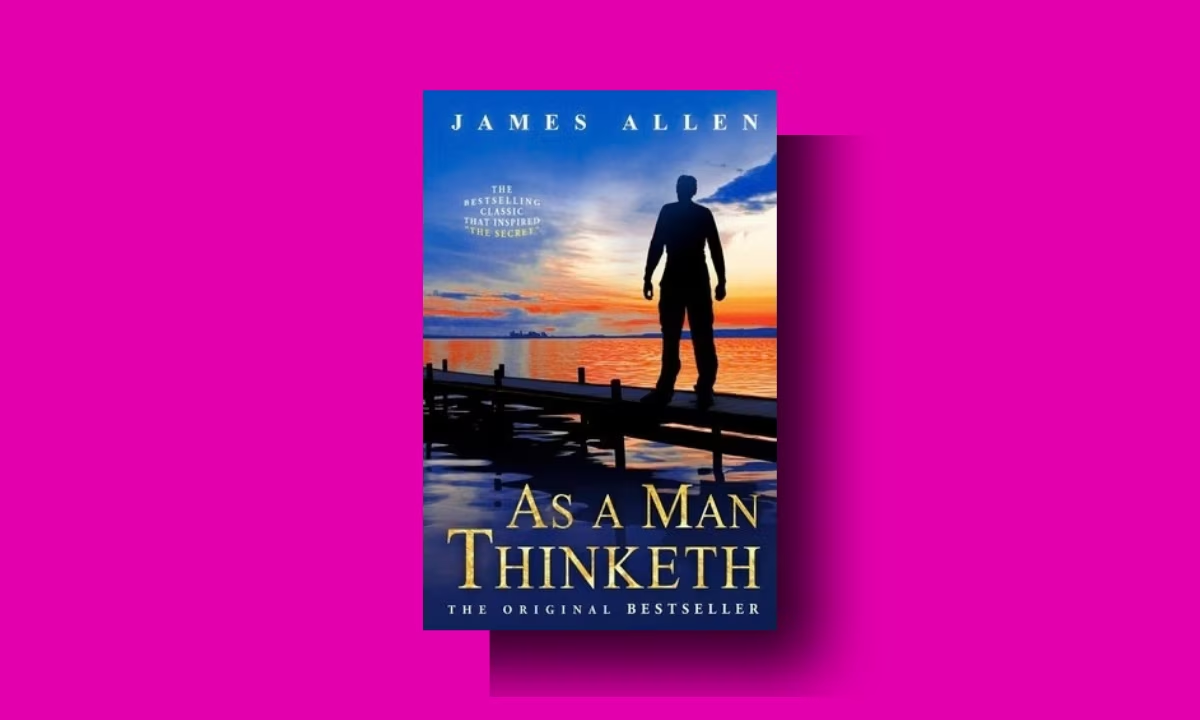

As a Man Thinketh is a short 1903 essay by the English writer James Allen that argues one thing with total conviction: your thoughts build your character, and your character builds your life.
It runs to roughly 7,500 words in the Project Gutenberg edition I read, which means you can finish it in under an hour. That brevity is exactly why millions still pass it around.
This As a Man Thinketh summary gives you every chapter, the lines worth remembering, and my honest verdict, because I came away convinced Allen was right about how thoughts harden into habits and plainly wrong about why people suffer.
Table of Contents
Both halves matter if you want to use As a Man Thinketh without letting it hurt you.
What Are the Key Lessons of As a Man Thinketh?
The core lesson is that repeated thoughts turn into habits, and habits turn into the conditions of your life. Here is the whole book at a glance.
The thesis. “A man is literally what he thinks, his character being the complete sum of all his thoughts” (Thought and Character).
The garden metaphor. Your mind is a garden. If you plant nothing useful, weeds arrive anyway. Tending it is your job.
The chain that matters most. Thought “rapidly crystallizes into habit, and habit solidifies into circumstance” (Effect of Thought on Circumstances). This is the most usable sentence in As a Man Thinketh.
You attract what you are, not what you want. Allen writes, “Men do not attract that which they want, but that which they are.”
Change yourself first. “Men are anxious to improve their circumstances, but are unwilling to improve themselves; they therefore remain bound.”
Purpose beats drifting. Without a central aim, he says, you become easy prey to “petty worries, fears, troubles, and self-pityings.”
Doubt and fear are the enemies. “He who has conquered doubt and fear has conquered failure.”
Achievement costs something. “He who would accomplish little must sacrifice little; he who would achieve much must sacrifice much.”
Luck is effort you did not see. Onlookers call success “luck” because they never saw the struggle behind it.
Calm is the final prize. “Self-control is strength; Right Thought is mastery; Calmness is power.”
Where I push back. Allen insists there is “no element of chance” in anyone’s life and that “Suffering is always the effect of wrong thought in some direction.” Modern evidence and plain fairness both say otherwise.
Suggested readers for As a Man Thinketh
You will probably love it if you:
- Want a self-help book you can read in one sitting and reread every year.
- Like the moral tone of older writing, with its Bible echoes and Victorian cadence.
- Are stuck in a rut of blaming others and need a firm push toward ownership.
- Enjoy Stoic thinkers like Marcus Aurelius or Epictetus and want a Christian-flavoured cousin.
- Are a student, athlete or early-career worker building habits from scratch.
You will probably bounce if you:
- Are living with chronic illness, disability, grief or poverty you did not choose. Several passages will read as blame.
- Need evidence, studies or data. Allen gives none.
- Dislike gendered, archaic language. The book says “man” and “manly” constantly.
- Want a step-by-step method. This is a sermon, not a workbook.
What Is As a Man Thinketh About?
As a Man Thinketh is a self-help essay about the power of thought, written by James Allen and first published in 1903. It is a short work of inspirational, quasi-religious philosophy, and it is usually grouped with the New Thought movement of the late 19th and early 20th centuries.
Title, Author and Publication Details
- Title: As a Man Thinketh
- Author: James Allen (1864 to 1912)
- First published: 1903, according to Wikipedia. Goodreads lists a first publication date of 1902, so I cannot confirm the exact year with certainty, but 1903 is the date most reference sources use.
Where Does the Title Come From?
The title comes from Proverbs 23:7 in the King James Bible: “For as he thinketh in his heart, so is he.” Allen opens the book with that exact aphorism and builds everything on it.
What Is As a Man Thinketh‘s Main Argument?
The main argument is that people are “makers of themselves.” In the foreword, Allen says the book’s object is to help readers see that mind is “the master-weaver, both of the inner garment of character and the outer garment of circumstance.”
Put simply, he believes your inner life produces your outer life, and that this works by law, not by luck. He also says, modestly, that the book is “suggestive rather than explanatory.” That one phrase is worth keeping in mind, because it explains both the book’s charm and its biggest gap.
Who Was James Allen, and Why Does His Life Matter Here?
James Allen was a working-class English writer who wrote 19 books between 1901 and 1912, and his hard early life gives this book its moral fire.
He was born on 28 November 1864 in Leicester, England. According to Wikipedia, his father William travelled to America in 1879 and died soon after at New York City Hospital, in what is believed to have been a robbery and murder.
The Christian Classics Ethereal Library notes that at fifteen, with the family facing economic disaster, Allen had to leave school and find work.
He worked as a private secretary and stationer, then as a journalist. In 1902 he founded a magazine called The Light of Reason, later renamed The Epoch. In 1903, the year this book is usually dated, he moved with his wife, Lily Louisa Oram, whom he married in 1895, to Ilfracombe, on the north Devon coast. You can see that address, “Broad Park Avenue, Ilfracombe, England,” signed under the foreword in my copy. He died there on 24 January 1912, aged 47.
Wikipedia records the cause of death as tuberculosis. I mention this not to mock him but because it matters to how we read Chapter 3. A man who wrote that “the people who live in fear of disease are the people who get it” died of an infectious disease in his forties. That does not prove him a hypocrite. It does show that the body follows rules thought alone cannot overrule.
His wife Lily later said he “never wrote theories, or for the sake of writing,” and that he wrote only when he had lived a message out himself (quoted on his Wikipedia page). I believe her. The book reads like a man talking himself through hardship, not a man selling a system.
As a Man Thinketh summary
Opening Verse and Foreword
Before the first chapter, Allen places a short poem. Its last line sets the tone for everything: “Environment is but his looking-glass.” In other words, the world around you is a mirror of the person you are inside.
The foreword is only one paragraph. Allen calls the book “the result of meditation and experience” and says it is not “an exhaustive treatise.” His stated goal is to stimulate readers toward the truth that “They themselves are makers of themselves.” He adds a hopeful turn.
If people have so far “woven in ignorance and pain,” they can now choose to weave better. That promise of a second chance runs through every chapter.
Chapter 1. Thought and Character
Chapter 1 argues that your character is simply the total of your thoughts. Allen starts with the Proverbs line and declares that it reaches “every condition and circumstance” of life.
His first image is botanical. “As the plant springs from, and could not be without, the seed, so every act of a man springs from the hidden seeds of thought.” This applies, he says, even to acts we call spontaneous. Then comes one of the book’s best sentences: “Act is the blossom of thought, and joy and suffering are its fruits.”
Next, he quotes some lines of verse, without naming the source, that closely match the opening verses of the Buddhist Dhammapada. If a man’s mind holds evil thoughts, pain follows him “as comes / The wheel the ox behind.” If he stays pure in thought, joy follows “As his own shadow.”
From here Allen sets out his law. “Man is a growth by law, and not a creation by artifice.” Cause and effect work as surely in the mind as in the physical world. A noble character is “not a thing of favour or chance” but the result of “continued effort in right thinking.” A degraded character comes from “the continued harbouring of grovelling thoughts.”
He then uses a military image. “In the armoury of thought he forges the weapons by which he destroys himself.” Yet the same armoury holds the tools to build “heavenly mansions of joy and strength and peace.” Between those two extremes lie all the grades of character, and “man is their maker and master.”
The chapter closes on a point I found useful. Allen says a person is always the master, even at his weakest. The difference is whether he is a “foolish master who misgoverns his ‘household'” or a “wise master” who studies himself. And how do you become the wise master?
By “self analysis, and experience,” by watching your thoughts and “tracing their effects upon himself, upon others, and upon his life.” He ends by quoting Matthew 7:8, “He that seeketh findeth,” and insisting that only “patience, practice, and ceaseless importunity” open the door.
What I took from it: Watch your thoughts like a scientist, not a judge. Allen is asking for observation before reform.
Chapter 2. Effect of Thought on Circumstances
Chapter 2 claims that your outer circumstances always match your inner state, and it is by far the longest chapter in the book. By my count it holds about 2,850 words, close to 38 percent of the whole essay. Allen clearly thought this was the heart of his case.
The garden of the mind
It opens with the famous image. “Man’s mind may be likened to a garden, which may be intelligently cultivated or allowed to run wild.” Neglect does not leave the garden empty.
If you plant nothing, “an abundance of useless weed-seeds will fall therein.” A good gardener weeds out “the wrong, useless, and impure thoughts” and grows “right, useful, and pure thoughts.” Do this long enough and you discover you are “the master-gardener of his soul.”
Circumstances as teachers
Allen then makes a careful qualification that most summaries skip. He does not say your current situation shows your entire character. He says your circumstances are tied to “some vital thought-element” within you and are, for now, “indispensable to his development.” Every situation is a classroom. Once you learn its lesson, “it passes away and gives place to other circumstances.”
He follows with his boldest claim. “Every man is where he is by the law of his being,” and “there is no element of chance.” He adds that this holds true even for people who feel out of place in their surroundings.
You attract what you are
Here is the line most quoted online: “Men do not attract that which they want, but that which they are.” Your passing wishes get thwarted, but your “inmost thoughts and desires are fed with their own food, be it foul or clean.” Borrowing from Hamlet, he says the “divinity that shapes our ends” is inside us. Thought and action are “the gaolers of Fate” when base, and “the angels of Freedom” when noble.
So what does it mean to fight against circumstances? Allen’s answer is sharp. It means “revolting against an effect without, while all the time he is nourishing and preserving its cause in his heart.”
Three cautionary portraits
To make the point concrete, he sketches three people:
- A poor worker who wants a better home but “shirks his work” and cheats his employer because he thinks his wages are too low. Allen says he is drawing “a still deeper wretchedness” to himself.
- A rich glutton with a “painful and persistent disease” who will pay any sum for a cure but will not give up rich food.
- An employer who uses “crooked measures” to cut his workers’ wages, then goes bankrupt and “blames circumstances.”
His summary line is the chapter’s real lesson: “Men are anxious to improve their circumstances, but are unwilling to improve themselves; they therefore remain bound.”
A surprising moment of nuance
Then Allen does something I did not expect. He admits that “circumstances, however, are so complicated” that no one can judge another person’s inner state from the outside. An honest man may suffer and a dishonest man may prosper. But the honest man may have vices the other lacks, and the dishonest man may have virtues. Each reaps his own mix. He also warns against vanity: “It is pleasing to human vanity to believe that one suffers because of one’s virtue.”
Suffering as purification
Allen’s view of pain is stern. “Suffering is always the effect of wrong thought in some direction.” Its “sole and supreme use” is to purify, like fire burning dross from gold. “A perfectly pure and enlightened being could not suffer.” He measures right thinking by “blessedness, not material possessions,” and he notes that “a man may be cursed and rich; he may be blessed and poor.” Poverty and overindulgence are both “extremes of wretchedness.”
He then gives a line I quite like: “A man only begins to be a man when he ceases to whine and revile, and commences to search for the hidden justice which regulates his life.”
The thought, habit, circumstance chain
This is the passage I would save if I could keep only one page. “Men imagine that thought can be kept secret, but it cannot; it rapidly crystallizes into habit, and habit solidifies into circumstance.” Allen then lists pairs:
| Thought | Becomes the habit of | Hardens into circumstances of |
|---|---|---|
| Fear, doubt, indecision | Weak, irresolute habits | Failure, indigence, dependence |
| Lazy thoughts | Uncleanliness and dishonesty | Foulness and beggary |
| Hateful, condemning thoughts | Accusation and violence | Injury and persecution |
| Pure thoughts | Temperance and self-control | Repose and peace |
| Courage, self-reliance, decision | Strong habits | Success, plenty, freedom |
| Energetic thoughts | Cleanliness and industry | Pleasantness |
| Loving, unselfish thoughts | Self-forgetfulness for others | Abiding prosperity and “true riches” |
Then comes the most balanced sentence in the entire book: “A man cannot directly choose his circumstances, but he can choose his thoughts, and so indirectly, yet surely, shape his circumstances.” Notice the word indirectly. It quietly softens the “no element of chance” claim from a few pages earlier.
The chapter ends with a kaleidoscope image, “The world is your kaleidoscope,” and a four-stanza poem declaring that the human will can “hew a way to any goal, / Though walls of granite intervene.”
Chapter 3. Effect of Thought on Health and the Body
Chapter 3 argues that the body obeys the mind, so healthy thoughts produce a healthy body. It opens: “The body is the servant of the mind.”
Allen claims that “disease and health, like circumstances, are rooted in thought.” He goes further than I am comfortable with. “Thoughts of fear have been known to kill a man as speedily as a bullet,” he writes, and “the people who live in fear of disease are the people who get it.” Anxiety, he says, “quickly demoralizes the whole body.”
Some lines are practical and wise. “Change of diet will not help a man who will not change his thoughts.” Others are blunt and funny: “The so-called saint who does not wash his body is not a saint.” His neatest formula is this: “If you would protect your body, guard your mind. If you would renew your body, beautify your mind.”
He offers two anecdotes. He knows a woman of ninety-six with “the bright, innocent face of a girl,” and a man “well under middle age” whose face is twisted by “passion and discontent.” He describes a philosopher he saw on his deathbed who “died as sweetly and peacefully as he had lived.”
The chapter closes with lines I return to often: “There is no physician like cheerful thought for dissipating the ills of the body.” To live in “ill will, cynicism, suspicion, and envy” is to live in “a self made prison-hole.”
Chapter 4. Thought and Purpose
Chapter 4 teaches that thought without a clear purpose drifts, and drifting leads to failure. “Until thought is linked with purpose there is no intelligent accomplishment,” Allen begins. Most people let “the bark of thought” drift on the ocean of life, and he calls aimlessness “a vice.”
His advice is concrete by this book’s standards:
Pick a “legitimate purpose” and make it “the centralizing point” of your thoughts. It can be spiritual or worldly.
If you are not ready for a big purpose, start with your duty. Fix your thoughts on “the faultless performance of their duty, no matter how insignificant their task may appear.”
Train weak thoughts like weak muscles. “As the physically weak man can make himself strong by careful and patient training, so the man of weak thoughts can make them strong.”
Expect to fail. Even if you fail “again and again,” the strength of character you gain becomes “the measure of his true success.”
Shut out doubt and fear. They are “disintegrating elements” that make a straight line of effort “crooked, ineffectual, useless.”
The emotional peak of the chapter is this: “The will to do springs from the knowledge that we can do.” And its promise: “He who has conquered doubt and fear has conquered failure.” Allen ends by saying that thought joined fearlessly to purpose “becomes creative force,” turning a person from “a mere bundle of wavering thoughts” into a conscious user of the mind.
Chapter 5. The Thought-Factor in Achievement
Chapter 5 says that everything you achieve or fail to achieve comes from your own thoughts, so individual responsibility is “absolute.” The key lines: “As he thinks, so he is; as he continues to think, so he remains.”
He stresses that nobody can do your growing for you. “A strong man cannot help a weaker unless that weaker is willing to be helped,” and even then, the weak person “must become strong of himself.”
Then comes the most controversial passage in the book. Allen notes that people say, “Many men are slaves because one is an oppressor; let us hate the oppressor.” Some, he says, now reverse this and despise the slaves instead. His own view is that “oppressor and slave are co-operators in ignorance.”
A perfect love “condemns neither,” and a perfect compassion “embraces both.” The person who has conquered weakness “belongs neither to oppressor nor oppressed.
He is free.” I will come back to this, because I think it is the book’s weakest moment.
The rest of the chapter is about sacrifice. “There can be no progress, no achievement without sacrifice.” You do not need to give up all selfishness to succeed, he says, but “a portion of it must, at least, be sacrificed.” He divides achievement into three types (worldly, intellectual and spiritual) and says all follow “the same law” and “the same method.” Only the goal differs.
He also warns about keeping success: “Victories attained by right thought can only be maintained by watchfulness. Many give way when success is assured.” The chapter’s final rule is crisp: “he who would attain highly must sacrifice greatly.”
Chapter 6. Visions and Ideals
Chapter 6 claims that dreams are the seeds of reality, so whoever holds a lofty vision will one day realize it. It opens with the line people put on posters: “The dreamers are the saviours of the world.”
Composers, sculptors, painters, poets, prophets and sages are, to Allen, “the architects of heaven.” He gives historical examples: Columbus had a vision of another world and discovered it, Copernicus envisioned a wider universe and revealed it, and Buddha saw a spiritual world of perfect peace and entered it.
His instructions are lyrical. “Cherish your visions; cherish your ideals.” And: “Dream lofty dreams, and as you dream, so shall you become.”
Then the images: “The oak sleeps in the acorn; the bird waits in the egg.” In short, “Dreams are the seedlings of realities.”
He tells the story of a poor youth in “an unhealthy workshop,” unschooled, who dreams of “intelligence, of refinement, of grace and beauty.” He spends his small spare time and money developing himself. Eventually the workshop “falls out of his life as a garment is cast aside.” Years later he is a man of “worldwide influence” around whom “innumerable destinies revolve.”
Allen then turns to you directly. You will realize “the Vision (not the idle wish) of your heart,” because “you will always gravitate toward that which you, secretly, most love.” His sternest promise: “You will become as small as your controlling desire; as great as your dominant aspiration.”
He also quotes a writer he names as Stanton Kirkham Davis about a clerk walking out of his office to face an audience with “the pen still behind your ear.”
The chapter ends by attacking the idea of luck. Lazy observers see a rich man and call him lucky. They do not see “the trials and failures and struggles” behind it. “They do not see the long and arduous journey, but only behold the pleasant goal, and call it ‘good fortune.'” His conclusion is two words long: “Chance is not.”
Instead, “the strength of the effort is the measure of the result.”
Chapter 7. Serenity
The final chapter says that a calm mind is the highest result of right thinking and the real source of influence. “Calmness of mind is one of the beautiful jewels of wisdom,” Allen writes, and it comes from “long and patient effort in self-control.”
He links calm to understanding. Once you see yourself as “a thought evolved being,” you understand other people the same way. Then you stop the cycle where you “fuss and fume and worry and grieve.”
He makes a practical, almost commercial point. “The more tranquil a man becomes, the greater is his success.” Even “the ordinary trader” will see business improve, because “people will always prefer to deal with a man whose demeanour is strongly equable.”
The calm person is “like a shade-giving tree in a thirsty land, or a sheltering rock in a storm.” Serenity is “the last lesson of culture, the fruitage of the soul.” Allen asks whether “the great majority of people” ruin their lives “by lack of self-control.”
The book closes with a sailing image. Keep “your hand firmly upon the helm of thought.” The Master sleeping in the boat of your soul needs waking, a clear nod to the Gospel story of Jesus calming the storm.
The final words: “Self-control is strength; Right Thought is mastery; Calmness is power. Say unto your heart, ‘Peace, be still'”.
What Are the Main Themes of As a Man Thinketh?
The main themes are personal responsibility, the habit-forming power of repeated thought, purpose, sacrifice, and calm. Seen together, they form a ladder, and I find it useful to read the book that way.
- Self-observation. Before you change anything, watch your thoughts and trace their effects (Chapter 1).
- Cultivation. Weed and plant the garden deliberately (Chapter 2).
- Embodiment. Thoughts show up in the face and body (Chapter 3).
- Direction. Aim those thoughts at one purpose (Chapter 4).
- Cost. Pay the price of sacrifice (Chapter 5).
- Vision. Hold a high ideal for the long term (Chapter 6).
- Mastery. Arrive at calm self-control (Chapter 7).
Three images carry the whole book: the seed, the garden and the helm. The seed says every act has a hidden thought behind it. The garden says neglect is still a choice.
The helm says you steer, even in a storm. Allen also leans heavily on Scripture (Proverbs, Matthew, Mark), on Buddhist-sounding verse and on Shakespeare. The mix shows that he saw his message as universal rather than tied to one church.
Is As a Man Thinketh Right? My Analysis and Review
As a Man Thinketh is a moving, memorable and morally serious little book that gets the mechanics of habit right and the causes of suffering badly wrong. I finished it feeling both lifted and uneasy, and I think that mixed feeling is the most honest response to it.
Does Allen support his arguments with evidence?
No, not in any modern sense.
Allen offers metaphors, scripture, a few anecdotes (“I know a woman of ninety-six”) and confident assertion. He is upfront that the book is “suggestive rather than explanatory,” so this is not a hidden flaw. Still, phrases like “a law which cannot err” and “no element of chance” are claims of certainty, and he never tests them.
Does it fulfil its purpose?
Yes, if the purpose is to wake readers up to their own agency. The foreword says the aim is to “stimulate” people to see themselves as makers of themselves, and the book does that well. Its place in self-help history is also hard to dispute.
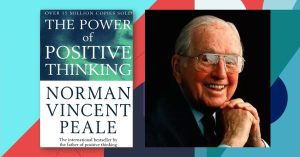
Earl Nightingale’s 1956 recording The Strangest Secret, which Wikipedia says sold more than a million copies and became the first spoken-word recording to earn Gold Record status, is now commonly sold bound together with Allen’s essay, and the book’s spirit runs through later bestsellers like Norman Vincent Peale’s The Power of Positive Thinking (1952), which spent 186 weeks on the New York Times bestseller list.
I cannot confirm a documented line of direct influence from Allen to Peale, so treat that as a family resemblance rather than proven lineage.
What does modern research say?
Some of Allen’s instincts hold up. Others do not.
Where he looks ahead of his time. In 2002, Yale researcher Becca Levy and colleagues published a study in the Journal of Personality and Social Psychology following 660 people aged 50 and over in a small Ohio town for up to 23 years.
According to Yale’s own announcement, those with positive views of their own ageing lived a median of 7.6 years longer than those with negative views.
That figure is often reported as 7.5 years. Allen’s line that “the body is the servant of the mind” is too strong, but this kind of finding shows attitude and health are not separate worlds.
His “thought, habit, circumstance” chain also looks familiar to anyone who knows cognitive therapy. Aaron Beck, widely called the father of cognitive therapy (as the Boston Globe described him at his death at 100 in 2021), built his approach on catching automatic thoughts and testing them.
Allen asked readers to “watch, control, and alter” their thoughts six decades earlier. To be clear, Allen had no clinical method, and I am drawing a parallel, not a direct link.
Where the research pushes back. Psychologist Gabriele Oettingen’s work complicates Chapter 6. According to the Association for Psychological Science, her studies found that people with stronger positive fantasies about their goals were “actually less likely to achieve them.”
They lost fewer pounds, earned worse grades and got fewer job offers. Allen’s “Dream lofty dreams” needs a second step he never gives, which is facing the obstacles squarely.
And on illness, Barbara Ehrenreich made the sharpest case in Bright-Sided (2009), a book that, opens with her own experience of breast cancer. As NPR summarized her argument, “a cheerful outlook… does not cure cancer.” Allen’s claim that fearful people “are the people who get” disease is exactly the kind of idea she warned against.
Strengths: What I loved
It is short and dense. Every page has a line you can underline. You can reread it on a single train ride.
The habit chain is brilliant. “Thought… crystallizes into habit, and habit solidifies into circumstance” is the clearest statement of habit formation I have found in pre-1950 writing.
It refuses self-pity. The line about ceasing “to whine and revile” is bracing when you need it.
It is honest about cost. Unlike many modern books, Allen says plainly that achievement demands sacrifice.
The serenity chapter is beautiful. It reframes calm as strength, not passivity.
It has a moment of real humility. His admission that you cannot judge another person’s inner life from outside is wise and often overlooked.
Weaknesses: Where it hurt to read
The “no element of chance” claim is false. Allen’s own father died far from home in what is believed to have been a robbery and murder when James was a teenager. Allen himself died of tuberculosis at 47. Chance and contagion are real, and pretending otherwise asks readers to blame themselves for things they did not cause.
Chapter 5 on oppression is troubling. Calling “oppressor and slave” “co-operators in ignorance” flattens a deeply unequal relationship. Allen’s intent seems to be compassion for both, but the effect is to shift moral weight onto the oppressed.
The health chapter can cause harm. Telling sick people that “sickly thoughts will express themselves through a sickly body” invites guilt on top of illness.
No method. He tells you to “control” thoughts but never says how, beyond watching them and staying firm.
Gendered, dated language. “Manly” and “unmanly” appear as synonyms for good and bad. Modern readers, women especially, may find this grating.
Survivorship bias in the stories. The poor youth who escapes the workshop is a composite success story. We never meet the equally hopeful youth who did not.
My verdict
As a Man Thinketh is a small, luminous and dangerous book. It gave me a sharper habit of noticing my own thoughts, and I would hand it to almost any 20-year-old. I would also hand them a pencil, and ask them to strike through every sentence that says suffering is always deserved.
How Can You Use As a Man Thinketh Today Without Blaming Yourself?
You can use it by applying Allen’s habit chain to your own thoughts while rejecting his claim that every misfortune is your fault. Here is the simple practice I built from As a Man Thinketh. It is my own adaptation, not a clinically tested method.
Run a 7-day thought audit. Three times a day (morning, lunch and night) write down the thought that has occupied you most in the last few hours. That gives you 21 entries by the end of the week.
Sort them using Allen’s table. Mark each entry as fear, doubt, laziness, hate, or as courage, energy, kindness, purity. You will usually see one or two weeds that keep growing back.
Trace one chain. Pick your most repeated thought and ask, as Allen did, what habit it has formed and what circumstance that habit is producing. For example, “I am bad with money” can become the habit of never opening bank statements, which hardens into late fees.
Name one duty, not a grand purpose. Chapter 4 says beginners should start with “the faultless performance of their duty.” Choose one small task you will do perfectly every day for 30 days.
Add the obstacle step Allen skipped. For your bigger dream, write down the most likely obstacle and your plan for it. This is the step Oettingen’s research suggests matters.
Draw a boundary around blame. Ask, “Is this within my control?” If not (an illness, a layoff, a death), drop Allen’s “law” for that item entirely. The book is a tool for what you can change, not a verdict on what you cannot.
End each day with Chapter 7. Read the final paragraph once before sleep. It takes less than a minute.
Which Books Are Similar to As a Man Thinketh?
Books similar to As a Man Thinketh include Meditations, The Power of Positive Thinking, Think and Grow Rich and The Game of Life and How to Play It. Here is how they compare.
| Book | Year | How it compares to Allen |
|---|---|---|
| Meditations, Marcus Aurelius | 2nd century AD | The Stoic ancestor. Same focus on governing the mind, but Marcus accepts fate and chance as real, which makes him kinder than Allen on suffering. |
| The Power of Positive Thinking, Norman Vincent Peale | 1952 | Same faith-and-thought formula, far longer and more anecdotal. Wikipedia notes critics like psychologist Albert Ellis warned its methods could lead to “failure and disillusionment.” |
| Think and Grow Rich, Napoleon Hill | 1937 | Takes Allen’s “thought becomes circumstance” idea and points it at money. More practical, more commercial. |
| The Game of Life and How to Play It, Florence Scovel Shinn | 1925 | A New Thought cousin with the same strength and the same flaw. It is sharp on fear and weak on health, as I argued in my review of The Game of Life and How to Play It. |
| The Secret, Rhonda Byrne | 2006 | The modern “law of attraction” version. Allen is more demanding, since he insists on effort and sacrifice, not just wanting. |
| Rethinking Positive Thinking, Gabriele Oettingen | 2014 | The evidence-based correction to Chapter 6. Read it right after Allen. My Rethinking Positive Thinking summary covers her WOOP method. |
| Mindset, Carol Dweck | 2006 | The research-backed descendant of Chapter 4’s “weak thoughts can be made strong” idea. See my Mindset book review. |
| The Road Less Traveled, M. Scott Peck | 1978 | Shares Allen’s belief that discipline and responsibility are the road to growth, with a psychiatrist’s realism. Read my review of The Road Less Traveled. |
| Bright-Sided, Barbara Ehrenreich | 2009 | The strongest counterargument. Pair it with Allen if you want a balanced view. |
Frequently Asked Questions About As a Man Thinketh
Is As a Man Thinketh a religious book?
Yes, partly. It quotes the Bible several times and speaks of “the Divine Perfection,” but it also draws on Buddhist-sounding verse and Shakespeare, and it never asks you to join a church. Secular readers can use most of it.
How long does it take to read As a Man Thinketh?
Most people can read it in under an hour. The essay is about 7,500 words by my count, and Goodreads lists one common edition at 80 pages.
Is As a Man Thinketh free?
Yes. It is in the public domain in the United States and most other countries, and Project Gutenberg offers it free as Etext #4507.
Is As a Man Thinketh about the law of attraction?
Not exactly. Allen does say “the soul attracts that which it secretly harbours,” but he insists results come from effort and sacrifice, writing that a man gets “not what he wishes and prays for” but “what he justly earns.” That is much closer to habit-building than to wishing.
What is the most famous quote from As a Man Thinketh?
The best-known lines are probably “A man is literally what he thinks” and “Men do not attract that which they want, but that which they are.” My personal favourite is “Self-control is strength; Right Thought is mastery; Calmness is power.”
Conclusion
Should you read As a Man Thinketh?
Yes, you should read As a Man Thinketh, but read it with a pencil in hand. Its central idea, that repeated thoughts become habits and habits become your daily life, is practical and still holds up more than 120 years after Allen wrote it. Its darker claim, that every hardship is the fruit of wrong thinking, should be crossed out.
Who will benefit most: students, young professionals, people coming out of a long rut, and anyone who already likes Stoic or devotional writing. It is written for general readers, not specialists, and needs no background at all.
Who should approach with care: anyone facing serious illness, grief, poverty or injustice they did not cause. Take Chapter 4 and Chapter 7, and leave the rest.
I hope this As a Man Thinketh summary gives you the whole book in one place. If you read only one line from it, make it Allen’s most balanced one: “A man cannot directly choose his circumstances, but he can choose his thoughts.”