
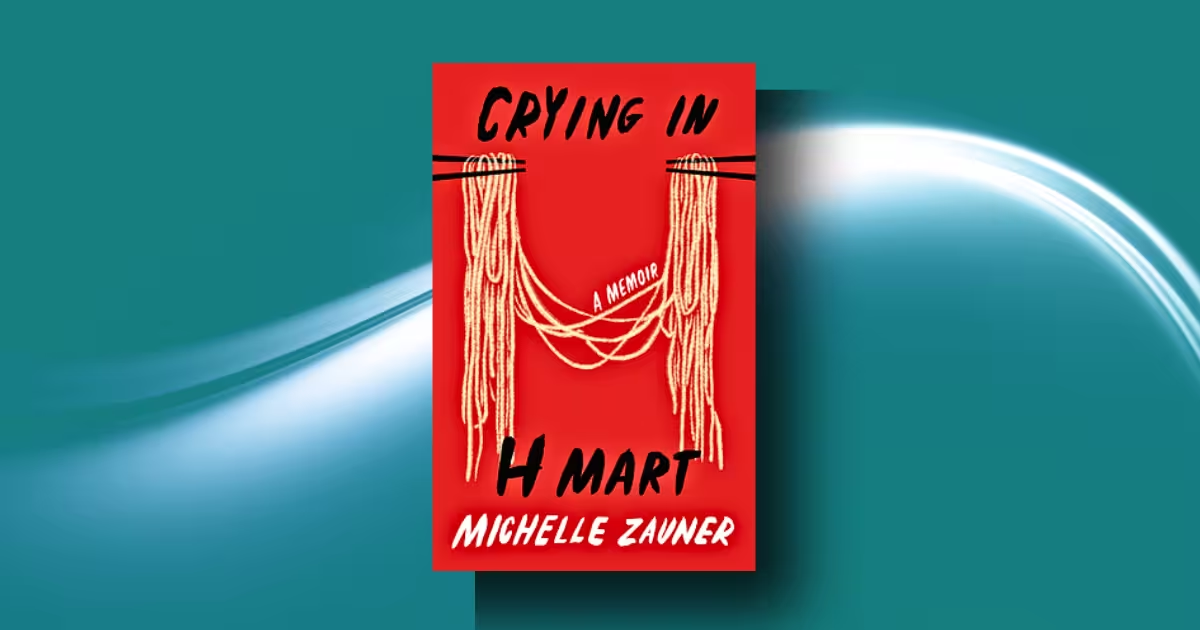
What if the one person who held your entire cultural identity together suddenly vanished—leaving you to chase her memory through supermarket aisles and half-remembered recipes? That gut-punch question is exactly why Crying in H Mart by Michelle Zauner hit me like a freight train the first time I picked it up, and why I keep returning to it whenever grief feels too heavy to name.
If you’re searching for a memoir that doesn’t just describe loss but embodies it through the universal language of food, family, and fractured identity, this is the book.
It’s not light reading, but it’s the kind that leaves you changed—and hungry for more than just the next page. In this deeply personal review, I’m breaking down everything I loved (and the few things that stung) so you walk away feeling like you’ve lived the story with Zauner herself. No spoilers held back, because the real power here is in how raw and honest it gets.
Crying in H Mart is best for anyone navigating grief after losing a parent, especially if food was your family’s love language. Korean-Americans, mixed-race kids, or anyone who’s ever felt “not enough” of either culture will see themselves mirrored.
Foodies who treat grocery runs like therapy sessions. Fans of Japanese Breakfast (Zauner’s band) wanting the backstory behind those emotionally charged albums. Readers who crave memoirs that blend humor, rage, tenderness, and recipes without a single fake note. If you’ve ever cried in an ethnic aisle at a big-box store because the smell of gochujang hit you like a memory, this book is your mirror.
Not for people allergic to heavy emotions or looking for a breezy beach read. If you want a tidy “five steps to heal grief” self-help manual, bounce—this is messy, real life. Those who prefer memoirs that stay surface-level on family dysfunction or cultural shame might find it too unflinching.
Table of Contents
1. Introduction
Crying in H Mart: A Memoir by Michelle Zauner dropped on April 20, 2021, from Alfred A. Knopf (a Penguin Random House imprint).
At 256 pages, it’s Zauner’s debut book—an expansion of her viral 2018 New Yorker essay of the same name. Zauner, better known as the Grammy-nominated frontwoman of indie rock band Japanese Breakfast, was born in Seoul to a Korean mother and white American father.
Raised in Eugene, Oregon, she grew up as one of the few Asian kids in a mostly white town, caught between two worlds. Her mother, Chongmi, died of squamous cell carcinoma (a rare bile-duct cancer often mislabeled as pancreatic in early reports) on October 18, 2014—Zauner was 25, her mom just 56.
The central thesis? Food isn’t just sustenance—it’s memory, love, and the fragile bridge to the parts of ourselves we lose when our parents die. As Zauner writes in the opening lines: “Ever since my mom died, I cry in H Mart.
H Mart is a supermarket chain that specializes in Asian food… You’ll likely find me crying by the banchan refrigerators, remembering the taste of my mom’s soy-sauce eggs and cold radish soup.”
That single paragraph sets the tone: grief isn’t linear; it ambushes you in the freezer aisle over dumpling skins.
This isn’t just a grief memoir. It’s a love letter to Korean food as emotional glue, a reckoning with mixed-race identity, and a portrait of a mother-daughter bond that was equal parts suffocating and sacred. Zauner proves that losing your mom doesn’t just break your heart—it can fracture the very language you use to understand who you are.
2. Background: The Real-Life Roots
Zauner’s story begins long before the cancer diagnosis. Born in Seoul, she moved to Eugene, Oregon, at age one after her parents’ whirlwind romance.
Her dad answered a “Opportunity Abroad” ad in The Philadelphia Inquirer in 1983, met Chongmi at the Naija Hotel front desk in Seoul, and they married after three months. They bounced through military bases before settling in the Pacific Northwest.
Eugene was green, rainy, and overwhelmingly white. Zauner describes moving to a five-acre wooded property at age ten, feeling isolated as an only child with no neighborhood kids.
Her mother, a homemaker, poured every ounce of her energy into shaping her daughter—pinching her nose as a baby to “fix” its flatness, making her stretch on the headboard to grow taller, screaming “Ukgae peegoo!” (“Shoulders straight!”) when she slouched. Food was the one arena where approval flowed freely. Korean stews had to be piping hot; kimchi perfectly sour. “Food was how my mother expressed her love,” Zauner writes (page 10).
No measurements, just cryptic instructions like “add sesame oil until it tastes like Mom’s.”
Summers in Seoul with Halmoni (grandmother) and aunts Nami and Eunmi offered glimpses of the “real” Korean life Zauner craved. She bonded with cousin Seong Young over Sailor Moon and live octopus at Noryangjin Fish Market. There, she learned that being a “courageous eater” earned her family’s highest praise.
3. Crying in H Mart Summary
Crying in H Mart is a memoir by Michelle Zauner, the musician known as Japanese Breakfast, that explores the complexities of mother-daughter relationships, the search for identity as a biracial Korean American, and the profound way grief and food are intertwined.
The Core Ideas
Crying in H Mart’s central argument is that culture and maternal love are primarily preserved through sensory experience—specifically food. Zauner posits that while language or physical presence may fade, the “distinctly Korean appetite” and the rituals of cooking serve as an indelible bridge to one’s heritage.
Her thesis concludes that to lose a mother is to lose a primary connection to a culture, but that same culture can be reclaimed by “becoming” the mother through the labor of traditional cooking.
Point-by-Point Summary and Argument
1. H Mart as a Gateway to Grief
Zauner begins with the famous line, “Ever since my mom died, I cry in H Mart”. She establishes the supermarket as a sanctuary for the Asian diaspora—a place where “parachute kids” and immigrant families find “freedom from the single-aisle ‘ethnic’ section”.
The Argument: For Zauner, H Mart is where she collects “evidence that the Korean half of my identity didn’t die” with her mother.
The sight of specific snacks like ppeongtwigi (rice-cake disks) or grandmothers eating seafood noodles triggers memories of her mother’s physical presence and the cultural fluency she once felt.
2. The “Tough Love” of Chongmi
Michelle’s mother, Chongmi, was a woman of “usuals” and “intractable expectations”. She expressed her love through brutal honesty and vigilance rather than typical Western “coddling”.
The “Save Your Tears” Philosophy: A recurring proverb in their household was “Save your tears for when your mother dies”. This “industrial-strength” love meant Chongmi would scream at Michelle when she got hurt because she felt her daughter’s pain as her own.
Aesthetic Obsession: Chongmi was obsessed with appearances, religiously following a ten-step QVC skincare regimen and demanding Michelle keep her “shoulders straight” (ukgae peegoo). This emphasized a Korean cultural value on presentation and “showing the best face” to the world.
3. Food as a Love Language
Despite their frequent clashes—especially during Michelle’s rebellious teenage years in Eugene, Oregon—food remained their common ground.
Culinary Upbringing: Chongmi never formally taught Michelle to cook, but she raised her with a “reverence for good food” where stews had to be “steamy hot” and kimchi perfectly sour.
Bonding through Cravings: They “chased their cravings daily,” whether it was frying pork belly on the deck in spring or eating miyeokguk (seaweed soup) on birthdays to honor the mother who gave birth.
4. Identity and Dislocation
Growing up biracial in a predominantly white town, Michelle felt like a “displaced… alien or exotic fruit”.
Rejection of Heritage: At age twelve, she began to “efface” her Korean identity to fit in, asking her mother to stop packing Korean lunches so she could eat with the “popular kids”.
Summers in Seoul: Every other summer, they visited family in Seoul, where Michelle felt “pretty” and “celebrated” in a way she didn’t in Oregon. These trips, filled with sannakji (live octopus) and late-night snacks from her grandmother’s (Halmoni) refrigerator, reinforced her dual identity.
5. The Diagnosis and Decline
The narrative shifts when Chongmi is diagnosed with Stage IV squamous cell carcinoma. Michelle, who had been struggling as a musician in Philadelphia/New York, returns to Oregon to become her mother’s primary caregiver.
The Caretaking Struggle: Michelle attempts to use food to heal her mother, but Chongmi loses her appetite as chemotherapy takes its toll[cite: 161, 251]. Michelle feels a sense of failure when she cannot cook the complex Korean dishes her mother needs, resorting to instant Ottogi cream soup.
Kye’s Arrival: A family friend named Kye arrives from Georgia to help care for Chongmi. Kye’s “icy demeanor” and her ability to cook perfect Korean porridge (jatjuk) make Michelle feel like an outsider in her own home, as if Kye is “more Korean” than she is.
6. The Outcome: Death and Immediate Aftermath
After two rounds of brutal, unsuccessful chemotherapy, Chongmi decides to stop treatment.
The Ending of Chongmi’s Life: Michelle and her boyfriend Peter decide to get married quickly so Chongmi can witness the wedding[cite: 403]. Shortly after, Chongmi’s condition worsens. She dies on October 18, 2014, at the age of fifty-six.
The Fracturing of the Family: After the funeral, the house in Oregon—once a meticulously curated reflection of Chongmi’s style—becomes a “symbol of collective failure” Michelle’s father, Joel, struggles with his own grief, eventually selling the house and moving to Thailand.
7. Reclamation through Maangchi
The “climax” of Michelle’s personal growth occurs when she begins learning to cook traditional Korean food by watching YouTube videos of the famous cook Maangchi.
Cooking as Catharsis: By mastering fermented dishes like kimchi, Michelle learns that “it is not quite controlled death, because it enjoys a new life altogether”. The fermentation process becomes a metaphor for her grief: something that transforms and becomes “tarter, more pungent” but remains vital.
The Thesis Reaffirmed: Through cooking, she realizes, “If I could not be with my mother, I would be her”. She preserves the culture her mother gave her by becoming its practitioner.
Later chapters of Crying in H Mart dive deeper: the painful adolescence, college years on the East Coast, restaurant jobs, forming her band. Her mother’s 2014 diagnosis forces Zauner home.
She spends weeks in hospitals, learning to cook Korean dishes for the first time—jatjuk (pine-nut porridge), kimchi jjigae—via YouTube’s Maangchi. Aunt’s death compounds the loss.
Reconciliation comes through small acts: folding dumplings, shopping for banchan, realizing her mother’s high expectations were love in disguise. The final chapters circle back to H Mart as a bridge to identity. Zauner collects “evidence that the Korean half of my identity didn’t die when they did.” She ends with coffee hanjan (one shot) and quiet gratitude.
Every chapter is laced with exact recipes and sensory details—live octopus at Noryangjin that “wriggled before me, freshly severed… every suction cup still pulsing.” You taste the gochujang, smell the roasted chestnuts, feel the sticky plastic wrap on delivery jjajangmyeon.
By the end, you’ve lived the full arc: outsider childhood, cultural reconnection in Seoul, fracture through illness, and hard-won wholeness through food.
4. Crying in H Mart Analysis
Crying in H Mart is groundbreaking in how it treats grief not as a tidy arc but as a lifelong companion. Zauner’s prose is electric—funny one moment (“I was stranded and lonely, an only child with no one to talk to or turn to but my mother”), devastating the next.
She never sugarcoats: her mother’s love was “brutal, industrial-strength,” yet the memoir honors it without excusing the pain. As a reader who’s lost family across continents, I felt seen in ways few books manage. It’s not just about Korean food; it’s about how flavor becomes the last language when words fail.
Zauner supports every claim with lived evidence—hospital logs, QVC skincare obsessions, exact banchan preferences. No vague “I felt sad.” She shows the rage at a random Korean grandmother who outlives her mom, the guilt over misremembered dates, the small victories of nailing a recipe.
Crying in H Mart fulfills its purpose: proving that identity survives loss when you fight for it in the kitchen. It contributes meaningfully to Asian-American literature by centering food as both archive and antidote.
5. Strengths and Weaknesses
Strengths: The sensory writing is unmatched. I could taste the sannakji and feel the humid Seoul summers. Zauner’s honesty about mixed-race shame and mother-daughter friction feels revolutionary—rarely do memoirs let mothers be both hero and antagonist without apology.
The structure—food as chapter anchors—makes it educational too; you’ll finish knowing how to approach Korean markets with new eyes.
It sold over a million copies, spent 60 weeks on the New York Times bestseller list, and won Goodreads Choice Award for Memoir & Autobiography 2021. A film adaptation is in the works with Zauner writing the screenplay.
Weaknesses: At times the grief loops feel repetitive—understandable in real life, but a few tighter edits could have kept the pace relentless. Non-Korean readers might crave a glossary for terms like ttukbaegi or pojangmacha, though context usually carries you.
The music-career thread is lighter than expected; fans of Japanese Breakfast might want more on how grief fueled Psychopomp.
Overall, the strengths crush any nitpicks. Reading this felt like therapy I didn’t know I needed.
6. Comparison with Similar Works
It sits beautifully beside Joan Didion’s The Year of Magical Thinking for raw grief, but swaps literary detachment for visceral food memories.
Like Trevor Noah’s Born a Crime, it nails mixed-race outsider status with humor. Food memoirs such as Kitchen Confidential by Anthony Bourdain share the kitchen-as-battleground vibe, but Zauner’s is more intimate and cultural.
For Korean-American parallels, try Minor Feelings by Cathy Park Hong or The Namesake by Jhumpa Lahiri—both explore identity fractures, but none center food as the emotional lifeline quite like this.
7. Conclusion: Who Should Read It?
If you’ve ever felt culturally orphaned or wondered how to honor someone through their recipes, Crying in H Mart is essential. It’s perfect for general audiences who love honest storytelling and specialists in diaspora studies or grief literature.
Grab it if you want to laugh, cry, and crave kimchi all in one sitting. I finished it feeling less alone—and immediately drove to my nearest Asian market.
This memoir didn’t just tell me a story; it handed me tools to carry my own losses with more grace. Michelle Zauner turned her pain into a bridge for the rest of us. Read it. Then go hug whoever taught you how to eat.







