
Last updated on January 13th, 2026 at 05:16 am
Ever feel like one “wrong” choice turns into a label you can’t shake—like you’re forever the messy one, the unreliable one, the person people quietly expect to mess up again? That’s why In Your Dreams hit me: it doesn’t just sell a romance—it talks back to that fear.
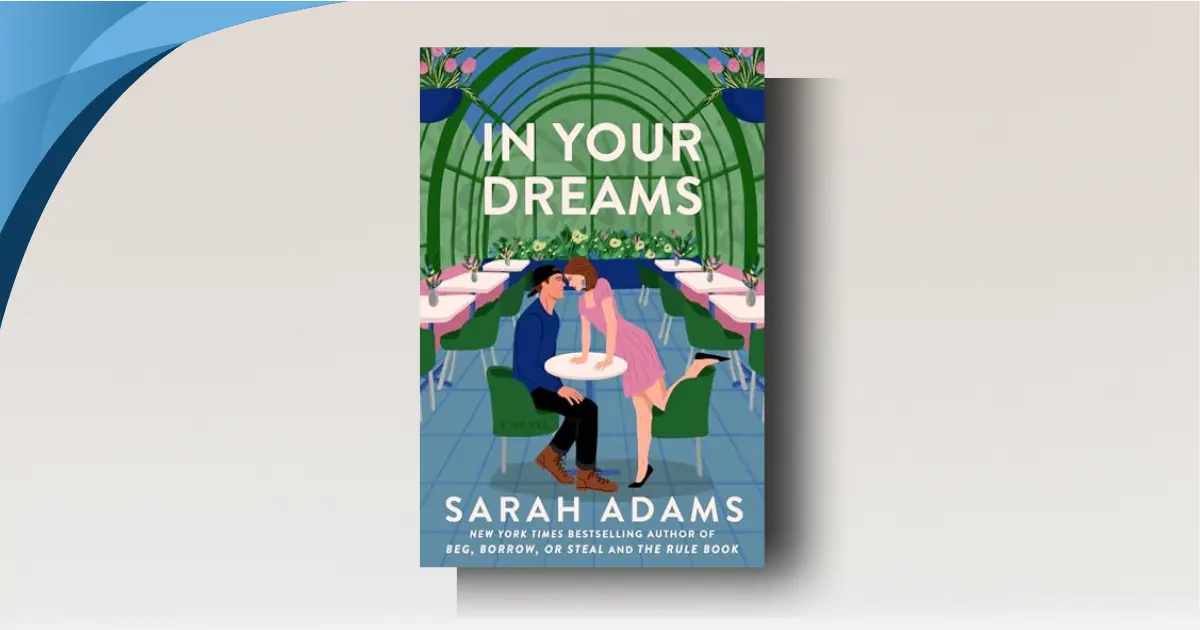
In Your Dreams is a warm, slow-burn small-town romance about two longtime family friends building a farm-to-table restaurant—and learning that commitment (to love, to purpose, to yourself) is less about perfection and more about showing up anyway.
In Your Dreams is best for readers who love small-town rom-com energy with tender emotional stakes (chef x farmer, friends-to-lovers, he-fell-first), anyone who wants romance with burnout/anxiety representation baked into the character arc (Madison’s panic attacks are explicit).
And for the fans of the Rome, Kentucky world who enjoy community “meddling townsfolk” and interconnected side characters.
Not for
- If you want high-drama/dark romance: this leans cozy, emotionally sincere, and funny.
- If you dislike open-door intimacy (there is on-page sex, including a memorable “boots” scene).
- If “family chatter + town eccentricities” annoy you, Rome will feel… loud (in a loving way).
Table of Contents
1. Introduction
Title: In Your Dreams
Author: Sarah Adams
Publication context: The book is published as part of Adams’s Rome, Kentucky series (often listed as #4).
Publication details: Major listings place the U.S. publication under Random House/Delacorte with a Dec 30, 2025.
At its surface, this is “chef returns home, farmer friend offers her a job, sparks fly.” But the real engine is the private dread behind Madison’s humor—she literally writes herself into a role: “The Failure.”
That single idea—how a story you tell about yourself can become your cage—shapes every flirtation, every fight, and every fragile step toward love.
2. Background
“In your dreams” isn’t only about romance; it’s also about a very contemporary American longing: local roots, meaningful work, and community-built places.
Farm-to-table as a restaurant identity became mainstream in the U.S. long after it was pioneered—often traced to Chez Panisse (1971) and the push toward local, seasonal sourcing that later reshaped American menus.
So when Adams sets the love story inside a farm-to-table restaurant, she’s using a setting that already means something: it’s about care, patience, seasonality, and trust—the same qualities James has, and Madison doubts she deserves.
Series context
Most public series guides list In Your Dreams as part of the Rome, Kentucky set (commonly numbered fourth).
Even if you read it standalone, it carries that “town-as-a-character” feeling: people notice everything, comment on everything, and somehow still love you through it.
3. In Your Dreams Summary
Madison Walker returns to Rome, Kentucky carrying the kind of exhaustion that doesn’t look dramatic from the outside—but feels like a locked door from the inside.
She tried to remake herself in New York through culinary school, hoping to become the kind of chef who commands rooms the way her idol does.
Instead, she walks away with a bruised relationship to kitchens and a body that learned panic as muscle memory: her own narration bluntly ties her New York dream to “anxiety and panic attacks” that make her dread professional cooking.
Back home, her identity is complicated. She’s loved, but she also believes she’s the family’s designated screw-up—“Every family has one person who is considered The Failure—and in my family, that person is me.”
It’s not just insecurity; it’s a story she’s rehearsed for decades, complete with examples, punchlines, and shame.
Then comes James Huxley—steady, stoic, and more emotionally observant than his quietness suggests. James is tied to Madison’s history in a way that makes romance feel both inevitable and impossible.
Their families are close. Their childhoods overlap. They know each other’s patterns—Madison’s chaos, James’s seriousness—and the town knows them too.
The inciting move is classic “small-town rom-com,” but with an undercurrent of devotion that borders on reckless: James offers Madison a head-chef position at a new farm-to-table restaurant on his family’s land.
The twist is that this job isn’t merely opportunity—it’s personal. James has been shaping his life around responsibility and the farm, and he’s carrying financial pressure that makes the restaurant more than a passion project.
As the story unfolds, you learn James’s “help” wasn’t just business-minded.
He’s been in love with Madison for years, and the restaurant is tangled up with that longing. At one point, he admits—internally and bluntly—that he’s effectively building the restaurant because the woman he loves needed a way to come home: “Everyone… [is] completely oblivious that I’m creating an entire… restaurant because the woman I’m… in love with said she wanted to come home… I made one for her.”
That confession reframes everything: the offer wasn’t neutral. It was love in the language James speaks—labor, logistics, sacrifice.
Relationship arc: from friction to intimacy
Madison and James don’t flip into romance overnight.
Their connection deepens through proximity, shared stress, and a series of small moments that feel like emotional “proof.” One of the most telling: Madison notices James monitoring his health, learns his blood pressure is elevated, and remembers his dad’s heart attack—suddenly the man she thought of as unbreakable looks mortal.
Madison’s fear of loss spills out in a line that is both funny and heartbreakingly sincere: “You can’t die at the start of our friendship.”
James’s response to her emotions matters because Madison is used to people treating her feelings as “too much.” She even jokes she could write a whole magazine article on how quickly men bolt when she cries. James doesn’t bolt. He moves closer.
The Tommy factor
Tommy—James’s brother—is both comic relief and emotional trigger. He flirts like it’s breathing, and Madison can spar with him without risk.
He’s charming enough to be funny, but his presence repeatedly forces James to confront jealousy and vulnerability.
Tommy also becomes a key pressure point when Madison learns facts that re-open her fear of being set up to fail. One of the novel’s most important emotional turns is Madison collapsing under the weight of what she thinks she “is,” and James fighting to re-name her—out loud:
“You are not overly emotional; you feel deeply… you are a resilient woman…”
Then he lands the plea that is basically the book’s thesis: “I’m begging you to believe in yourself.”
Symbolic thread: Sammy the tortoise
A deceptively sweet subplot becomes a quiet mirror: Sammy the tortoise. Madison’s instinct is to rescue what’s vulnerable and overlooked.
James, who seems “hard,” is careful with the tiny creature—so careful that the moment snaps something into focus for Madison: “I think I’m falling in love with James Huxley.”
That’s the magic of this romance: love isn’t declared first. It’s recognized—through the way someone handles what matters to you.
The ending
The restaurant storyline builds toward opening pressures, community buzz, and the personal risk that if this fails, it won’t just be a business loss—it’ll confirm Madison’s worst self-story.
In the romance arc, the emotional climax arrives with James finally saying what he’s been living for years: his yearning isn’t casual—it’s a decade-long ache. “For a decade, I’ve been dying inside, wanting you.”
From there, the book resolves in the way this relationship has earned: not via grand public gestures, but private clarity. James commits in a way Madison can’t misread: “You’ll never have to wonder where you stand with me.”
Madison challenges him back—will he stay “home,” or move with her when her wild heart needs motion? James answers with the line that seals their emotional contract: “You’re my home… I’ll go with you anywhere.”
Sex and tenderness follow (including the now-infamous boots-in-the-shower moment). But the final note isn’t just heat—it’s steadiness. The narrative stamps the theme of resilience with a timestamp-style line that reframes “failure” as an event, not an identity: “6 DAYS SINCE I FAILED… BUT KEPT GOING.”
That’s the ending’s real promise: love doesn’t erase fear; it gives you a place to return when fear speaks.
4. Analysis
4.1 In Your Dreams Characters
Madison Walker: the “funny” woman with a private ledger of shame
Madison is written with humor that’s protective—she can turn trauma into punchlines fast. But her inner monologue reveals the deeper wound: she believes her family has already assigned her role, and she keeps proving them “right.”
What makes her compelling is the contradiction: she’s chaotic, yes—but also tender, hardworking, and deeply attuned to others’ needs (Sammy, James, even the town).
Her growth isn’t “becoming perfect.” It’s learning to separate a bad outcome from a permanent identity, which the book underlines explicitly in that final “kept going” marker.
James Huxley: devotion disguised as practicality
James is the romance fantasy for anyone who’s ever wanted love to show up as consistency.
He does the work: literal labor, emotional restraint, long-term planning. Even his “help” can look like logistics until you realize it’s longing with a blueprint: the restaurant exists because he wanted Madison back in Rome.
What keeps him from becoming a flat “good man” archetype is that his steadiness has a cost: stress, health anxiety, and a deeply learned habit of carrying burdens alone.
Tommy Huxley: chaos as a mirror
Tommy’s flirtation is funny, but it also exposes how men can treat women like games—and how that destabilizes someone already terrified of being judged.
The book uses him to surface James’s jealousy and Madison’s boundaries (including her firm “I don’t owe you a time frame” stance).
The town and the families: “meddling” as care
The secondary cast creates that distinctive Rome, Kentucky texture—nosy, affectionate, relentless. Even a throwaway scene like Phil’s “running club” spiral shows how the town manufactures belonging through humor and intrusion.
4.2 In Your Dreams Themes and Symbolism
Theme: identity as a story you can rewrite
Madison’s “Failure” identity is treated like a script she keeps performing.
The arc is not “she stops failing.” It’s “she stops treating failure as destiny,” made explicit in the closing “failed… but kept going” line.
Theme: love as clarity, not confusion
James’s commitment is direct: “You’ll never have to wonder where you stand with me.”
That’s important because Madison’s anxiety thrives on uncertainty. The romance functions as emotional exposure therapy: repeated proof that intimacy doesn’t have to be unstable.
Symbolism: Sammy the tortoise
Sammy is injured, patched, and protected—small enough to be overlooked, stubborn enough to survive. The moment Madison realizes she’s falling in love happens while watching James handle Sammy gently and logically.
It’s a clean symbol: James’s love is careful. Madison’s love is rescuing. Together they become safer than either one alone.
Symbolism: “home” as a person, not a place
The book lands its emotional thesis in one word: home. “You’re my home… I’ll go with you anywhere.”
That’s the opposite of small-town romance as “stay here forever.” It’s small-town romance as “you’re not trapped—you’re held.”
5. Evaluation
1. Strengths (what works)
- Emotionally precise reassurance: James’s re-naming of Madison’s fears is one of the book’s most effective scenes.
- Chemistry that grows from friendship: Adams sells the shift from “we’ve always known each other” to “oh no, it’s you” (the Sammy moment is a perfect hinge).
- Setting-as-theme: farm-to-table isn’t just a vibe; it mirrors patience, seasons, rebuilding.
2. Weaknesses (what could be better)
- If you prefer external plot complexity, the tension leans more internal (fear, self-worth, stress) than twisty.
- Some readers may find the town “banter volume” high (the humor is frequent and very present).
3. Impact
The most lasting effect is how the book treats failure as survivable. That final “kept going” line is simple, but it’s the kind of sentence you remember on a bad day.
6. Comparison with similar works
If you like small-town romance with community warmth, this sits in the same reader-comfort lane as other cozy contemporary romance series, and reviewers often recommend it to fans of similarly warm, slow-burn small-town books.
It also echoes “homecoming” romances where the real love story is learning to come back to yourself—made literal in Madison’s kitchen joy returning: “It felt like coming home to myself.”
Compared to the earlier Rome, Kentucky novels by Sarah Adams, In Your Dreams is the most inward-looking and emotionally reflective installment.
While When in Rome leans heavily into fish-out-of-water humor and fast romantic chemistry, and Practice Makes Perfect centers on self-confidence and social anxiety through a lighter, coaching-style dynamic, In Your Dreams slows the pace and focuses on long-term yearning, emotional burnout, and the quiet weight of being labeled “the unreliable one.”
7. Personal insight with contemporary educational relevance
One reason Madison feels so recognizable is that her “failure” story is basically a burnout story. She’s not lazy—she’s depleted. And in real life, anxiety isn’t niche. NIMH describes anxiety disorders as among the most common mental disorders in the U.S.
That matters because books like this quietly teach something practical: your nervous system can learn fear, but it can also learn safety—especially through consistent relationships and stable environments.
James’s love is written like consistency training: clear commitment, repeated showing up, and a refusal to punish Madison for big feelings.
Even Madison notes that most guys react badly to her emotions, while James doesn’t. That contrast mirrors a real-life skill: supportive partnerships don’t eliminate anxiety, but they can reduce “uncertainty load,” one of the biggest anxiety multipliers.
There’s also a quiet modern lesson in the farm-to-table setting itself. The farm-to-table movement—popularized in the U.S. through early local, seasonal sourcing models—helped normalize the idea that food can be ethical, communal, and rooted in place.
In the book, the restaurant becomes more than a business: it’s a structure for belonging. And that’s the takeaway I’d keep: when life feels unstable, build small, repeatable “homes”—habits, people, places—where your body can stop bracing for impact.
8. In Your Dreams Quotes
- “Every family has… The Failure—and… that person is me.”
- “You are not overly emotional; you feel deeply.”
- “I’m begging you to believe in yourself.”
- “For a decade… I’ve been… wanting you.”
- “I love you… You’ll never have to wonder…”
- “You’re my home… I’ll go… anywhere.”
- “I think I’m falling in love with James Huxley.”
- “6 DAYS SINCE I FAILED… BUT KEPT GOING.”
9. Conclusion
In Your Dreams works because it understands a quiet truth: many people aren’t afraid of failing once—they’re afraid the failure will “prove” who they are.
Madison’s arc is a steady unlearning of that lie, and James’s role isn’t to rescue her—it’s to stay, clearly and repeatedly, until she can believe she’s worth staying for.
Recommendation: If you enjoy slow-burn small-town romance, “he fell first,” warm family dynamics, and a storyline that treats anxiety with more respect than melodrama, this is a strong pick.







