
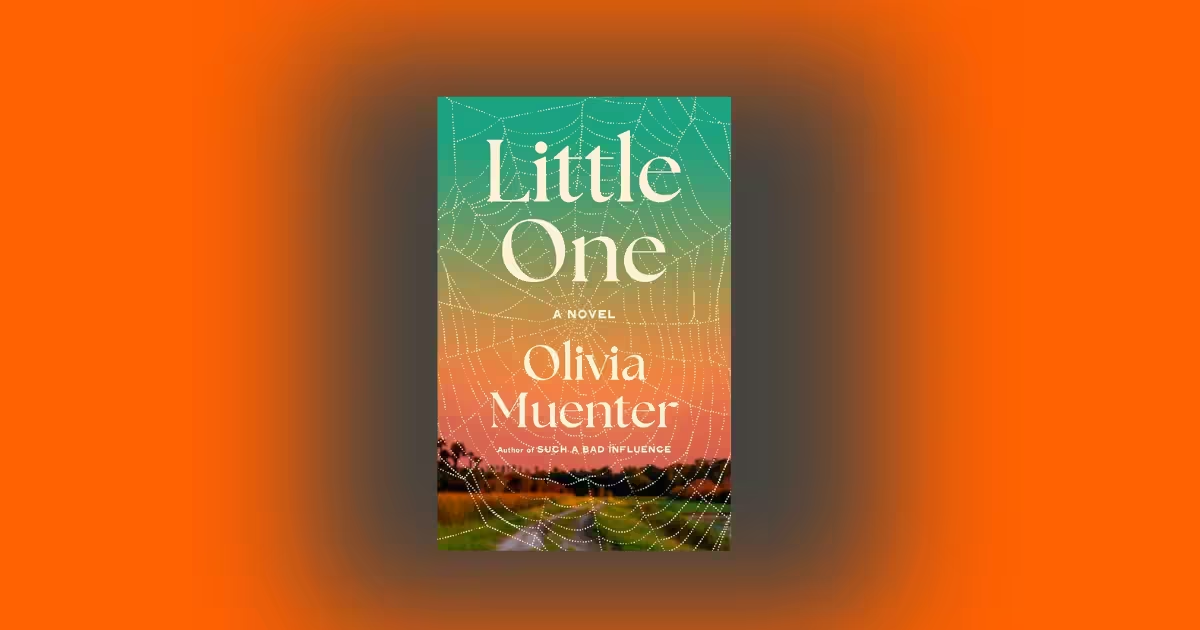
Do you ever wonder if the stories we tell about ourselves are the truth, or just the version we needed to survive? When does the desire to belong cross the line into a hunger that can consume you entirely? Little One is a chilling, atmospheric deep dive into the cost of survival, exploring how a woman weaponizes her own traumatic cult upbringing to seize control of her narrative in a world obsessed with true crime.
Little One is best for readers who loved the psychological complexity of My Dark Vanessa or the atmospheric cult dread of The Girls, and anyone fascinated by the ethics of the “trauma porn” industry.
Not for: Those who are sensitive to depictions of disordered eating, gaslighting, or bleak, morally ambiguous endings where justice is subjective.
Table of Contents
1. Introduction
Title and Author Information: Little One is the searing sophomore novel by Olivia Muenter, published in February 2026 by Little, Brown and Company.
Following her bestseller Such a Bad Influence, Muenter cements her status as a master of the modern psychological thriller. This novel is not just a story about a cult; it is a razor-sharp critique of wellness culture and the commodification of female pain.
2. Background
The narrative is set against the backdrop of the sweltering, isolated landscape of rural Central Florida, a setting that acts as a pressure cooker for the characters.
Historically, the novel taps into the very real and contemporary fascination with “cults” disguised as wellness retreats or off-grid utopias—echoing the rise of groups like NXIVM or the “Twin Flames” universe. Muenter uses this setting to explore how the language of self-improvement (“being your highest self”) can be twisted into a tool for horrific control.
4. Little One Analysis
4.1. Little One Characters
Catharine West: She is a “diamond-strong” protagonist who subverts the typical victim narrative. Initially presented as a survivor of her father’s cult, we learn that her survival was forged through complicity and, eventually, patricide.
She is not merely a passive victim; she is a cold, calculating architect of her own future, willing to kill her father to escape and later willing to exploit that same trauma for a Netflix deal.
Her complexity lies in her refusal to be “good” in the way society expects victims to be.
The Father: A terrifyingly realistic villain who uses charisma and “moderation fasts” (starvation) to control his family. He represents the ultimate narcissist, believing his abuse is a form of love and discipline. His transformation from a “professor” figure to a murderer reveals the banality of evil—he is just a man who craved power.
Linna: Catharine’s adopted sister and soulmate. For much of the book, Catharine believes Linna is the famous author Marion Earl. This hope drives the plot.
However, in a heartbreaking twist, we learn Linna is likely dead, killed by the father in the swamp. She serves as the tragic emotional core of the story—the “what could have been” if they had escaped together.
Reese Campbell: The journalist who inadvertently gives Catharine the stage she needs. He represents the public’s voyeuristic gaze. While he thinks he is uncovering the truth, he is ultimately manipulated by Catharine into helping her produce a sanitized, profitable version of her life.
4.2. Little One Themes and Symbolism
Hunger as Control: The most pervasive theme is hunger—both physical and spiritual. The father uses “moderation fasts” (limiting food to beans or water) to break the women’s will. Symbolically, hunger represents the emptiness the characters feel and their desperate need for love and approval. Catharine eventually learns that “Hunger is a thing you can hold,” turning her deprivation into a weapon of self-discipline and power.
The Commodification of Trauma: The novel brilliantly critiques the “True Crime” industrial complex. Catharine realizes that to be safe and wealthy, she must package her horrific childhood into a palatable docuseries. The “Go Bag” her mother hid symbolizes the hope of escape, but the Netflix contract symbolizes the reality of escape in the modern world—selling your pain to the highest bidder.
The Tomato Garden: Initially a symbol of idyllic, self-sufficient life, the garden becomes a place of forced labor and secrets. It represents the duality of the cult: beautiful on the surface, but rotting underneath.
5. Evaluation
Little One is a groundbreaking and fiercely intelligent deconstruction of the survivor narrative that refuses to give the reader an easy moral resolution.
Strengths: The atmospheric writing is suffocatingly effective; you can practically feel the Florida humidity and the gnawing ache of hunger. Muenter’s choice to make Catharine a morally gray killer rather than a helpless damsel is a stroke of genius. The meta-commentary on how we consume tragedy is sharp and timely.
Weaknesses: The middle section, detailing the teenage years and the specific mechanics of the fasts, can feel repetitive, though this mirrors the monotony of cult life. Some readers might find the ambiguity of Linna’s fate—never finding a body—frustrating, though it fits the theme of unresolved grief.
Impact: This book left me unsettled, forcing me to question my own consumption of “survivor stories.” It lingers like a bruise, reminding us that “moving on” is often just a performance we put on for others.
Comparison: It sits comfortably alongside Emma Cline’s The Girls for its focus on female dynamics within a cult, but possesses the thriller pacing of
Gillian Flynn’s Sharp Objects. It shares DNA with Educated by Tara Westover, but twisted into a dark, fictional nightmare.
6. Personal Insight with Educational Relevance
Little One serves as a grim case study in coercive control, a psychological concept now recognized in legal systems (like the UK’s Serious Crime Act 2015).
The father’s use of “intermittent reinforcement”—alternating between cruelty (the scale weigh-ins) and praise (“That’s my girl”)—is a textbook tactic used to create trauma bonds.
Furthermore, the book illustrates the “identifiable victim effect,” where society cares deeply about a specific, charismatic victim (Catharine) while ignoring systemic issues.
In an era where #TrueCrime trends on TikTok with billions of views, Muenter asks us to consider: Are we helping victims by listening, or are we just entertained by their destruction?
7. Little One Quotes
- “Hunger is a thing you can hold.”
- “Doubt is a sickness, Catharine. It spreads.”
- “I just drove and drove and drove.”
- “You can’t bully yourself into being happy or good, Catharine. You can’t hate yourself until you get there.”
- “We’re all protecting something, I guess, aren’t we? For better or worse. Whatever it takes.”
8. Conclusion
Little One is a masterful exploration of the lies we tell to survive. Olivia Muenter has crafted a story that is as heartbreaking as it is horrifying, culminating in a finale that feels both shocking and inevitable.
Recommendation: This is essential reading for fans of literary thrillers and dark women’s fiction. If you obsess over the psychology behind headlines, this book provides the human (and inhuman) context you crave.
Final Reflection: It challenges the reader to accept that a “victim” can also be a villain, and that sometimes, the only way to escape a monster is to become a different kind of monster yourself.







