Last updated on October 21st, 2026 at 09:07 am
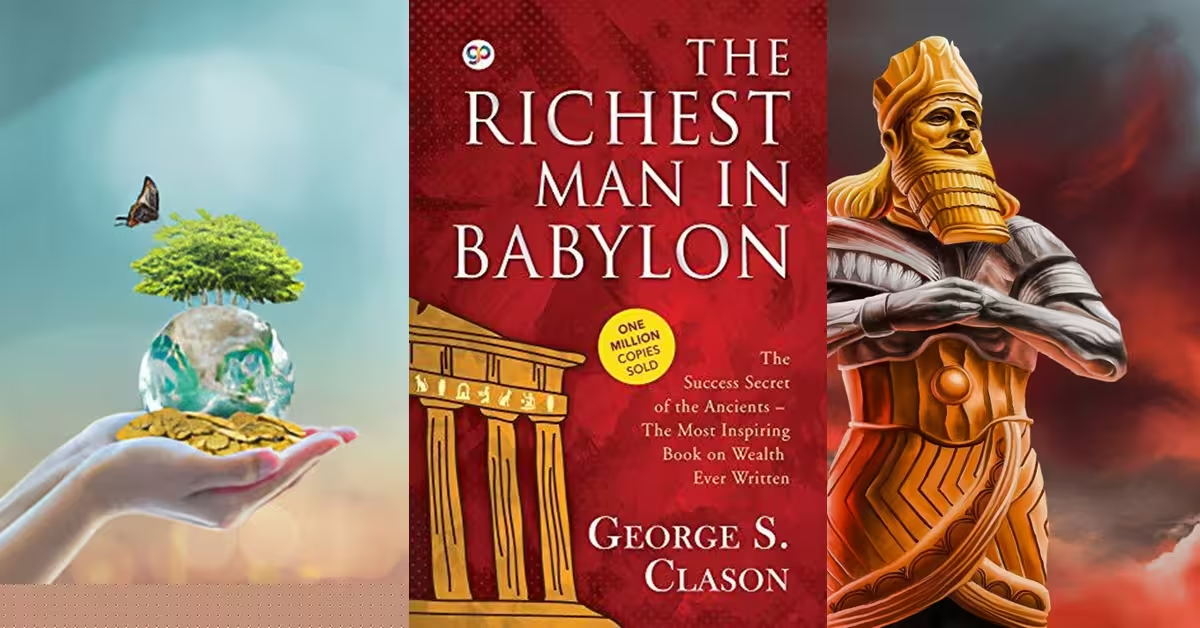
The Richest Man in Babylon is a 1920s money book dressed up as ancient storytelling, and its answer to getting rich is blunt: keep one tenth of everything you earn, make that tenth earn more, and never hand your savings to a stranger with a thrilling story. Most reviews stop at the famous seven cures.
After reading the book cover to cover, I think the part that still earns its place on your shelf is the one almost nobody quotes, a repayment plan near the end where a freed slave splits his income into ten, seventy and twenty parts.
This article gives you the whole book in plain language, with page numbers from my Signet edition, then tells you honestly where it still works and where it wobbles.
Table of Contents
What does The Richest Man in Babylon teach, in one minute?
The Richest Man in Babylon teaches that wealth is a habit, not a gift, and Clason reduces it to a few repeatable moves:
Pay yourself first. Keep at least one tenth of all you earn, however little that is.
Control spending. Your “necessary expenses” will grow to match your income unless you stop them.
Make savings earn. Lend or invest so that coins produce children, and the children produce more .
Protect the principal. Invest only where you can get your money back, and only with advice from people who handle money for a living (pp. 33 to 34).
Own your home, plan for old age, and raise your earning power.
Luck follows action. Opportunity favours people who move when it appears.
Clear debts on a schedule. Live on seven tenths, save one tenth, pay creditors two tenths.
Work is a friend, not a punishment.
Who will love it, and who may bounce? If you are new to money, feel behind, or learn better from stories than spreadsheets, you will probably love this book, because it asks for habits rather than financial training and it is short enough to finish in a weekend.
If you already invest through index funds, track your net worth and read the Federal Reserve’s household surveys for fun, you will likely find it thin, repetitive and old-fashioned, and the archaic “thou hast” dialogue may grate after the third chapter.
Readers who want modern tax advice, retirement accounts, or a view on risk beyond “be cautious” should treat this as a motivational starter, then move on to something with numbers in it.
I would hand it to a teenager, a first-job graduate or a friend who keeps saying “I never have anything left at month end.”
What is The Richest Man in Babylon, and who wrote it?
The Richest Man in Babylon is a collection of short parables about money by George S. Clason, set in an imagined ancient Babylon and written to teach thrift. My copy is the Signet paperback, whose copyright page lists Clason’s copyright dates from 1926 to 1955 and notes a first Signet printing in February 1988, after an earlier Dutton edition.
However, The Richest Man in Babylon is one of the 10 books on building wealth and getting rich.
The genre sits somewhere between fable and self-help, and the book is not a history of Babylon, whatever the title suggests.
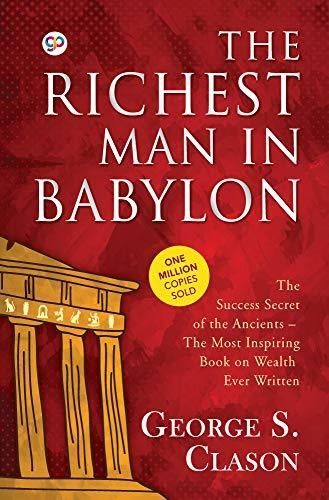
Clason was born in Louisiana, Missouri, in 1874, studied at the University of Nebraska and served in the United States Army during the Spanish-American War, according to his Penguin Random House biography.
He founded the Clason Map Company of Denver and published the first road atlas of the United States and Canada, then in 1926 began issuing pamphlets on thrift, which banks and insurance companies handed out in large quantities.
Those pamphlets became the stories in this book. One detail I find telling: his map company did not survive the Great Depression, so the man preaching careful saving knew exactly what a bad stretch looks like. I could not verify the circumstances of that failure beyond that bare statement.
The central thesis is stated in the opening pages and repeated in the Foreword. Money, Clason says, follows “simple laws,” and those laws are the same today as in Babylon.
The Foreword calls the book “a guide to financial understanding” (p. vii) and promises readers a way to acquire money, keep it, and “make their surpluses earn more money.”
How old is the Babylon in this book?
The Richest Man in Babylon never settles on one answer, and that quirk gives you a useful way to read it. The unnumbered epigraph says Babylon’s prosperous men thronged the streets “six thousand years ago.” The Goddess of Good Luck chapter says men wanted luck “four thousand years ago”.
Professor Shrewsbury’s 1934 letter about the clay tablets says conditions had not changed much in “five thousand years”. Popular summaries add a fourth figure: one Goodreads summary post says the parables are set 8,000 years ago.
For context, the best-known Babylonian lawgiver, Hammurabi, ruled around 1795 to 1750 B.C., which is nearly 3,800 years before today by my arithmetic. Clason, in other words, was writing atmosphere, not archaeology. I cannot verify which historical period he had in mind, and I do not think he cared. Read the dates as “a very long time ago” and you will enjoy the book more.
The Richest Man in Babylon Summary
Chapter 1, The Man Who Desired Gold
Bansir, a chariot builder, sits on a wall outside his workshop while his wife’s glances remind him that the meal bag is nearly empty. His friend Kobbi, a musician, arrives and asks to borrow two shekels. Bansir cannot lend them, because they would be his entire fortune. He confesses a dream in which he was a man of means, and the waking comedown has made him bitter.
Both friends have worked for years and own nothing. They watch a column of slave water carriers pass and admit they are not much better off, “working, working, working” and “getting nowhere”.
Kobbi notices something sharp: a man’s wealth is not the purse he carries but the income that refills it, and Arkad, The Richest Man in Babylon, has exactly that. Then comes the idea that drives the whole book. They succeeded at chariots and lyres because they put their best effort there, and they never sought wealth with the same energy.
So they decide to ask Arkad how it is done.
Chapter 2, The Richest Man in Babylon
Arkad’s old friends ask why fate chose him and ignored them. He answers that they either never learned the laws of wealth or do not obey them. He calls Fickle Fate “a vicious goddess” and argues that unearned gold ruins most people, turning them into spenders or frightened misers. Test it, he says, by looking at people who inherited suddenly.
He then tells his own story. He was a scribe cutting clay tablets, and he bargained with the moneylender Algamish: Arkad would carve a long law overnight, and Algamish would tell him how to be rich. The answer was short. Part of all you earn is yours to keep, never less than a tenth.
Algamish added the line that gives the rule its teeth: you pay everyone except yourself, so pay yourself first. Wealth, he said, grows like a tree from a tiny seed.
Arkad’s early mistakes make the lesson stick.
He gave his first year’s savings to Azmur, a brickmaker, to buy jewels in Tyre, and Azmur came back with worthless glass. Advice about jewels, Algamish scolded, belongs with a jeweller (pp. 15 to 16). Next, Arkad lent to the shieldmaker Agger and spent the rental on a feast and a scarlet tunic.
Algamish told him he had “eat the children of your savings”, meaning he had consumed the earnings his money should have reinvested. By the end Algamish made him a partner and left him part of his estate.
Two more ideas close the chapter. Arkad rejects the claim that this is luck. A fisherman who studies fish for years is not lucky when he catches them. And will power, he says, is only “unflinching purpose”, which he illustrates with a vow to toss a pebble in a stream every day for a hundred days, retracing his steps if he forgets. His final advice is humane: save, invest cautiously, take expert counsel, and still “enjoy life while you are here”.
Chapter 3, Seven Cures for a Lean Purse
The king asks Arkad to teach a hundred students, and Arkad spends seven days on seven remedies.
Start thy purse to fattening. For every ten coins you put in, spend only nine. An egg merchant who adds ten eggs and removes nine each day ends up with an overflowing basket. Arkad insists he managed just as well on nine tenths.
Control thy expenditures. What we call necessary expenses “will always grow to equal our incomes” (p. 29) unless we resist, and desires grow like weeds wherever there is space. A student protests that a budget is slavery. Arkad replies that a pack-ass would budget for hay and water, not jewels, and that a budget is “a bright light in a dark cave” that shows the leaks.
Make thy gold multiply. Income, not coins, is wealth. A farmer lends ten pieces of silver for his newborn son at one fourth interest every four years, and it becomes thirty and a half pieces by age twenty and one hundred and sixty-seven by age fifty, “almost seventeen times.”
Guard thy treasures from loss. The penalty of risk is probable loss. Lend only to people with the means and reputation to repay, and ask experienced people first.
Own thy own home. Stop paying exacting landlords. Save a portion, borrow the rest from a moneylender and repay him as you once paid rent.
Insure a future income. A sandal maker named Ansan deposited two pieces of silver a week for eight years and holds 1,040 pieces. Arkad even predicts that wise men will one day create insurance against death, which he calls impossible only because no institution is yet stable enough.
Increase thy ability to earn. Desire must be specific. Wishing to be rich is weak, while wanting five pieces of gold is a target. Skill raises pay, and a self-respecting person pays debts promptly, provides for family, makes a will and helps the unfortunate.
Arkad closes with a promise that there is “more gold in Babylon” than students dream of (p. 41).
Two checks on the numbers, because I did the arithmetic. Ten pieces growing by one fourth every four years works out to about 5.7 percent a year, which is a modest return, not a miracle. At that rate, ten pieces becomes roughly 30.5 at twenty years, matching the book, but roughly 163 at fifty years, not 167.
Ansan’s 1,040 equals his 832 deposits (two a week for 52 weeks over eight years) plus exactly 25 percent, which suggests Clason used simple rounding rather than full compounding. These are small slips, and I mention them because the book presents these figures as proof.
Chapter 4, Meet the Goddess of Good Luck
The scene moves to the Temple of Learning, where Arkad hosts evening debates. A cloth weaver has found a purse of gold and wants to know how to keep being lucky. Arkad steers the crowd away from gambling. He walks through a dice game in which the red side pays four to one but five sides lose, so the game keeper can expect to keep one fifth of all coins wagered.
He adds that he cannot name one successful Babylonian whose fortune began at the gaming table.
Two stories follow. An elderly merchant admits he ignored his father’s urging to put a tenth of his earnings into a water-wheel scheme on barren land, because he wanted new robes, and the scheme made a fortune without him.
An animal buyer, locked outside the city gates at night, refused to pay a farmer two thirds of the price of a flock of sheep until morning. By dawn four buyers had arrived, and the farmer sold for nearly three times what he had offered.
A Syrian listener supplies the word the group needed: procrastinator.
Arkad’s conclusion is that luck is not random delivery from a goddess. “Good luck can be enticed by accepting opportunity”, and the goddess prefers “men of action.” It is a modern idea in old clothes: prepare, then act quickly.
Chapter 5, The Five Laws of Gold
A caravan master named Kalabab tells his crew the story of Nomasir, Arkad’s son. Arkad refuses the custom of letting rich sons wait for their inheritance.
He sends Nomasir away for ten years with a bag of gold and a clay tablet carved with the five laws of gold. Nomasir loses the gold in Nineveh twice. First he bets on a horse in a rigged race, run by men he trusted on the road, and then he buys a shop with a charming partner who never brings his share. Broke and hungry, he finally reads the tablet.
Here are the five laws, in my words:
- Save at least a tenth of your earnings to build an estate for yourself and your family. Gold then comes “gladly” and in growing amounts.
- Put gold to work in a profitable use, and it multiplies like the flocks of the field.
- Protect it by investing under the advice of people who are wise in handling money.
- Avoid businesses you do not understand, or ones that skilled money people would not approve.
- Do not force gold to impossible earnings, follow tricksters, or trust your own inexperience and romantic wishes.
Nomasir applies them by saving from his pay supervising slaves on Nineveh’s new outer wall. His boss invites him into a pool of savers who ship copper and tin to Nineveh, expecting the king to need metal for bronze gates.
The pool makes money, and Nomasir becomes a partner in other deals with careful men. Ten years later he returns three bags: one to repay the gold, two to honour the wisdom. “Wealth that comes quickly goeth the same way,” Kalabab concludes.
Chapter 6, The Gold Lender of Babylon
Rodan, a spearmaker, receives fifty pieces of gold from the king for a better spearpoint, and everybody wants a share. His sister wants him to lend it to her husband, so Rodan asks Mathon the gold lender for advice. Mathon tells the fable of the ox and the ass: the ass tried to help a friend and ended up doing his work, so help friends in ways that do not shift their burden onto you.
Mathon then opens his token chest. Each token reminds him of a borrower, and together they sort loans into three kinds: loans backed by property, loans backed by earning ability, and loans to people with neither, which need guarantors. His examples are vivid.
A man ruined by a lavish marriage never repays. A farmer borrows to buy long-haired goats and repays early. A boy with big plans and no experience leaves his father’s land at risk. Mathon’s rules are simple. Ask what the borrower knows, what security exists, and whether gold will come back with its earnings.
For Rodan the advice is to keep the fifty pieces, lend his sister’s husband one year’s savings at most, and put the rest with careful people. Carved under the chest’s lid is a line that sums up the chapter: “Better a little caution than a great regret”.
Chapter 7, The Walls of Babylon
This is the shortest and most cinematic chapter. Old Banzar guards a passage to the top of Babylon’s walls while Assyrians attack for three weeks and five days.
Terrified citizens ask him if they are safe, and he answers each time that the walls built by Queen Semiramis protect them. The walls hold. Clason’s point is that human beings need protection, and he says people now find it “behind the impregnable walls of insurance, savings accounts and dependable investments”.
The moral line is “We cannot afford to be without adequate protection.”
Chapter 8, The Camel Trader of Babylon
Starving Tarkad meets Dabasir, the camel trader, who is owed a few coppers and a silver. Dabasir makes him sit and watch him eat a leg of goat while he tells his story.
As a young saddle maker, Dabasir spent beyond his means and borrowed to cover it. Creditors circled, his wife went back to her father, and he joined desert robbers.
A rival chief captured the gang, and Dabasir was sold in Damascus for two pieces of silver. Sira, the first wife of his Syrian master, asks him the question that changes everything: does he have the soul of a free man or of a slave?
He decides he is free and flees across the desert, nearly dying along the way. His turning point is one idea, which he later explains: “Where the determination is, the way can be found”.
Back in Babylon, he visits every creditor, asks for patience, and repays them with work arranged by Mathon, who sends him to the camel buyer Nebatur. Tarkad, the listener, rises with the soul of a free man.
Chapter 9, The Clay Tablets from Babylon
The frame is a letter dated 1934 from Professor Alfred Shrewsbury of Nottingham to Professor Franklin Caldwell, who is excavating near Hillah. Shrewsbury has translated five tablets. He is astonished that the oldest tablet talks about the ordinary problem of paying debts, and he plans to try the plan with his wife.
The tablets are Dabasir’s records, and here lies the most practical part of The Richest Man in Babylon. Mathon’s plan splits all income into three:
- One tenth is kept and never spent.
- Seven tenths pays for home, clothing, food and a little pleasure.
- Two tenths is shared among creditors fairly and regularly (pp. 105 to 108).
Dabasir lists ten creditors by name, including a cloth weaver, a jewel maker and a landlord, and totals 119 pieces of silver and 141 of copper (pp. 107 to 108). He visits each.
A former friend, Ahmar, reviles him. The farmer Birejik asks to be paid first. The landlord Alkahad threatens him. Dabasir treats them equally. In the first month he earns 19 pieces of silver and divides it as planned. By my arithmetic that is 1.9 saved, 13.3 for living and 3.8 for creditors.
A poor second month brings 11 pieces, yet he still follows the plan. The third month brings 42. After twelve moons he pays the last debt and celebrates, and even Alkahad says he has become “bronze capable of holding an edge”.
A caution from me: at two tenths, clearing 119 pieces of silver in twelve moons would require earnings of about 50 pieces a moon, more than the 19, 11 and 42 he records. The tablets are partly illegible, and The Richest Man in Babylon never explains the copper-to-silver conversion. The method is sound, but the numbers are fiction.
Chapter 10, The Luckiest Man in Babylon
Sharru Nada, a caravan master, rides toward Babylon with Hadan Gula, grandson of his late partner Arad Gula. Hadan Gula wears jewels, hates work and says “work was made for slaves.” Sharru Nada answers by telling him how his own grandfather started: as a slave.
Sharru Nada was a slave too, chained to a farmer named Megiddo who insisted that work was his best friend and that a hard day does less harm than a half-hearted one.
Sharru Nada put the idea to use after being sold to a baker, Nana-naid, by working so willingly that he created a bread-selling side business and kept some of the earnings. He saved coppers, bought his freedom and later became Arad Gula’s partner.
Hadan Gula is stung but listens, then removes his jewels and rides humbly behind the caravan leader. The chapter closes the book’s circle: wealth begins with work, and the willingness to work is what attracts opportunity.
The Historical Sketch of Babylon
Clason’s closing essay argues that Babylon’s wealth was man-made. He says it stood beside the Euphrates in a flat, arid valley with no forests, no mines and not even stone for building, and prospered because engineers diverted the river with dams and irrigation canals.
He adds that its kings valued wisdom and justice more than conquest. These are Clason’s claims.
Does The Richest Man in Babylon still work today?
The habits still work, the investing details do not. The case for habits starts with the savings gap: in the Federal Reserve’s 2025 household survey, 63 percent of adults said they would cover a $400 emergency expense with cash or a card paid off at the next statement, which leaves more than a third who would not. Five lessons carry over cleanly:
- Pay yourself first, then budget the rest. Automate the tenth on payday, before you see the money.
- Treat every raise as a chance to keep more, not spend more. The Richest Man in Babylon‘s warning that necessary expenses grow to match income is the shortest description of lifestyle creep I know.
- Never invest in what you cannot explain. The Phoenician glass and the rigged horse race are today’s crypto tips and group-chat stock picks.
- Repay debt on a schedule and tell creditors the truth. Dabasir’s two tenths is a plan you can write on an index card. For context, Hammurabi’s code capped debt servitude at three years, with the debtor freed in the fourth year, so repayment plans were taken seriously even then.
- Act when the opportunity is good. Procrastination cost both the merchant and the buyer a fortune.
What has aged poorly is the advice to lend privately at fixed rents, the near absence of diversification, inflation and tax, and a view of homeownership as an unqualified win.
Critic’s analysis: is the book any good?
The Richest Man in Babylon is a plain, stubborn, occasionally preachy little book, and the stubbornness is its charm. Clason argues by anecdote, never by evidence, so the case rests on whether the stories feel true to you, and mostly they do. It meets its purpose, which is to make saving feel dignified and simple, and it has outlived many books with better graphs.
What I enjoyed. The Dabasir plan, the egg basket and the walls of Babylon stayed with me for days. The repeated message, that wealth comes from a small habit applied for years, is hard to fault. Reading it felt like listening to a kind, slightly stern grandparent.
What frustrated me. The dialogue is heavy, the lessons repeat, the numbers wobble in places, and the sources of the advice are limited.
Clason’s pamphlets were distributed by banks and insurance companies, which may partly explain why lending and insurance receive so much praise. That is my reading, not a documented claim. Women mostly appear as wives, and slavery is a backdrop used for moral lessons.
Rating: 4 out of 5.
What are some books like The Richest Man in Babylon?
The closest modern cousin is Morgan Housel’s The Psychology of Money, which treats saving as behaviour. Housel writes that saving money is the gap between your ego and your income, a line Arkad would have recognised.
Other titles that often appear on similar reading lists include Robert Kiyosaki’s Rich Dad Poor Dad and Vicki Robin and Joe Dominguez’s Your Money or Your Life, while David Bach’s The Automatic Millionaire is described as a one-step plan to live and finish rich.
Choose Housel for psychology, Bach for automation, and Clason for the story.
Which lines from the book are worth remembering?
- “Pay yourself first” (p. 14, my paraphrase of Algamish’s rule).
- “Fickle Fate” as “a vicious goddess” (p. 10).
- “Eat the children of your savings” (p. 16).
- Necessary expenses “will always grow to equal our incomes” (p. 29).
- “Better a little caution than a great regret” (p. 85).
- “Where the determination is, the way can be found” (p. 101).
Conclusion: should you read The Richest Man in Babylon?
Obviously yes, if you want a calm, repeatable starting point for money habits and you are happy to read parables. It suits general readers, students and anyone restarting after debt.
Specialists should skip it or read it in an hour for pleasure. My verdict is simple: The Richest Man in Babylon is dated in dress and durable in spirit, and if you only take one thing from it, take Dabasir’s three-way split.
The Richest Man in Babylon

The Richest Man in Babylon is a 1920s money book dressed up as ancient storytelling, and its answer to getting rich is blunt: keep one tenth of everything you earn, make that tenth earn more, and never hand your savings to a stranger with a thrilling story. Most reviews stop at the famous seven cures.
URL: https://www.sopranu.com/richest-man-in-babylon-money-lessons/
Author: George S. Clason
4
Pros
- Simple habits, memorable stories, the Dabasir debt plan, short and readable
Cons
- Archaic dialogue, repetition, shaky numbers, no diversification or tax advice