
Last updated on October 31st, 2026 at 09:57 pm
Did Stephen Hawking believe in God? No, and he said so more plainly with every book he wrote. Yet the physicist used the word “God” constantly, which is why people still argue about what he meant. In Brief Answers to the Big Questions, the last book he left behind, he wrote that “it’s my view that the simplest explanation is that there is no God.”
Across the books I went through, Stephen Hawking on God moves from a careful hint that a creator has little left to do to a flat statement that “the question itself makes no sense.” I checked his own words, book by book, to show you where each turn happened and what he actually meant.
At a glance
Short answer: Hawking did not believe in a personal God. He called himself an atheist in a 2014 interview, and his last book says “the simplest explanation is that there is no God.”
“The mind of God” closes A Brief History of Time (1988). He later explained he used “God” in an impersonal sense, “for the laws of nature.”
1981 Vatican conference: the Pope told scientists not to study the Big Bang itself. Hawking had just presented a theory in which it had no edge and no moment of creation.
2010, The Grand Design: “It is not necessary to invoke God to light the blue touch paper and set the universe going.”
2018, Brief Answers: “No one created the universe and no one directs our fate.” He also dismissed the afterlife as “wishful thinking.”
Tone: he never tried to convert anyone. “I have no desire to tell anyone what to believe.”
Caution: several famous “Hawking on God” lines come from interviews or a film, not his books. I mark those clearly below.
Did Stephen Hawking believe in God?
He did not, but the answer arrived in stages, and the early stages were far more polite than the later ones. The table below is the quickest way to see the shift.
| Year | Where he said it | What he said about God |
|---|---|---|
| 1988 | A Brief History of Time, ch. 8 and 12 | “What place, then, for a creator?” and “we would know the mind of God” |
| 1992 | Desert Island Discs, in Black Holes and Baby Universes | His theory “says nothing about whether or not God exists,” only that “He is not arbitrary” |
| 2010 | The Grand Design | “It is not necessary to invoke God” |
| 2014 | Interview with El Mundo (not a book) | “I’m an atheist” |
| 2018 | Brief Answers to the Big Questions, ch. 1 | “The simplest explanation is that there is no God” |
Notice that the first two rows leave a door ajar. The last three close it. What changed was not a sudden loss of faith, because he had none to lose. What changed was how much physics he thought he could put behind the argument.
How did a boy in St Albans end up arguing about creation?
Hawking was arguing about God before he was old enough to vote. In Brief Answers to the Big Questions, he remembers “six or seven close friends in St Albans” and “long discussions and arguments about everything, from radio-controlled models to religion.”
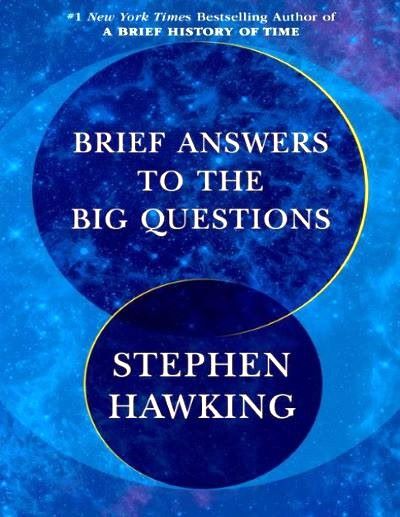
He adds that “one of the big questions we discussed was the origin of the universe, and whether it required a God to create it and set it going” (Brief Answers to the Big Questions, ch. 1).
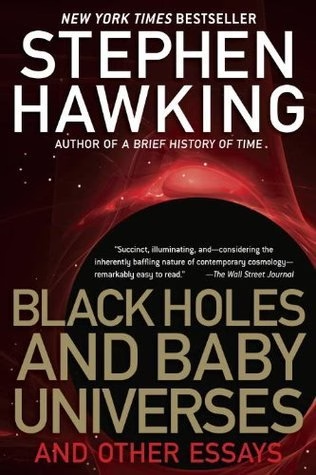
He liked the coincidence of his own birth date. In Black Holes and Baby Universes (1993) he writes: “I was born on January 8, 1942, exactly three hundred years after the death of Galileo. However, I estimate that about two hundred thousand other babies were also born that day” (ch. 1, “Childhood”).
The joke is typical. He liked linking himself to Galileo, the scientist the Church had punished, and then deflating the grand claim with arithmetic.
That teenage question never left him. It simply got sharper tools. Physics offered one way to ask whether the universe needed a first push, and Hawking spent his career on exactly that.
What did “the mind of God” really mean?
When Hawking wrote “the mind of God,” he meant the laws of nature. The sentence that made the phrase famous ends A Brief History of Time (published 1 April 1988). Hawking says that if we find the answer to why we and the universe exist, “it would be the ultimate triumph of human reason” because “then we would know the mind of God” (ch. 12). Many readers heard a believer there.
He spent years correcting that.
In Brief Answers to the Big Questions, he is blunt about it: “I use the word ‘God’ in an impersonal sense, like Einstein did, for the laws of nature, so knowing the mind of God is knowing the laws of nature.” Right before that, he draws the line most people want drawn: “One could define God as the embodiment of the laws of nature.
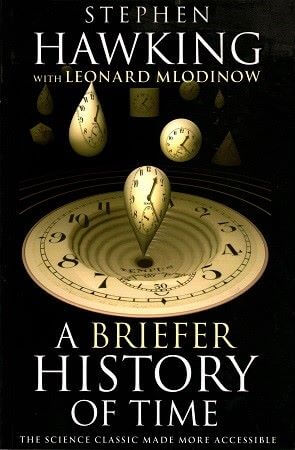
However, this is not what most people would think of as God. They mean a human-like being, with whom one can have a personal relationship” (ch. 1).
There is also a small publishing confession in Black Holes and Baby Universes. In an essay about the reception of his bestseller, he mimics the formula of reviews of his book and admits: “In the proof stage I nearly cut the last sentence in the book, which was that we would know the mind of God.
Had I done so, the sales might have been halved” (ch. 5). So the most quoted phrase in his career was almost deleted, and it may have helped sell the book. I find that both funny and revealing.
In 2014 he cleared it up one more time, in an interview with the Spanish newspaper El Mundo. He said that by “we would know the mind of God” he meant “we would know everything that God would know, if there were a God, which there isn’t,” and then: “I’m an atheist.”
That quote is from the interview as reported by NBC News, not from any of his books, and I could not find the word “atheist” in the six of his books I searched for it.
Why did the Pope’s advice in 1981 matter so much?
It matters because it was the moment Hawking’s physics touched the Church’s doctrine head on. In 1981 he attended a cosmology conference organised by the Jesuits in the Vatican.
In A Brief History of Time (ch. 8) he writes that the participants had an audience with the Pope, who “told us that it was all right to study the evolution of the universe after the big bang, but we should not inquire into the big bang itself because that was the moment of Creation and therefore the work of God.”
Then comes one of his driest lines.
He was glad the Pope “did not know the subject of the talk I had just given at the conference,” which put forward the possibility that “space-time was finite but had no boundary, which means that it had no beginning, no moment of Creation.”
That idea, the no-boundary proposal, is the backbone of his argument about God. If you picture the universe like the surface of the Earth, finite but without an edge, you never reach a first point where someone had to start it.
In A Brief History of Time he draws the conclusion in two short sentences: “So long as the universe had a beginning, we could suppose it had a creator. But if the universe is really completely self-contained, having no boundary or edge, it would have neither beginning nor end: it would simply be. What place, then, for a creator?” (ch. 8).
He was not hostile to the Church as an institution. Years later, in My Brief History (2013), he describes being awarded the Pius XI Medal by the Pontifical Academy of Sciences.
His first reaction was irritation, because he had just watched a television episode about Galileo’s trial. “At first I felt like indignantly refusing it, but then I had to admit that the Vatican had ultimately changed its mind about Galileo.”
He went to Rome and, as he recalls it, “Pope Paul VI got down from his throne and knelt by my side.”
Did his early books rule God out?
They did not, and he was careful about it. In A Brief History of Time he accepts that a universe with a starting point still leaves room for a creator: “An expanding universe does not preclude a creator, but it does place limits on when he might have carried out his job!” (ch. 1).
In the same book he asks whether a unified theory needs a creator at all: “Or does it need a creator, and, if so, does he have any other effect on the universe? And who created him?” (ch. 12).
The sharpest example of his caution is a radio interview. In the BBC programme Desert Island Discs, broadcast on Christmas Day 1992 and printed at the end of Black Holes and Baby Universes, the host Sue Lawley asked whether his theory left “no place for God.”
Hawking replied that the way the universe began “would be determined by the laws of physics. One wouldn’t have to say that God chose to set the universe going in some arbitrary way that we couldn’t understand.”
Then he added the sentence that matters most here: it “says nothing about whether or not God exists,” and shows only that “He is not arbitrary.”
Lawley pushed again: “many people do feel you have effectively dispensed with God.” His answer is worth reading slowly: “All that my work has shown is that you don’t have to say that the way the universe began was the personal whim of God. But you still have the question: Why does the universe bother to exist? If you like, you can define God to be the answer to that question” (ch. 14).
He also kept morality in a separate box. When Lawley asked how he accounted for love and faith, he answered: “Love, faith, and morality belong to a different category to physics. You cannot deduce how one should behave from the laws of physics.”
Few debates between science and religion are this modest on the science side.
Another early idea deserves a mention because it gave him his best God joke. Einstein had objected to quantum theory with the line “God does not play dice.” Hawking, whose own work on black holes leans on quantum theory, replied that “all the evidence indicates that God is an inveterate gambler and that He throws the dice on every possible occasion” (Black Holes and Baby Universes, ch. 8).
Where does he say God would have no freedom at all?
In his essays on the origin of the universe, Hawking pushes the creator’s job description down to almost nothing. In “The Origin of the Universe” (ch. 9 of Black Holes and Baby Universes), he first grants the traditional view: “These laws may have been ordained by God, but it seems that He does not intervene in the universe to break the laws.”
Then he asks what is left. If the no-boundary idea is right, “the laws of physics would hold even at the beginning of the universe, so God would not have had the freedom to choose the initial conditions.”
In the closing essay on determinism, he turns the same logic on everyday life. It “doesn’t make much difference whether this determinism is due to an omnipotent God or to the laws of science,” he writes, because “one could always say that the laws of science are the expression of the will of God.”
Then comes the jab: can one “really believe that God chose all the trivial details, like who should be on the cover of Cosmopolitan?” (ch. 12, “Is Everything Determined?”).
It is a joke, but it carries an argument. A God who micromanages every detail looks very different from a God who only authors the laws.
Why did The Grand Design cause such an uproar?
Because it dropped the diplomacy. The Grand Design, co-written with Leonard Mlodinow and published in September 2010, opens with a dismissal of an entire discipline: “Traditionally these are questions for philosophy, but philosophy is dead” (ch. 1).
The question it asks next is “Did the universe need a creator?” It answers near the end: “Because there is a law like gravity, the universe can and will create itself from nothing… Spontaneous creation is the reason there is something rather than nothing, why the universe exists, why we exist. It is not necessary to invoke God to light the blue touch paper and set the universe going” (ch. 8).
The book also takes on the idea that God is the author of the laws. In chapter 2, he calls it “no more than a definition of God as the embodiment of the laws of nature,” and adds that using it “merely substitutes one mystery for another.” In chapter 8 he turns to the first-cause argument: “It is reasonable to ask who or what created the universe, but if the answer is God, then the question has merely been deflected to that of who created God.”
Newspapers ran with it. In Brief Answers he describes one front page: “A few years ago, The Times newspaper ran a headline on the front page which said ‘Hawking: God did Not Create Universe.’ … They made it look like a duel between us.
But I don’t have a grudge against God.” That is a revealing sentence. He read the headline as a boxing match he never signed up for.
Reaction came from every direction. The Christian Century collected responses from faith leaders. Rowan Williams, then Archbishop of Canterbury, wrote in the Times: “Belief in God is not about plugging a gap in explaining how one thing relates to another within the universe.”
Britain’s Chief Rabbi Jonathan Sacks said, “Science is about explanation. Religion is about interpretation.” On the science side, the critical reception was split. Richard Dawkins welcomed the stance on God, while Roger Penrose noted that M-theory, the framework the book leans on, lacks observational support, and Oxford’s John Lennox argued that the central claim contains logical errors.
I think the criticism of the physics deserves more attention than the criticism of the theology.
Whether M-theory is correct is a scientific question, and The Grand Design itself calls it “the only candidate for a complete theory of the universe” while admitting that its finiteness “has yet to be proved” (ch. 8).
What does his last book say about God?
His final position, published in October 2018 after his death, is the clearest. Brief Answers to the Big Questions appeared on 16 October 2018 with a foreword by Eddie Redmayne, an introduction by Kip Thorne and an afterword by his daughter Lucy.
Its first chapter is titled “Is There a God?”
He starts by setting the tone: “I have no desire to tell anyone what to believe, but for me asking if God exists is a valid question for science. After all, it is hard to think of a more important, or fundamental, mystery than what, or who, created and controls the universe.”
Then he gives the scientific answer in two moves. First, the energy argument: “It means that if the universe adds up to nothing, then you don’t need a God to create it.
The universe is the ultimate free lunch.” Second, the time argument, which has become his best-known sentence on the subject: “When people ask me if a God created the universe, I tell them that the question itself makes no sense. Time didn’t exist before the Big Bang so there is no time for God to make the universe in.”
He does not leave it as a lecture. He asks, in plain language, the question a believer would ask: “did God create the quantum laws that allowed the Big Bang to occur? In a nutshell, do we need a God to set it up so that the Big Bang could bang?” His reply is gentle: “I have no desire to offend anyone of faith, but I think science has a more compelling explanation than a divine creator.”
Then comes the personal verdict: “Do I have faith? We are each free to believe what we want, and it’s my view that the simplest explanation is that there is no God. No one created the universe and no one directs our fate. This leads me to a profound realisation: there is probably no heaven and afterlife either. I think belief in an afterlife is just wishful thinking.”
His closing thought in that chapter is not bleak. “We have this one life to appreciate the grand design of the universe, and for that I am extremely grateful.” Even his joke about meeting God comes with a physicist’s twist: “if there were such a God, I would like to ask however did he think of anything as complicated as M-theory in eleven dimensions.”
How did ALS shape the way he thought about God?
Hawking never said that his illness caused his atheism, and I do not want to claim it for him. His stated reasons were scientific. But he did address the old idea that suffering is a divine verdict.
In Brief Answers he writes: “For centuries, it was believed that disabled people like me were living under a curse that was inflicted by God. Well, I suppose it’s possible that I’ve upset someone up there, but I prefer to think that everything can be explained another way, by the laws of nature.”
The way he describes the diagnosis in Black Holes and Baby Universes is plain and unsentimental. At twenty-one he learned that he had “an incurable disease that was likely to kill me in a few years.” His first reaction was the question anyone would ask: “How could something like that happen to me? Why should I be cut off like this?”
What stopped the self-pity was a boy on the hospital ward: “I had seen a boy I vaguely knew die of leukemia in the bed opposite me… Whenever I feel inclined to be sorry for myself, I remember that boy” (ch. 3, “My Experience with ALS”).
He did not die. “In fact, although there was a cloud hanging over my future, I found to my surprise that I was enjoying life in the present more than I had before.” Half a century later, in My Brief History, he sums it up: “At the time, I thought my life was over and that I would never realize the potential I felt I had. But now, fifty years later, I can be quietly satisfied with my life.”
Notice what is missing from those passages. He never asks God to explain, and he never blames God. He moves straight to work, family and gratitude. That is where I find the most human part of his answer.
On what comes after death, he was as direct as ever. In a 2011 interview with the Guardian, reported by CBS News, he said: “There is no heaven or afterlife for broken down computers; that is a fairy story for people afraid of the dark.”
That is an interview quote, not a book quote. In Brief Answers, the language is milder but the position is the same: “I think that when we die we return to dust. But there’s a sense in which we live on, in our influence, and in our genes that we pass on to our children.”
What do people get wrong about Hawking and God?
Four mistakes come up again and again, and each is easy to check.
“The mind of God” proves he believed. It does not. As shown above, he defined the phrase himself as the laws of nature.
He converted before he died. This is a hoax. After he died on 14 March 2018, a Facebook post claimed he asked to visit the Vatican and said “Now I believe” after Pope Francis blessed him.
A fact-check by The Washington Post, reprinted by the Valley News found the story fabricated, and noted that the photo used was from 2016, nearly two years before his death.
The dinner-table line from the film is a quote from Hawking. The 2014 biopic The Theory of Everything, directed by James Marsh and based on Jane Hawking’s memoir, has a scene in which Stephen says, as quoted in a review of the film, “A physicist can’t allow his calculations to be muddled by belief in a supernatural creator.”
That is movie dialogue. I searched six of his books for it and found nothing like it.
The film earned about US$123 million worldwide and won Eddie Redmayne the Best Actor Oscar, and Hawking approved of it, but a screenplay is not a primary source.
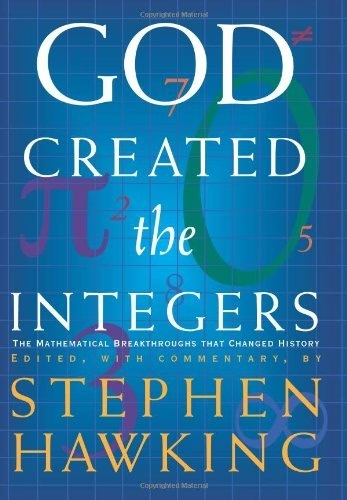
“God created the integers” is his motto. The line is the mathematician Leopold Kronecker’s. Hawking’s 2005 anthology God Created the Integers borrows it for the title, and in his own commentary he introduces Kronecker as the man who “left us with the quotation, ‘God created the integers, all else is the work of man,’ used as the title of this book.” It is a joke about whole numbers, not a statement of faith.
Where he is strongest, and where he leaves a gap
I think Hawking is strongest when he refuses to claim more than he can show. “I do not want to give the impression that my work is about proving or disproving the existence of God,” he writes in Brief Answers. “My work is about finding a rational framework to understand the universe around us.” That restraint is why his argument is hard to wave away.
He is not saying that physics has disproved God. He is saying that the explanation does not need one.
He is also honest about the weak point. In the Desert Island Discs interview, he concedes that “you still have the question: Why does the universe bother to exist?” and in Brief Answers he asks whether God created the quantum laws themselves.
Both questions point past what his theory can reach. A believer can say that is exactly where God belongs, and Hawking never claimed to have an experiment that shuts that door. His last answer was “the simplest explanation,” which is a judgment about parsimony, not a proof.
The second gap is human rather than scientific. He said himself that love, faith and morality belong to “a different category to physics.” If so, the physics-only case for atheism leaves much of what religion is actually used for untouched.
People rarely pray to explain the Big Bang. Hawking understood this. In Brief Answers he even writes that “people will always cling to religion, because it gives comfort, and they do not trust or understand science.” I read that sentence as both a criticism and an admission of how hard that comfort is to replace.
What can Hawking’s answer teach us today?
Hawking’s real lesson is how to disagree about the biggest question without contempt. That matters now, because the number of people who answer the God question with “no” or “not sure” keeps growing.
The Pew Research Center’s 2023 to 2024 survey of more than 36,000 US adults, published in February 2025, found that 62% of US adults are Christian, down from 78% in 2007, while 29% are religiously unaffiliated, up from 16% in 2007. Whether you sit in the first group or the second, you share a public square with the other.
Here are five lessons I take from reading Hawking on this subject. They are my own reading, not a summary of his.
Name the question before you answer it. “How did the universe begin?” and “What should I do with my life?” are different questions. He answered the first with physics and said plainly that the second is a “different category.”
Define your words. Half the fight over “the mind of God” came from people meaning different things by “God.” Settling the definition first would have saved a lot of headlines.
State your view without recruiting. “I have no desire to tell anyone what to believe” is a rare sentence from someone with a bestseller and a global audience. It shows you can be firm and still leave the other person’s conscience alone.
Let humour do some of the heavy lifting. The Cosmopolitan joke and the “ultimate free lunch” land harder than a footnote would. Hard arguments go down easier when the person making them does not seem to be angry.
Gratitude does not need an afterlife. “We have this one life to appreciate the grand design of the universe, and for that I am extremely grateful.” I would take that over many sermons. If you want a companion text on finding purpose under pressure, I wrote about it in my piece on Man’s Search for Meaning.
How did he leave the world?
Hawking died on 14 March 2018 at the age of 76. On 15 June 2018, during a service of thanksgiving, his ashes were buried in Westminster Abbey, between the graves of Sir Isaac Newton and Charles Darwin. An atheist laid to rest in a church between two giants of physics and biology is, I think, the sort of irony he would have enjoyed.
His daughter Lucy closes Brief Answers with a line that shows the private man. She writes that she holds on to “the last words my father said to me, that I had been a lovely daughter and that I should be unafraid.” She adds: “My father never gave up, he never shied away from the fight.”
Quick answers
Was Stephen Hawking an atheist? Yes. He said “I’m an atheist” in a 2014 interview with El Mundo, and in Brief Answers he wrote that “the simplest explanation is that there is no God.”
Did Stephen Hawking believe in an afterlife? No. He called belief in an afterlife “wishful thinking” and said “when we die we return to dust.”
Did Stephen Hawking think science and religion conflict? He thought the conflict is old and real when God is imagined as a person who intervenes: “If you accept, as I do, that the laws of nature are fixed, then it doesn’t take long to ask: what role is there for God?” (Brief Answers, ch. 1).
Did Hawking convert before he died? There is no evidence for it. A viral claim to that effect was fact-checked and found fabricated.
Conclusion
Stephen Hawking on God is not a story of a scientist who attacked faith. It is the story of a scientist who followed one question, whether the universe needed a starting hand, until the answer left no job for a creator. He did it politely in the 1980s and 1990s, bluntly in 2010, and with a smile in 2018.
If you want the shortest version, read the first chapter of Brief Answers to the Big Questions.
If you want to see how he got there, read the Desert Island Discs interview at the end of Black Holes and Baby Universes. Readers who enjoy philosophy and popular science will get the most from this.
Readers who want an argument that physics proves or disproves God will not find one, and Hawking would have told them so himself.







