
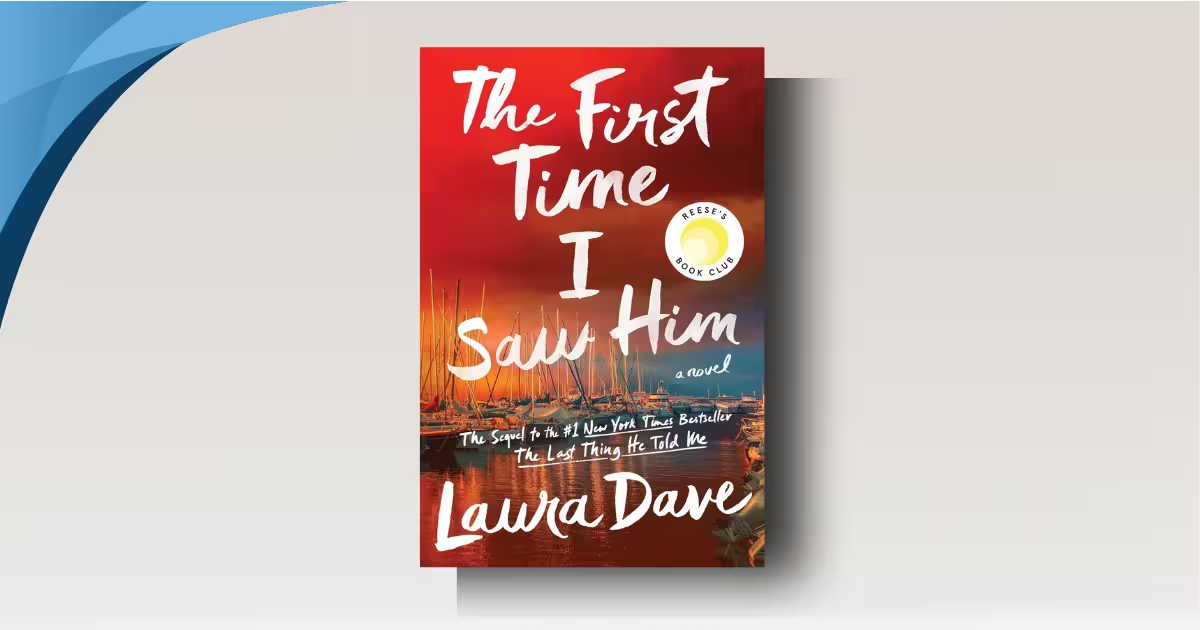
What happens when the man who shattered your world to save it suddenly steps back into your life after years of silence? That heart-stopping moment is exactly where Laura Dave plunges us in The First Time I Saw Him, and let me tell you, it hit me harder than I expected—like a wave crashing over everything I thought I’d buried.
This gripping sequel explores whether love can survive betrayal, disappearance, and relentless danger when forgiveness becomes the only path to family reunion.
Laura Dave’s first book, The Last Thing He Told Me, sold over six million copies worldwide, topped the New York Times bestseller list for months, and became a Reese’s Book Club pick that sparked endless discussions about trust and protection.
This sequel, released January 6, 2026, and also chosen for Reese’s Book Club, has already earned rave early reviews—Publishers Weekly calls it a “heart-pounding sequel,” while Kirkus highlights its satisfying resolution of loose threads from the original.
You’ll love The First Time I Saw Him if you crave emotional thrillers with strong female leads, complicated family dynamics, and twists that keep you up all night—perfect for fans of Lisa Jewell or Liane Moriarty. It’s not for you if you prefer pure action without deep character introspection or if you haven’t read the first book (seriously, start there or you’ll miss the emotional weight).
Table of Contents
1. Introduction
The First Time I Saw Him by Laura Dave, published by Scribner (an imprint of Simon & Schuster) on January 6, 2026, is the long-awaited sequel to her blockbuster The Last Thing He Told Me (2021).
Clocking in at around 288 pages, it’s a Reese Witherspoon Book Club selection that continues Hannah Hall’s story with the same pulse-pounding mix of suspense, family drama, and raw emotion that made the original a global phenomenon.
2. Background
The story builds directly on the events of The Last Thing He Told Me, where Hannah Hall marries Owen Michaels, only for him to vanish, leaving a note: “Protect her.” Hannah uncovers that Owen was living under a false identity to shield his daughter Bailey from her grandfather Nicholas Bell, a powerful mob lawyer tied to an organized crime syndicate.
No major historical events anchor this one—it’s firmly contemporary, set in a post-pandemic world where digital surveillance, hidden identities, and lingering threats feel all too real.
3. The First Time I Saw Him summary
Five years have passed since Owen disappeared. Hannah and Bailey have built a careful new life in Southern California—Hannah thriving as a wood artisan with her own furniture collections, Bailey now 22, graduated from college, working her first job, and even writing a musical.
They’ve cautiously reconciled with Nicholas Bell, Bailey’s grandfather, who’s been providing quiet protection in exchange for the fragile peace Owen’s testimony bought.
The story opens with that electric prologue I couldn’t shake. Hannah is at the Pacific Design Center in Los Angeles for a First Look exhibition, debuting her white oak pieces. She’s tired, doing small talk, waiting for Bailey and her new boyfriend Shep.
Then he appears—Owen, disguised with a buzz cut, broken nose, tattoos, backpack, still wearing the slim oak wedding ring Hannah made him. He bends to help her pick up dropped papers, says nothing revealing except, in a low voice only she’d recognize: “The could have been boys still love you” (a callback to their private phrase from the first book).
Then he’s gone, melting into the crowd. Moments later, Bailey arrives, smiling, unaware she just passed her father.
That brief encounter shatters everything.
The next morning, Hannah replays it obsessively. Soon, danger crashes in: a staged gas leak at home, a cryptic text warning them to flee, and the devastating news that Nicholas Bell has died—his protection gone.
The organized crime family, once held at bay, is coming for revenge. Hannah and Bailey activate their emergency plans—hidden cash, burner phones, safe houses, secret cars—and go on the run.
Owen, living in exile in New Zealand (working at a biodynamic vineyard under yet another identity), has been watching from afar. During his brief appearance, he planted a flash drive on Hannah containing clues, coordinates, and messages guiding their escape.
The chase becomes international: Los Angeles to safe houses across the U.S., then to the South of France and Paris, always one step ahead of the syndicate’s enforcers—specifically the vengeful children of Frank Pointe (or Campano Pointe in some references), the mob boss Nicholas once served.
The narrative weaves multiple timelines and perspectives. We get Hannah’s present-day desperation as she protects Bailey while grappling with her lingering love for Owen. Bailey, now an adult, wrestles with anger, hope, and her evolving bond with Hannah. Owen’s sections reveal his lonely years apart, his quiet planning, and his willingness to sacrifice himself.
Most surprising are the flashbacks to Nicholas—once the villainous mob lawyer—showing how he became entangled with Frank, their complicated friendship, and the tragic death of his daughter (Bailey’s mother), which Owen believed was retaliation.
Twists keep coming: Nicholas and Owen had been secretly collaborating before Nicholas’s death to dismantle the remaining threats. Frank’s children are relentless, but cracks in their loyalty emerge. Hannah and Bailey face close calls—car chases, near misses in European cities, moments of doubt about whether Owen is leading them to safety or a trap.
The climax unfolds in Paris and then on a quiet boat off the coast. Hannah, Bailey, and Owen finally reunite. No grand shootouts—just raw confrontations.
The remaining threats are neutralized not through violence but through Owen’s final clever play and Nicholas’s lingering influence. The family chooses forgiveness over vengeance.
They acknowledge the pain, the lies, the years lost, but decide to move forward together. The ending is bittersweet: they’re reunited, but forever changed, always glancing over their shoulders. Yet there’s hope—quiet mornings, shared glances, the sense that love, battered as it is, endured.
4. The First Time I Saw Him Analysis
4.1. The First Time I Saw Him Characters
Hannah remains the beating heart—resilient, practical, deeply loving. Her growth from bewildered new wife to fierce protector is complete; she’s honed escape skills, but her vulnerability when facing Owen again is devastating.
Bailey has matured beautifully—her bond with Hannah feels authentic and earned, the true triumph of both books. Owen’s sections humanize him; we see the toll of his choices, his quiet heroism.
The biggest surprise is Nicholas. Flashbacks reframe him from cold mob lawyer to a flawed man trying to protect his family, his friendship with Frank layered and tragic. Even secondary villains like Frank’s children get shades of gray.
Relationships evolve realistically—no easy forgiveness, but hard-won understanding.
5. The First Time I Saw Him Themes and Symbolism
Reading The First Time I Saw Him felt like the emotional payoff I’d been waiting for since finishing The Last Thing He Told Me. Laura Dave doesn’t just give us thrills—she uses the suspense to unpack big, messy human questions in a way that lingers.
Below, I’ll break down the major themes with full spoilers, drawing directly from the story, and explore them educatively: what they reveal about relationships, trauma, and healing, with some real-world psychological ties that made me reflect on my own life.
1. Forgiveness as an Active, Ongoing Choice (Not a One-Time Event)
This is the heart of The First Time I Saw Him. The title itself—“The First Time I Saw Him”—isn’t just about Owen’s disguised appearance at the exhibition; it’s about seeing people anew after betrayal, choosing to love the flawed version in front of you.
When Owen whispers “The could have been boys still love you” and vanishes again, Hannah’s world cracks open. Five years of building a life with Bailey, and one coded message undoes it all. Yet by the end, on that quiet boat off Antibes at dawn, Hannah, Bailey, and Owen sit together—not with grand declarations, but with exhausted acceptance.
They acknowledge the lost years, the lies, the abandonment. Bailey, especially, has to forgive the father who missed her graduations, performances, and everyday growth. She doesn’t erase the pain; she chooses to move forward anyway.
Educatively, this mirrors what psychologists call “radical forgiveness”—not condoning harm, but releasing its hold for your own healing. Studies on family estrangement (like those from psychologist Joshua Coleman) show that reconciliation often requires grieving the “ideal” relationship first.
Dave illustrates this beautifully: forgiveness here isn’t clean or instant. It’s Hannah deciding Owen’s sacrifice (hiding in New Zealand, orchestrating the whole escape) was rooted in love, even if it shattered them. Bailey’s arc—from angry teen to young woman who researches the Picasso painting clue and reunites with Owen at the museum—shows forgiveness as growth.
It teaches that holding onto resentment keeps you tethered to the past; letting go frees you to reclaim the present.
2. The Cost of Protective Love—and When It Becomes Destructive
Owen’s entire disappearance was an act of protection: exposing the Organization to save Bailey from her grandfather Nicholas’s world. But the sequel asks: At what point does “protecting” someone become controlling or harmful?
Nicholas Bell’s redemption arc drives this home. Once the menacing mob lawyer, he’s now the family’s quiet guardian.
He fakes his death (bribing a coroner) as part of Owen’s plan, then risks everything at Frank Pointe’s 80th birthday party in Èze—walking in alive, tablet full of evidence (racketeering, money laundering, extortion), demanding a permanent truce. When Frank grazes him with a bullet, Nicholas accepts exile (or implied death in some readings) so the family can live free.
His sacrifice echoes Owen’s: both men believe the ends justify the pain they inflict.
But The First Time I Saw Him doesn’t glorify it. Hannah calls out the “unholy mess” of love (nodding to the Harriet Selina epigraph). Quinn’s revelation—that she ordered the hit-and-run on Kate (Bailey’s mom) because Kate was asking dangerous questions—shows how “protection” can twist into vengeance across generations.
Frank’s line, “In this family, nothing ends and there’s always a cost,” underscores the cycle.
In real life, this theme connects to parental overprotection research (e.g., helicopter parenting studies showing it can stunt resilience). Dave educates us that true protection involves truth and trust, not unilateral secrets.
The family’s survival comes when they finally share the burden—deciphering clues together, making choices as a unit.
3. Chosen Family vs. Biological Ties—and Redemption Across Generations
The strongest bond isn’t blood: it’s Hannah and Bailey. Five years of cautious living forge them into a real mother-daughter unit, stronger than biology. Bailey calling Hannah “Mom” in the prologue hits harder in context.
Yet biological ties get nuance. Nicholas redeems himself by breaking the cycle his choices helped create. Owen (Ethan) returns not as hero, but humbled. Even Frank’s complicated friendship with Nicholas—flashbacks showing mutual respect amid crime—humanizes the “villain.”
This teaches about attachment theory: secure bonds can form outside biology through consistent care (Hannah stepping up for Bailey). It also touches intergenerational trauma—how Nicholas’s mob ties killed Kate, nearly destroyed Bailey, but his final act stops the bleed.
4. Resilience, Reinvention, and Finding Yourself in Loss
The e.e. cummings epigraph—“For whatever we lose (like a you or a me) / It’s always ourselves we find in the sea”—is woven throughout. The sea symbolizes escape (houseboat origins), danger (fleeing), and renewal (final boat reunion). Oak (Hannah’s medium, Owen’s ring) represents enduring strength.
Characters reinvent constantly: Owen as Luke the winemaker, Nicholas faking death, Hannah and Bailey mastering go-bags and fake passports. Their flight—from L.A. to Napa, Paris, Antibes—mirrors internal journeys. Bailey, once avoiding beaches, now tan and confident. Hannah turns paranoia into skill.
Educatively, this aligns with post-traumatic growth research (Tedeschi & Calhoun): adversity can foster deeper self-knowledge, stronger relationships, new priorities. The vineyard ending—Owen making wine, Hannah crafting bowls—symbolizes blending old skills into new life.
5. The Lingering Shadow of Secrets—and Moral Gray Areas
No clean justice: the Organization isn’t dismantled; it’s neutralized by blackmail. Frank’s heirs back off to protect their own kids. It’s messy, realistic. Secrets (Owen’s clues, Nicholas’s evidence) save them, but also prolong pain.
This probes ethical dilemmas: Is mutually assured destruction justice? The unresolved tension—will Quinn or Teddy ever retaliate?—mirrors real organized crime, where deals are fragile.
Final Thoughts
What stayed with me is how Dave uses suspense not for cheap twists, but to earn emotional depth. These themes educate quietly: love is messy, forgiveness hard-won, protection costly—but human connection endures.
In a world quick to cancel or ghost, the book gently argues for seeing people anew, flaws and all. If you’ve ever wrestled with forgiving someone who hurt you to save you, this one will resonate deeply.
6. Evaluation
Strengths/pleasant/positive experiences with book: The pacing is relentless yet never sacrifices emotion. Dave juggles timelines masterfully; every revelation feels earned.
The mother-daughter bond between Hannah and Bailey moved me to tears multiple times. Owen’s reappearance and the quiet reunion scene on the boat—perfectly understated, no melodrama.
Weaknesses/negative experiences with book: Some readers might find the resolution too neat; the crime family threat dissipates quicker than the buildup suggests. At 288 pages, a few more chapters exploring post-reunion life could have deepened the catharsis.
Impact: This one wrecked me emotionally. I finished it in two sittings, heart racing, then sat quietly thinking about my own family and what I’d forgive for love.
Comparison with Similar Books/Works
The First Time I Saw Him fits snugly into the domestic thriller genre, much like Liane Moriarty’s Apples Never Fall—both explore fractured families, missing persons, and buried secrets with sharp emotional insight and relatable character drama.
It also echoes Gillian McAllister’s works (Wrong Place Wrong Time or Famous Last Words), delivering twisty suspense around betrayal and moral dilemmas, though Dave leans harder into heartfelt forgiveness over pure psychological darkness.
Fans of Lucy Foley’s locked-room mysteries (The Paris Apartment) will appreciate the international chase and hidden identities, while Lisa Jewell’s family-secret thrillers (Then She Was Gone) match its blend of tension and relational depth.
Overall, it’s less cynical than Gillian Flynn’s edge but more redemptive, making it a comforting yet thrilling pick for readers craving closure amid the chaos.
Adaptation
The original became a hit Apple TV+ limited series starring Jennifer Garner as Hannah—critically acclaimed, though it altered some details (like locations).
Season 2, already in development with Garner returning, will likely adapt this sequel. No theatrical film, so no box-office figures, but the streaming success of season 1 reportedly drew millions of viewers worldwide.
7. Personal Insight with Contemporary Educational Relevance
Reading this in early 2026, amid rising concerns about digital privacy and identity theft (the FBI reported over 800,000 cybercrime complaints in 2024 alone, many involving stolen identities), Owen’s life in hiding feels eerily relevant.
The First Time I Saw Him quietly asks: In an age where we’re all trackable, what lengths would we go to protect loved ones? It’s a powerful reminder that forgiveness isn’t weakness—it’s survival.
Statistics show family estrangement affects nearly 27% of U.S. adults (per a 2023 Cornell study), often over betrayal or secrets. Dave’s story offers hope that reconciliation, though messy, is possible. (For more on family reconciliation resources).
8. The First Time I Saw Him Quotes
- From the prologue: “The could have been boys still love you,” Owen says. He isn’t looking at me when he says it, his voice low. The way you say hello. The way you say goodbye.
- Hannah reflecting post-reunion: “For whatever we lose (like a you or a me) / It’s always ourselves we find in the sea” — the epigraph that haunts the entire story.
- Owen to Hannah near the end: “I never stopped trying to get back to you. Every day was a step closer or a step that felt like failure.”
- Nicholas’s flashback realization: “I thought I was protecting them. Turns out I was just protecting myself from admitting I’d already lost them.”
9. Conclusion
Overall, The First Time I Saw Him is a worthy, heart-wrenching sequel that delivers thrills, tears, and a deeply satisfying resolution. Laura Dave sticks the landing, giving fans the closure we craved while leaving just enough ambiguity to feel real.
I recommend it wholeheartedly to anyone who loved the first book, fans of emotional suspense, or readers curious about forgiveness in impossible circumstances.
If you’re looking for a book that reminds you love can endure almost anything—this is it. Worth every sleepless night.







