
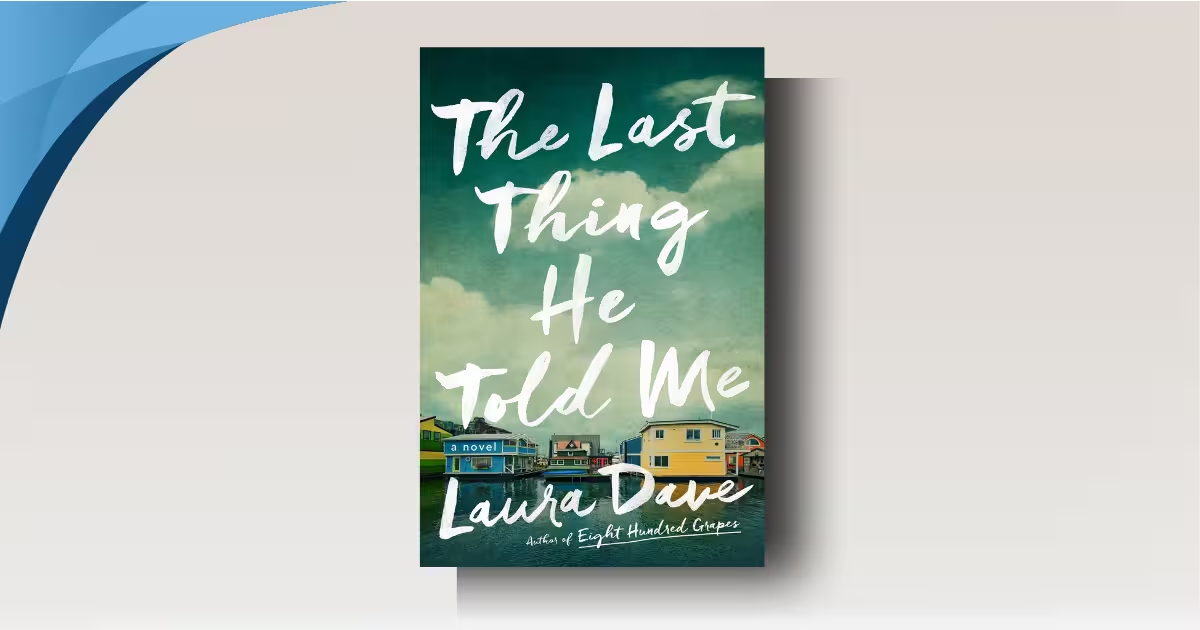
Have you ever trusted someone completely, only to question if you ever truly knew them at all? Laura Dave’s The Last Thing He Told Me masterfully preys on this universal fear, wrapping a gripping mystery in a poignant story of the families we choose.
The Last Thing He Told Me is a profound exploration of how love and the need to protect can force seemingly ordinary people to build lives upon elaborate deceptions, challenging the very foundations of trust and identity.
The narrative is built on the gradual erosion of protagonist Hannah’s certainty, supported by psychological themes of memory, trust, and trauma, as seen in real-world cases of assumed identities and the lengths individuals go to for a fresh start.
The Last Thing He Told Me is for the readers who enjoy domestic suspense with deep emotional cores, fans of authors like Liane Moriarty or Jessica Knoll, and anyone intrigued by stories about blended family dynamics.
Not for: Readers seeking a fast-paced action thriller or a conventional crime procedural; the pace is deliberate, focusing on emotional unraveling over procedural detail.
Table of Contents
1. Introduction
The Last Thing He Told Me is a bestselling novel by Laura Dave, published in 2021 by Simon & Schuster. Dave, also known for Eight Hundred Grapes and Hello, Sunshine, crafts a narrative that quickly captivated readers, leading to a 2023 Apple TV+ series adaptation starring Jennifer Garner.
The Last Thing He Told Me skillfully blends the suspense of a mystery with the intimate, character-driven depth of literary fiction, asking how well we can ever know the people we love.
2. Background
While not historical fiction, the novel is firmly rooted in a contemporary context that gives its plot terrifying plausibility: the tech boom of Silicon Valley, with its culture of ambition, staggering wealth, and potential for catastrophic fraud. It also taps into the modern anxiety of digital identity—how easy it is to curate, or erase, a life online.
The backdrop of The Shop’s scandal echoes real-life corporate downfalls like Theranos and Enron, where charismatic leaders built empires on lies. Furthermore, the story leverages the timeless, yet ever-relevant, complexities of the step-parent and step-child relationship, a dynamic becoming increasingly common.
3. The Last Thing He Told Me summary
Hannah Hall is a woodturner living a quiet, artistic life in a Sausalito houseboat with her new husband, Owen Michaels, and his resistant sixteen-year-old daughter, Bailey.
Her world shatters when Owen, a programmer at a hot tech startup called The Shop, disappears. His departure coincides with the very public collapse of his company, its CEO arrested for massive fraud.
Owen’s communication is limited to two cryptic notes. Hand-delivered by a young soccer player, Hannah’s reads: “Protect her” . Bailey receives a duffel bag left in her school locker containing over $600,000 and a note pleading, “Help Hannah. Do what she tells you. She loves you. We both do”. With authorities—including a cryptic U.S. Marshal named Grady Bradford—closing in, Hannah is thrust into the role of Bailey’s sole protector, a role the teenager fiercely resists.
As Hannah investigates, she discovers that the man she married is a phantom. A friend’s investigation reveals “no Owen Michaels exists that fits your husband’s biography”. The life story he gave—growing up in Newton, attending Princeton—is a complete fabrication.
The only clue is Bailey’s hazy childhood memory of attending a wedding and a football game in Austin, Texas, which is also the home base of Marshal Bradford.
Defying authorities, Hannah takes Bailey to Austin to trace this memory. Their search leads them to Professor Tobias Cookman, who confirms Owen was once his terrible math student at the University of Texas.
He provides a class roster, stating, “I remember he was a really good kid”, and mentions Owen was distracted by a brilliant female classmate. This woman, they deduce, was Bailey’s mother, Olivia—meaning Owen also lied about when and where he met his first wife.
The trail eventually leads to a courthouse in a small Texas town, where they uncover the shocking truth. Owen’s real name is Ethan J. Miller. As a young man, he witnessed his best friend, Bobby V., murder a man.
Threatened into silence by Bobby’s powerful family, he testified weakly, helping Bobby get a light sentence. Upon release, Bobby, now a dangerous criminal, came after Ethan, vowing revenge.
To save himself and his baby daughter, Bailey (whose real name is Grace), Ethan, with the help of a sympathetic marshal, was given a new identity: Owen Michaels. Olivia’s tragic death was not an accident but a hit ordered by Bobby.
Owen disappeared not because of The Shop’s fraud—though it threatened to expose his fake identity—but because Bobby had found him again. He fled to draw the threat away from Hannah and Bailey. The novel’s climax occurs in a secluded Texas location where Owen has lured Bobby.
Hannah and Bailey arrive, and in a tense confrontation, Hannah is forced to make a split-second decision to save Owen’s life, finally forging an unbreakable bond with Bailey.
In the end, Owen turns himself in to Grady Bradford for his role in The Shop’s fraud, accepting his fate to finally end the running. The family finds a fragile, hopeful new beginning, with Hannah and Bailey’s relationship permanently cemented.
The last lines show them waiting for Owen, together: “Bailey takes my hand. She holds it, and we stand there like that—waiting for him”.
4. The Last Thing He Told Me Analysis
4.1. The Last Thing He Told Me Characters
Hannah Hall: Our protagonist’s strength is her quiet resilience, born from her own childhood abandonment. She is a maker, a fixer—someone who turns raw wood into something beautiful and functional.
This skill becomes a metaphor for her attempt to mend her fractured family. Her evolution from a tentative stepmother to Bailey’s fierce protector and ally is the emotional backbone of the story. Her motivation is twofold: love for Owen and a deep-seated vow to not repeat her mother’s abandonment.
Bailey Michaels: A brilliantly portrayed teenager, armored in sarcasm and purple hair. Her hostility towards Hannah is rooted in grief for her mother and fear of losing her father’s sole attention.
Her journey is one of terrifying disillusionment, as “the person you thought you knew, your favorite person, starts to disappear, a mirage”. Her gradual alliance with Hannah is earned, not given, making their final unity profoundly moving.
Owen Michaels/Ethan Miller: He is the mystery. The charming, devoted father and husband is also a man who built a life on a lie. The novel forces us to reconcile these two truths. His primary, overwhelming motivation is protection. Every lie, every stolen identity, was an act of love for his daughter. He is a tragic figure who sacrificed his authentic self to give Bailey a safe one.
Grady Bradford: Represents the ambiguous line between law and justice. He appears menacing but is ultimately the marshal who helped create “Owen” and is now trying to save him. He embodies the system’s complexity—sometimes an obstacle, sometimes the only path to salvation.
4.2. The Last Thing He Told Me Themes and Symbolism
The Architecture of Identity: The core theme asks what makes us who we are. Is it our name, our past, or the love we give and receive? Owen sheds his identity like a skin, suggesting the self can be chosen and rebuilt. Hannah’s woodturning is direct symbolism for this: “it was also a peeling back, to seeing what was inside the wood, what the wood had been before”.
Protection vs. Deception: The novel constantly questions whether lying to protect someone is justifiable. Owen’s entire life is this paradox. His final note to Bailey acknowledges the cost: “I can’t help this make sense. I’m sorry”.
Chosen Family: The relationship between Hannah and Bailey is the heart of The Last Thing He Told Me. It argues that family is not solely defined by blood but by choice, sacrifice, and showing up. Their bond is literally forged in a life-and-death crisis, transcending their difficult start.
The Haunting Past: The past is not passive; it is an active, hunting force (Bobby V.). This reflects a psychological truth: unaddressed trauma and secrets will always resurface.
5. Evaluation
1. Strengths: The pacing is exceptional—a slow-burn unraveling that becomes utterly propulsive. The dual mystery (corporate fraud + personal identity) is cleverly intertwined. Most impressively, Dave makes the emotional journey of Hannah and Bailey as compelling as the central whodunit. Their relationship’s evolution feels authentic and earned.
2. Weaknesses: The corporate fraud plot, while a good catalyst, is ultimately a MacGuffin; readers deeply invested in that financial thriller element may find it resolved too simply. Some may also find the character of Bobby V., the villain from the past, to be a slightly underdeveloped archetype of evil compared to the nuanced main characters.
3. Impact: The book resonates on a deep emotional level. It lingers because it moves beyond “what happened” to explore the devastating “what does it mean?” of betrayal and trust. It leaves you contemplating the lengths you would go to for your family.
4. Comparison with Similar Works: It shares DNA with Gone Girl in its dissection of a mysterious spouse, but is ultimately less cynical and more heartfelt. It is closer in spirit to Chris Bohjalian’s The Flight Attendant, where a personal crisis forces a reckoning with a hidden past.
5. Adaptation – The Apple TV+ Series: The 2023 adaptation faithfully captures the plot’s suspense and the central relationship. Jennifer Garner embodies Hannah’s steadiness and strength, while Angourie Rice is a perfect Bailey. The series expands on subplots (like Jules’s role) and visualizes the lush Sausalito and Austin settings beautifully.
However, the internal monologue and deeper psychological layers of the book are naturally harder to translate.
The series was a critical success, praised for its performances and tension, though some purists noted the book’s richer emotional texture.
It performed well for Apple TV+, bolstering the platform’s reputation for quality literary adaptations, though specific box-office style numbers are not typically released for streaming series.
6. Personal Insight & Contemporary Relevance
Beyond its thriller elements, The Last Thing He Told Me offers a stark lesson in digital age vulnerability. Owen’s ability to reinvent himself pre-dates the internet, but today, his task would be paradoxically easier and harder.
According to a 2023 Javelin Strategy report, identity fraud cases affected about 1 in 3 Americans in the past year, showing how fluid identity can be. Furthermore, the story mirrors real-life cases of individuals in witness protection or fleeing abuse, who must sever their pasts to survive.
On a psychological level, the novel speaks to the “quantified self” trend—the idea that we are the sum of our data, our posts, our digital trail.
Owen’s story asks what remains when that trail is falsified. It’s a poignant reminder that in a world obsessed with personal branding and curated online histories, the most authentic identity might be found in our private, sacrificial acts of love, not in any public record.
7. The Last Thing He Told Me quotes
- “Protect her.” (Owen’s note to Hannah)
- “You are my whole life, Dad.” (The closing of Owen’s note to Bailey)
- “It’s better than sitting here.” (Hannah to Bailey, justifying their quest to Austin)
- “Who does this to his family?” (Elenor at the church).
- “Someone without a choice… That’s who does this to his family.” (Hannah’s response)
- “We always have a choice.” (Grady and Elenor, a recurring motif challenging Owen’s actions)
- “He lied to me.” (Bailey’s simple, devastating summary)
8. Conclusion
The Last Thing He Told Me is a triumph of domestic suspense. Laura Dave has written a novel that is as much a page-turner as it is a moving portrait of an unconventional family forged in crisis.
Its power lies not in shocking twists for their own sake, but in how those twists force characters—and readers—to confront difficult questions about love, truth, and protection.
Recommendation: I highly recommend this book to anyone who loves a mystery that makes you feel, or a family drama that keeps you on the edge of your seat. It’s perfect for book clubs, promising rich discussion about morality and marriage.
While the tech scandal sets the plot in motion, the story’s true significance is timeless: a reminder that the strongest bonds are often tested in the wreckage of beautiful lies.
Final Reflection: This book stays with you because, beneath the thriller exterior, it is a fundamentally hopeful story. It argues that even when built on falsehoods, real love can become the truest thing of all.







