
Last updated on October 8th, 2026 at 09:29 am
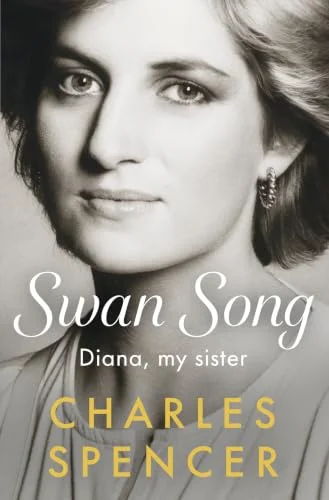
Swan Song: Diana, My Sister is Charles Spencer’s 384-page memoir of growing up beside Princess Diana and of the six days in September 1997 when he wrote and delivered one of the most famous funeral speeches of the modern age. It is warm, funny and heartbreaking whenever it stays inside the nursery at Park House.
It turns cold and furious the moment it reaches the Palace, the tabloids and the man who is now King. If you want to know what the Swan Song Charles Spencer published in September 2026 actually says, what it gets right, where it stumbles (including one factual error he has already apologised for), and whether it deserves a place on your shelf, this review gives you all of it.
Table of Contents
Swan Song at a Glance
What it is: A sibling memoir by Charles Spencer, 9th Earl Spencer, published on 22 September 2026 by Penguin Press (US) and Michael Joseph (UK), 384 pages. Each of its 31 chapters takes its title from a phrase in his 1997 eulogy, and the full eulogy closes the book.
The core claim: Diana was not the miserable child of the biographies. She was a happy, maternal, stubborn girl who was failed by her schools, sold a fairytale by the Royal Family and hunted to death by the press.
The biggest revelations: Spencer says King Charles (then Prince Charles) told him on the phone before the funeral, “we’ll forget her soon enough”; that Charles wanted William and Harry to walk behind the coffin; that the Queen offered to restore Diana’s HRH title on the train home from the funeral; and that Spencer dodged a Palace attempt to vet his eulogy by pretending he had left it at home.
The Bashir chapter: A first-hand account of how Martin Bashir used forged bank statements to reach Diana in 1995, backed by the notes Spencer kept and later gave to Lord Dyson’s inquiry.
His diagnosis: Spencer argues Diana had undiagnosed ADHD and Rejection Sensitive Dysphoria, which he believes explains her school “failure”, her self-doubt and her pain at press attacks. This is his opinion, not a clinical finding.
The weak spots: Score-settling, long stretches about Spencer himself, and a factual error about Piers Morgan that he publicly apologised for within a week of publication.
Verdict: A moving, partisan, uneven book. Essential for anyone who remembers 1997. Read it as a brother’s testimony, not as neutral history.
Reader Recommendation
You will love it if:
- You watched the funeral in 1997 and still remember the “most hunted” line.
- You want Diana’s childhood from the one person who shared a nursery with her.
- You read Spare and want the Spencer side of the family story.
- You care about press ethics, the Bashir scandal or how a state funeral is put together in six days.
You will bounce if:
- You want a balanced biography with sources and footnotes for every claim.
- You admire King Charles and dislike reading him painted as petty and cold.
- You have little patience for an author who returns often to his own grievances, divorces and battles with the tabloids.
- You expect new detail on the Paris crash itself. Spencer offers anger and suspicion, not investigation.
What Is Swan Song: Diana, My Sister About?
Swan Song: Diana, My Sister is a memoir about one sibling relationship, told against the backdrop of one of the most watched lives of the twentieth century. Charles Spencer was born in 1964, nearly three years after Diana, and he writes that they shared a roof every night for roughly the first seven years of his life.
He opens Swan Song with a line that sets the tone: when people ask what it was like to grow up with Diana, he says he does not know what it was like “not to grow up with her.”
Title and Author Information
- Title: Swan Song: Diana, My Sister
- Author: Charles Spencer, 9th Earl Spencer
- Publishers: Penguin Press (US, hardcover ISBN 9798217379743) and Penguin Michael Joseph (UK)
- Publication date: 22 September 2026 (simultaneous UK and US release)
- Length: 384 pages; audiobook of 9 hours 47 minutes read by the author, according to Penguin Random House
- Commercial status: Penguin Random House lists it as a #1 New York Times bestseller
Context: Genre and the Author’s Credentials
This is memoir, not biography. Spencer says plainly in the introduction that he has “never read a biography of Diana.” His authority comes from proximity: he was her younger brother, he was named guardian to William and Harry in her will (a role he notes had no legal force while their father lived), and he gave the eulogy at Westminster Abbey on 6 September 1997.
He also brings a professional toolkit. According to the book’s author note, he worked as an on-air correspondent for NBC News from 1986 to 1995, has written eight history books and one earlier memoir, and is a fellow of the Royal Historical Society.
He uses that reporter’s training openly, describing how he built the eulogy the way he built TV scripts.
Purpose: What Is Swan Song Trying to Prove?
Spencer states his aim in the introduction. Pushed by the approaching 30th anniversary of Diana’s death and tired of declining documentary requests (he names Andrew Morton and Alastair Campbell among those who asked), he decided to “tell things how I remember them.”
He wants younger readers who know Diana only as a tragic face to “get” who she was, and he wants older readers to see the eulogy’s themes from the inside.
He also admits Swan Song is “openly positive” and that he will not go looking for faults. That honesty matters, because it tells you exactly what kind of witness you are reading.
Background: Why a Eulogy Became a Book
On 31 August 1997, Diana died after a car crash in the Pont de l’Alma tunnel in Paris, alongside Dodi Fayed and the driver Henri Paul. She was 36. Spencer was at home in Cape Town with his four young children. Within hours he stood at his gate and told reporters that every editor who had paid for intrusive photographs had “blood on their hands today.”
Six days later he delivered the eulogy. Swan Song uses that speech as its spine. Every chapter title is a phrase from it: “A world in shock…”, “Sing openly, as you planned”, “The opposite end of the moral spectrum”, and so on. Chapters alternate between the funeral week and the decades before it.
It is a clever structure, and it means the book reads like an annotated eulogy, with each line opened up and filled with memory.
The scale of that week is part of the story. Spencer cites a wedding TV audience of 750 million in 74 countries, a funeral audience estimated at up to 2.5 billion, 580,000 online condolence messages on the monarchy’s website, and 43 condolence books at Kensington Palace with queues of up to 12 hours.
These are the figures as he gives them; the funeral audience in particular is a widely repeated estimate rather than a measured number.
Swan Song Summary
What follows is a full summary of the book’s content, arranged so you can follow both the childhood thread and the funeral-week thread. Spoilers are the point here.
The Night Diana Died (Chapters 1 and 3)
Does Swan Song begin with the crash? Yes, and from an unusual angle. Spencer’s neighbour in Cape Town saw the first news report and decided not to wake him. Then his sister Jane rang.
Her husband, Robert Fellowes, was the Queen’s Private Secretary, so the family had access to early information: a broken leg, then a head injury, then Robert’s cry in the background and Jane’s quiet words, “Duch is dead.” “Duch” was the family’s nickname for Diana.
Spencer sat alone watching TV commentators speak about Diana with what he calls patronising, dismissive contempt, not yet knowing she had died. He describes it as the most extreme dramatic irony he could imagine. In the morning he told his children.
Five-year-old Eliza asked whether it was “not in real life.” Six-year-old Kitty dragged a chair to the sink to wash up while her father sobbed. These are the passages where the book is strongest.
He also records a phone call from Prince Charles that morning. Spencer says Charles sounded “giddily elated”, like a lottery winner, and suspects the prince was thinking first of being free to marry Camilla. This is the first of several harsh portraits of the King, and you should note it is Spencer’s impression of a tone of voice, not a recorded fact.
Park House and a Happy Childhood (Chapter 2)
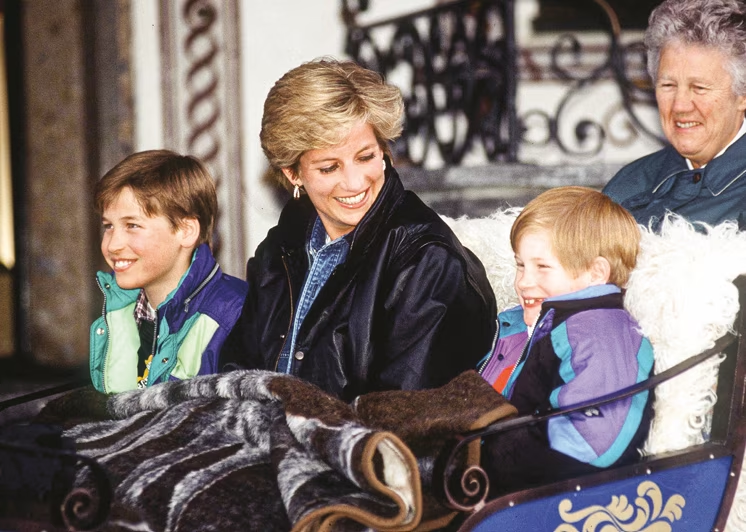
Was Diana an unhappy child? This is the book’s first big argument, and Spencer says no. Park House, on the Sandringham estate in Norfolk, was in his telling a warm, slightly old-fashioned home. The children lived in the former servants’ wing with a nanny.
Their father, Johnnie Spencer, photographed them obsessively, read them fairy tales and adventure stories, and once hired a camel named Bert for Diana’s seventh birthday on 1 July 1968.
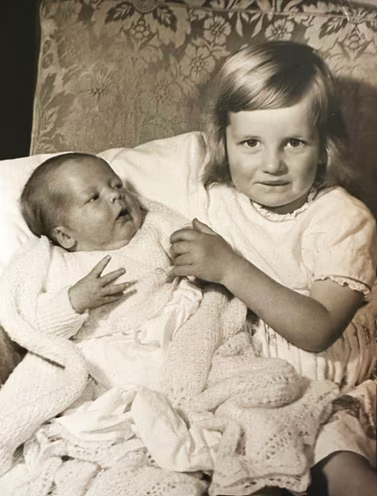
The details are vivid. Diana tidied her brother’s bed before school. On his first day at Silfield School in September 1968, she could not settle in her own class until the headmistress let her go and check on him. She drew the curtains every evening, precisely, as if preparing the house for night in their mother’s absence.
She was a star swimmer and a fearless diver. She loved forget-me-nots, and her bedside pot was a birthday gift bought with her brother’s pocket money.
Spencer does not hide the darker parts. Two nannies were abusive; one banged the children’s heads together. He also concedes that Diana herself described her childhood as less happy than he remembers, and that she told him she found it hard to complain about anything, even returning a dress that did not fit. His conclusion is careful: they were “far from the miserable children” of the biographies, but maybe Diana hid her pain too well.
The Spencer Inheritance (Chapters 5 and 7)
Why does Spencer spend pages on ancestors? Because he wants you to see Diana as a Spencer first. He traces the family from sixteenth-century sheep farmers to Althorp, built in 1508, and points to two famous forebears: a Lady Diana Spencer almost married to a Prince of Wales in 1731, and Georgiana, Duchess of Devonshire, who was hounded by the press, battled an eating disorder, separated from her husband and died young.
The parallels are deliberate.
He also reveals a family secret: their father had a romance with the young Queen Elizabeth, ended by Lord Mountbatten, and an aunt’s letter written days before Diana’s wedding praises Johnnie for decades of silence about it. Spencer presents this as family history backed by the letter and the regimental chaplain’s later account.
I could not find independent confirmation of the romance beyond what the book reports, so treat it as the family’s account.
Park House itself was royal property, lent to Diana’s maternal grandparents, the Fermoys, by George V. The Spencer children went to royal birthday parties at Sandringham, hid behind their chairs during the Child Catcher scenes of Chitty Chitty Bang Bang, and knew the royal children as acquaintances, not friends. Three of the four Spencer children had royal godparents. Diana, oddly, did not.
The Divorce and the Doorstep (Chapters 8 and 9)
What really happened in the Spencer divorce? Spencer gives the fullest family account yet. His parents’ first son, John, was born in January 1960 with severe malformations and lived only a few hours. Their mother, Frances, never held him. Spencer believes the loss “festered” in the marriage, along with a 12-year age gap and very different temperaments.
In 1966 Frances fell in love with Peter Shand Kydd on a skiing holiday. Spencer’s central correction is about the legal grounds. Divorce law in the mid-1960s offered limited options, and his mother cited “mental cruelty”, which in his reading meant what she personally found intolerable. He insists there was never any allegation of physical abuse by his father and calls that claim, repeated since 1992, “an appalling lie.”
The saddest image in Swan Song belongs here. Frances, packing her things, told Diana not to worry because she would come home soon. Diana took her at her word and would sit on the front doorstep waiting. Spencer believes she never forgave her mother for that.
After the divorce, Johnnie won custody, helped by the testimony of Frances’s own mother, Ruth Fermoy. The children took monthly trains to London to see their mother, then longer trips to Itchenor in Sussex and later to Ardencaple, a farm on an island off the west coast of Scotland. Peter Shand Kydd comes across as fun and generous.
Diana, a fierce older sister, once shoved her brother off a sea wall into gorse because he had annoyed her, and once coached him past a party game set up by bullies. “In adulthood,” Spencer writes, he tried to do the same for her.
School, “Failure” and the ADHD Argument (Chapters 11 and 13)
Did Diana fail at school? On paper, yes. She failed all her O-levels, and Spencer remembers her screaming and sobbing when the results arrived at Ardencaple. On her first day at Riddlesworth Hall she told her father, “If you loved me, you wouldn’t leave me here.”
Spencer has read every one of her school reports. He quotes teachers noting her short concentration, restlessness and tendency to give up, alongside constant praise for her kindness: she looked after homesick new girls, won West Heath’s prize for Service to the School, and was the staff’s favourite babysitter.
His argument is that she had undiagnosed ADHD and learning difficulties, that no school offered help, and that the label of academic failure stayed with her for life. Her own line from a Swiss finishing-school letter sums it up: “My French is not improving very fast but then I am a slow learner.”
The finishing school, Institut Alpin Videmanette, was a disaster. Diana was so homesick that she wrote, Spencer says, an average of ten letters or postcards a day. Fourteen-year-old Charles told his father it was “just cruel” to keep her there, and she came home. Spencer dates her transformation to that return. Free of teachers, she became confident, quick and very funny.
His claim that Diana had ADHD and Rejection Sensitive Dysphoria (RSD) is a retrospective, non-clinical opinion. He says he recognised RSD in himself as part of his own neurodivergence, and he reads it back into her.
It is a plausible lens, and it is offered with love, but it is not a diagnosis, and I think readers deserve to hear that plainly.
Meeting Charles and the Press from Day One (Chapters 13 and 14)
When did Diana meet Prince Charles properly? At Althorp in November 1977, when he was dating her sister Sarah. Spencer even reproduces the menu and wine list from the dinner. Sixteen-year-old Diana wrote to her father afterwards that Charles “is clearly someone in need of a wife.”
By November 1980 the press had found her. Spencer describes Diana arriving to take him out from Eton with a dozen cars and a motorbike behind her, and men converging on her “like hyenas closing in on a gazelle.” Months earlier, a photographer had ripped her suitcase from her hand at Balmoral to read the luggage tag and learn her name. She had no police protection. She was 19.
He also tells the story of the “Royal Train” report of November 1980, which claimed Diana had secretly met Charles on the train. Diana told her brother it was not her, and she later became convinced the woman was Camilla Parker Bowles.
Spencer marks this as the start of what he calls “seventeen years of fear and resentment” of Camilla. Again, this is Diana’s belief as reported by her brother.
The Engagement and the Wedding (Chapter 15)
Did Diana want to call off the wedding? According to Spencer, yes. After Prince Andrew’s 21st birthday party at Windsor in June 1981, where Charles ignored her, she told their father she could not marry a man who did not love her. Johnnie, a former royal equerry, said it was impossible to pull out.
Their mother had earlier given different advice: “Can you live without this man? If you can, then you should not marry him.”
Spencer adds that, as Diana later told a friend, Charles told her the day before the wedding that he was happy to marry her but was not in love with her. On the morning itself, Spencer found her at Clarence House, exhausted and wistful.
He also recounts the old Park House governess, “Allie”, dying of cancer and being photographed in her hospital bed by a tabloid photographer disguised as a medic, a month before the wedding.
The wedding numbers come straight from the book: 3,500 guests at St Paul’s Cathedral, 750 million TV viewers in 74 countries, and a three-and-a-half-minute walk down the aisle by their father, who was still recovering from a massive brain haemorrhage in 1978 and leaned on Diana the whole way. Diana mixed up Charles’s names in the vows. Spencer, aged 17, sat next to her at the wedding breakfast while she barely ate.
Royal Life, Food and Isolation (Chapters 16, 17 and 19)
How bad was Diana’s eating disorder? Spencer is direct. She told him she had been in the grip of her eating disorder for five months by her wedding day. A few days after the engagement, Charles had squeezed her waist and said, “Oh, a bit chubby here, aren’t we?”
Her waist went from 29 to 23½ inches between engagement and wedding. Years later she told him her weight had once fallen to eight and a half stone.
Spencer criticises the Palace for sacking the family GP, Dr Mike Bloomer, and handing Diana to the Queen’s physician, a stranger. He calls it “a monumental blunder.” He also notes that Diana, now married, was required to spend every Christmas with the Royal Family, which meant the siblings did not share a Christmas for twelve years.
There is real guilt in these chapters. Spencer admits that telling Diana she looked beautiful on her wedding day, when she was starving herself, was “far from helpful.” He prints a supportive letter from relationship counsellor Zelda West-Meads, written after some of his private letters to Diana were leaked after her death. And he reports Diana’s warning, delivered over lunch, that every time her family did something embarrassing, it made life harder for her inside the Palace.
He also shows her magnetism: an orchestra breaking ranks to crowd round her after a charity concert, a coachload of tourists waving through a restaurant window, a press pack laughing when she mimed fluffing her hair at a state banquet.
The Little Brother as Tabloid Target (Chapter 16)
Why does Spencer write so much about himself? Partly because the press made him a story. He was mocked as “Champagne Charlie”, had quotes invented for him, and was told by two tabloid reporters that he would always be “Lady Di’s ne’er-do-well brother” unless he fed them stories.
He refused. He writes, frankly, that the cumulative attacks pushed him at times to think about ending his life, and that Diana, in her later years, reached that point more than once too. In both cases, he says, love for their children held them back.
If you are struggling with thoughts like these, please talk to someone. In the UK you can call Samaritans on 116 123; in the US, call or text 988.
Raine, Althorp and the Staircase (Chapter 20)
Who was Raine Spencer to Diana? The villain of the middle chapters. Johnnie married Raine, Countess of Dartmouth, in July 1976, and Diana learned of it from a newspaper. She slapped her father across the face, the only physical clash she ever had with a parent, according to her brother.
Spencer accuses Raine of selling a fifth of Althorp’s contents during her sixteen years there, often at knockdown prices, with dealers paying her side commissions. He describes cheap imitation jewellery on sale in the Stables after her Sunday lunches, rudeness to staff, and a removal van loaded with family silver on the night after his father died in March 1992.
The most startling scene comes on the eve of Spencer’s first wedding in 1989. Raine sent his mother to sit alone. Diana confronted her. Raine said she had always felt sorry for the Prince of Wales for “marrying somebody quite as stupid as you.” Diana, Spencer says, hooked a leg round Raine’s calves and pushed her down the carpeted stairs. Then, at their father’s funeral, Diana walked out of church holding Raine’s hand. Spencer calls this “playing to the gallery.” Later still, Raine introduced Diana to Dodi Fayed.
Diana and the Media: Survival, Not Manipulation (Chapter 18)
Did Diana manipulate the press? Spencer rejects the word. He describes her use of Richard Kay of the Daily Mail and her secret cooperation with Andrew Morton as guerrilla tactics against a far stronger army.
He admits his own part: he helped Diana get a story about Raine’s sales into the Mail, and he talked to Morton about their childhood only. Diana was hurt that he told Morton about her school struggles.
His best example is the 1990 Necker Island holiday, where Diana offered photographers one 30-minute session on a single boat in exchange for privacy for the rest of the trip. It worked. “If only it had always been possible,” he writes.
Separation, the Headway Speech and the Fake Letter Story (Chapters 22 and 24)
What happened after Diana stepped back from public life? On 3 December 1993, at a Headway lunch, Diana announced she would withdraw from most public duties. She wrote individually to around a hundred charities. Spencer wrote her a supportive letter two days later.
Three months on, the tabloid Today splashed a story claiming he had written to criticise her public appearances. Spencer shows the timeline could not work: his letter predated the events it supposedly criticised. He believes someone in the Palace encouraged the story, and he lists the coordinated headlines that followed, which painted Diana as unstable for shouting at photographers who had chased her to tears.
He also reminds you that Prince William later said most of the times he saw his mother cry were about press intrusion.
The Garden House Rupture (Chapter 23)
Did Spencer refuse Diana a home at Althorp? Yes, and he explains why. She asked for the Garden House, a small villa about a hundred yards from a public road. The local police called the plan “ridiculous” on security grounds, his wife was unwell, and his children were young.
He offered Wormleighton Manor instead. Diana refused it, sent an angry letter drafted by a journalist, and once had his secretary remind him that “the Princess of Wales” was calling. It was their longest silence. Spencer says he regrets not finding a middle way.
The Bashir Con (Chapter 25)
How did Martin Bashir get the Panorama interview? This is the chapter many readers will buy the book for, and it is brisk.
In August 1995 Bashir contacted Spencer, promising he did not want Diana but was exposing a security-service plot against her. At Althorp he produced what Spencer now knows were forged bank statements suggesting Spencer’s former security chief and two former naval officers who had served Diana, her Private Secretary Patrick Jephson and Richard Aylard, were being paid to betray her. Spencer checked with Panorama’s executive producer, Steve Hewlett, who told him: “Martin’s one of our finest.”
At a meeting in a friend’s flat, Bashir told Diana a flood of claims, including that the Queen was close to death and that William’s watch was bugged. Spencer noticed repeated figures and details, decided Bashir was not to be trusted, and told Diana so. Weeks later the BBC announced the interview.
Around 23 million UK viewers watched, by Spencer’s count. Within five weeks the Queen insisted on a divorce, which was finalised on 28 August 1996, when Diana lost her HRH title.
Spencer goes further than the record when he draws a line from Panorama to Paris, arguing the interview left Diana isolated and frightened. That is his interpretation.
What is on the record: Lord Dyson’s report, published on 20 May 2021, found Bashir had committed a “serious breach” of BBC rules by mocking up fake bank statements and that the BBC’s later investigation was “woefully ineffective”, according to Press Gazette.
In July 2022 the BBC paid substantial damages to Tiggy Legge-Bourke over Bashir’s false claims about her, as NBC News reported. Spencer’s handwritten notes from 1995 were part of the evidence.
Cape Town and Mandela, March 1997 (Chapter 29)
Was Diana planning a new life abroad? Spencer says she came to Cape Town in March 1997 to see if she and her heart-surgeon boyfriend could live there, with Christiaan Barnard phoning several times a day about possible hospital jobs. Spencer kept the paparazzi away using a hidden side gate and a decoy driver.
The only public moment was the meeting he arranged with President Nelson Mandela, who called her a “beauty-princess.” They discussed working together on AIDS in Africa.
Yet he also saw her waiting all day for a phone call that rarely came, and signs that her eating disorder was “rampant.” Their goodbye at the airport was the last long time they spent together. They met only once more, by chance, at a Tate dinner on her 36th birthday.
The Funeral Week (Chapters 4, 6, 10, 12, 21, 24, 26 and 27)
What happened behind the scenes of Diana’s funeral? This is the richest material in Swan Song, and here are the key events in order.
1. Who would speak. Spencer remembered a poor eulogy at his father’s funeral and a good one at the memorial. On the drive from Heathrow, his mother told him the family had already decided it would be him.
2. Where she would lie. The Queen wanted burial at Frogmore. The family wanted Althorp. Because Diana had asked to be buried intact, the family crypt at Great Brington would not work, and crowds were already flooding the village. Spencer chose the island in the Round Oval lake, her favourite place. The Bishop of Peterborough consecrated the grave two days before the funeral.
3. Keeping out the tabloids. When Spencer learned that tabloid editors had been invited to the Abbey, he phoned each of them and asked them not to come. He says all agreed.
He named Piers Morgan as the one who “snarled” before hanging up, and linked him to the 1993 gym photographs. That link was wrong (see the analysis below).
4. The walk behind the coffin. A Palace courtier said the princes would walk behind the coffin. Spencer refused. Then Charles rang him. When Charles said he had walked behind Lord Mountbatten’s coffin, Spencer replied, “But you were thirty, sir, and he wasn’t your mother.”
Charles, he writes, said the Spencers had “no bloody sense of duty” and then hissed that “we’ll forget her soon enough.” Spencer hung up. The day before the funeral, he was told the boys had chosen to walk, with Prince Philip beside them. He agreed, on the condition they were not being pressured.
5. The black swans. Diana’s favourite card in a childhood Animal Lotto game was the black swan. When Spencer asked his office to find some for the lake, he was told four were arriving the next day, a gift from a stranger. It is one of Swan Song‘s loveliest coincidences.
6. Writing the eulogy. He drafted it at about 5.30 a.m. on 3 September, in an hour and a half, and faxed it to himself at 7.12 a.m. He cut a passage defending Diana against the charge of manipulation, and he cut a thank-you to Dodi Fayed, which he now regrets.
7. The rehearsal trick. At the Abbey run-through, when officials gathered to hear his speech, Spencer pretended he had left it at home and read from the Book of Common Prayer instead. He had two copies in his pockets.
8. The night before. He read the eulogy aloud to Diana’s coffin in the Chapel Royal, watched the Queen’s live broadcast from Jane’s house, and walked with his family among the flowers in Kensington Gardens.
9. The walk. Prince Philip overruled Charles and put Spencer in the centre, between the boys. The route was extended to about two miles, and the Abbey’s tenor bell tolled more than 30 times. A card on the coffin read “Mummy.” Under Horse Guards Arch, out of sight of cameras, Spencer gave Harry a quick hug. He calls the walk the most harrowing experience of his life.
10. The service and the speech. Elton John sang the rewritten “Candle in the Wind”, Tony Blair read 1 Corinthians 13, and Spencer, given three minutes, slowed down after hearing how slowly Blair spoke. He nearly broke on the final lines to William and Harry. Applause began outside and spread inside the Abbey.
11. The HRH offer. On the Royal Train to Althorp, Robert Fellowes told Spencer the Queen wanted to restore Diana’s HRH title. Spencer declined on her behalf, asking what the point was now. He admits he still wonders if that was right.
12. The burial. The hearse broke down from driving so slowly through falling flowers. At the island, a man from Charles’s retinue hid behind a tree and said, “I am a tree.” Spencer adds: “He blinked more than a tree should.” It is a rare joke on the darkest day.
The Aftermath (Chapters 28 and 30)
What happened to Spencer after the eulogy? About 80,000 letters arrived at Althorp, and he answered more than a thousand by hand. Viscount Rothermere announced the Daily Mail would stop buying paparazzi pictures. Then, Spencer says, the tabloids took revenge, most visibly during his Cape Town divorce three months later. A stranger outside a Fulham pub shouted “Top speech, mate.” White House press secretary Mike McCurry told him he had done the right thing.
The book ends in November 2002, when Nelson Mandela visited Diana’s grave. Standing in the rain, Mandela told Spencer she was “a very, very great lady, your sister.” The final chapter prints the full eulogy.
The Key Arguments of Swan Song
If you are reading Swan Song for research or teaching, these are the five arguments that hold the book together.
The happy-childhood correction. Diana’s childhood was loving and secure, despite divorce. Her later sense of being unloved came from the marriage, the press and her own self-doubt, not from Park House.
The failed-schoolgirl wound. Undiagnosed learning difficulties, which Spencer believes were ADHD, left her with lifelong feelings of worthlessness. Her charity work was partly a way of answering them.
The marriage as deception. Spencer argues that Charles entered the marriage with his heart elsewhere. He quotes an elderly former aide calling it “double-dealing, pure and simple.”
The press as killer. The paparazzi were “without doubt, the leading cause” of her death, and the editors and owners who paid them share the blame. Bashir’s deceptions form a second, parallel path.
Diana as the monarchy’s protection, not its problem. In his view, she made an old institution human and popular. The jealousy she drew from parts of the Royal Family was a mistake the Crown paid for in 1997.
Swan Song Review: My Verdict and Analysis
Swan Song is a tender, angry and deeply uneven book, at its best a family album and at its worst a ledger of old scores. I finished it moved and slightly exhausted, the way you feel after a long evening with a grieving relative who loves the dead person fiercely and has not forgiven anyone else.
Does Spencer Support His Claims With Evidence?
Sometimes very well.
He quotes school reports, his father’s diary, letters from Diana, faxes, handwritten notes and a contemporary diary entry by Alastair Campbell. The Bashir chapter in particular rests on documents that a retired Supreme Court judge later relied on. The childhood chapters feel lived-in and specific.
Elsewhere the evidence is his own memory of other people’s words and tones of voice, most importantly the “forget her soon enough” phone call.
No one else heard it. Buckingham Palace’s response, as reported by Fox News, was that “the pain of fraternal grief can cloud reason, affect judgment and colour memory.” That is pointed, but it is also fair to ask: how do you check a 29-year-old phone call?
The Piers Morgan error shows the risk. Spencer linked Morgan to the 1993 gym photographs, but Morgan did not edit the Daily Mirror until later.
Within days of publication Spencer’s spokesperson said that “as an historian, accuracy is important to Earl Spencer,” admitted the assumption was wrong, and apologised, according to Now To Love and Fox News.
Spencer still stands by his account of Morgan’s tone on the 1997 call, and Morgan has said he is pursuing legal action against Spencer and Penguin. For a historian, it is an avoidable slip, and it hands critics an easy reason to doubt the rest.
Strengths: What Worked for Me
The childhood is new. Bert the camel, the curtains, the doorstep, the conger eel she killed with a penknife in a lobster boat. I had never read Diana this way.
The funeral week reads like a thriller. The rehearsal bluff, the phone call, the walk, the HRH offer. I knew the ending and still felt my chest tighten.
It corrects the record on his parents. The careful explanation of 1960s divorce law and “mental cruelty” is a useful corrective to decades of lazy claims about his father.
The Bashir material is first-hand and documented. It is short, but it is the clearest account yet from the person Bashir used first.
He admits his failures. The wedding-day compliment, the shrugged-off arm of his mother after the eulogy, the Garden House. These admissions make him more believable.
Weaknesses: Where It Let Me Down
Score-settling. Raine, Charles, Morgan, Soames, Dempster, a restaurateur, a BBC producer. The list is long, and the tone is often sneering (“this bellowing buffoon” about the then Prince of Wales).
Too much Spencer. His Eton magazine, his gap-year film work, his libel worries, his three divorces. Some of it explains his bond with Diana. Much of it does not.
Diagnosis at a distance. The ADHD and RSD reading is sincere but speculative, and the book never says so clearly enough.
Selective silence. He says up front he will not look for Diana’s faults, so her harder side appears only in flashes: the push down the stairs, the long silences, pulling rank on the phone.
Thin on Paris. He speculates that the driver’s blood test might have been tampered with but offers nothing to support it. I would have preferred he left it out.
A factual error in print. The Morgan mistake should never have reached a first edition.
My honest feeling: I closed Swan Song with more affection for Diana and less trust in her brother as a neutral narrator. Both reactions are probably what an honest reader should have.
How Does Swan Song Compare With Other Diana Books?
Is Swan Song better than other books on Diana? It is different. Here is how it sits beside the books you are most likely to compare it with.
Andrew Morton’s Diana: Her True Story (1992). Morton’s book was secretly built on Diana’s own taped answers. Swan Song openly argues with it on the childhood, especially the idea that Diana was “born a disappointment.” Read Morton for Diana’s voice; read Spencer for a sibling’s challenge to it.
Tina Brown’s The Diana Chronicles (2007). Brown writes as a journalist with sources and distance. Spencer writes as a mourner. Interestingly, Brown praised Swan Song on her Substack, saying Spencer “was there for all this history.”
Prince Harry’s Spare (2023). The closest cousin in tone: grief, fury at the press, and a cold portrait of the Palace. If you liked our review of Spare by Prince Harry, you will see the same funeral walk from a 12-year-old’s side there and from the uncle’s side here. Together they are oddly moving.
Sally Bedell Smith’s Diana in Search of Herself (1999). Spencer mentions giving Bedell Smith an off-the-record interview in 1998. Her book is more clinical about Diana’s psychology; his is protective.
Films and TV. Spencer (2021) and The Crown dramatise the same Sandringham and marriage years. Swan Song is the family’s reply to all that fiction.
For wider reading on memoirs that rewrite family myths, see our list of the Top 50 memoirs, autobiographies and biographies of all time and our review of Educated by Tara Westover, another book about a childhood that outsiders misread. If you are interested in how fame turns private pain into public property, Sopranu’s piece on Hollywood, Ending and the price of fame makes a useful companion read.
FAQs about Swan Song
When was Swan Song by Charles Spencer published?
It was published on 22 September 2026 by Penguin Press in the US and Michael Joseph in the UK.
How long is Swan Song?
The hardcover runs to 384 pages, and the audiobook, read by Spencer himself, is 9 hours 47 minutes.
What does Swan Song claim King Charles said about Diana?
Spencer writes that, during a row over whether William and Harry should walk behind the coffin, Charles said “we’ll forget her soon enough.” Buckingham Palace responded that grief can “colour memory.”
Did Charles Spencer apologise for anything in Swan Song?
Yes. He apologised to Piers Morgan for wrongly linking him to the 1993 gym photographs of Diana and said the second edition would be corrected. He stands by his account of their 1997 phone call.
Does Swan Song include the full eulogy?
Yes. Chapter 31 prints the complete funeral oration from 6 September 1997, and the photo section includes his handwritten first draft.
Is Swan Song worth reading?
If you care about Diana’s early life or the funeral week, yes. If you want a balanced biography, pair it with a journalist’s account such as Tina Brown’s.
Conclusion: Should You Read Swan Song?
Swan Song is the book only Charles Spencer could write, with all the strengths and blind spots that implies. It gives you Diana before the cameras: tidying her little brother’s bed, waiting on a doorstep, fearless on a diving board, furious at a stepmother, wise at a bullies’ party game.
It gives you the hidden machinery of one of the most watched events in television history. And it gives you, unasked, a lot of its author’s wounded pride.
Who should read it: general readers who remember 1997, royal-watchers who want the Spencer side, students of media ethics, and anyone who has lost a sibling (the book is dedicated “For all those who have lost a sibling,” and that dedication is where its heart really is).
It is written for general audiences, not specialists, and it needs no background knowledge.
Who should skip it: readers who want a neutral, fully sourced history, and readers who will be put off by repeated attacks on the King.
My final word: read the childhood and the funeral chapters slowly, read the score-settling quickly, and finish with the eulogy. By then you will understand why a brother needed 384 pages to explain three minutes.
Swan Song: Diana, My Sister
Swan Song: Diana, My Sister is Charles Spencer's 384-page memoir of growing up beside Princess Diana and of the six days in September 1997 when he wrote and delivered one of the most famous funeral speeches of the modern age. It is warm, funny and heartbreaking whenever it stays inside the nursery at Park House.
URL: https://www.sopranu.com/swan-song-charles-spencer-review-diana-memoir/
Author: Charles Spencer, 9th Earl Spencer
Author: Sopranu
ISBN: 9780241825594 (UK Hardback) / 9798217379743 (US Hardcover)
Format: https://schema.org/Hardcover
3.5
Pros
- Intimate, firsthand account of Diana's childhood from her brother.
- Reveals new details about the funeral week and the Bashir scandal.
- Emotionally powerful and written with a reporter's eye for detail
Cons
- Heavily partisan and often reads as score-settling.
- Contains a factual error about Piers Morgan that the author later apologized for.
- Long stretches focus on the author's own grievances rather than Diana