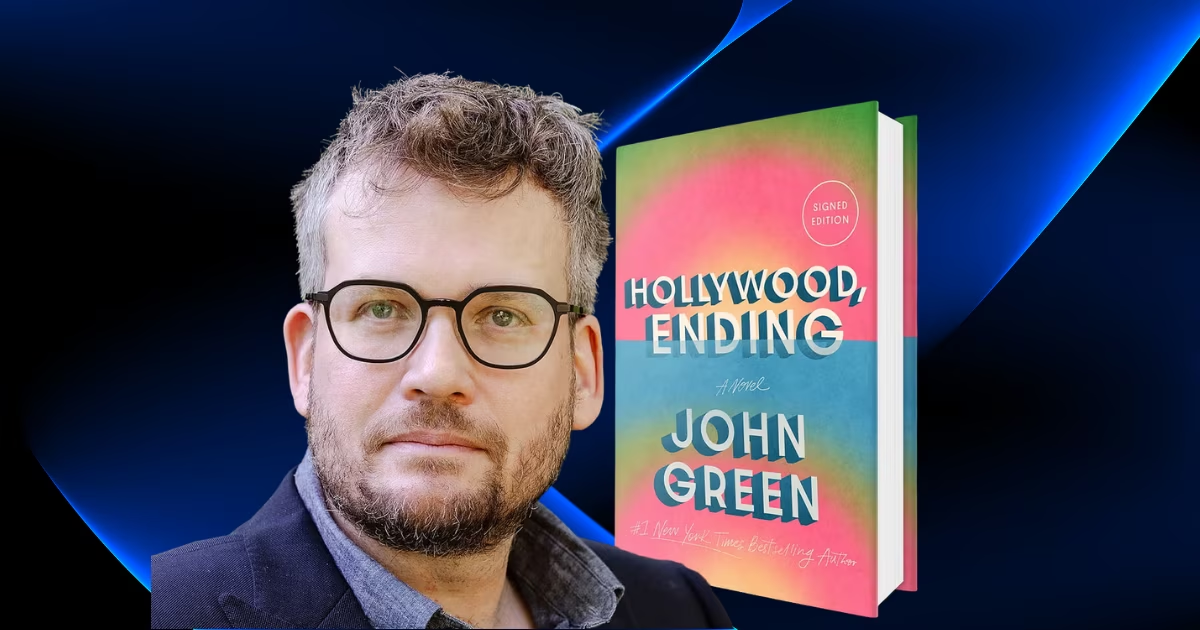

Hollywood, Ending by John Green is his first adult novel and first fiction in nine years. It follows two rising actors, Juniper Castillo and Kai Laramie, who fall in love while filming an Andy Warhol biopic called Andy Warhol Never Gets Old.
The novel is told in four parts: The Shoot (Juniper’s POV), The Test and The Junket (Kai’s POV), and The Comedown (Juniper’s POV). It’s about the cost of fame, the commodification of trauma, and whether love can survive the machine that turns private experience into public content.
Matthew Malone, a movie star playing Warhol, leaks Kai’s childhood sexual abuse to generate press for the film.
Kai finds out at the New York premiere, walks away from everything, and Juniper has to decide what she actually wants. The book ends with them choosing each other over the studio’s demands, opting out of the awards campaign, and building a life that isn’t entirely defined by the Industry.
Reader Recommendation: This book will land hardest with readers who’ve followed John Green’s career and want to see him write about adulthood with the same emotional precision he brought to adolescence.
It’s for anyone who’s ever felt the gap between their public self and private self widen into a canyon. It’s not for readers looking for a light Hollywood romance or a fast-paced plot. The novel is slow, interior, and deeply uncomfortable in places. If you want escapism, this isn’t it.
Table of Contents
Introduction: What Is Hollywood, Ending About?
Hollywood, Ending is John Green’s adult fiction debut, published on September 22, 2026, by Dutton Books. It’s his first novel since Turtles All the Way Down (2017), ending a nine-year fiction hiatus that included two nonfiction books, The Anthropocene Reviewed and Everything Is Tuberculosis.
The novel runs approximately 280 pages and is told through the alternating first-person perspectives of Juniper Castillo and Kai Laramie, two young actors whose lives change when they’re cast in an Andy Warhol biopic.
I’ve read every John Green novel. I was nineteen when The Fault in Our Stars came out. I’m thirty now.
Reading Hollywood, Ending felt like running into someone you used to know and realizing you’ve both changed in ways you didn’t expect. Green isn’t writing for teenagers anymore.
He’s writing about the world he’s been living in for the past decade, the one where your worst memories become content and your most private self becomes a brand. It’s a harder book than his YA work. It’s also, in some ways, his most honest one.
Background
John Green has been a public figure for over fifteen years. He’s been on the New York Times bestseller list multiple times. He’s had movies made from his books. He’s dealt with the mental health advocacy space, the online attention economy, and the specific weirdness of being famous for being earnest in a culture that mostly rewards irony.
In interviews leading up to the book’s release, Green described Hollywood, Ending as a story about “the strange, complicated exchanges of attention and trauma” that define the social internet, exchanges that, as he put it, have become “something no longer reserved for movie stars alone”.
That’s the thesis of the novel. Everyone is performing now. Everyone is curating. Everyone is trading pieces of themselves for likes, follows, and the attention that translates into money or meaning or both.
The novel draws on Green’s own experiences with Hollywood adaptations of his books. He’s seen the machine up close. He knows how a movie gets made, how a press junket operates, how a studio decides which parts of a person’s life are sellable.
But he’s also careful to note in the acknowledgments that this is fiction, not memoir. Still, the specificity of the details, from the double-banger trailers to the Instagram posting schedules to the way a publicist pivots a question about trauma into a talking point about the movie, suggests someone who’s been paying very close attention.
The historical context matters here too.
The novel is set in 2019, before the pandemic, before the current iteration of the culture wars, when the social internet was already fully weaponized but hadn’t quite reached its present saturation. Reading it in 2026, the book feels almost nostalgic for a moment when the attention economy was still novel enough to be shocking.
Hollywood, Ending Summary
Part 1: The Shoot (Juniper)
The novel opens in 2019 in Pittsburgh. Juniper Castillo, twenty-two, is a former child star trying to transition into adult roles. She’s been cast as Carly, a young journalist profiling Andy Warhol for Esquire, in a movie called Andy Warhol Never Gets Old. The movie is directed by Kathryn Johnson and stars Matthew Malone, a massive action-movie actor, as Warhol.
Juniper meets Kai Laramie in the lobby of Matthew’s hotel. Kai is twenty-one, from Indianapolis, with exactly one previous credit as a production assistant. He’s been cast as Jude, an intern at Interview magazine who falls in love with Carly. They have immediate chemistry. Juniper is drawn to his openness, his habit of saying “I love you” casually and often, his willingness to be vulnerable.
The shoot is grueling. Kathryn keeps pushing Juniper to play Carly younger and more innocent, which frustrates her because she sees Carly as smarter and more self-destructive than that. Kai struggles with the emotional demands of his role, particularly a scene where Jude confesses his brother’s death from overdose and his father’s abuse. Juniper helps him through it by telling him that acting is “going everywhere you can go…but safely.”
Meanwhile, Matthew Malone takes them under his wing. He’s charming, generous, and deeply invested in the movie. He calls in favors for Juniper, getting her an audition for a massive fantasy franchise called Gods of Andromeda. He tells Kai that “a good life fits in your car. A great life fits on your motorcycle.”
Juniper and Kai grow closer. They run lines together, watch movies, go to a Pirates game. Kai tells her he loves her “a little” and she says she likes him “a medium amount. A socially acceptable amount.” But the attraction is undeniable.
The shoot ends with a love scene between Jude and Carly, filmed on a rooftop. Kai tells Juniper he loves her. She says “Back at ya, Kai.”
Part 2: The Test (Kai)
Months later, Kai is in New York for media training with Ellen Kim, a studio publicist. Ellen drills him on talking points, warns him about what’s off-limits, and then asks the question that changes everything: “Ever been a witness in a trial?”
Kai has been. He was abused by a high school English teacher. The abuse went on for two years. He testified at the trial. The teacher died in prison. Kai hasn’t told anyone in Hollywood. Ellen tells him he should “get out in front of it,” ideally with a sympathetic profile in The New Yorker, before it leaks.
Kai doesn’t want to talk about it. But he can’t stop thinking about it, especially when he’s with Juniper. He wants to tell her, but he can’t find the right moment.
The studio flies Kai and Juniper to LA to see the finished movie. The film is good. Kai cries watching it. Afterwards, the producers, Lon and Natalie, tell Juniper that her notes on the film are appreciated but the movie is essentially locked. The test scores are “ninety-two percent top two boxes,” which is exceptional, but nobody knows the movie exists.
At a bar after the screening, a paparazzo tries to get into Juniper’s Uber. Kai throws him out. The incident goes viral. Ellen later admits the studio set it up. Todd from the studio planted the guy to generate press. Kai is furious, but Juniper says it was “good press.”
Kai’s agent, Bob, tells him the studio wants him to test for the lead in Gods of Andromeda, opposite Juniper. The role was originally the lead’s brother, but the studio is upgrading it. Kai doesn’t want to spend six months in Vancouver playing someone’s brother, but he signs the test deal anyway.
At a breakfast with Brian Arawas, the director of Gods of Andromeda, Kai is surprised to learn the director sees him as a Gavinth, the Queen’s husband, not Garon, the brother. Brian talks about the “journey from tool to weapon” that Garon undergoes, but he’s more interested in Kai’s chemistry with Juniper. The breakfast is weird and pretentious, but Kai feels like he’s being taken seriously.
Kai tells Juniper about his abuse. They’re sitting by his tiny hotel pool. He tells her about the teacher, the trial, the shame. She doesn’t pity him. She says she’s angry for him. She says she loves him.
Kai’s abuse leaks. A gossip site publishes the story. Ellen tells him to “get out in front of it.” Kai posts on Instagram, acknowledging the abuse. He does an interview with Jill from The New Yorker. He passes the test. Bob calls him: “You got the fucking part, kid. They said why buy a star when we can fucking make one.” The studio pays him $750,000 for Gods of Andromeda, with raises for sequels.
Part 3: The Junket (Kai)
The press tour is exhausting. Kai and Juniper do satellite interviews with local morning shows, roundtable interviews with reporters, photo shoots. They’re asked about their chemistry, about working with Matthew, about their trauma. Juniper handles the trauma questions with practiced grace, saying “Your first obligation is to survive.” Kai struggles.
Matthew hosts a party at a club. He tells Kai and Juniper about his own career, his father’s death, his philosophy of acting. He says he knows “the special ones” and that Kai and Juniper are special. Later, at his apartment, Matthew shows them his Warhol painting and talks about the movie’s tracking numbers. He’s proud of them.
Then the other shoe drops. One of the other kids who was abused by the same teacher posts a Twitter thread saying Kai never said anything, that he was the one who turned the teacher in, and that Juniper is behind the media narrative making Kai look like a hero. The thread goes viral. Kai is devastated. He asks Juniper if she leaked it. She says no. He believes her, but the damage is done.
Kai and Juniper fly to Paris for the European premiere. The premiere is overwhelming. Fans scream, photographers shout, interviewers ask invasive questions. Kai is barely holding it together. Matthew arrives and the chaos intensifies.
At the afterparty, Matthew puts his arm around Kai and tells him he’s proud of him. Then he says something that makes Kai’s blood run cold: “Sent my guy to poke around your school.” Kai realizes Matthew leaked the abuse. Matthew doesn’t deny it. He says, “Look how great it all turned out. You see why I had to do it.” He says, “If you need me to be your villain, I’m happy to play the role. But ten years from now, you’ll have me to thank for your career.”
Kai finds Juniper in the theater and tells her. She says, “What a fuckface. But, I mean, we have to work with him.” She’s already thinking about the awards campaign, the screenings, the whole machine. Kai feels trapped. He does the panel, says nice things about Matthew, and then walks out. He gets in a cab, goes to the airport, and books a flight to Jamaica. He throws his phone in a trash can.
Part 4: The Comedown (Juniper)
Juniper wakes up the next morning and can’t reach Kai. She calls Ellen, who tells her Kai’s phone was tracked to JFK, then to Jamaica. Todd from the studio calls Juniper into his office and tells her that if Kai doesn’t come back for Gods of Andromeda, the studio will recast both roles. Juniper is furious. She tells Todd that she’s the professional, that Kai is the one who ran, and that it’s always the men who get to be “artistes.” Todd says, “It’s the market you’re mad at.”
Juniper flies to Jamaica. She finds Kai at a bar, drinking Red Stripe, drawing in his sketchbook. He’s cold, distant. He says they have nothing in common except the movie. He says she’s still chasing her dead mother’s dream. She says he’s being a child. He says, “Fuck off.” She goes back to her villa and cries.
The next day, Kai shows up at her villa. He wants to watch a movie in silence. They watch A View to a Kill, then Rush Hour, then The Pursuit of Happyness. During the last movie, Kai cries silently. He tells Juniper, “He fucked me up. I’d never even kissed anyone before. I had my first blow job before I had my first kiss.” Juniper holds him.
Kai calls Ellen. Juniper tells him she fired Katie, her publicist, for saying she would have leaked Kai’s abuse too. Kai is stunned. Juniper tells him she loves him, that she’s loved him since Pittsburgh.
She says she doesn’t care if they make Gods of Andromeda. Kai calls Todd and tells him they’ll do the movie, but they won’t do an awards campaign for Andy Warhol Never Gets Old, and the studio will pay for them to stay in Jamaica until they fly to Vancouver. Todd agrees.
Epilogue
Kai and Juniper make Gods of Andromeda in Vancouver. They keep separate apartments. They start therapy. Kai cries and throws up while telling the therapist about the abuse. The therapist says he doesn’t have to say anything that makes him feel unsafe. Kai says, “You don’t understand. There’s no going back. You don’t get to feel safe again.”
The movie gets shut down in March 2020 by the pandemic. Kai and Juniper drive to Indianapolis and rent a house near his parents. Juniper falls in love with the city. They finish the movie after Covid protocols are established. The junket is long, but they survive it.
Andy Warhol Never Gets Old makes over $100 million globally. Kai and Juniper get Independent Spirit Award nominations but are shut out of the Oscars. Matthew gets nominated for everything but doesn’t win. Ellen becomes their publicist, not the studio’s.
The novel ends with Juniper reflecting on survival. “It’s a dirty lie that what doesn’t kill you makes you stronger, or that everything happens for a reason, but this much is true: You survive.” She writes, “The miracle of love is that Kai loved the Juniper he met in that Pittsburgh hotel, and he also loves this me.
The miracle of love is that yes, I am here and you are there, but the door is ajar. We get through that door with empathy, with imagining, with acting. We play our way through it with music and dance and art. We break down the door with love. We love others until they can love themselves, until we can love ourselves.”
Hollywood, Ending Analysis and Critique
Characters
Juniper Castillo is the novel’s anchor. She’s ambitious in a way that makes people uncomfortable, including herself. She’s been trained by her abusive, alcoholic mother to measure her worth by her success.
She’s not a saint. She fired her publicist for being honest about the industry. She tells Kai, “What are we gonna do?” when she learns Matthew betrayed him, which is the wrong thing to say but also the only thing she knows how to say. Her growth in the novel is about learning to want things for herself, not because her mother would have wanted them. The epilogue suggests she’s still working on that.
Kai Laramie is the novel’s heart. He’s generous, open, and deeply damaged. His habit of saying “I love you” to everyone is both genuine and a defense mechanism. He’s been abused by someone he trusted, and he’s spent years trying to pretend it didn’t define him. The leak forces him to confront that it does, at least in the eyes of the world.
His decision to walk away from the premiere is reckless and selfish, but it’s also the first time he’s chosen himself over the machine. His arc is about learning that survival isn’t the same as healing.
Matthew Malone is the novel’s villain, but he’s not a cartoon. He’s charming, generous, and genuinely talented. He believes he’s helping Kai by leaking his trauma, because he believes the machine requires sacrifice.
He tells Kai, “You don’t get to be Matthew Malone without wanting it, kid. You’ve gotta want it really fucking badly.” He’s a product of the system he perpetuates. The novel doesn’t forgive him, but it understands him.
Hollywood, Ending Themes and Symbolism
The central theme of Hollywood, Ending is the commodification of trauma. Green has said Hollywood, Endingis about “the strange, complicated exchanges of attention and trauma of the social internet”.
In the novel, Kai’s abuse becomes a marketing tool. It trends on Twitter. It sells movie tickets. It gets him the lead in a blockbuster. The studio doesn’t care that it’s destroying him; they care that it’s working. Ellen, the publicist, tells him, “This is literally why I’m here.” The machine consumes people, and it doesn’t apologize.
The novel is also about the tension between public and private selves. Juniper and Kai are constantly performing, not just in movies but in interviews, on Instagram, in their relationships.
They don’t know where the performance ends and the self begins. Andy Warhol, the subject of the movie they’re making, is the patron saint of this theme. He was “a deeply superficial person,” as he put it, but the novel argues that the surface is where the truth lives.
Another key theme is the cost of ambition. Juniper wants to be great. She works harder than anyone. But the novel asks whether that ambition is hers or her mother’s. Kai wants to act but hates being famous. The novel doesn’t resolve this tension. It just sits with it.
Evaluation
Hollywood, Ending is an outstanding, uncomfortable, and necessary novel. It’s the book John Green needed to write to move from YA to adult fiction. It’s not perfect, but it’s honest in a way that his earlier work sometimes wasn’t.
Strengths
The prose is clean and precise. Green has always been good at dialogue, and he’s at his best here. The scenes between Juniper and Kai are funny, tender, and real.
Hollywood, Ending‘s structure, with alternating perspectives and four distinct sections, keeps the narrative propulsive even when the plot is slow. The ending is earned. It doesn’t wrap everything up in a bow, but it offers something like hope without being naive.
Weaknesses
The pacing drags in the middle. The junket section is intentionally repetitive, but it’s still repetitive. Some of the secondary characters, like Kathryn and Lon and Natalie, feel underdeveloped. The novel’s thesis about the attention economy is clear from the first chapter, and it doesn’t evolve much beyond that. Readers who want a plot-driven story will be frustrated.
Comparison to Similar Works
If you liked The Idiot by Elif Batuman or Normal People by Sally Rooney, you’ll find something familiar here: the focus on intimacy, the slow burn, the interest in how people fail each other. But Green’s novel is more explicitly about the machinery of fame than either of those. It’s closer in spirit to The Devil Wears Prada but without the glamour.
Personal Insight: The Attention Economy and the Trade in Trauma
The most important theme in Hollywood, Ending is the way the internet has turned trauma into currency. Green isn’t the first writer to notice this. But he’s one of the few who’s been on both sides of it: the person whose private life became public content, and the person who benefits from the attention.
In the novel, Kai’s abuse becomes a story. It generates clicks, likes, retweets. It sells tickets. The studio doesn’t care about Kai’s pain; they care about his reach. Ellen, the publicist, tells him that the story is “gold.” Todd, the executive, tells him that the leak “helps us.” The machine doesn’t just tolerate trauma; it requires it.
This isn’t fiction. In 2022, the New York Times reported that social media platforms algorithmically amplify content that generates strong emotional reactions, including anger and sadness.
Trauma performs. It gets shared. It builds audiences. The result is a system where people are incentivized to commodify their worst experiences.
Green’s novel asks what happens to the people inside that system. The answer is that they get hollowed out. Kai survives, but he doesn’t heal. He learns to live with the knowledge that his pain is public property. That’s not a happy ending, but it’s a true one.
Five Lessons from Hollywood, Ending:
- Your trauma is not your brand. The novel shows how quickly private pain becomes public content. The machine doesn’t care about you. It cares about your story. Protecting your inner life is an act of resistance.
- Ambition can be inherited. Juniper’s drive to succeed comes from her mother. She has to learn to separate what she wants from what she was trained to want. That’s harder than it sounds.
- Survival is not the same as healing. Kai survives the leak, the junket, the betrayal. But he doesn’t magically get better. Healing takes time, therapy, and people who love you without wanting something from you.
- The people who hurt you can also help you. Matthew Malone is a monster, but he’s also the reason Kai and Juniper get their careers. The novel refuses to simplify him. That’s uncomfortable, but it’s honest.
- Love is a practice, not a feeling. Juniper and Kai don’t fall in love and live happily ever after. They choose each other, again and again, even when it’s hard. The novel argues that love is something you do, not something you feel.
Hollywood, Ending Quotes
- “I love you a little.” (Kai, page 22)
- “I like you a medium amount. A socially acceptable amount.” (Juniper, page 22)
- “The dead are not in the past, not really, because you carry them around with you.” (Juniper, page 11)
- “I’m a success but I’m still alone. So what.” (Juniper quoting Warhol, page 27)
- “Acting is listening.” (Juniper, page 21)
- “The magic isn’t in what I do or what you do, but what happens between us.” (Juniper, page 86)
- “You don’t get to feel safe again.” (Kai, page 275)
- “Your first obligation is to survive.” (Juniper, page 184)
- “The miracle of love is that yes, I am here and you are there, but the door is ajar.” (Juniper, page 276)
- “You survive, and you survive, until one day, you survived.” (Juniper, page 276)
Conclusion
Hollywood, Ending is John Green’s most mature novel. It’s about the cost of fame, the commodification of trauma, and the difficulty of loving someone in a world that turns everything into content. It’s not a perfect book. The pacing sags in the middle, and some of the secondary characters feel thin. But the core of the novel, the relationship between Kai and Juniper, is strong enough to carry it.
I’d recommend this to readers who’ve grown up with John Green and want to see him write about adulthood with the same emotional precision he brought to adolescence. It’s also for anyone who’s ever felt the gap between their public and private selves widen into a canyon.
If you’re looking for a light Hollywood romance, this isn’t it. But if you’re looking for a book that takes the mess seriously, that doesn’t offer easy answers, that argues that survival is enough, then this is worth your time.
I finished the novel 2 days ago, and I’m still thinking about it. That’s the highest compliment I can give.