The films that changed cinema did it in one of four ways: they changed how movies are made, how they are sold, who gets to tell the story, or what audiences will accept on screen. This list sorts 25 landmarks by what each one changed, not by how good it is, and it keeps count of the damage a few of them did.
Some famous “firsts” turn out to be shakier than the legend, so I flag those too. Where sources disagree, I say so.
How did I decide which films changed cinema?
I asked one question of every title: can I name something it changed? A technique, a way of selling films, a barrier that fell.
Greatness alone was not enough. Quartz’s list of 25 films that changed the way movies are made handles technique well, so I added business, voice and cost, because a film can change cinema for the worse and an honest list should admit it.
Mostly, I watched all of them personally.
Five films from 1925 to 1941 taught cinema to cut for meaning, to talk, to think at epic scale, to find a second life on television and to see in depth.
Table of Contents
25 Films That Changed Cinema Forever
1. Battleship Potemkin (1925)
Sergei Eisenstein had a theory he called montage: cut images against each other so that meaning comes from their collision, not from continuous action. In practice that meant cutaways to objects and reaction shots that built mood.
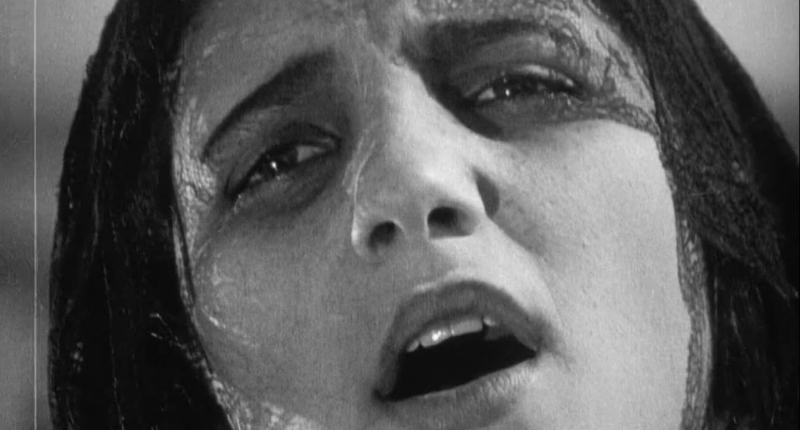
It was made to honour early Russian revolutionaries, yet it ended up changing how dramatic films were cut. It is propaganda, and I think you can disagree with its politics and still see how much modern editing owes it.
2. The Jazz Singer (1927)
Studios worried that audiences would not accept sound. It was The Jazz Singer that changed their minds, even though it had only a few scenes of synchronized dialogue. So it was not a fully talking picture, and calling it the first talkie flatters it a little.
What it proved was the business case, because audiences flocked to see it. HowStuffWorks still credits it with breaking cinema’s sound barrier, and as a turning point that is fair.
3. Gone with the Wind (1939)
The film premiered in Atlanta on 15 December 1939, and segregation barred Hattie McDaniel from attending, the same Hattie McDaniel who became the first African American actor to win an Oscar for it. That one fact holds the whole legacy.
The picture is also among the highest-grossing ever once you adjust for inflation, so it showed how big a studio epic could get. It also showed what a romantic picture of the slave-holding South costs.
My essay on the film weighs both sides.
4. The Wizard of Oz (1939)
Oz was not the first film to use Technicolor and, by Britannica’s account, was not an immediate financial or critical success. Its gift to cinema was the cut from sepia Kansas to colour Oz, still one of the best known transitions in film.
Then television took over.
CBS aired it in 1956 and an annual viewing tradition began, and the Library of Congress now calls it the most seen film in history. A film can change cinema by being rescued by a new medium.
My review says more.
5. Citizen Kane (1941)
Orson Welles was 25. With cinematographer Gregg Toland he used deep focus, keeping foreground, middle ground and background sharp at once, and he told the story through fragmented flashbacks that make you assemble Charles Foster Kane like a puzzle.

Critics rewarded that ambition for decades: Kane led the Sight and Sound critics’ poll for 50 years before Vertigo replaced it in 2012.
In 2022 it sat third. My review looks at the revolution it started.
6. Seven Samurai (1954)
For the final battle, Kurosawa used several cameras and telephoto lenses to shape what the audience feels, and he kept using multiple cameras on every film after.
The recruit, train and make a last stand story became a template. The academic Mark Sandler called it “probably the most-oft remade, reworked and referenced film in all of cinema history”.
The Magnificent Seven is the famous remake, and George Lucas has cited Kurosawa as his biggest influence for Star Wars. My review.
7. The Seventh Seal (1957)
A knight returns from the Crusades to a plague-struck Sweden and plays chess with Death. It won the Special Jury Prize at Cannes, shared with Andrzej Wajda’s Kanal, and brought Bergman international fame and wider distribution. That matters beyond one director.
It showed that a stark black and white film about faith and mortality could reach audiences far from Sweden. My review.
8. Vertigo (1958)
Critics in 1958 dismissed it as dull and middling, yet it topped the Sight and Sound poll in 2012. It also gave cinema the dolly zoom, designed by second-unit cameraman Irmin Roberts, which Guinness World Records credits to Vertigo and notes was later used to great effect in Jaws and Goodfellas.
In 2022, the film fell to second place. That says more about shifting taste than about the film. My review.
9. Psycho (1960)
Hitchcock made it for about $800,000, and no film had killed its lead so early, roughly 45 minutes in. Filmmaker Alexandre O. Philippe, who made a documentary about the shower scene, says “There were movies before the shower scene and movies after the shower scene”.

Gross estimates run from $32 million to $60 million, so treat any single number with care. The Conversation argues its success also fed Hollywood’s appetite for slasher and true-crime stories. My review.
10. The Graduate (1967)
Mike Nichols matched a satire of middle-class comfort with a jittery style borrowed from the French New Wave, cast the unknown Dustin Hoffman instead of Robert Redford, and opened the door to unconventional leading men.

It earned $104.9 million in the United States and Canada, the most of any 1967 release. I think its use of Simon and Garfunkel songs pointed the way for pop soundtracks. My review.
11. 2001: A Space Odyssey (1968)
Kubrick made a science fiction film with sparse dialogue and effects done without computers. It was one of the first to use front projection extensively and won the visual effects Oscar, Kubrick’s only Oscar win. Reception was split at first, and critics Andrew Sarris and Pauline Kael panned it.
Time reversed that. In the 2022 directors’ poll, 2001 was named the greatest film ever.
12. The Godfather (1972)
Paramount’s Robert Evans thought Gordon Willis’s cinematography was “too dark”. Coppola won the argument, and Willis’s low-light look shaped later cinematographers.
The film was the highest-grossing of 1972 and for a time the highest-grossing ever made. It opened in only five theatres for its first week, a pattern Jaws would soon break. Pauline Kael called it a model of how popular movies come from “a merger of commerce and art”. My review.
13. Jaws (1975)
Before Jaws, big films opened in a few cities and spread slowly. Universal opened it in more than 400 theatres with about $2 million of advertising, much of it 30-second national TV spots.
It was the first film to pass $100 million in the US, and Guinness recognises it as the first summer blockbuster. Mind the legend, though. It was not the first saturation release, and earlier films such as Breakout used wide release and TV promotion first.
Theatre counts also vary by source, from 409 to about 450. Historian Joseph McBride blames the television advertising for what went wrong afterwards.
14. Star Wars (1977)
George Lucas founded Industrial Light & Magic in May 1975 because no Hollywood effects house could build what he imagined. He also took the sequel and merchandising rights in place of a directing fee.
Those two decisions explain much of what followed: effects became an industry of their own, and toys, games and spin-offs became part of a film’s income. It won six Oscars but lost Best Picture to Annie Hall.
15. Apocalypse Now (1979)
Coppola moved Heart of Darkness to the Vietnam War, and the shoot nearly broke him. A typhoon, a lead actor’s heart attack and runaway costs delayed it, and Coppola covered the overages himself. He later summed it up: “little by little we went insane”.
The unfinished cut still won the Palme d’Or, and Eleanor Coppola’s footage became the documentary Hearts of Darkness. My review.
16. Goodfellas (1990)
Henry Hill walks his date into the Copacabana through the kitchen in one Steadicam shot, about three to four minutes by different counts. Scorsese pairs it with voiceover, freeze-frames and a pop soundtrack.
The film grossed only about $46 million, yet its style fed straight into Pulp Fiction and The Sopranos.
17. The Silence of the Lambs (1991)
It is the lone scary movie to win Best Picture, and only the third film to win all five major Oscars, after It Happened One Night and One Flew Over the Cuckoo’s Nest. Awards voters, it turned out, would reward a serial-killer thriller if the filmmaking was this good.
The same source notes the film was criticised by LGBT viewers for its portrayal of Buffalo Bill, a cost the sweep tends to bury.
18. Schindler’s List (1993)
Spielberg shot nearly all of it in black and white. As he put it, “I don’t know the Holocaust in colour.” It won seven Oscars, and about 1,200 people survived through Oskar Schindler’s efforts. Empire notes it was a smash in Germany, and Spielberg went on to found the USC Shoah Foundation in 1994 to record survivor testimony. My essay.
19. Pulp Fiction (1994)
Made for $8 to 8.5 million and the first film Miramax fully financed, it won the Palme d’Or and became Miramax’s first $100 million film in North America.
Out-of-order storytelling was not new, but it introduced the idea to a wide audience. The BFI says its success changed American independent cinema and prefigured the “hyperlink” films of the 2000s. My guide.
20. Toy Story (1995)
It was the first entirely computer-animated feature film, and John Lasseter received a Special Achievement Oscar for it. It was also the first animated film recognised for screenwriting, with a nomination for Original Screenplay.
Here is why it belongs on a list about change: it was Pixar’s first feature, and it began the move of American animation from hand-drawn to computer-generated.
21. Titanic (1997)
Cameron’s film was the most expensive ever made, at about $200 million, and executives feared another Heaven’s Gate. It became the first film to gross more than $1 billion worldwide and won 11 Oscars from 14 nominations, tying Ben-Hur.
Its 2012 3D re-release pushed it past $2 billion. My review looks at the real tragedy behind it.
22. The Matrix (1999)
“Bullet time” did not begin here, but The Matrix popularised both the effect and the name, with dozens of still cameras freezing the action. It won all four Oscars it was nominated for and was the first title to sell a million DVD copies. Its question about whether reality is real feels more pressing in an age of screens and AI.
23. The Lord of the Rings: The Fellowship of the Ring (2001)
Peter Jackson shot all three films at once, over about 15 months in New Zealand, and the effects came from Weta Digital, the company he cofounded. Andy Serkis supplied both the voice and the motion-capture movements of Gollum. The locations later starred in Tourism New Zealand’s advertising.
24. The Dark Knight (2008)
Christopher Nolan was the first to shoot sequences of a major studio feature with IMAX cameras, including the six-minute opening bank robbery. It earned about $1 billion, and Heath Ledger’s posthumous Oscar made it the first comic-book film to win a major acting award. Ledger died in January 2008, months before it opened, and that loss shaped how the film was received.
25. Parasite (2019)
Bong Joon-ho’s class satire is the first non-English-language film to win Best Picture, part of a four-Oscar night that followed its Palme d’Or. Bong told The New York Times that it was “a film that came out of nowhere” only in the eyes of outsiders, since it continued Korean cinema’s long history.
What changed is the assumption that the Academy’s top prize belongs to English-language films. Whether that lasts is still open.
Did the 2022 Sight and Sound poll change what counts as a landmark?
Yes, and it is the main reason for this update. More than 1,600 participants voted, and Chantal Akerman’s Jeanne Dielman, 23 quai du Commerce, 1080 Bruxelles (1975) jumped from 36th to first, the first film directed by a woman to top the list since it began in 1952.
The 2022 list holds 11 films directed by women, up from two in 2012.
Editor in chief Mike Williams said the film “challenged the status quo” in 1975 and still does. Four films from 2012 or later also made the top 100, including Parasite at 90th.
A critics’ poll is not the same as box-office impact, but it proves the canon was always narrower than cinema.
Which films did I leave out, and why?
My five most loved films are no longer numbered: Lawrence of Arabia, Casablanca, Forrest Gump, Fight Club and The Shawshank Redemption. My reviews stay online. I simply could not name a way each one changed how films are made, sold or seen.
Other near-misses deserve a line. Rashomon gave us the “Rashomon effect” and its conflicting versions of one event. Avatar (2009) was the first film past $2 billion. The Birth of a Nation (1915) belongs in any honest history, but one critic notes it changed the world “in the wrong way”.
For a quieter counterpart, read my piece on Within Our Gates (1920), a film that was censored and lost.
What do these 25 films have in common?
Most were bets that looked unsafe at the time. The Wizard of Oz was not an immediate financial success. Vertigo was dismissed. 2001 was panned by leading critics. Goodfellas earned modestly. Titanic frightened its own studio. Apocalypse Now nearly destroyed its director’s career. In contrast, the safest films on the list, such as the blockbusters, left the heaviest costs: a market that favours formula, a slasher boom, a romantic myth of the Old South. That is why the title says brilliant ideas with real costs.
If you only watch three, which should they be?
Watch Seven Samurai for craft, Jaws for business and Parasite for voice. They sit in three different decades, and together they show how cinema’s habits are made, sold and broken. If you want a fourth, make it Citizen Kane, so you know what the argument is about.
FAQs
What was the first film ever screened?
The Lumière brothers’ 47-second Workers Leaving the Lumière Factory, shot in 1895, is usually named as the first motion picture screened, though some historians credit Louis Le Prince with the first film made.
Which film changed cinema the most?
There is no honest single answer. I would say Citizen Kane for craft, Jaws for business and Parasite for who gets heard.
Is there a 2020s film on the list?
No. Parasite is the latest. Recent films have not had time to show what they changed, and I would rather wait than guess.
Why do these 25 films still matter?
Because each one solved a problem somebody called unsolvable, or asked a question nobody had dared to ask on screen, and because the gifts came with bills. If you are new to classic cinema, pick three from different decades and watch them in one week.
I suspect you will come back for the rest.