
What does dolce far niente mean, and why does sitting still for ten minutes feel harder than answering fifty emails? If you have ever tried to “just relax” and ended up scrolling, planning tomorrow, or feeling guilty, this guide answers the questions people ask most about this Italian phrase and the practical problems that come with trying to live it.
Table of Contents
Snapshot
- Dolce far niente is Italian for “the sweetness of doing nothing.”
- It is about enjoying idle time, not avoiding responsibility.
- Most people find doing nothing hard. In one set of experiments, many participants chose a mild electric shock over sitting alone with their thoughts.
- The key word is sweet. Idle time spent worrying is not dolce far niente.
- Start small: 10 minutes, no phone, one pleasant sensory anchor.
What Does Dolce Far Niente Mean?
The phrase breaks down into three Italian words: dolce (sweet), fare (to do, shortened to far), and niente (nothing). Put together, it means “sweet doing nothing” or “the sweetness of doing nothing.”
Pronunciation: DOHL-cheh far nee-EN-teh.
Is it “il” or “la” dolce far niente? It is il. In Italian, an infinitive used as a noun is masculine, so “il dolce far niente” is correct. “La dolce far niente” is a common mistake, likely borrowed from la dolce vita.
Where Does the Phrase Come From?
The origin is less romantic than most travel blogs suggest. According to the Online Etymology Dictionary, the phrase is recorded in English from 1814, yet it does not seem to appear in the work of any notable Italian author. It reportedly circulated among the lazzaroni, the street poor of Naples, rather than coming from classical literature. Some articles call it a “Latin proverb,” but it is an Italian phrase.
Most English speakers today know it from Eat Pray Love. One detail is often mixed up here. In Elizabeth Gilbert‘s 2006 book, the version she uses is il bel far niente (“the beauty of doing nothing”). The 2010 film starring Julia Roberts uses dolce far niente, explained to her character during a scene in a Roman barbershop.
Is Dolce Far Niente Just a Fancy Word for Laziness?
No, and this is the most common misunderstanding.
Laziness usually means avoiding something you need to do. Dolce far niente means choosing a break and enjoying it fully, often after the work is done.
It also does not mean Italians work less. OECD figures for 2025 put average annual hours actually worked per worker at about 1,716 in Italy, compared with about 1,332 in Germany. The idea is not “work less.” It is “when you stop, actually stop.”
Why Is Doing Nothing So Hard?
If you struggle with this, you are in good company. In a 2014 paper in Science, psychologist Timothy Wilson and colleagues ran 11 studies in which people sat alone with nothing to do but think for 6 to 15 minutes. Most participants did not enjoy it.
In one version, people could give themselves a mild electric shock during the quiet period. Twelve of 18 men (67%) and 6 of 24 women (25%) shocked themselves at least once, even though most had earlier said they would pay to avoid that shock.
So if your hand reaches for your phone within seconds, that is not a personal failing. It is a common response to an unstructured mind.
What Happens in Your Brain When You Do Nothing?
Your brain does not switch off. In 2001, neurologist Marcus Raichle described what he called “a default mode of brain function,” now known as the default mode network. According to reporting in Quanta Magazine, this network is linked to daydreaming, recalling past experiences, imagining the future, and thinking about other people.
There is also some evidence that idle, low-demand time can help creative thinking. In a 2014 study in the Creativity Research Journal, Sandi Mann and Rebekah Cadman had participants copy numbers from a phone book before a creativity task. That group produced more creative answers than a control group, and a passive reading task produced even more.
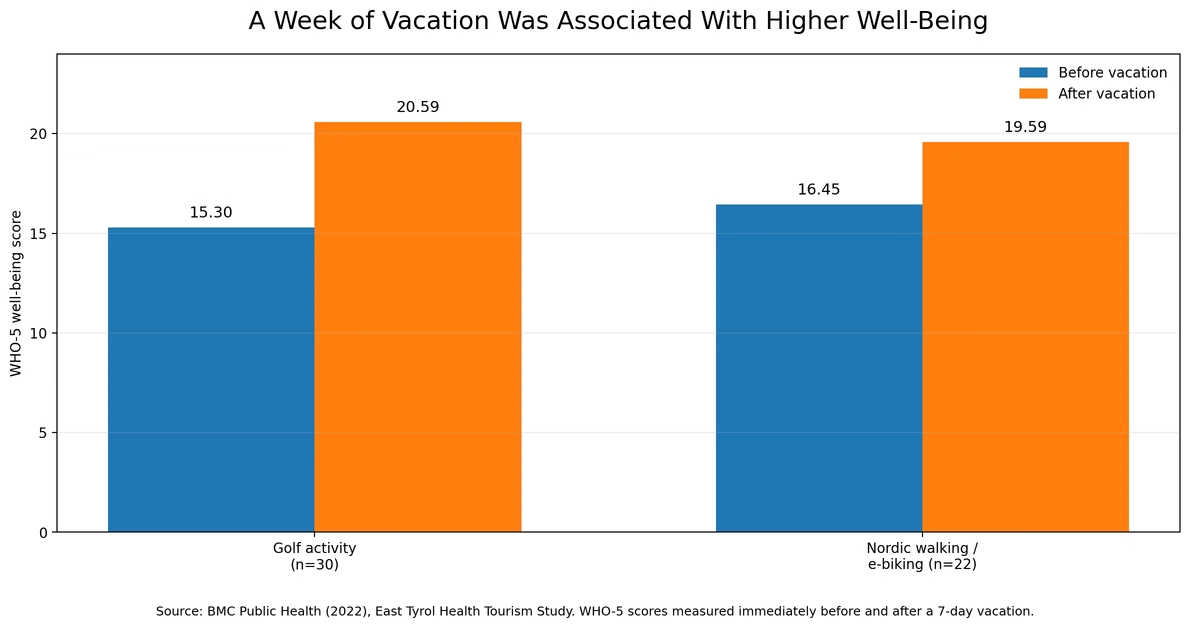
The study found that WHO-5 well-being scores increased 40% in the golf group and 19% in the Nordic walking/e-biking group after the week-long vacation. The researchers also reported roughly 44% reductions in cumulative stress across the groups.
An important caveat: A 2010 Harvard study by Matthew Killingsworth and Daniel Gilbert, which sampled 2,250 people, found minds wandered during 46.9% of waking hours, and wandering minds tended to be less happy. That is why the sweet part of the phrase matters. Doing nothing while replaying arguments or rehearsing worries is not dolce far niente. Doing nothing while noticing the sun on your arm is.
How to Practice Dolce Far Niente: Solutions to Common Problems
“I feel guilty when I rest.”
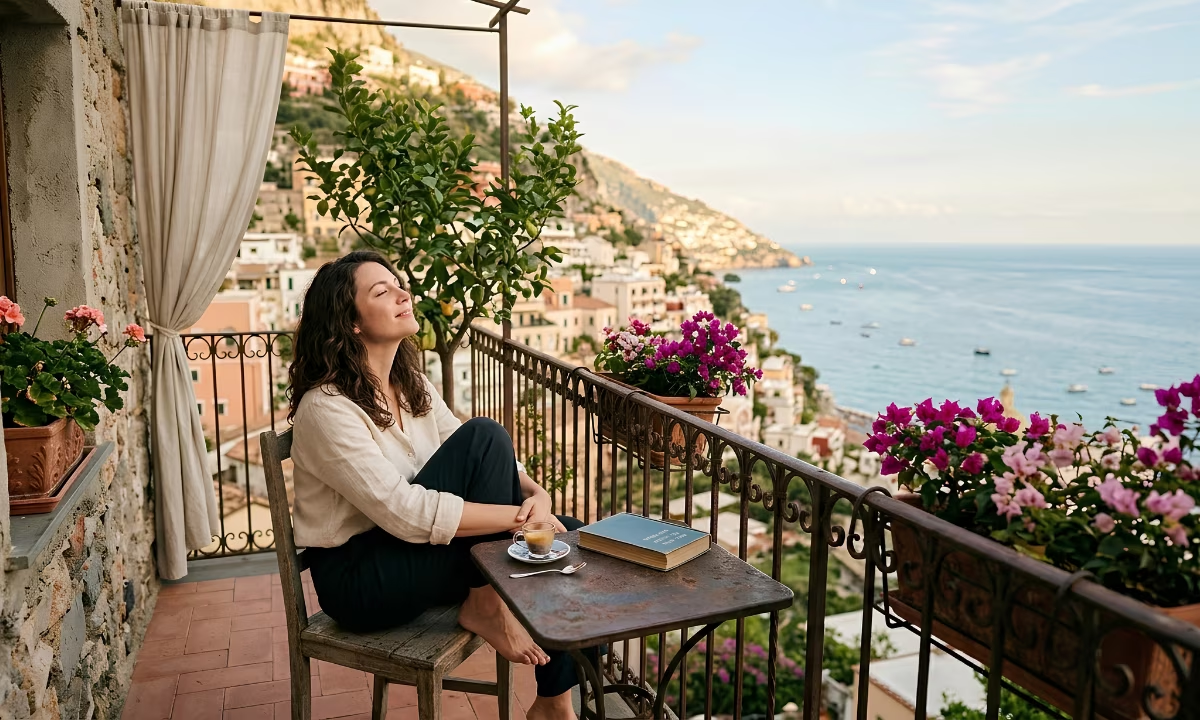
Give the time a name and a slot. A break you planned is a decision, not a lapse. Write “20 minutes, balcony, nothing” in your calendar the same way you would write a meeting. Guilt tends to ease when rest stops feeling accidental.
“I keep reaching for my phone.”
Put the phone in another room, not just face down. Start with 10 minutes, which sits inside the 6 to 15 minute range people found difficult in the Wilson experiments. Once 10 minutes feels easy, add five more.
“My mind spirals into worry.”
Give your attention a pleasant anchor: the taste of coffee, a breeze, the sound outside your window. If worry keeps returning, switch to a slow walk with no destination. Light movement still counts, and it is better than forcing stillness that has turned sour.
“I have kids or a demanding job. I don’t have free hours.”
You do not need hours. Look for small pockets you already have:
- Drink your morning coffee sitting down, with no screen.
- Stay at the table for five minutes after a meal.
- Sit in your parked car for three minutes before walking inside.
- Watch your kids play without also checking messages.
“Does watching Netflix or scrolling count?”
Not really. Those are activities, even if they feel restful. They fill your attention with someone else’s content. Bertrand Russell, in his essay collection In Praise of Idleness (1935), argued for more leisure but separated active, meaningful leisure from passive amusement. Dolce far niente sits closer to idle presence than to consumption.
Dolce Far Niente vs. Niksen vs. Mindfulness
| Practice | Origin | Core idea |
|---|---|---|
| Dolce far niente | Italian phrase | Enjoy idle time for its own pleasure |
| Niksen | Dutch verb meaning “to do nothing” | Do nothing without purpose, often against burnout |
| Mindfulness | Rooted in Buddhist meditation practice | Pay deliberate, non-judging attention to the present |
Niksen reached wide English-language attention through Olga Mecking’s 2019 New York Times piece, “The Case for Doing Nothing.” The main difference is tone: mindfulness asks for focused attention, niksen asks for no purpose, and dolce far niente adds pleasure.
How Long Should You Do Nothing Each Day?
There is no research-backed daily number for this, and we could not find a reliable source that sets one. A practical starting point is 10 to 20 minutes, then adjusting based on how you feel afterward. If you feel calmer and clearer, keep it. If it turns into rumination, shorten it or add gentle movement.
Conclusion
Dolce far niente is not a lifestyle trend or a license to skip work. It is a simple skill: stopping on purpose and letting the stop feel good. Most people find it hard at first, and research suggests that is normal. Start with ten phone-free minutes, anchor yourself in something pleasant, and protect the habit the way you would protect anything else that matters.
If this idea appeals to you, you may also enjoy our guides on the Tao Te Ching and the value of simplicity, Essentialism and doing less, and Life After Ambition. For the opposite side of the balance, read our Deep Work review.