

Last updated on October 21st, 2026 at 10:43 am
The best books on building wealth are The Psychology of Money by Morgan Housel for the mindset and The Little Book of Common Sense Investing by John C. Bogle for the method. Together they teach the habits that work: save part of every paycheque, avoid costly debt and invest cheaply for decades.
The ten books below are ranked by how much they will change what you do, and each one comes with the flaws other lists skip.
Table of Contents
Snapshot
Start with The Psychology of Money for the mindset and The Little Book of Common Sense Investing for the method. Add The Intelligent Investor if you want the principles behind both. Read Rich Dad Poor Dad and Think and Grow Rich last, and treat them as motivation, because the evidence behind their claims is weak.
- Best for behaviour: The Psychology of Money (2020)
- Best for investing: The Little Book of Common Sense Investing (2007)
- Best for saving habits: The Richest Man in Babylon (1926) and I Will Teach You to Be Rich (2009)
- Best for debt: The Total Money Makeover (2003)
- Read with a sceptical eye: Rich Dad Poor Dad (1997) and Think and Grow Rich (1937)
Personal finance shelves are crowded with promises about retiring early and never worrying about money again. Most of those books can be skipped. A smaller group has shaped how millions of people save, spend and invest, and I have ranked ten of them by how much they will change what you do with your next paycheque, not by how many copies they sold.
I have also been blunt about the weak spots. Two books on this list rest on stories that historians and critics have challenged, and one famous plan asks you to pay off cheap debt before you invest. You should know that before you spend your money or your time.
Some lessons are aimed at American readers, so anything involving specific accounts or tax rules needs adapting to where you live, including Bangladesh.
How do the ten books compare?
The table below shows what each book does best and where it falls short, so you can pick by your own situation.
| Rank | Book | Year | Best for | Main caution |
|---|---|---|---|---|
| 1 | The Psychology of Money | 2020 | Behaviour and patience | No step-by-step plan |
| 2 | The Little Book of Common Sense Investing | 2007 | Low-cost investing | Says little about saving or debt |
| 3 | The Intelligent Investor | 1949 | Investing principles | Dense and demanding |
| 4 | The Richest Man in Babylon | 1926 | Saving habit | Parables, not a modern plan |
| 5 | I Will Teach You to Be Rich | 2009 | Automating money | American accounts |
| 6 | The Total Money Makeover | 2003 | Getting out of debt | Rigid rules |
| 7 | The Millionaire Next Door | 1996 | Spending discipline | Dated US data |
| 8 | The Compound Effect | 2010 | Daily habits | Self-help, not finance |
| 9 | Rich Dad Poor Dad | 1997 | Asset thinking | Disputed story, risky advice |
| 10 | Think and Grow Rich | 1937 | Motivation | Unverified claims |
What are the best books on building wealth?
The best books on building wealth are the ones that make you save first, avoid costly debt and invest cheaply for decades. Here are the ten, in the order I would recommend them.
1. The Psychology of Money by Morgan Housel (2020)
The Psychology of Money argues that how you behave with money matters more than how much you know about it. The book is built from 19 short stories rather than formulas (publisher description, Harriman House via University of Huddersfield shop), and the same listing says it has sold over 10 million copies worldwide.
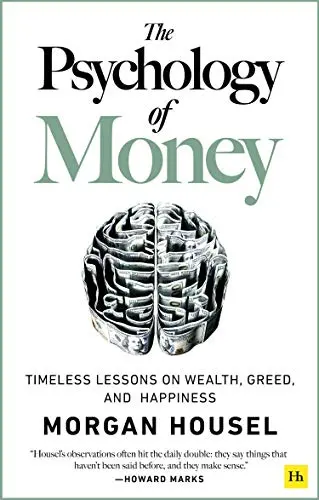
Treat that figure as the publisher’s claim, not an audited number.
Housel’s strongest ideas are patience, humility and knowing when you have enough, a theme he returned to when he discussed the hedonic treadmill, the habit of resetting your idea of enough as your income rises (NGPF podcast). It is also the most readable book here, which matters, because a money book you finish beats a better one you abandon.
Best for: beginners who find finance books dry. Watch out for: it gives you a mindset, not a plan, so pair it with a method book. My full review. Best lesson: time and compounding reward people who stay calm and stay invested.
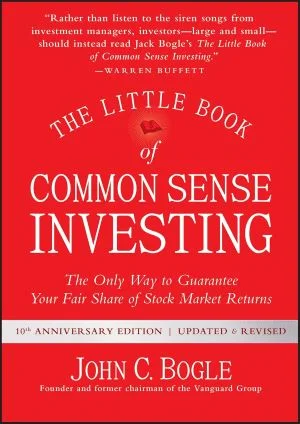
2. The Little Book of Common Sense Investing by John C. Bogle (2007)
John Bogle’s book makes one argument: keep your costs low and buy the whole market through index funds. Bogle founded Vanguard and is credited with creating the first index fund, which was dismissed as “Bogle’s folly” when it launched in the mid-1970s (Evidence Investor).
His case rests on arithmetic. Bogle called it the Cost Matters Hypothesis: investors as a group earn the market return before fees and far less after them (Validea, summarising Forbes). In his words, the two greatest enemies of the equity fund investor are expenses and emotions (Evidence Investor).
The data still lean his way. In 2025, 79% of active large-cap US equity funds underperformed the S&P 500 (S&P Dow Jones Indices), and over the 15 years to December 2024 no category had a majority of active managers outperform (S&P Dow Jones Indices).
To be fair, critics say the scorecard counts closed funds as failures and treats every fund equally regardless of size, which can exaggerate the gap (Advisor Perspectives). The direction holds even after that adjustment, though the margin is debated.
Best for: anyone who wants a simple, evidence-backed way to invest. Watch out for: index funds fall when the market falls. Bogle’s argument is about cost, not safety. My review. Best lesson: keep costs low and stop trying to beat the market.
3. The Intelligent Investor by Benjamin Graham (1949)
The Intelligent Investor is the foundation of value investing, and it is more about temperament than tactics. Warren Buffett read the first edition in 1950 at age 19 (Podbean book summary) and has called it “by far, the best book on investing ever written” (Bottom Line).
Two ideas carry the book. Graham invented Mr. Market, an imaginary partner who personifies the moods of the crowd, and his advice is that you cannot control him, only your reaction (Bottom Line). The other is the margin of safety, the gap between what you pay and what a business is worth (Motley Fool Australia).
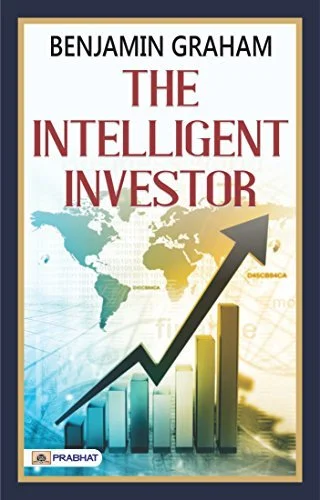
I find it demanding, and I would not start here. Current editions pair Graham’s original text with updated commentary, which makes the examples easier to follow (Porchlight Books listing).
Best for: readers who want to understand why markets behave as they do. Watch out for: stock-picking can tempt beginners into the exact trap Bogle warns about. My review. Best lesson: buy with a margin of safety and do not let market moods decide for you.
4. The Richest Man in Babylon by George S. Clason (1926)
The Richest Man in Babylon teaches saving through parables set in ancient Babylon. The stories began as pamphlets that Clason distributed through banks and insurance companies in the early 1920s, and they were bound together as a book in 1926.
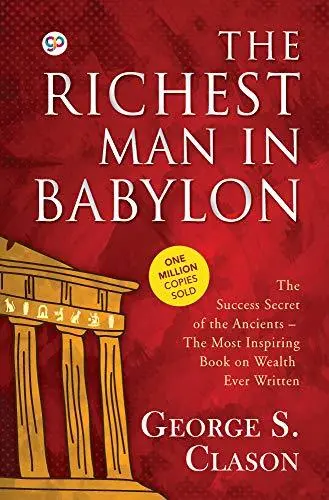
The core rule is that a part of all you earn is yours to keep. The book’s seven cures for a lean purse begin with starting your purse fattening and end with increasing your ability to earn. That ordering is the lesson: save first, then grow your income.
Best for: people who have never saved regularly. Watch out for: it is a century old and says nothing about modern accounts or index funds. My review. Best lesson: pay yourself first.
5. I Will Teach You to Be Rich by Ramit Sethi (2009)
Sethi’s book is the most practical modern system on this list. The original appeared in 2009, and a second edition with over 80 new pages followed in 2019 (Workman Publishing, Hachette Book Group). It shows you how to set up no-fee, high-interest bank accounts and automate your savings and investing so the right money moves without a monthly decision.
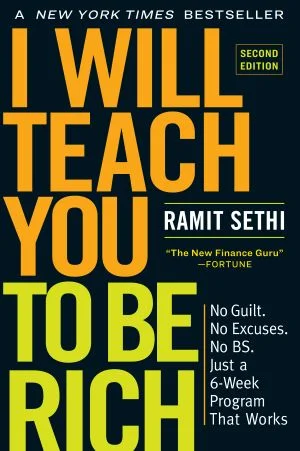
What I like is its permission to spend. The publisher’s pitch is that you can buy what you love guilt-free once the automatic transfers are in place, which makes the plan easier to keep than a strict budget.
Best for: salaried readers who want a system they can set up in a weekend. Watch out for: the specific banks and accounts are American, so look for local equivalents. My review. Best lesson: automate good decisions so you do not have to remake them every month.
6. The Total Money Makeover by Dave Ramsey (2003)
Ramsey’s book is the best of the lot for people drowning in debt. It was first published in 2003 and sets out seven baby steps. The best-known one is the debt snowball, where you pay off your smallest balance first and roll that payment onto the next.
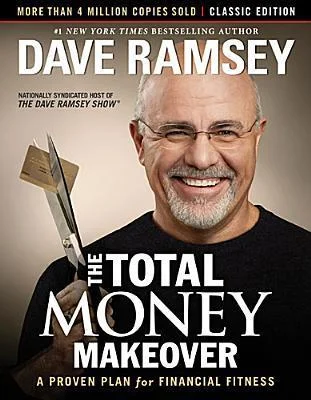
The snowball is not the mathematically cheapest method, and Ramsey himself concedes that paying the highest interest rate first costs less. His argument is behavioural: quick wins keep you going. Researchers have found the snowball more likely to lead to debt elimination despite its flaws on paper. The plan also pauses retirement investing while you clear debt, which some experts dispute when the debt is cheap.
Best for: people who need structure and a clear order of operations. Watch out for: rigid rules, such as avoiding credit entirely, do not suit everyone. My review. Best lesson: deal with debt systematically before trying to invest.
7. The Millionaire Next Door by Thomas J. Stanley and William D. Danko (1996)
This book overturned the picture of what wealth looks like. It draws on about 20 years of research, including 1,115 interviews with wealthy Americans, and found that many millionaires live on a modest budget in an ordinary home. One chapter is titled “Frugal, Frugal, Frugal” (University at Albany), which tells you the thesis.
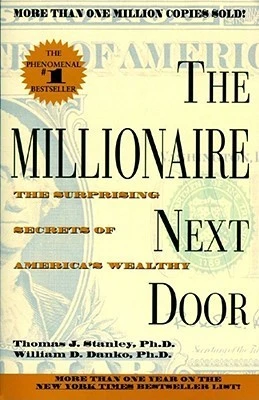
The pattern still holds for me: real wealth is mostly money not spent. But the data are from the 1990s and from the United States, and one review argues that the authors lean too hard on low consumption (PrepScholar). Earning more matters as well as spending less.
Best for: high earners who spend everything they make. Watch out for: dated figures and a narrow US sample. My review. Best lesson: real wealth is often invisible, because it is money not spent.
8. The Compound Effect by Darren Hardy (2010)
Hardy’s book is self-help rather than finance, and it earns a place because its lesson applies directly to saving. It was published in 2010, and its formula is small, smart choices plus consistency plus time.
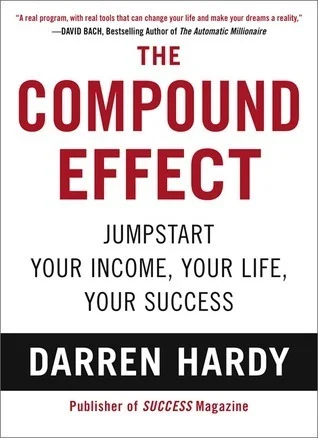
The best-known example asks whether you would take $3 million now or a penny that doubles every day for 31 days (Derek Sivers’ notes). The penny wins, finishing above $10 million, and the arithmetic checks out. The book gives no advice on where to put your money, so it works as fuel for the other nine.
Best for: readers who know what to do but struggle to keep doing it. Watch out for: nothing here tells you how to invest. My review. Best lesson: small daily choices compound into large results.
9. Rich Dad Poor Dad by Robert Kiyosaki (1997)
Rich Dad Poor Dad teaches the difference between assets that pay you and liabilities that cost you, and it has sold over 32 million copies. Kiyosaki claims an estimated 40 million in the preface to the 20th anniversary edition.
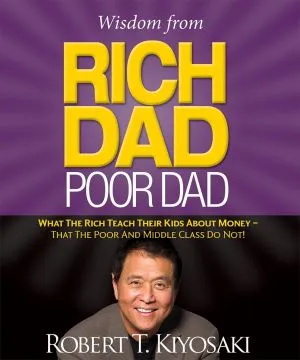
I recommend it with a warning. The existence of the “rich dad” remains unproven, and real estate investor John T. Reed wrote a long analysis arguing the book contains wrong, bad and even dangerous advice (John T. Reed). The asset-versus-liability idea is useful. Treating the stories as fact, or copying the leveraged real estate approach without risk limits, is where readers get hurt.
Best for: readers who need a spark to start thinking about money. Watch out for: disputed anecdotes and risky advice on debt and property. My review. Best lesson: know the difference between things that put money in your pocket and things that take it out.
10. Think and Grow Rich by Napoleon Hill (1937)
Think and Grow Rich is the oldest and the weakest on evidence, and I keep it on the list for its place in history. It was published in 1937 and condenses Hill’s earlier work into 14 principles.
Its founding story is the problem. Hill said Andrew Carnegie handed him a mission to study successful people, yet there is no record of the two meeting. Carnegie’s biographer David Nasaw told one outlet he “found no evidence of any sort that Carnegie and Hill ever met” (Space Daily). Sales figures are just as slippery, ranging from about 15 million (Gizmodo) to over 100 million claimed by the Napoleon Hill Foundation.
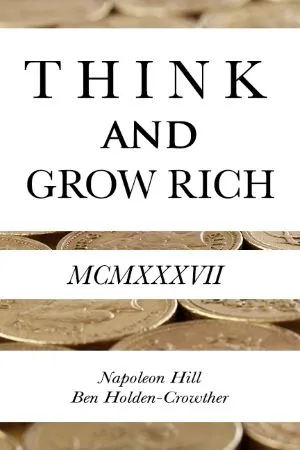
Read it for the push towards goals and persistence. Do not read it for instructions, and be wary of the idea that poor results are always a failure of thinking.
Best for: a motivational push, nothing more. Watch out for: unverifiable stories and a message that can blame the reader for bad luck. My review. Best lesson: a clear, written goal and steady persistence matter.
Which book should you read first?
Read The Psychology of Money first if you are new to this, because it is short and sets the right habits before you touch a single investment. After that, choose by your situation:
- You have debt: The Total Money Makeover.
- You earn but never save: The Richest Man in Babylon or I Will Teach You to Be Rich.
- You are ready to invest: The Little Book of Common Sense Investing.
- You overspend on status: The Millionaire Next Door.
- You know the plan but cannot stick to it: The Compound Effect.
If you read only two, I would choose Housel for the mindset and Bogle for the method. Together they cover most of what an ordinary person needs.
Do these wealth books work outside America?
Most of the principles travel well, but the account types and tax rules do not. American tools such as employer retirement plans are specific to the United States, so you will need to find the local version of anything an author recommends by name.
The index fund argument, at least, is not only American. S&P’s Canadian scorecard found that over 85% of active funds underperformed their benchmarks in 2025 (S&P Dow Jones Indices), and S&P publishes similar scorecards for Asia ex-Japan and the Middle East and North Africa.
If you live somewhere with limited low-cost funds, check what is actually available before copying a US plan. For anything specific to your situation, speak to a qualified adviser.
What money mistakes do these books warn against?
Across all ten books, the same five mistakes appear again and again:
- Spending every raise instead of saving part of it. Clason’s pay-yourself-first rule and Sethi’s automation both target this.
- Chasing quick returns and hot tips. Graham and Bogle spend whole chapters on it.
- Paying high fees without noticing. This is Bogle’s central point.
- Borrowing for things that lose value. Ramsey’s plan is built around it.
- Trying to look rich instead of becoming secure. Stanley and Danko’s core finding.
Which other wealth books deserve a mention?
Three more titles are worth a look if you finish the list, though none is a first pick.
- The 4-Hour Workweek by Timothy Ferriss is more about lifestyle design than money, but it challenges assumptions about work.
- Your Money or Your Life by Vicki Robin and Joe Dominguez treats money as life energy and asks how much is enough.
- The Almanack of Naval Ravikant by Eric Jorgenson collects short reflections on wealth and happiness from a well-known investor.
How can you read a money book so it changes what you do?
Pick one action per book and do it within a week, because reading about money does not move any money. I use a simple routine:
- Finish the book, then write down one change, such as a standing transfer on payday.
- Set it up immediately, before the motivation fades.
- Leave it alone for three months and judge it on the numbers, not on how it feels.
- Only then pick the next book and the next change.
Ten books read and no action taken is worth less than one book and one automatic transfer.
Frequently asked questions
What is the best book to start building wealth?
The Psychology of Money by Morgan Housel is the best starting point for most readers. It is short, easy to read and focuses on behaviour, which decides your results more than any formula. Follow it with a practical book such as I Will Teach You to Be Rich or The Little Book of Common Sense Investing.
Is Rich Dad Poor Dad worth reading?
It is worth reading as motivation, not as a manual. The asset-versus-liability idea is useful, but the existence of the “rich dad” is unproven and critics warn that some of the debt and property advice is risky. Read it, then check any specific tactic against independent sources.
Which book teaches index fund investing?
The Little Book of Common Sense Investing by John C. Bogle is the clearest. Bogle founded Vanguard, and the book explains why low-cost index funds tend to beat most active managers after fees. Recent S&P data support the direction of his argument.
What book is best for getting out of debt?
The Total Money Makeover by Dave Ramsey is the strongest choice for structure and motivation. Its debt snowball is not the cheapest method on paper, but it is built to keep you going. If your debts carry very different interest rates, compare it with paying the highest rate first.
Do you need to read all ten books?
No. Two or three, applied properly, will do more than all ten read passively. My pick is The Psychology of Money and The Little Book of Common Sense Investing, then one habit book that matches your weak spot.
Final thoughts
The books that last teach the same quiet things: save part of everything you earn, avoid expensive debt, keep investment costs low and stay patient. The two loudest books on the list are the ones I trust least, which says something about how wealth advice gets sold.
Start with Housel and Bogle, act on one idea, and speak to a qualified financial adviser for anything specific to your own situation.





5 thoughts on “10 Books on Building Wealth That Actually Help”